
 iPhone Data Recovery
 iOS System Recovery
 iOS Data Backup & Restore
 iOS Unlocker
 iPhone Password Manager
 Location Changer
 Android Data Recovery
 Broken Android Data Extraction
 Android Data Backup & Restore
 Android Unlocker
 FoneTrans for iOS
 iPhone Data Eraser
 iPhone Cleaner
 HEIC Converter
 HyperTrans
 WhatsApp Transfer for iOS
 Mac Sweep
 Data Retriever
 Mac Data Retriever
 Video Converter Ultimate
 Screen Recorder
 Phone Mirror
- Part 1. Quick Diagnostic: Identify Your File Corruption Type
- Part 2. Create a Sandbox Copy Before Attending Repairs
- Part 3. How to Fix Corrupted Operating System Files
- Part 4. How to Extract Text from Corrupted Documents
- Part 5. How to Recover Files from a Corrupted Drive with FoneLab Data Retriever
- Part 6. Troubleshooting Common File Recovery Loops
- Part 7. FAQs about How to Fix a Corrupt File
 Recover PC Data Now
Recover the lost/deleted data from computer, hard drive, flash drive, memory card, digital camera and more.
Efficient Guide on How to Fix Corrupt Files Properly
 Updated by
 Looking for effective corrupt file repair methods? You’re not alone. File corruption is one of the most frustrating computer issues, whether it’s a crucial work document, a family photo, or a system file that suddenly won’t open. It can happen to anyone at any time, and often without warning, making the situation more alarming. Luckily, it doesn’t mean you’ve lost your file forever.
You read that right! Whether the damage is minor or seems severe, there is always a suitable solution to save your file. That’s why we listed the most effective methods for handling a corrupted file in the following sections. We will also help you diagnose the situation first so you can apply the right fix. Thus, don’t miss any information—read through every section.


Guide List
- Part 1. Quick Diagnostic: Identify Your File Corruption Type
- Part 2. Create a Sandbox Copy Before Attending Repairs
- Part 3. How to Fix Corrupted Operating System Files
- Part 4. How to Extract Text from Corrupted Documents
- Part 5. How to Recover Files from a Corrupted Drive with FoneLab Data Retriever
- Part 6. Troubleshooting Common File Recovery Loops
- Part 7. FAQs about How to Fix a Corrupt File
Part 1. Quick Diagnostic: Identify Your File Corruption Type
As mentioned, the first step in fixing a corrupted file is to diagnose and identify the type of corruption. This part is crucial because not all corrupt files are the same, so using the wrong repair method can cause further damage. So, take a moment to identify your situation first.
- • System-wide issues - Blue screens, random crashes, or startup failures point to corrupted operating system files.
- • File won't open at all - You get an error message, like "file is damaged" or "cannot read."
- • File opens but looks wrong - Jumbled text, missing images, strange symbols, or distorted audio/video.
- • File opens partially - Only part of the document or media loads, then it cuts off or freezes.
Part 2. Create a Sandbox Copy Before Attending Repairs
Once you identify the file's status, it’s time to prepare to fix corrupt PPT, photo, system files, or other data by creating a sandbox copy. This means creating a duplicate of the corrupted file and placing it in a separate folder. That’s because some repair tools and methods can accidentally alter or further damage the original file. So, it’s important to have a backup as a safety net. You can simply create a folder named Sandbox and then copy and paste the corrupted files into it. You may also rename them, adding “_COPY” so you don't confuse them with the originals.
Part 3. How to Fix Corrupted Operating System Files
Now, let’s start with one of the most critical types of corruption: system files. Simply put, these are the core files that your computer needs to boot up and run properly. So, when they become corrupted, you might encounter blue screens, random crashes, or sluggish performance. Unlike regular documents or media files, you can't just open and repair these files using standard software. Instead, they require built-in Windows tools that are specifically designed to scan, verify, and restore system integrity. Don’t worry, though. The process is safe and straightforward.
Follow the procedure below for a system corrupt file repair:
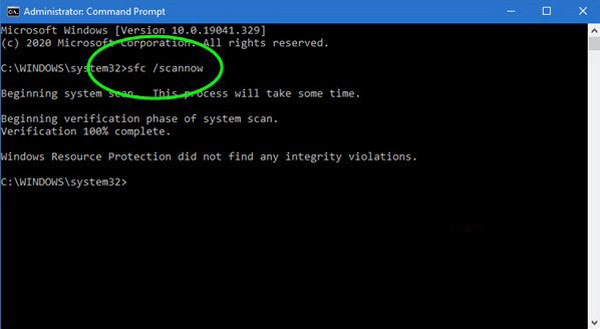
Step 1Open your Command Prompt as an administrator, then run the first command. Simply type sfc /scannow and hit Enter to scan and replace corrupted system files automatically.
Step 2If issues remain, run the DISM /Online /Cleanup-Image /RestoreHealth command next to repair the system image itself, giving SFC a healthy source to work from.
Part 4. How to Extract Text from Corrupted Documents
Sometimes you don't need to repair a file fully. You just need to get the content out and keep it in a new working document. Whether you have corrupted Word documents, PDFs, etc., you don’t need to struggle to fix the entire file. This part focuses on preserving the most important thing: your text. Aside from having a fresh, uncorrupted document, it also saves you the time a full repair would take. Simply use Microsoft Word's built-in Recover Text from Any File feature.
Follow the steps below to fix corrupt Word file or other documents by extracting the text:
Step 1Start on the Microsoft Word interface. Select File > Open > Browse, then select the corrupted document once without opening it completely.
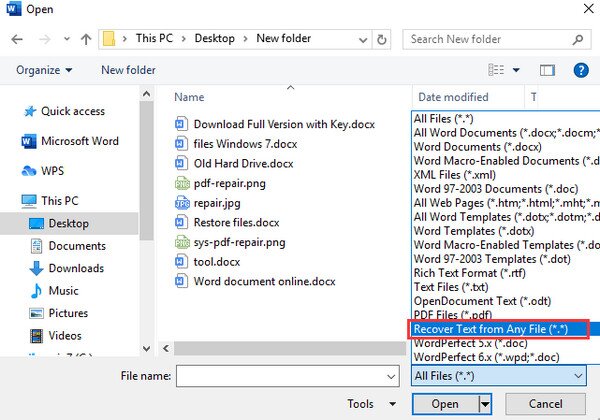
Step 2Next, click the drop-down menu beside the file name box to select Recover Text from Any File (*.*), then Open. Word will shortly extract the raw text, so copy it to a new document.
Part 5. How to Recover Files from a Corrupted Drive with FoneLab Data Retriever
What if you’re dealing with a corrupted drive rather than just individual files? It may feel much more disheartening because not just one, but all your files are at risk. The good news? Recovery is still possible despite a corrupted drive if you have a FoneLab Data Retriever. It is popular for Mac and Windows data recovery, even in the worst situations imaginable.
FoneLab Data Retriever - recover the lost/deleted data from computer, hard drive, flash drive, memory card, digital camera and more.
- Recover photos, videos, documents and more data with ease.
- Preview data before recovery.
That’s because this tool supports various storage devices that have faced data loss due to accidental deletion, corruption, formatting, disk damage, and more. Many data types in various formats can be restored, including emails, photos, documents, videos, and music. Not to mention its design, which is perfect for beginners, especially with its intuitive, helpful features.
Follow the guide below to recover your data from a corrupted drive with FoneLab Data Retriever:
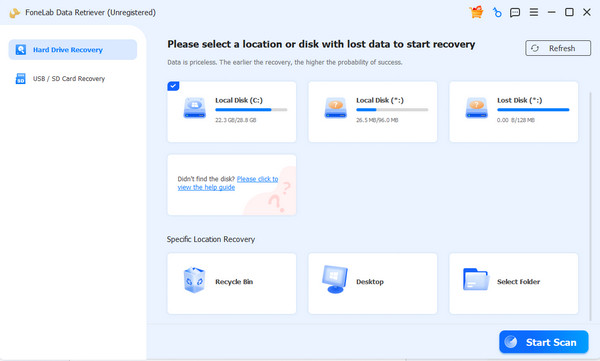
Step 1Install FoneLab Data Retriever using the saved file by clicking Free Download. After a few moments, the Start tab will appear, allowing you to launch the tool. The main interface will shortly display the disks, so choose your corrupted drive, then select Start Scan.
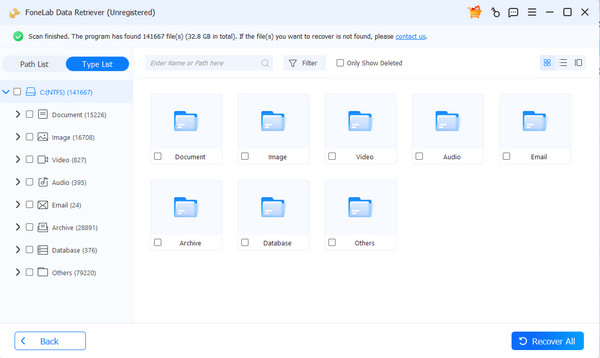
Step 2It will be a quick scan, but you can always run the deep scan if needed. Open the folders accordingly afterward. This way, you can explore the content and locate the files you want to restore. When ready, select the checkboxes for the files and choose Recover All.
Part 6. Troubleshooting Common File Recovery Loops
Successfully fixing your corrupted files is a good feeling, but avoiding them is even better. The good news is that most corruption is preventable with simple habits, such as always safely ejecting external drives, keeping your system and antivirus software up to date, avoiding shutdowns during updates or file transfers, and regularly checking your hard drive's health. Lastly, back up your files regularly so you can restore them if corruption occurs later.
Part 7. FAQs about How to Fix a Corrupt File
Can I fix my corrupt file without installing any software?
Yes, you can. Built-in tools and commands like SFC, DISM, and Microsoft Word's recovery feature are available and can fix many issues, even without third-party software.
Can a corrupted file infect my other data?
Generally, no. A corrupted file won't infect others if it's just basic corruption. However, if a virus or malware causes the corruption, your file can then infect others, so you must act quickly.
File corruption can be frustrating, but it is fixable. All you need is a suitable repair method, whether for system files, documents, etc., to keep your data usable. Besides, you can always turn to FoneLab Data Retriever when needed.