
 iPhone Data Recovery
 iOS System Recovery
 iOS Data Backup & Restore
 iOS Unlocker
 iPhone Password Manager
 Location Changer
 Android Data Recovery
 Broken Android Data Extraction
 Android Data Backup & Restore
 Android Unlocker
 FoneTrans for iOS
 iPhone Data Eraser
 iPhone Cleaner
 HEIC Converter
 HyperTrans
 WhatsApp Transfer for iOS
 Mac Sweep
 Data Retriever
 Mac Data Retriever
 Video Converter Ultimate
 Screen Recorder
 Phone Mirror
- Part 1: Recover ISO Files from a System Image
- Part 2: Recover Deleted ISO Files with FoneLab Data Retriever
- Part 3: What an ISO File Is and Why It Matters
- Part 4: Why ISO Files Get Lost or Corrupted
- Part 5: Check the Recycle Bin and Downloads First
- Part 6: Tips to Keep ISO Files Safe
- Part 7: FAQs About ISO File Recovery
 Recover PC Data Now
Recover the lost/deleted data from computer, hard drive, flash drive, memory card, digital camera and more.
How to Recover ISO Files from a Hard Drive
 Posted by Valyn Hua / September 09, 2026 21:00
An ISO file is a complete image of an optical disc — a CD, DVD, or Blu-ray — captured as a single file. People keep ISOs around for everything from system installation discs to archived movies and software. Because they're often several gigabytes, an ISO is usually downloaded once and stored, which makes losing one especially annoying: it's a big file that isn't easy to replace.
ISO files disappear the same way other files do — accidental deletion, an emptied Recycle Bin, a crash, or a drive error. The good news is that, like most data, a deleted ISO isn't erased instantly. This guide covers two ways to get it back: restoring from a system image if you made one, and scanning the drive with recovery software when there's no backup.

Guide List
- Part 1: Recover ISO Files from a System Image
- Part 2: Recover Deleted ISO Files with FoneLab Data Retriever
- Part 3: What an ISO File Is and Why It Matters
- Part 4: Why ISO Files Get Lost or Corrupted
- Part 5: Check the Recycle Bin and Downloads First
- Part 6: Tips to Keep ISO Files Safe
- Part 7: FAQs About ISO File Recovery
Part 1: Recover ISO Files from a System Image
If you created a system image before the ISO disappeared, restoring it brings back everything on that drive — settings, programs, and files included. This only works if the image was made before the file was lost.
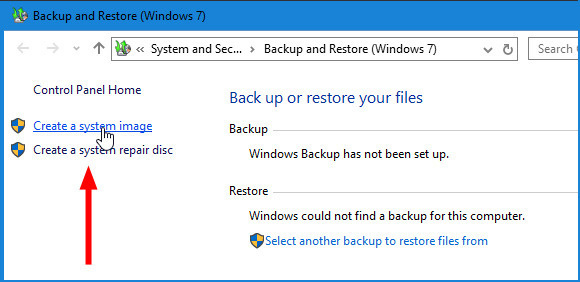
To create a system image going forward (or to confirm you can):
Step 1Open the Start menu.
Step 2Go to Control Panel > System and Security > Backup and Restore.
Step 3Click Create a System Image on the left pane.
Step 4Choose where to save the image, click Next, select the drives to include, and click Start Backup.
To restore an ISO from an existing system image:
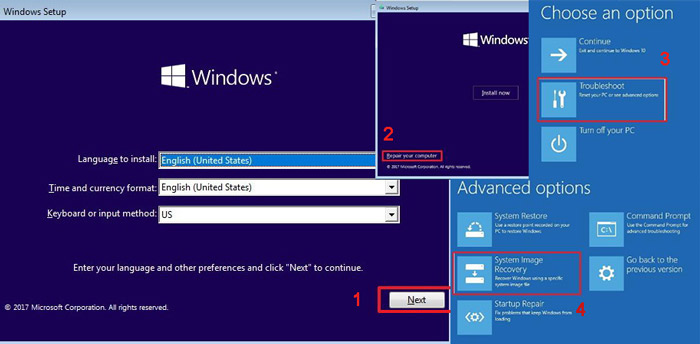
Step 1Connect the drive holding the system image and boot the computer into recovery options.
Step 2On the Windows Setup page, click Next.
Step 3Click Repair your computer > Troubleshoot > System Image Recovery.
Step 4Choose Use the Latest Available System Image and click Next.
Step 5Click Finish to restore.
Restoring a full system image is a heavy hammer — it replaces the whole drive, not just the ISO. Use it only when the image is exactly what you want back, or when the drive is otherwise unusable.
Two things to know before you go down the system-image path. First, the image must have been created before the ISO disappeared, or it won't contain the file — a system image is a point-in-time snapshot, not a live backup. Second, restoring replaces everything on the target drive, so it's not a way to "just get one file back" unless you're restoring to a spare drive you can dig through afterwards. Most people who simply deleted an ISO are better served by the scan-and-recover approach in Part 2, which is faster and less disruptive.
If you don't have a system image but do have File History or a cloud-synced folder that once held the ISO, check those first too. Any of them can hand you the file back without touching a recovery tool.
Part 2: Recover Deleted ISO Files with FoneLab Data Retriever
If there's no system image — which is most of the time for an ISO — recovery software is the practical answer. FoneLab Data Retriever scans the hard drive for deleted or lost files, lets you preview what it finds, and recovers the ISO to a location you choose. It also works on external drives, memory cards, and USB sticks.
FoneLab Data Retriever - recover the lost/deleted data from computer, hard drive, flash drive, memory card, digital camera and more.
- Recover photos, videos, contacts, WhatsApp, and more data with ease.
- Preview data before recovery.
- Recover photos, videos, documents, and more data with ease.
- Recover data from device, iCloud, and iTunes.
Step 1Download and install FoneLab Data Retriever, then launch it.
Step 2Select the file types you want and choose the location where the ISO was stored. Not sure? Scan the Recycle Bin or the whole drive.
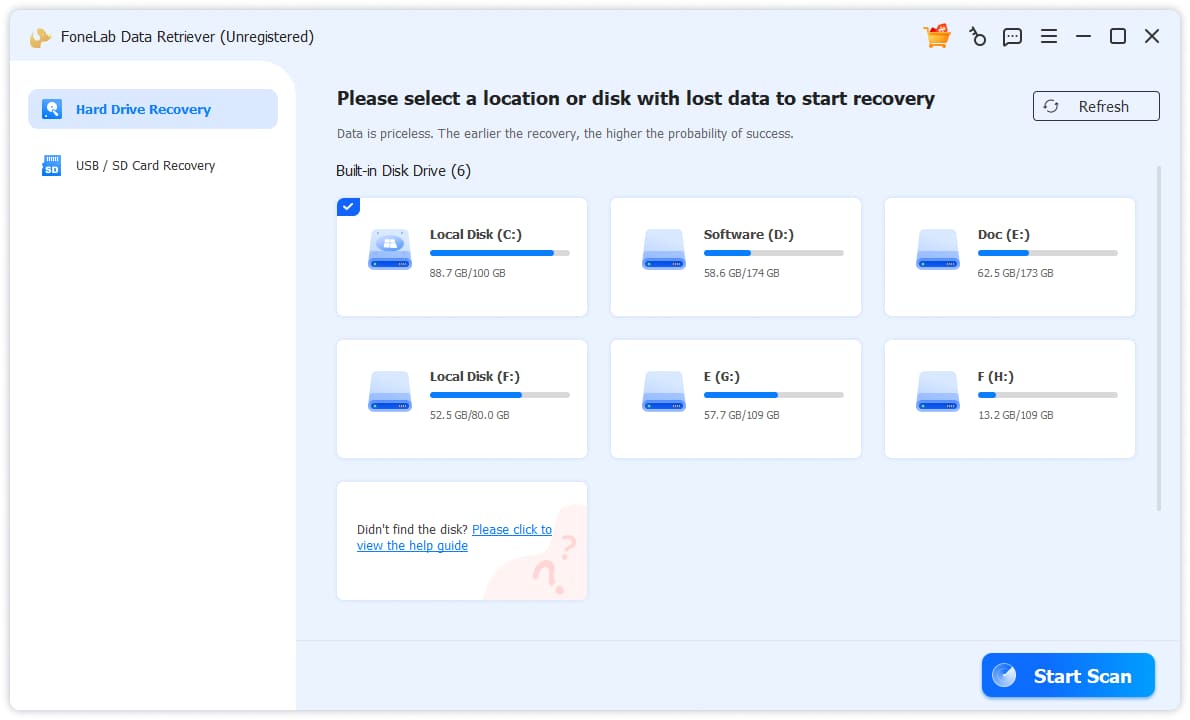
Step 3Click Scan and wait for the results. Use the Filter bar to find ISO files by name or type.
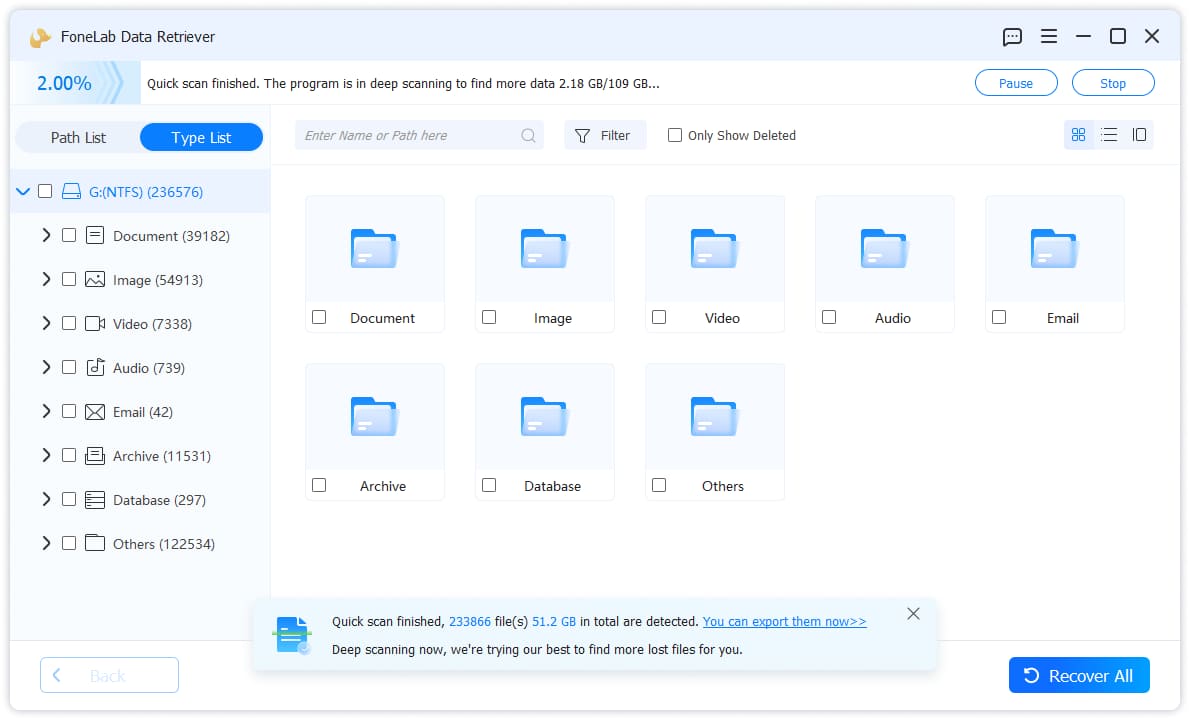
Step 4If the ISO isn't in the first pass, run Deep Scan — it takes longer but digs deeper.
Step 5Preview and tick the ISO, click Recover, and save it to a different drive than the one scanned.
The same tool recovers other file types too — documents, images, videos — so it's worth keeping for any "I deleted something important" moment.
For other deleted data on the same drive, recovering files from a hard disk covers the broader picture.
A practical note on big files like ISOs: because they're large and stored contiguously, they're often among the easiest files to recover — the recovery tool finds the whole block and brings it back intact. That's the good news. The bad news is that their size means they're more likely to have parts overwritten over time, which is another reason to scan sooner rather than later. If you know roughly when the ISO was deleted, scan within a day or two for the best result.
Part 3: What an ISO File Is and Why It Matters
An ISO file is a sector-by-sector image of an optical disc. Instead of copying individual files, an ISO preserves the disc's structure, which is why it can be mounted like a virtual disc or burned back to physical media. That structure makes ISOs ideal for operating system installers, driver discs, and archival copies of media.
The flip side is that ISOs are big — often 1 to 5 GB — and they're typically stored in one place. When that one place fails, the whole disc image is at risk. Understanding this is why backups and recovery tools matter for ISOs more than for small documents.
Part 4: Why ISO Files Get Lost or Corrupted
- Accidental deletion: clearing files or emptying the Recycle Bin takes the ISO with it.
- Interrupted download: an ISO that cut off at 99% won't mount, and may be deleted as "useless."
- Drive failure: bad sectors can corrupt parts of a large file.
- Malware or crash: a system issue can render stored files unreadable.
- Failed write: burning or copying to another drive can leave a partial ISO behind.
For each cause, the recovery path is the same in spirit: if the bytes still exist on disk, they can be recovered before they're overwritten.
For a general guide to getting lost files back, recovering deleted files from a hard drive has more methods.
There's a simple way to think about deletion on a modern drive: when you delete a file, the system just marks its space as available. The file's data sits untouched until a new file happens to write over those same sectors. That's why "deleted" doesn't mean "gone" — and why the first rule of recovery is to stop using the drive. Every new download, install, or document save shrinks the chance of a clean recovery, so run the scan before you keep working.
Part 5: Check the Recycle Bin and Downloads First
Before any software, spend two minutes checking the obvious places. If the ISO was deleted normally, it's in the Recycle Bin — right-click and Restore. If it came from a download, check the browser's default download folder and any "incomplete" copies that might still be there under a different name. And if you ever shared the ISO by email or cloud link, check the sender's outbox or the cloud trash — a copy may exist outside your machine entirely.
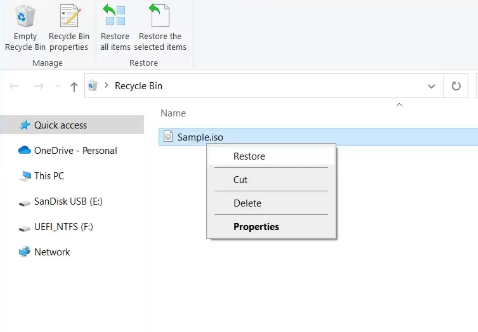
One more spot worth a look: if you mounted the ISO before, the mount point or a temporary extraction folder may still hold a copy of its contents, even if the .iso file itself is gone. Windows sometimes leaves behind an extracted folder in the user's temp directory. It won't always be there, but it's a free check before you run a full scan.
Part 6: Tips to Keep ISO Files Safe
- Keep installers and archived ISOs in a dedicated folder and back it up to another drive.
- Verify large downloads open or mount correctly before deleting the source archive.
- Use a file hash to confirm an ISO copied correctly — a bad copy looks fine until you try to mount it.
- Turn on File History or scheduled backups for the drive where ISOs live.
- Store truly irreplaceable ISO images (old disc archives) on two media.
These habits cost little and save the pain of re-downloading gigabytes or losing a disc archive forever.
If the ISO was stored on the Windows system drive specifically, recovering ISO files in Windows is the targeted guide.
For ISOs you can't re-download — old software discs, personal media archives, rare drivers — treat them like the irreplaceable data they are. A second copy on a cheap external drive is a few minutes of work that protects something that might otherwise be gone for good. And if you're storing an OS installer, checking the hash once after download means you never mount a broken image at the worst possible moment.
Part 7: FAQs About ISO File Recovery
Can I recover an ISO file after deleting it from the Recycle Bin?
Yes. The data stays on the drive until overwritten. Recovery software can usually find it if you scan soon after deletion.
Why won't my ISO file mount or open?
Usually an incomplete download or a bad copy. Check the file size against the source, re-download if smaller, or recover an earlier version.
Is ISO recovery software safe to use?
Reputable tools read the drive and write to a different location, so your data isn't at risk. FoneLab Data Retriever lets you preview before recovering.
That preview step means you can confirm the ISO is intact before committing anything.
Large files like ISOs are often the easiest to bring back whole.
Conclusion
A lost ISO is inconvenient but rarely permanent. Restore from a system image if you made one, and scan the drive with FoneLab Data Retriever when there's no backup. Check the cheap spots first, act quickly, and keep backups for your most important disc images.
FoneLab Data Retriever - recover the lost/deleted data from computer, hard drive, flash drive, memory card, digital camera and more.
- Recover photos, videos, contacts, WhatsApp, and more data with ease.
- Preview data before recovery.
- Recover photos, videos, documents, and more data with ease.
- Recover data from device, iCloud, and iTunes.