
 iPhone Data Recovery
 iOS System Recovery
 iOS Data Backup & Restore
 iOS Unlocker
 iPhone Password Manager
 Location Changer
 Android Data Recovery
 Broken Android Data Extraction
 Android Data Backup & Restore
 Android Unlocker
 FoneTrans for iOS
 iPhone Data Eraser
 iPhone Cleaner
 HEIC Converter
 HyperTrans
 WhatsApp Transfer for iOS
 Mac Sweep
 Data Retriever
 Mac Data Retriever
 Video Converter Ultimate
 Screen Recorder
 Phone Mirror
- Part 1. Hardware Checks & Assigning a Drive Letter
- Part 2. Recover Existing Data First with FoneLab Data Retriever
- Part 3. Repair File System Layout Errors Using CHKDSK (Windows)
- Part 4. Run First Aid via Disk Utility (MacOS)
- Part 5. Wipe and Reformat the Drive (The Last Resort)
- Part 6. Comparison of Methods to Fix Corrupted Hard Drive
- Part 7. Hardware Warning: Identifying Physical Mechanical Failure
- Part 8. FAQs about Fixing Corrupted Hard Drive
 Recover PC Data Now
Recover the lost/deleted data from computer, hard drive, flash drive, memory card, digital camera and more.
Reliable Guide on How to Fix a Corrupted Hard Drive
 Updated by
 Can you fix a corrupted hard drive? The simple answer is yes. A corrupted drive can fail without warning, leaving you locked out of precious files, work documents, etc. But if you can identify whether you're dealing with physical failure (unusual noises or BIOS detection issues), file system corruption (RAW partitions or format errors), bad sectors (slow performance or CRC errors), partition table loss (unallocated or wrong-capacity drives), and logical software errors (accidental deletion or virus damage), it will be easier to determine the right solution.
Hence, in this article, let's walk you through five proven, reliable methods to repair a corrupted hard drive. From built-in system utilities to advanced recovery programs and command-line approaches, fixing your hard drive has never been easier. Simply browse and understand the most trustworthy solutions below, and perform the most appropriate method for your hard drive.

Guide List
- Part 1. Hardware Checks & Assigning a Drive Letter
- Part 2. Recover Existing Data First with FoneLab Data Retriever
- Part 3. Repair File System Layout Errors Using CHKDSK (Windows)
- Part 4. Run First Aid via Disk Utility (MacOS)
- Part 5. Wipe and Reformat the Drive (The Last Resort)
- Part 6. Comparison of Methods to Fix Corrupted Hard Drive
- Part 7. Hardware Warning: Identifying Physical Mechanical Failure
- Part 8. FAQs about Fixing Corrupted Hard Drive
Part 1. Hardware Checks & Assigning a Drive Letter
Before diving into the primary fixes, it is helpful and essential to do a basic hardware check and assign a drive letter. Sometimes a corrupted drive isn't actually corrupted at all. Your computer may not recognize it because of loose cables, faulty ports, or a missing drive letter assignment. So, a quick hardware inspection is necessary, as it might save you a great deal of time and effort. In some cases, all you need to do is assign a drive letter, which is a simple process.
Follow the navigation below to learn how to fix corrupted hard drive via hardware checks and assigning a drive letter:
Step 1Check hardware by ensuring all physical connections are okay, and try a different port or cable. Then, listen for any unusual clicking or grinding sounds that could indicate failure.
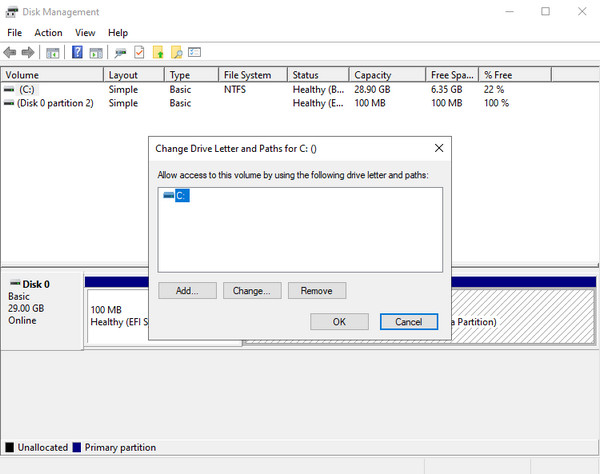
Step 2Once everything is in order, press Windows + X and select Disk Management. On the bottom half of the window that appears, right-click your drive and choose Change Drive Letter and Paths. Finally, select Add and assign a new drive letter accordingly.
Part 2. Recover Existing Data First with FoneLab Data Retriever
Once you've ruled out the hardware issues, the next priority is to recover your existing data before attempting any repairs that could overwrite or damage your files further. In this case, we recommend FoneLab Data Retriever as the best solution, as it's known for its ability to recover data from corrupted hard drive, whether images, documents, emails, videos, etc.
It also supports an extensive range of storage devices, including hard drives, SSDs, USB flash drives, and memory cards, regardless of whether they are corrupted. Besides, FoneLab Data Retriever can also work in other scenarios, like accidental deletion, virus attack, unwanted format, and more, making it a versatile solution when facing data loss.
FoneLab Data Retriever - recover the lost/deleted data from computer, hard drive, flash drive, memory card, digital camera and more.
- Recover photos, videos, documents and more data with ease.
- Preview data before recovery.
Discern the simplified guidance below for a hard drive corrupted existing data recovery with FoneLab Data Retriever:
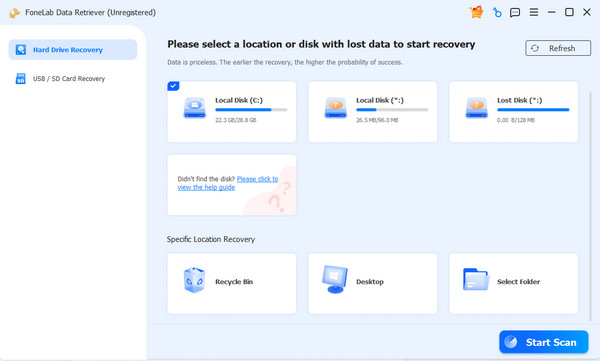
Step 1Acquire the installer file for FoneLab Data Retriever via the Free Download option and install the program. When done, hit Start, and the main interface will be revealed. From there, simply select the hard drive that has been corrupted and click Start Scan.
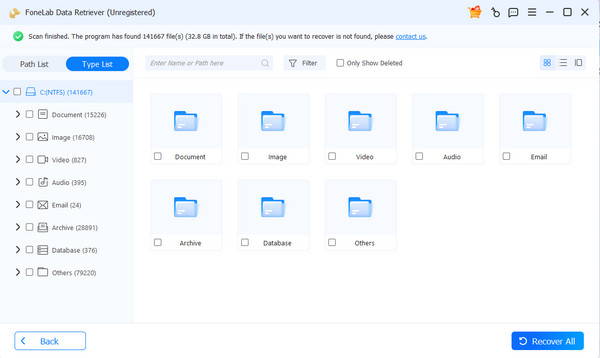
Step 2Once scanned, folders will be presented for each data type. Open and explore them to locate and select the items you desire to recover. When ready, go for the Recover All option.
Part 3. Repair File System Layout Errors Using CHKDSK (Windows)
After safely recovering your data, it's time to repair the underlying issues that caused the corruption. If you use Windows, CHKDSK, its built-in command line utility, is the next one you should navigate. It is designed to scan and fix file system errors, bad sectors, and directory structure problems. Thus, this utility is especially effective when your drive shows symptoms like unexpected shutdowns, file access delays, or system messages about corrupted files.
Follow the operation below to understand how to repair corrupted hard drive by repairing file system layout errors using CHKDSK:
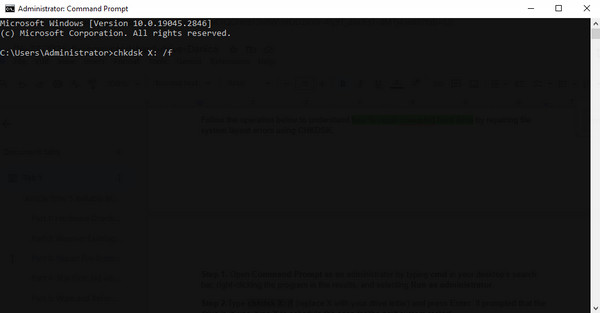
Step 1Open Command Prompt as an administrator by typing cmd in your desktop's search bar, right-clicking the program in the results, and selecting Run as administrator.
Step 2Step 2.Type chkdsk X: /f (replace X with your drive letter) and press Enter. If the system indicates that the drive is in use, type Y to schedule the scan for the next system restart.
Part 4. Run First Aid via Disk Utility (MacOS)
For Mac users with a corrupted hard drive, Apple's built-in Disk Utility is the appropriate solution. It is the macOS equivalent of CHKDSK, designed to fix file system corruption, directory issues, and mounting problems on both internal and external drives. Its First Aid feature scans your drive's internal structure and fixes inconsistencies.
Follow the process below to repair corrupted hard drive by running First Aid via Disk Utility:
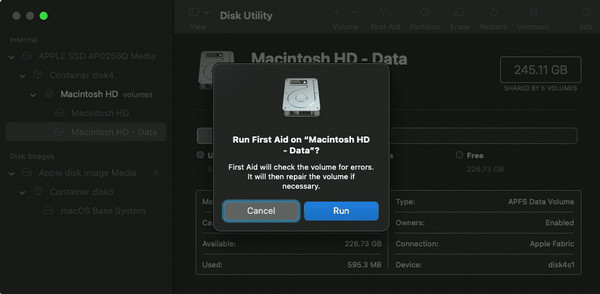
Step 1Open Disk Utility from Applications > Utilities, or restart your Mac and hold Command + R to enter Recovery Mode, then select Disk Utility from there.
Step 2After that, select your corrupted drive from the sidebar and click First Aid > Run.
Part 5. Wipe and Reformat the Drive (The Last Resort)
When all else fails, wiping and reformatting the drive becomes the final option. This method completely erases all data and restores the drive to its factory state, effectively giving it a fresh start. However, this process has a major downside—you will lose all your data, which may include important documents, treasured photos, and more. Therefore, think your decision through carefully before finalizing your course of action.
Follow the steps below to fix corrupted hard drive by wiping and reformatting the drive:
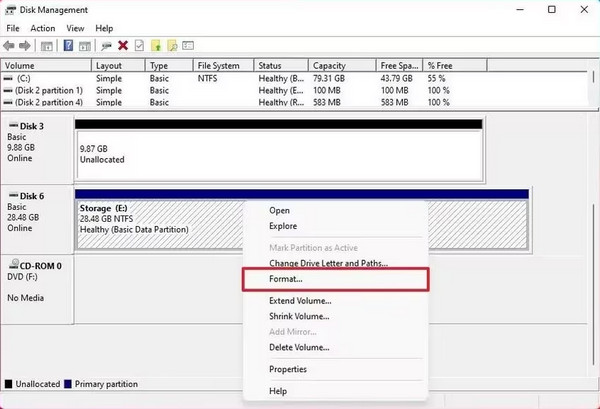
Step 1Open Disk Management and right-click the corrupted drive to select Format.
Step 2Then, follow the succeeding prompts to format your drive and wipe all its data.
Part 6. Comparison of Methods to Fix Corrupted Hard Drive
| Aspects | Primary Purpose | Best For | Difficulty | Recovery Ability |
| Hardware Checks & Assigning Drive Letter | Fix detection issues | Drives not recognized | Easy | None |
| FoneLab Data Retriever | Recover files from a corrupted drive | Data recovery before repairs | Easy | Recovers 1000+ file types |
| CHKDSK (Windows) | Repair file system errors | Logical corruption & bad sectors | Moderate | None |
| Disk Utility (macOS) | Repair disk structure | Mounting failures on Mac | Easy | None |
| Wipe & Reformat | Erase all data and start fresh | Severely corrupted drives | Easy |
Part 7. Hardware Warning: Identifying Physical Mechanical Failure
Unfortunately, not all drive issues can be fixed with software. Physical failure shows clear signs, such as clicking, grinding, buzzing, overheating, a burning smell, or the drive not spinning at all. If you notice any of these signs, stop immediately and do not run any repair programs, as they can cause further damage. Your safest option is to seek professional data recovery services, as they have specialized equipment to handle physically damaged drives. It can be costly, but it is often the only way to save your data.
Part 8. FAQs about Fixing Corrupted Hard Drive
What's the first thing I should do when my drive gets corrupted?
Stop using the drive immediately to prevent overwriting data and avoid further issues.
Is CHKDSK safe to use?
Yes, but only on logical errors. It is not recommended to run it on a physically failing drive, as it could worsen the damage.
When faced with a corrupted drive, don't panic. It can be fixed with the right approach, but always recover your data first with FoneLab Data Retriever—and know when to stop and seek professional help.