
 iPhone Data Recovery
 iOS System Recovery
 iOS Data Backup & Restore
 iOS Unlocker
 iPhone Password Manager
 Location Changer
 Android Data Recovery
 Broken Android Data Extraction
 Android Data Backup & Restore
 Android Unlocker
 FoneTrans for iOS
 iPhone Data Eraser
 iPhone Cleaner
 HEIC Converter
 HyperTrans
 WhatsApp Transfer for iOS
 Mac Sweep
 Data Retriever
 Mac Data Retriever
 Video Converter Ultimate
 Screen Recorder
 Phone Mirror
 Get Data Recovery Now
Recover the lost/deleted data from computer, hard drive, flash drive, memory card, digital camera and more.
[4 Ways] How to Recover Deleted Text Files from Hard Drive
 Updated by Valyn Hua / October 29, 2026 10:00
Text files are the quiet workhorses of every computer. A .txt note, a code snippet, a saved log, or a quick draft can hold information you cannot easily recreate. So when the hard drive that stores them starts misbehaving, or you empty the Recycle Bin without checking first, losing those plain notes feels small until you actually need one.
The good news is that a deleted .txt file is usually recoverable. Windows does not immediately erase the actual data when you delete a file; it just marks the space as free. As long as that space has not been overwritten, the text file is still sitting on the disk. In this guide, I will walk you through four practical ways to recover deleted text files from a hard drive, starting with the free built-in options and moving to a dedicated recovery tool when you need more power.

Guide List
Part 1. Why Text Files Get Lost from a Hard Drive
Before you jump into recovery, it helps to understand what happened. Text files usually disappear for one of a few reasons, and the cause decides which method works best.
- Accidental deletion. You selected the wrong files and pressed Delete, or you cleared the Recycle Bin without checking what was inside.
- Drive formatting. You formatted the partition (often to fix an error), which wipes the file table and makes every file look gone.
- File system corruption. A sudden power cut, improper ejection, or a bad sector can corrupt the drive so Windows cannot read the folder.
- Virus infection. Some malware hides or deletes files, and text notes are not spared.
- Software crash. If your editor or the whole PC crashed while a .txt was open, the unsaved content can vanish.
The single most important rule the moment you notice missing files is to stop writing to that drive. Every new photo, download, or install on the same partition can overwrite the deleted text data. Save new files on a different disk or a USB stick until recovery is done.
Text files are especially fragile because they are small. A single download or a browser cache write is enough to bury a lost .txt under new data, which is why acting within hours or days gives you a far better chance than waiting weeks. If the drive that failed is making clicking noises, stop immediately and treat it as a hardware problem rather than a software one.
FoneLab Data Retriever - recover the lost/deleted data from computer, hard drive, flash drive, memory card, digital camera and more.
- Recover photos, videos, documents and more data with ease.
- Preview data before recovery.
Part 2. Method 1: Check the Recycle Bin First
Most of the time a deleted text file is not really gone yet. When you press Delete in File Explorer, Windows moves the file to the Recycle Bin instead of erasing it. This is the fastest free recovery and worth thirty seconds of your time.

Step 1 Double-click the Recycle Bin icon on your desktop to open it.
Step 2 Use the search box in the top-right corner and type part of the .txt filename, or sort by Date deleted to narrow it down.
Step 3 Right-click the text file you want and choose Restore. Windows will put it back in the folder where it was originally saved.
If the file is not there, it means it was either deleted with Shift+Delete (which skips the Recycle Bin) or the bin has already been emptied. In that case, move on to the next methods. It is worth opening the Recycle Bin even if you are sure it is empty, because the date-deleted sort sometimes reveals a note you forgot was sitting there.
Part 3. Method 2: Restore Previous Versions / Windows Backup
Windows keeps automatic shadow copies of files when System Protection is turned on. If you remember which folder held the lost text file, you can roll that folder back to an earlier state without any third-party tool.
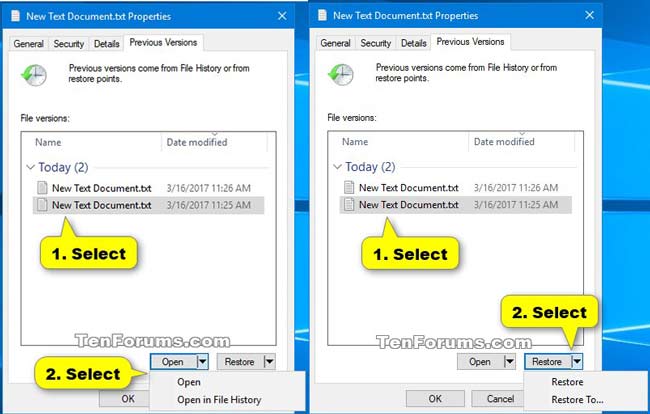
Step 1 Navigate to the folder that originally contained the text file (or create a dummy file with the same name in that location).
Step 2 Right-click the folder or the dummy file and choose Properties, then open the Previous Versions tab.
Step 3 Pick a restore point from the list that dates back to before the file was deleted, then click Restore.
If you use Windows Backup, open Control Panel > System and Security > Backup and Restore and click Restore My Files to pull the text document back from an external backup drive. This only works if you actually enabled backups ahead of time.
Part 4. Method 3: Recover Text Files with FoneLab Data Retriever
If the Recycle Bin is empty and you have no restore point or backup, a dedicated undelete tool is your best remaining option. FoneLab Data Retriever scans the raw disk and rebuilds file entries that Windows has already forgotten. It can pull .txt notes back from internal drives, external hard disks, USB sticks, and memory cards. One honest limit: it recovers the text files stored on the drive, not data that was never saved to disk in the first place.
FoneLab Data Retriever - recover the lost/deleted data from computer, hard drive, flash drive, memory card, digital camera and more.
- Recover photos, videos, documents and more data with ease.
- Preview data before recovery.
Step 1 Install and launch FoneLab Data Retriever, installing it on a different drive than the one you are recovering from.
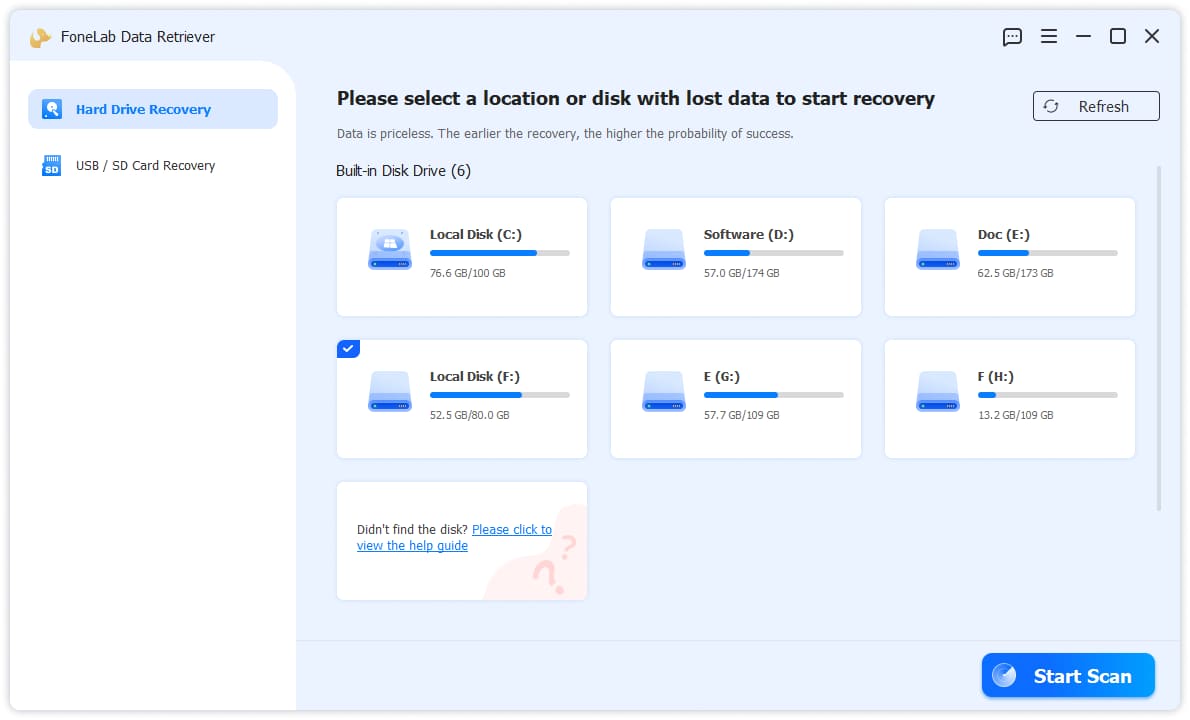
Step 2 On the left side, keep Hard Drive Recovery selected, then choose the disk or specific location where your files were lost.
Step 3 Click the blue Start Scan button in the bottom-right corner to scan the selected disk. The software will automatically run a deep scan to search for every recoverable file on the disk, so there is no separate button to press.
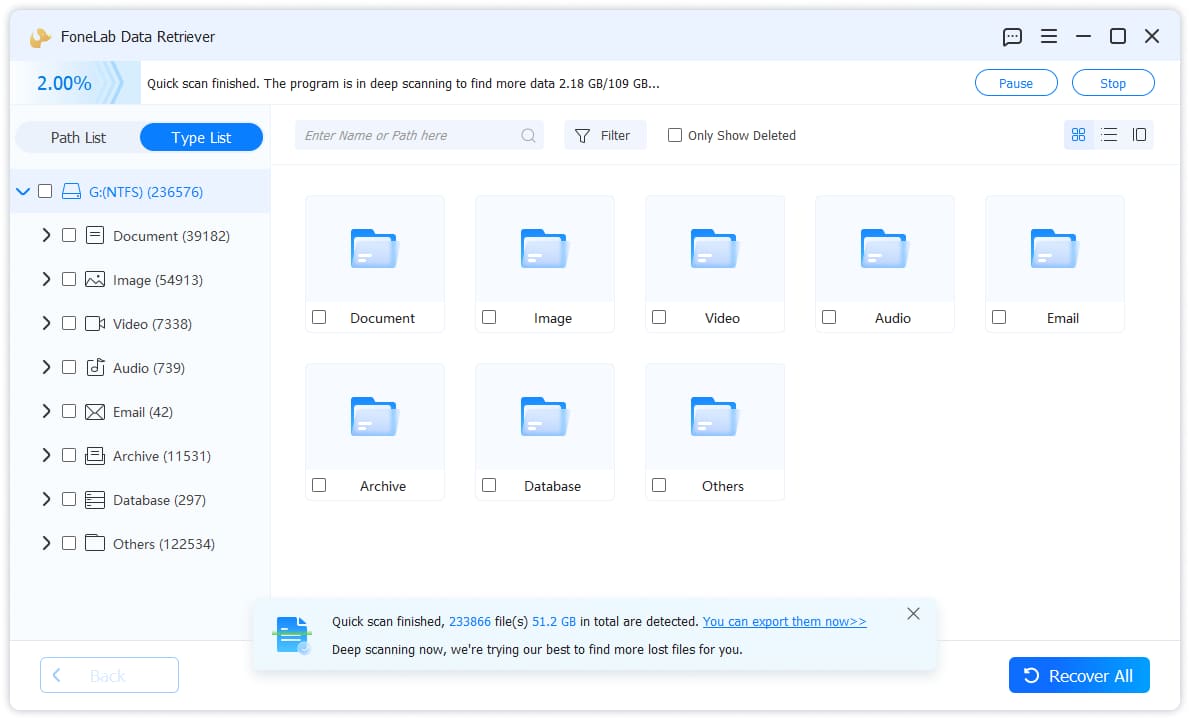
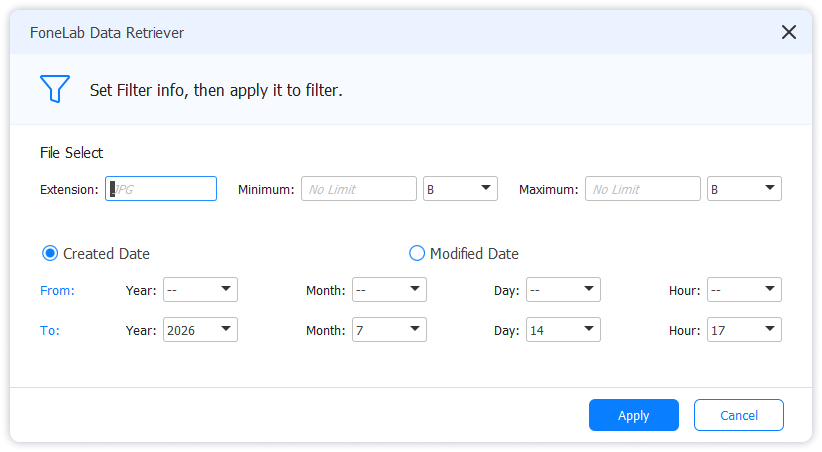
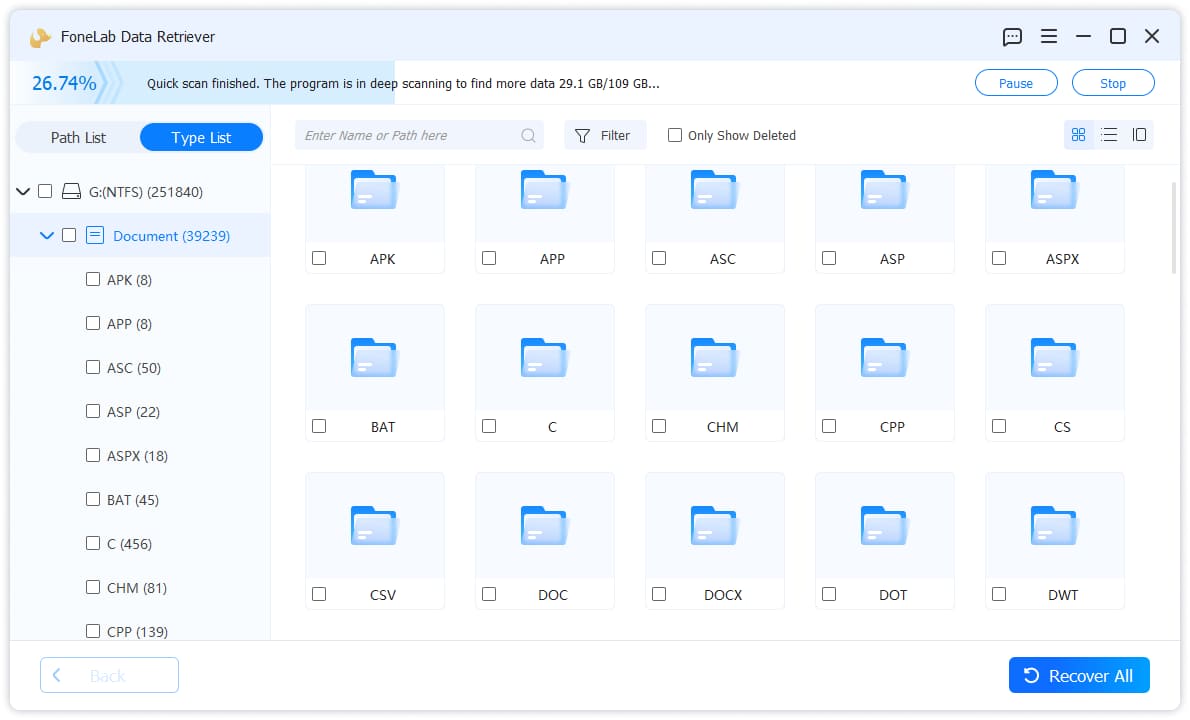
Step 4 When the scan finishes, click a file type on the left and tick the boxes of the files you want. Use the filter or only show deleted option to locate them faster, and preview each file to confirm it opens.
Step 5 Click the blue Recover button in the bottom-right corner and save the recovered files to a different drive.
This tool is not limited to plain .txt files. The same scan also covers recovering Word documents, spreadsheets, PDFs, and code files, so it doubles as a general hard drive document recovery tool.
One honest note on limits: FoneLab Data Retriever recovers text files that were saved to the disk at some point. It cannot recreate content you typed but never saved, and it cannot pull data off a drive the computer cannot mount at all. If the .txt existed on the drive before deletion, the scan has a good chance of finding it; if it was lost because the whole disk is physically dead, you will need a professional clean-room service instead.
Not sure which route to take? Here is a quick side-by-side.
| Recycle Bin | Previous Versions / Backup | FoneLab Data Retriever | |
|---|---|---|---|
| When to use | Files deleted recently | You had System Protection or backup on | Bin is empty, no backup |
| Needs a backup | No | Yes | No |
| Recovers after format | No | Depends on backup | Yes (automatic deep scan) |
| Difficulty | Very easy | Easy | Easy |
| Cost | Free | Free | Free trial, paid license |
Which method should you try first? Work through the free options in order: check the Recycle Bin or Trash and any backup, because restoring from a working backup is instant and risk-free. Reach for FoneLab Data Retriever when those come up empty, or when the drive was formatted, corrupted, or reinstalled. The comparison table above makes the trade-offs clear: backups are the safest option but require foresight, while the recovery tool works without a backup but cannot repair a physically failing drive.
If your recovery still fails, do not panic and do not keep writing to the disk. First confirm the drive is still readable in Disk Management on Windows or Disk Utility on Mac. If the drive is not detected at all, try a different cable, a different USB port, or plugging it into another computer. If files are found but will not open, they were likely partially overwritten, and a professional data recovery lab that works at the sector level may be your last resort. The earlier you stop using the disk, the more likely a normal software recovery succeeds.
FoneLab Data Retriever - recover the lost/deleted data from computer, hard drive, flash drive, memory card, digital camera and more.
- Recover photos, videos, documents and more data with ease.
- Preview data before recovery.
Part 5. Tips to Prevent Text File Loss
Recovery works best when it is a backup, not a rescue mission. A few habits save you from repeating this whole process.
- Turn on System Protection. This is what powers the Previous Versions method above.
- Keep a backup copy. Mirror important notes to an external drive or a cloud folder like OneDrive or Google Drive.
- Never save recovered files to the same disk. That is the fastest way to overwrite the next file you might need.
- Eject drives safely. Pulling a USB stick mid-write is a classic cause of file system corruption.
- Save as you type. Press Ctrl+S often, especially in editors that auto-save inconsistently.
Part 6. FAQs about Text File Recovery
Can I recover a text file I saved over by accident?
If you overwrote the same filename, the original content is usually gone unless you have a Previous Version or a backup. FoneLab Data Retriever finds deleted file entries, but a true in-place overwrite makes recovery unlikely. Check Previous Versions first.
How long does a deep scan take?
A quick scan of a modern SSD finishes in a couple of minutes. A deep scan on a large or nearly-full hard drive can take from several minutes up to an hour or more, depending on the disk size and health.
Will recovered .txt files still contain my text?
Yes, when the clusters have not been overwritten. The preview in FoneLab Data Retriever lets you read the content before recovering, so you can confirm the text is there and intact.
Can this recover text files from a formatted hard drive?
A quick format does not erase the raw data, and FoneLab Data Retriever runs an automatic deep scan after you click Start Scan, so it usually recovers the text files. A full format that overwrites every sector, or physical drive damage, makes recovery much harder and may need a professional lab.
Losing plain notes is frustrating, but it is rarely permanent. Start with the Recycle Bin, check Previous Versions and backups, and if those come up empty, let FoneLab Data Retriever scan the drive. For related help, see how to recover data from a hard drive or restore files from the Recycle Bin.
FoneLab Data Retriever - recover the lost/deleted data from computer, hard drive, flash drive, memory card, digital camera and more.
- Recover photos, videos, documents and more data with ease.
- Preview data before recovery.