
 iPhone Data Recovery
 iOS System Recovery
 iOS Data Backup & Restore
 iOS Unlocker
 iPhone Password Manager
 Location Changer
 Android Data Recovery
 Broken Android Data Extraction
 Android Data Backup & Restore
 Android Unlocker
 FoneTrans for iOS
 iPhone Data Eraser
 iPhone Cleaner
 HEIC Converter
 HyperTrans
 WhatsApp Transfer for iOS
 Mac Sweep
 Data Retriever
 Mac Data Retriever
 Video Converter Ultimate
 Screen Recorder
 Phone Mirror
- Part 1: Recover Emails by Finding PST Files on the Old Drive
- Part 2: Recover Deleted Emails with FoneLab Data Retriever
- Part 3: What PST and OST Files Are
- Part 4: Why Emails Disappear from a Hard Drive
- Part 5: Check the Deleted Items and Server Folders First
- Part 6: Tips to Keep Emails Safe
- Part 7: FAQs About Email Recovery from a Hard Drive
 Recover PC Data Now
Recover the lost/deleted data from computer, hard drive, flash drive, memory card, digital camera and more.
How to Recover Deleted Emails from a Hard Drive
 Posted by Valyn Hua / September 09, 2026 20:00
Emails are easy to take for granted — until the computer crashes, the drive fails, or Outlook starts fresh with an empty inbox. For anyone who relies on Outlook, that lost archive can feel irreplaceable: years of correspondence, receipts, and project threads gone in a reboot. The good news is that email data on a hard drive is usually still there, even after it stops showing up in Outlook.
Outlook keeps mail in .pst (or .ost) files, and even a "deleted" email lives in those files until they're truly overwritten. This guide covers the two practical routes: find and copy the .pst files yourself when the drive still works, or use recovery software to scan for emails when the files are gone or hidden.

Guide List
- Part 1: Recover Emails by Finding PST Files on the Old Drive
- Part 2: Recover Deleted Emails with FoneLab Data Retriever
- Part 3: What PST and OST Files Are
- Part 4: Why Emails Disappear from a Hard Drive
- Part 5: Check the Deleted Items and Server Folders First
- Part 6: Tips to Keep Emails Safe
- Part 7: FAQs About Email Recovery from a Hard Drive
Part 1: Recover Emails by Finding PST Files on the Old Drive
If the old computer crashed but the hard drive still works, you can connect it to a working computer — via a USB enclosure or an IDE-to-USB adapter — and copy the Outlook files off it. This is the most direct method and needs no special tools.
Step 1Connect the old drive to your working computer using a USB enclosure or adapter.
Step 2Open File Explorer and browse the old drive. Look for the Outlook .pst file.
Step 3Know where to look — the location depends on the old setup:
- Outlook 2010 or newer: .pst files sit in a folder named Outlook Files inside Documents.
- Old Windows XP with older Outlook: Documents and Settings\username\Local Settings\Application Data\Microsoft\Outlook.
- Windows 7 or newer with older Outlook: Users\username\AppData\Local\Microsoft\Outlook.
Step 4These folders are often hidden and permission-locked. Right-click the username folder, choose Properties, untick Hidden on the General tab, then on the Security tab click Edit and grant your account full control.
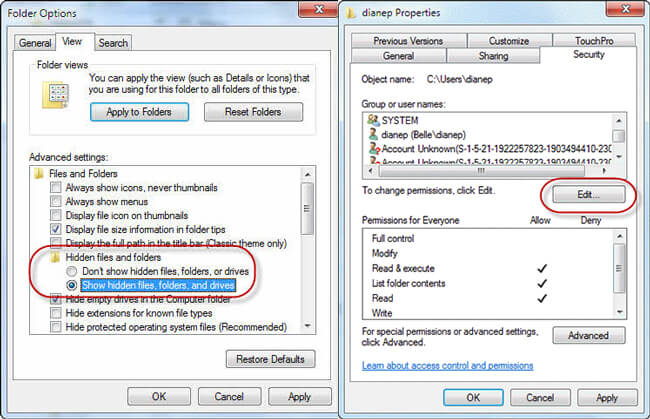
Step 5Copy the .pst files to your working computer, then open them in Outlook via File > Open & Export > Open Outlook Data File.
This method works well when the .pst files survived. It does take some comfort with folders and permissions, which is why the next method is the one most people end up using.
One thing that trips people up here: the old drive's files are still owned by the old Windows user account, so you may hit "Access Denied" even after unhiding folders. The permission fix in Step 4 handles most cases, but if a folder still refuses to open, boot the old drive on the old machine if you still have it — copying files off while logged into the original account avoids the ownership problem entirely. Alternatively, a Linux live USB can read Windows drives without caring about permissions, which is a handy trick for stubborn folders.
Also keep in mind that .pst files can be large — multi-gigabyte files are normal after years of mail. Copying them takes a while over USB, so be patient and don't unplug the drive mid-copy. Once copied, opening the file in Outlook is instant, and you can search it like any other folder.
Part 2: Recover Deleted Emails with FoneLab Data Retriever
When you'd rather not dig through hidden folders — or when the .pst files are gone entirely — recovery software is the reliable answer. FoneLab Data Retriever scans the hard drive for lost email data in Outlook, Gmail, and other clients, and lets you preview and recover it with a few clicks.
FoneLab Data Retriever - recover the lost/deleted data from computer, hard drive, flash drive, memory card, digital camera and more.
- Recover photos, videos, contacts, WhatsApp, and more data with ease.
- Preview data before recovery.
- Recover photos, videos, documents, and more data with ease.
- Recover data from device, iCloud, and iTunes.
Step 1Download and install FoneLab Data Retriever, then launch it.
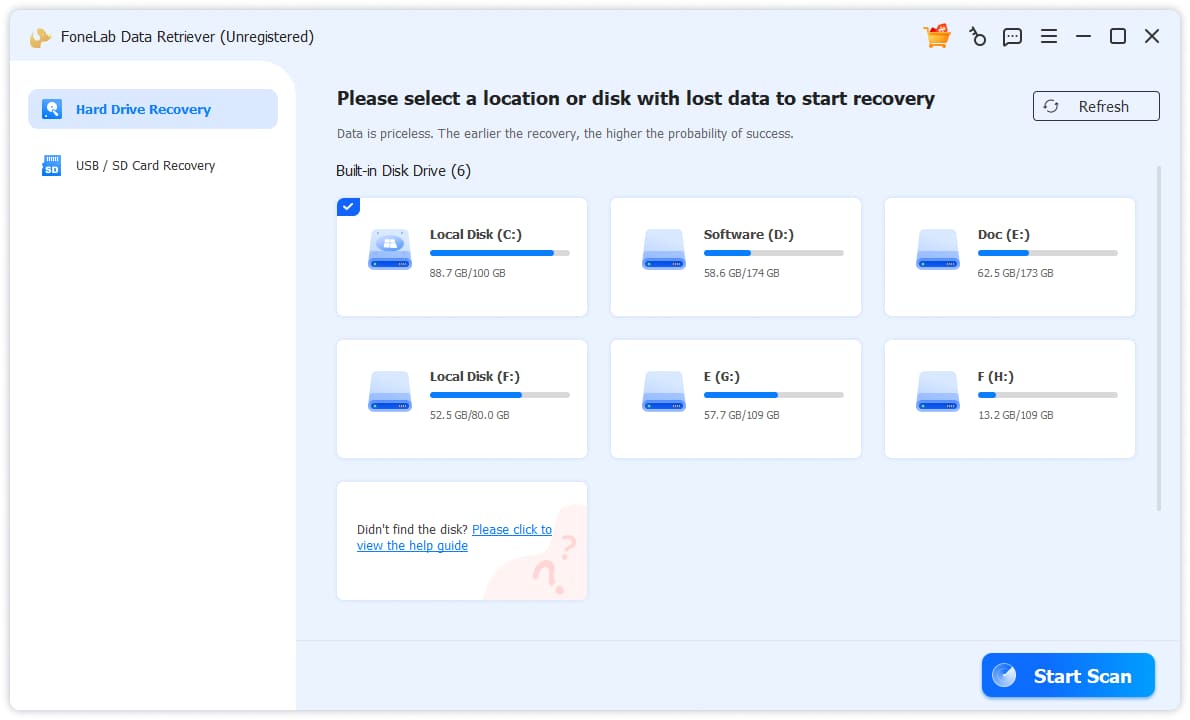
Step 2On the main screen, select Email as the data type, then choose the drive or location where the emails were stored.
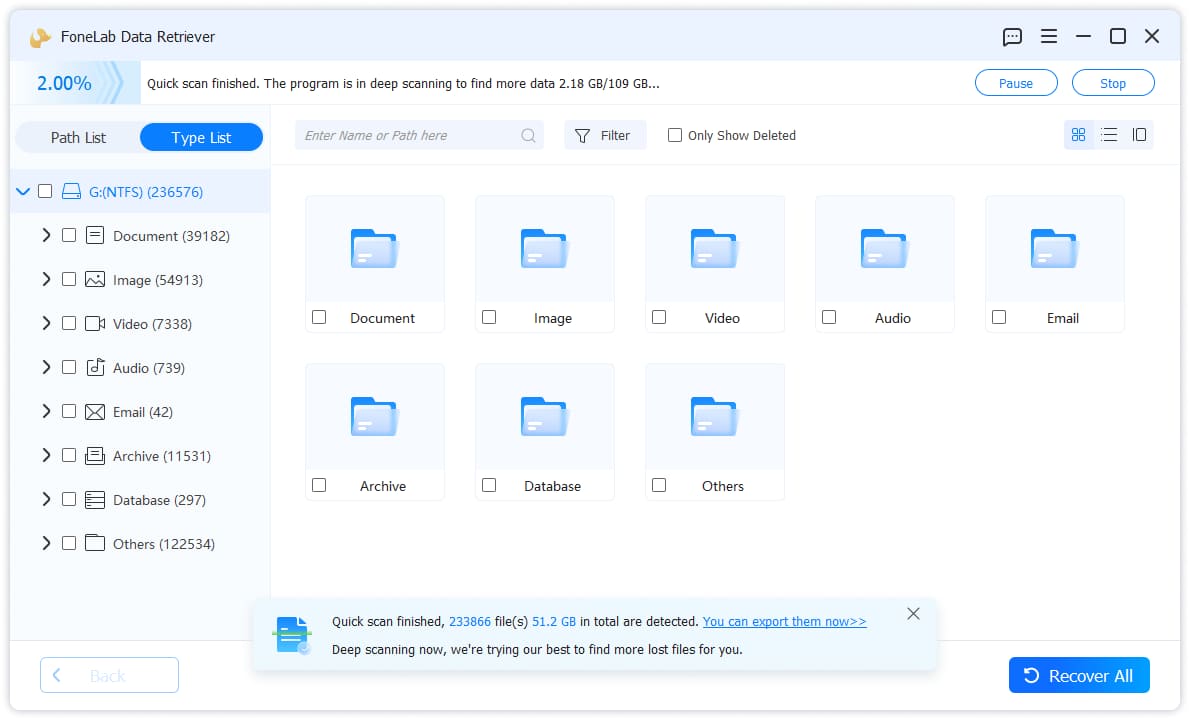
Step 3Click Scan. When it finishes, browse the results — use Deep Scan if you need more results.
Step 4Use the Filter bar to find the emails you need, tick them, and click Recover to save them to a different drive.
This route doesn't require any technical knowledge of folder structures, and it finds emails that were deleted so long ago that no .pst file remains. It also handles other lost files — documents, photos, videos — from the same scan.
If the emails were on the computer rather than a mail server, recovering deleted emails on a computer covers that path too.
If the scan finds thousands of items, don't try to eyeball everything. Search by the sender's address or a subject keyword in the filter, then recover in small batches so the output stays organized. And always save recovered emails to a different drive than the one you scanned — writing the recovered files back onto the scanned drive risks overwriting data you haven't found yet.
Part 3: What PST and OST Files Are
Outlook stores your mail locally in two kinds of files:
- PST files — Personal Storage Table files that hold your folders, messages, contacts, and calendar items. These are the ones you back up and recover.
- OST files — Offline Storage Table files, the cached copy Outlook keeps for accounts connected to an Exchange or Microsoft 365 server. OST files are tied to the account that created them.
For most recovery work, you're after .pst files. If an account was set to cache-only, the .ost may be the only local copy — and recovery software can often read those too.
Part 4: Why Emails Disappear from a Hard Drive
- System crash: a sudden shutdown can leave the mail file unreadable or unmounted.
- Deleted items emptied: emails in the Deleted Items folder are still on disk until it's emptied or they're overwritten.
- Hard drive failure: bad sectors or a dying drive can make data unreadable, not always gone.
- Formatting or reinstall: a fresh Windows install replaces the profile and can hide old data files.
- Wrong account or profile: logging into a different Outlook profile makes old mail "disappear" even though the files remain.
Most of these are cases where the data still exists somewhere — the fix is finding and reading it, not recreating it.
For Outlook-specific recovery, recovering deleted emails in Outlook is the focused guide.
There's a helpful way to think about this: on a working drive, "deleted" emails are almost never erased instantly. The space they occupied is simply marked free, and the bytes stay put until something else writes over them. That's why acting quickly matters, and why recovery software succeeds so often. If you deleted mail yesterday and haven't used the computer much since, the odds are strongly in your favor.
Part 5: Check the Deleted Items and Server Folders First
Before any recovery, spend a minute on the cheap checks. Open Outlook and look in Deleted Items — emails often sit there for 30 days before real deletion. If you use Exchange or Microsoft 365, check the Recoverable Items folder in webmail or the Recover Deleted Items option in Outlook, which keeps a deeper copy. And if the mail lives on the server, reconfiguring the account on a new machine may simply pull it back down without any recovery needed.
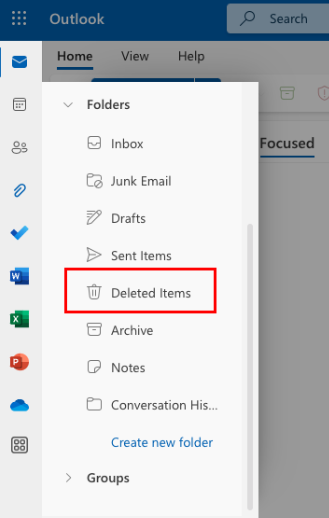
One more check people overlook: the email might still be sitting in a draft, an archive folder, or a sub-folder you stopped opening months ago. Search across all mail folders by sender or subject before concluding the message is gone. It sounds obvious, but the "I lost this email" panic often turns out to be an email that was simply filed somewhere unexpected.
Part 6: Tips to Keep Emails Safe
- Export a .pst backup of your mail regularly via File > Open & Export > Import/Export.
- Store that .pst on an external drive or cloud, not just the same disk as the mail.
- Empty Deleted Items only when you're sure you don't need what's inside.
- Keep your Outlook data file in a known location so backups are easy to verify.
- Back up the whole profile folder before reinstalling Windows or switching machines.
None of these take more than a few minutes, and they turn a potential data disaster into a minor restore.
And when the worst happens, how to retrieve deleted emails pulls the options together.
For office users, a quarterly .pst export synced to a shared or cloud drive is a small habit with outsized value — it means a lost laptop never costs you the corporate mail archive. Set a reminder and treat it like any other backup.
It also makes switching to a new machine painless, because you can open the same archive anywhere Outlook runs.
Keep two recent exports so one always survives a bad copy — email is worth that small redundancy.
Part 7: FAQs About Email Recovery from a Hard Drive
Can I recover emails after emptying Deleted Items?
Yes, usually. The data stays on the drive until overwritten. Recovery software can scan for it, especially if you act quickly and avoid using the drive.
Where are Outlook emails stored on the hard drive?
In .pst files, usually under Documents\Outlook Files or in the AppData\Local\Microsoft\Outlook folder, depending on the Outlook version.
Does email recovery software work if the hard drive is damaged?
It works when the drive is still readable. For a physically failing drive, software can help if the system recognizes it, but a professional recovery service may be needed for serious damage.
Conclusion
Lost emails on a hard drive are rarely gone for good. If the drive still works, find and copy the .pst files yourself. If they're missing or you'd rather not dig through folders, FoneLab Data Retriever scans and recovers them with a few clicks. Act early, keep backups going forward, and your mail archive stays safe.
FoneLab Data Retriever - recover the lost/deleted data from computer, hard drive, flash drive, memory card, digital camera and more.
- Recover photos, videos, contacts, WhatsApp, and more data with ease.
- Preview data before recovery.
- Recover photos, videos, documents, and more data with ease.
- Recover data from device, iCloud, and iTunes.