
 iPhone Data Recovery
 iOS System Recovery
 iOS Data Backup & Restore
 iOS Unlocker
 iPhone Password Manager
 Location Changer
 Android Data Recovery
 Broken Android Data Extraction
 Android Data Backup & Restore
 Android Unlocker
 FoneTrans for iOS
 iPhone Data Eraser
 iPhone Cleaner
 HEIC Converter
 HyperTrans
 WhatsApp Transfer for iOS
 Mac Sweep
 Data Retriever
 Mac Data Retriever
 Video Converter Ultimate
 Screen Recorder
 Phone Mirror
- Part 1. Common Excel File Loss Scenarios
- Part 2. Method 1: Recover Unsaved Excel Files with AutoRecover
- Part 3. Method 2: Recover Deleted Excel Files from Recycle Bin
- Part 4. Method 3: Recover with FoneLab Data Retriever
- Part 5. How to Repair Corrupted Excel Files
- Part 6. Frequently Asked Questions about Excel File Recovery
 Recover PC Data Now
Recover the lost/deleted data from computer, hard drive, flash drive, memory card, digital camera and more.
How to Recover Excel Files in Windows (Deleted, Unsaved, Corrupted)
 Posted by Boey Wong / October 15, 2026 09:00
Excel files often contain critical data: financial records, project plans, inventory lists, client databases. Losing an Excel file can mean hours of work gone or important data lost forever. Whether you accidentally deleted a file, Excel crashed before you saved, or the file became corrupted, there are several ways to recover it on Windows.
In this guide, I will show you how to recover unsaved, deleted, and corrupted Excel files using Excel's built-in AutoRecover, the Recycle Bin, and FoneLab Data Retriever for more serious cases. Let us get started.

Guide List
- Part 1. Common Excel File Loss Scenarios
- Part 2. Method 1: Recover Unsaved Excel Files with AutoRecover
- Part 3. Method 2: Recover Deleted Excel Files from Recycle Bin
- Part 4. Method 3: Recover with FoneLab Data Retriever
- Part 5. How to Repair Corrupted Excel Files
- Part 6. Frequently Asked Questions about Excel File Recovery
Part 1. Common Excel File Loss Scenarios
Before we dive into recovery methods, let us look at the most common ways Excel files are lost, because each requires a different approach.
- Unsaved due to crash. Excel or Windows crashes while you are working, and you had not saved the file. This is the most common scenario.
- Accidental deletion. You deleted the file and emptied the Recycle Bin, or used Shift+Delete to bypass the Recycle Bin.
- Corrupted file. The Excel file will not open, shows an error message, or displays garbled data. This can happen due to a crash during saving, virus, or file system error.
- Overwritten file. You saved a new file with the same name, overwriting the old one.
- Formatted drive. You formatted the drive where the Excel files were stored.
- Virus or malware. A virus deleted or encrypted your Excel files.
- Power outage. A sudden power loss while saving can corrupt the file or leave it unsaved.
The recovery method depends on the scenario. For unsaved files, use AutoRecover (Method 1). For deleted files, check the Recycle Bin (Method 2) or use data recovery software (Method 3). For corrupted files, use the repair methods in Part 5.
FoneLab Data Retriever - recover the lost/deleted data from computer, hard drive, flash drive, memory card, digital camera and more.
- Recover photos, videos, documents and more data with ease.
- Preview data before recovery.
Part 2. Method 1: Recover Unsaved Excel Files with AutoRecover
Excel has a built-in AutoRecover feature that automatically saves temporary copies of your work at regular intervals (default is every 10 minutes). If Excel crashes or you close without saving, you can often recover the unsaved file.
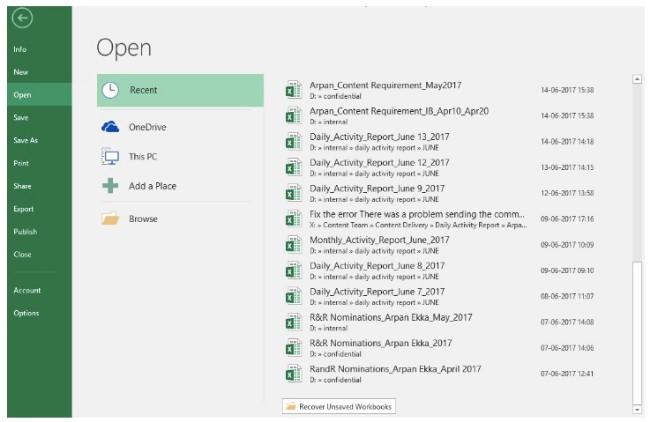
Step 1Open Microsoft Excel. Go to File > Open > Recent.
Step 2Scroll to the bottom of the recent files list and click Recover Unsaved Workbooks.
Step 3A folder will open showing all unsaved Excel files that Excel has temporarily stored. These files have a ".xlsb" extension and random names.
Step 4Open the file you want to recover. Check the content to make sure it is the right version.
Step 5Immediately save the file with a proper name and location by clicking File > Save As.
You can also find AutoRecover files manually by navigating to: C:\Users\[Your Username]\AppData\Roaming\Microsoft\Excel\. Look for files with the ".xlsb" extension or in the "UnsavedFiles" folder.
To make AutoRecover more effective, go to File > Options > Save and set the "Save AutoRecover information every" interval to 5 minutes (the minimum). Also make sure "Keep the last AutoRecovered version if I close without saving" is checked.
Part 3. Method 2: Recover Deleted Excel Files from Recycle Bin
If you deleted an Excel file from your computer, it may still be in the Recycle Bin.
Step 1Double-click the Recycle Bin icon on your desktop to open it.
Step 2Look for the Excel file you want to recover. You can use the search bar in the top-right corner to search for ".xlsx" or ".xls" to filter spreadsheet files.
Step 3Select the Excel file, right-click it, and choose Restore. The file will be returned to its original location.
Step 4If the file is not in the Recycle Bin (you emptied it or used Shift+Delete), you can check File History if it was enabled. Go to the folder where the file was stored, click the Home tab in File Explorer, and click History. Browse previous versions of the folder and restore the file.
Step 5If you have a backup on an external drive or cloud storage, check there as well.
If the file is not in the Recycle Bin, File History, or any backup, you will need data recovery software to scan the drive for the deleted file. Move to Method 3.
One thing worth doing right now, before you run anything: stop saving new files to that drive. When Windows deletes a file it only marks the space as free, and the Excel rows are still on disk until something overwrites them. Every extra download, install, or document you save on that drive lowers your chance of getting the workbook back whole.
FoneLab Data Retriever - recover the lost/deleted data from computer, hard drive, flash drive, memory card, digital camera and more.
- Recover photos, videos, documents and more data with ease.
- Preview data before recovery.
Part 4. Method 3: Recover with FoneLab Data Retriever
FoneLab Data Retriever is a professional data recovery tool that scans your hard drive for deleted Excel files and pulls them back. It works after you empty the Recycle Bin, format the drive, or the file system gets corrupted.
Step 1Download and install FoneLab Data Retriever on your Windows computer. Install it on a different drive than the one where the Excel file was stored, so you do not overwrite the data you are trying to recover.
Step 2Open the software. Under Data Type, select Document (this covers Excel files). Under Location, pick the drive where the Excel file was saved.
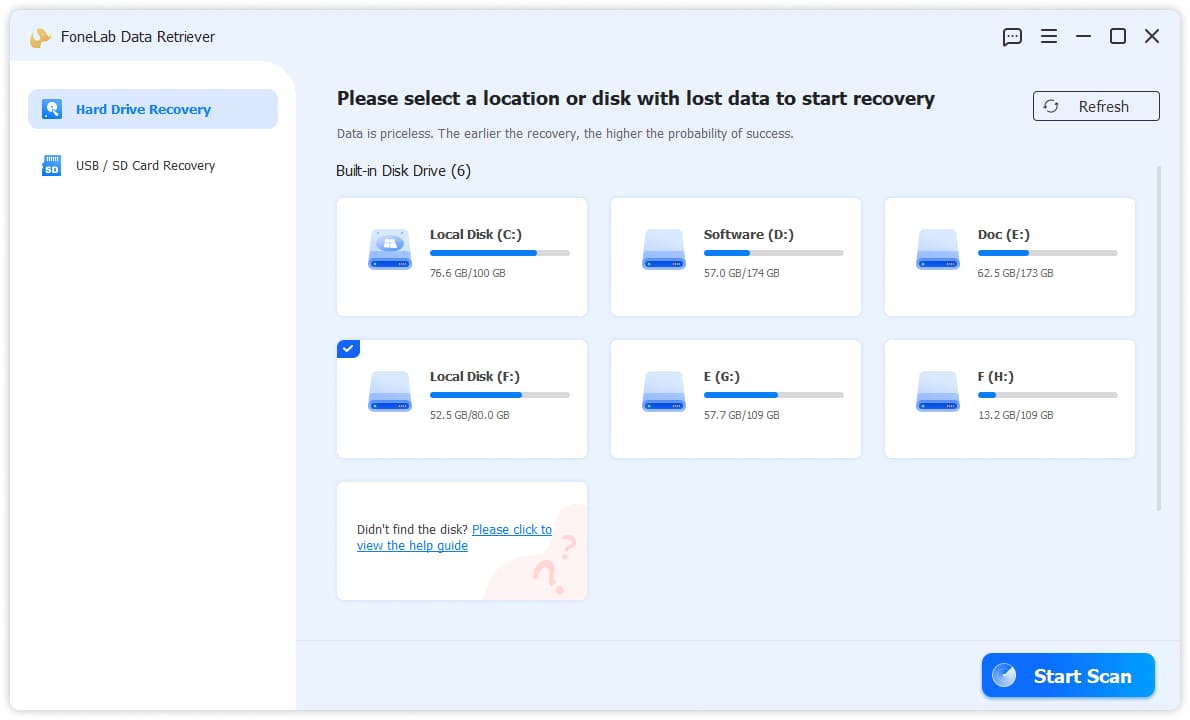
Step 3Click Start Scan. The software searches for deleted and existing documents, including Excel (.xlsx, .xls), Word, PowerPoint, PDF, and more. It runs an automatic deep scan, so there is no separate Deep Scan button to look for.
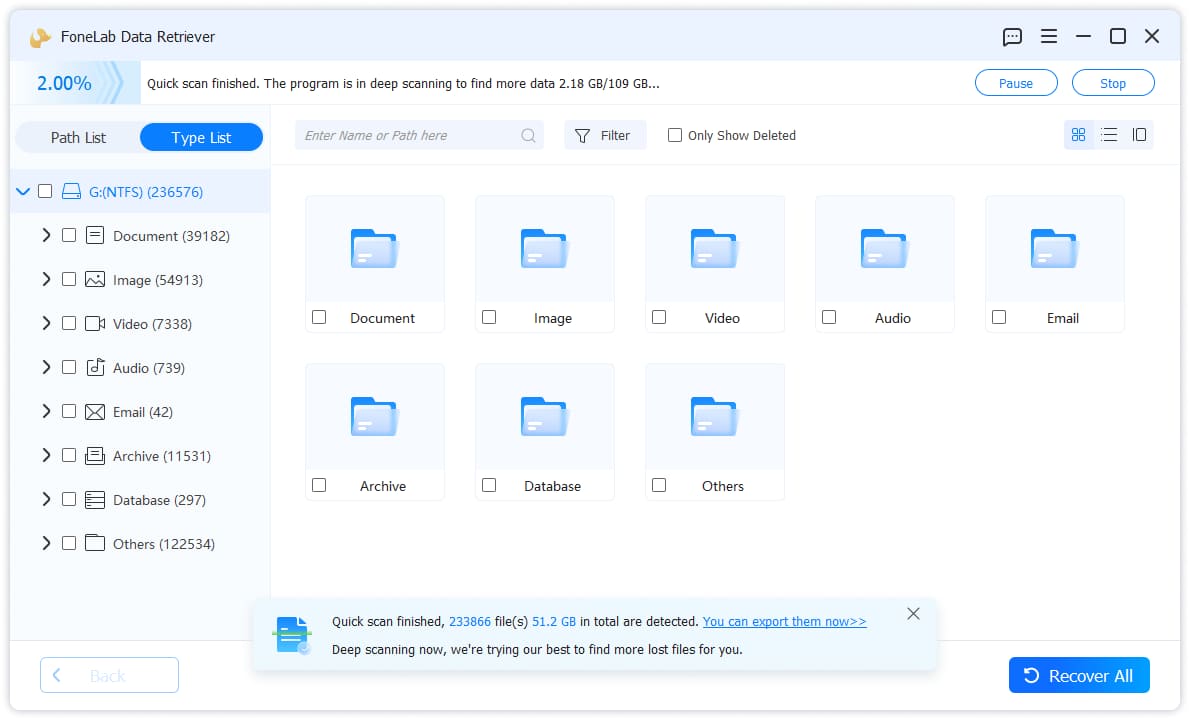
Step 4When the scan finishes, browse the recovered documents by type or path. Use the search bar to look for ".xlsx" or the file name, and preview a file to confirm it opens correctly.
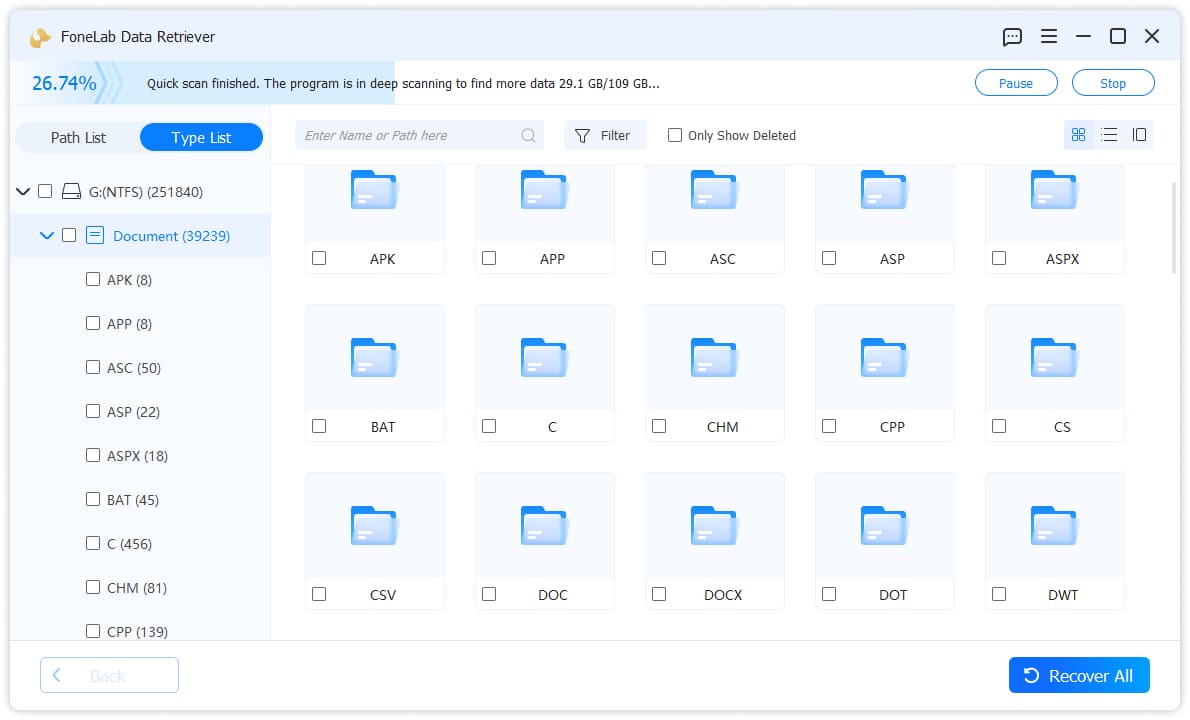
Step 5Tick the Excel file you want and click Recover. Save it to a different drive, not the one you are recovering from.
FoneLab Data Retriever handles the common Excel formats — .xlsx, .xls, .xlsm, .xlsb, and .csv — and can pull them from internal drives, external USB drives, SSDs, and memory cards. It also recovers other documents, photos, videos, and emails. One honest limit: if the deleted file has already been overwritten by new data, no recovery tool can bring it back, which is why you should stop using the drive and run the scan as soon as you notice the file is gone.
Not sure which recovery method to use? Here is a quick comparison.
| AutoRecover | Recycle Bin / Previous Versions | FoneLab Data Retriever | |
|---|---|---|---|
| When to use | Excel crashed before you saved | The file was deleted recently | The file is permanently deleted or corrupt |
| Recovers unsaved workbooks | Yes | No | No |
| Recovers deleted files | No | Yes | Yes |
| Deep scan | No | No | Yes (automatic deep scan) |
| Needs a backup | No | No | No |
| Cost | Free | Free | Paid software |
Part 5. How to Repair Corrupted Excel Files
If your Excel file exists but will not open, shows an error, or displays garbled data, it is corrupted rather than deleted. That changes the approach: you are not hunting for a missing file on the drive, you are trying to coax a broken workbook open and salvage its sheets.
Use Excel's built-in repair:
Step 1Open Excel. Go to File > Open and browse to the corrupted file.
Step 2Select the file, then click the small arrow next to the Open button. Choose Open and Repair.
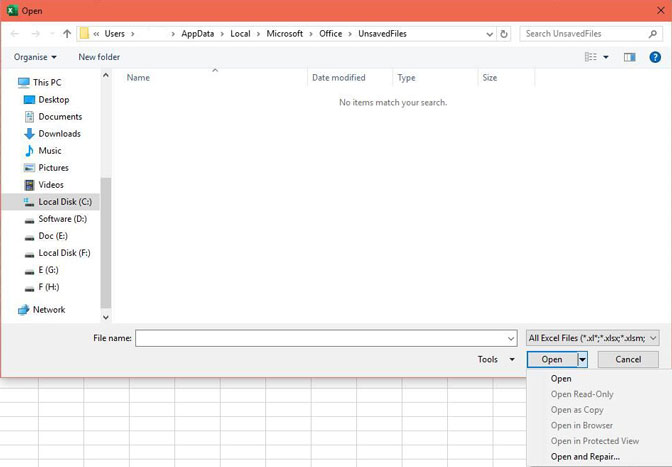
Step 3Excel will offer to Repair or Extract. Pick Repair first; if that fails, try Extract, which pulls out the values and formulas without rebuilding the workbook. If it succeeds, save the repaired file under a new name right away.
Restore from AutoRecover: If the file was corrupted because Excel crashed mid-save, check the AutoRecover folder (as described in Method 1) for a clean earlier version that Excel had already staged.
Use external references: Create a new blank Excel file, then point formulas at the broken workbook (for example, =[corruptedfile.xlsx]Sheet1!A1). This sometimes pulls the data out without forcing Excel to open the corrupted file directly.
Use the XML trick (for .xlsx files): An .xlsx is really a zip archive. Rename the copy to .zip, extract it, and look at the sheet XML inside. Often you can recover the cell values from sharedStrings.xml even if Excel refuses to open the whole book.
If every built-in option fails, the corruption is usually severe enough that only a dedicated Excel repair tool will help. Pick one with a preview so you can see what it can rescue before you pay. And remember: none of this works on a file that was deleted, not just corrupted — for that, go back to Method 3.
FoneLab Data Retriever - recover the lost/deleted data from computer, hard drive, flash drive, memory card, digital camera and more.
- Recover photos, videos, documents and more data with ease.
- Preview data before recovery.
Part 6. Frequently Asked Questions about Excel File Recovery
Can I recover an Excel file that was never saved?
Yes, if AutoRecover was enabled. Go to File > Open > Recent > Recover Unsaved Workbooks. AutoRecover saves temporary copies every 10 minutes by default. If you never saved the file and AutoRecover was disabled, recovery is unlikely.
How long does Excel keep unsaved files?
Excel keeps unsaved files in the AutoRecover folder until you close Excel normally. If Excel crashes, the unsaved files should be available the next time you open Excel. However, if you close Excel and choose "Don't Save," the unsaved file may be deleted. Always check the Recover Unsaved Workbooks folder immediately.
Can I recover an Excel file after emptying the Recycle Bin?
Yes, in most cases. Emptying the Recycle Bin does not permanently erase the file; it only removes the file system entry. The data is still on the drive until it is overwritten. Use FoneLab Data Retriever to scan the drive and recover the file. The sooner you do this, the better the chance of recovery.
Why is my Excel file corrupted?
Excel files can become corrupted due to a crash during saving, power outage, virus infection, bad sectors on the hard drive, or improper shutdown. Always use the "Eject" option before removing external drives, and keep your antivirus software up to date.
Losing an Excel file can be stressful, but with AutoRecover, the Recycle Bin, and FoneLab Data Retriever, recovery is often possible. The key is to act quickly and avoid using the drive until recovery is complete. Once you have your workbook back, spend two minutes turning the AutoRecover interval down to 5 minutes and keeping a backup copy in OneDrive so the next crash costs you nothing. For more recovery tips, check how to recover deleted documents or use Excel AutoRecovery.
FoneLab Data Retriever - recover the lost/deleted data from computer, hard drive, flash drive, memory card, digital camera and more.
- Recover photos, videos, documents and more data with ease.
- Preview data before recovery.