
 iPhone Data Recovery
 iOS System Recovery
 iOS Data Backup & Restore
 iOS Unlocker
 iPhone Password Manager
 Location Changer
 Android Data Recovery
 Broken Android Data Extraction
 Android Data Backup & Restore
 Android Unlocker
 FoneTrans for iOS
 iPhone Data Eraser
 iPhone Cleaner
 HEIC Converter
 HyperTrans
 WhatsApp Transfer for iOS
 Mac Sweep
 Data Retriever
 Mac Data Retriever
 Video Converter Ultimate
 Screen Recorder
 Phone Mirror
- Part 1: Recover Excel Files from a Formatted Drive with FoneLab Data Retriever
- Part 2: Recover Unsaved Excel Files with AutoRecover
- Part 3: Find AutoRecover Files Manually
- Part 4: What Formatting Really Does to Your Data
- Part 5: How to Avoid Losing Excel Files in the First Place
- Part 6: When Excel Recovery Might Fail
- Part 7: FAQs About Excel Recovery from a Hard Drive
 Recover PC Data Now
Recover the lost/deleted data from computer, hard drive, flash drive, memory card, digital camera and more.
How to Recover Excel Files from a Formatted Hard Drive
 Posted by Valyn Hua / September 09, 2026 22:00
Formatting a hard drive is supposed to be a clean slate — but if that drive held your Excel files, it can feel like a catastrophe. Budgets, project trackers, inventories, and years of data can seem wiped out in one click. Here's the thing most people don't realize: formatting doesn't actually erase the data. It removes the index that points to it, and the underlying file contents usually stay on the disk until something writes over them.

That's why Excel recovery after a format is often very possible. This guide covers the two scenarios you'll actually hit: recovering saved Excel files from a formatted drive with recovery software, and recovering unsaved Excel files using Excel's own AutoRecover features. Start with whichever matches your situation.

Guide List
- Part 1: Recover Excel Files from a Formatted Drive with FoneLab Data Retriever
- Part 2: Recover Unsaved Excel Files with AutoRecover
- Part 3: Find AutoRecover Files Manually
- Part 4: What Formatting Really Does to Your Data
- Part 5: How to Avoid Losing Excel Files in the First Place
- Part 6: When Excel Recovery Might Fail
- Part 7: FAQs About Excel Recovery from a Hard Drive
Part 1: Recover Excel Files from a Formatted Drive with FoneLab Data Retriever
If your Excel files were saved on a drive that got formatted — and there's no backup — recovery software is the way to bring them back. FoneLab Data Retriever scans the drive for the file data that formatting left behind and lets you recover your spreadsheets intact.
FoneLab Data Retriever - recover the lost/deleted data from computer, hard drive, flash drive, memory card, digital camera and more.
- Recover photos, videos, contacts, WhatsApp, and more data with ease.
- Preview data before recovery.
- Recover photos, videos, documents, and more data with ease.
- Recover data from device, iCloud, and iTunes.
Step 1Download and install FoneLab Data Retriever — ideally on a different drive than the one you formatted — and launch it.
Step 2On the main screen, select Document as the data type, then choose the formatted drive as the location.
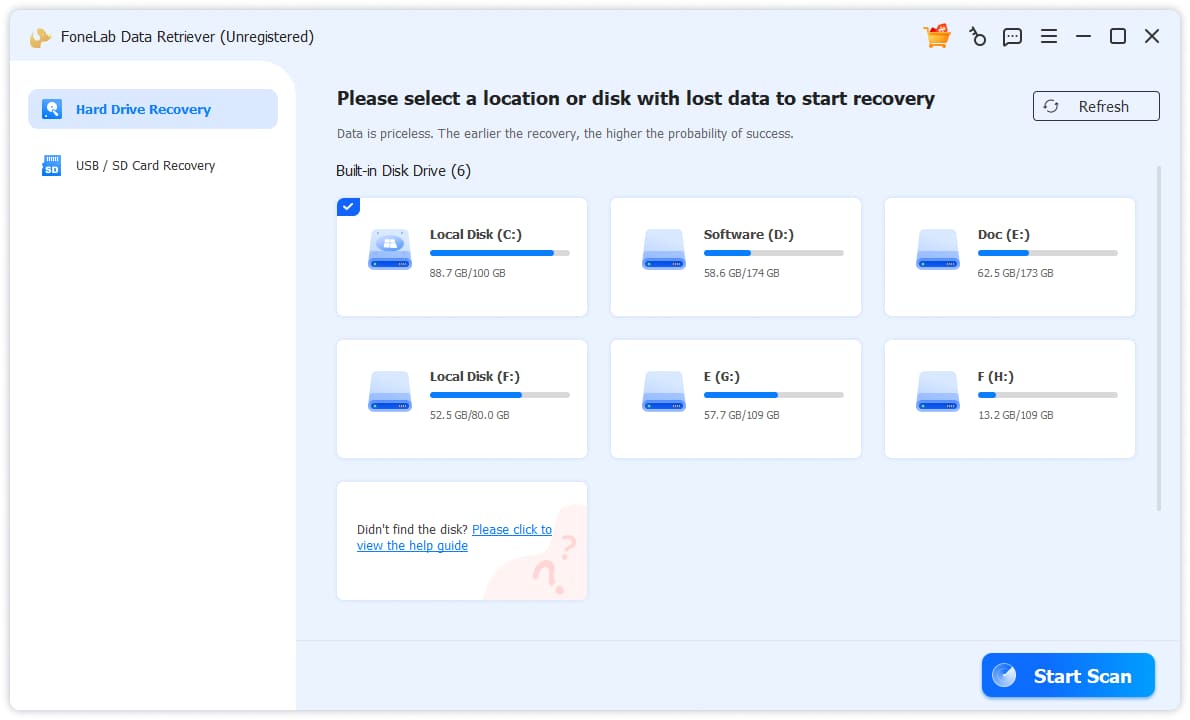
Step 3Click Scan and wait. When the scan finishes, use Deep Scan if you want more results.
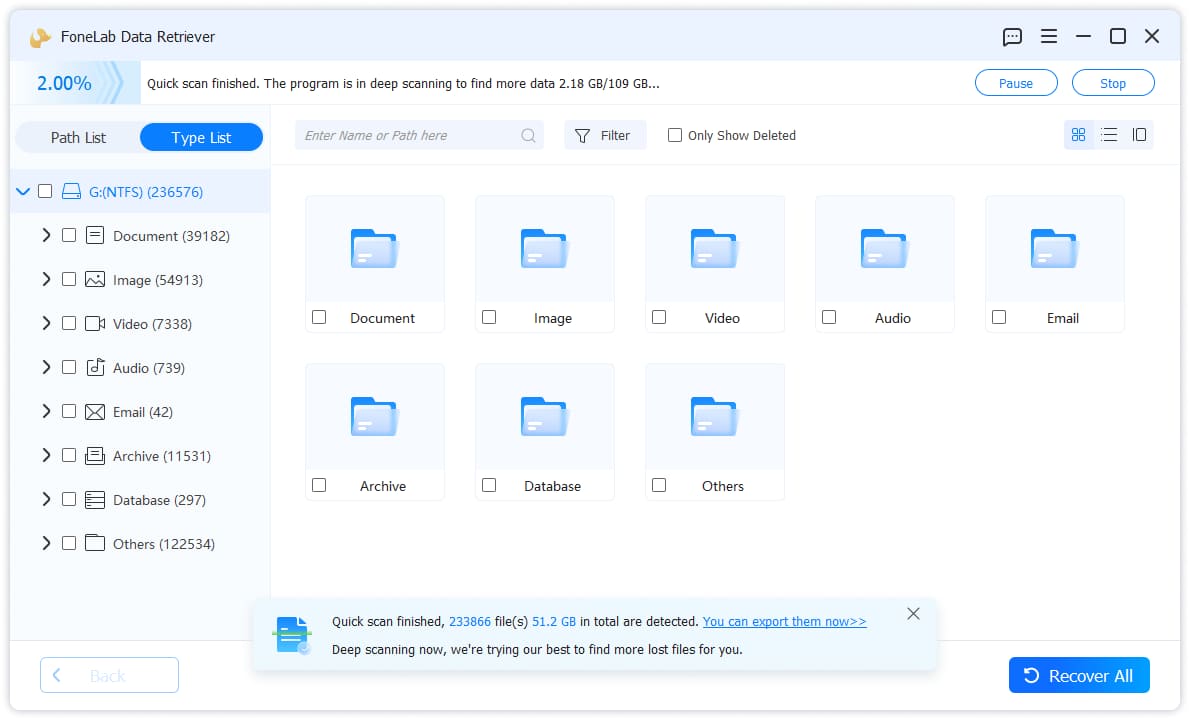
Step 4Filter by XLSX to focus on Excel files, preview them to confirm the content is intact, and tick what you need.
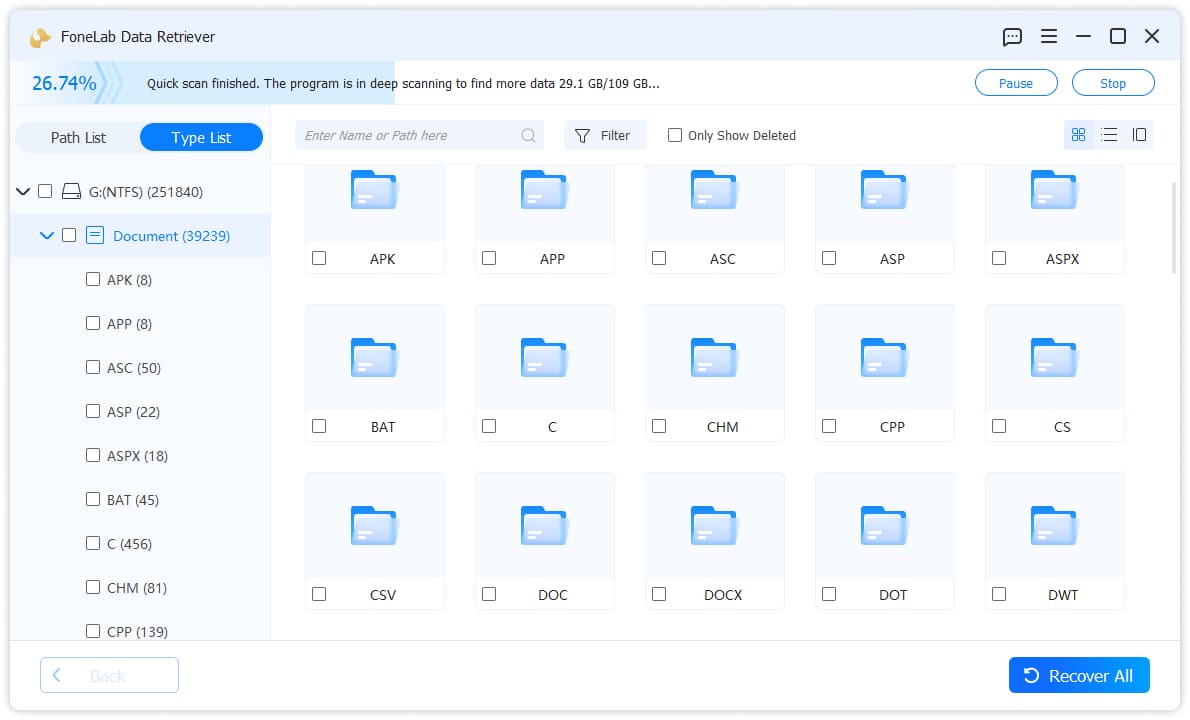
Step 5Click Recover and save the files to a different drive than the one scanned.
The most important thing: don't keep using the formatted drive. Every new write — even a quick test of whether it "works" — can overwrite the very data you're trying to save.
And if the workbook itself is damaged, fixing a corrupted Excel file is a separate fix worth knowing.
FoneLab Data Retriever - recover the lost/deleted data from computer, hard drive, flash drive, memory card, digital camera and more.
- Recover photos, videos, contacts, WhatsApp, and more data with ease.
- Preview data before recovery.
- Recover photos, videos, documents, and more data with ease.
- Recover data from device, iCloud, and iTunes.
That advice is worth repeating because it's the most common mistake people make. After a format, it's tempting to reinstall Windows or start copying files back onto the drive to "test" it. Don't. Recovery should come before any of that. If the drive is the system drive, your best move is to connect it to another computer as a secondary drive, or boot from a different drive, so the formatted disk stays untouched while you scan it. Every hour you keep it idle improves your odds.
Also remember that recovery software finds files by scanning for their signature, so even an XLSX you deleted months ago on that drive can show up if nothing has overwritten its sectors. It's not a guarantee, but it's far more hopeful than most people assume after a format.
Recover Permanently Deleted Excel Files
If you emptied the Recycle Bin or used Shift + Delete, the file is no longer visible in Windows, but the data usually still exists on the drive until it is overwritten. Stop using the drive immediately and run a data recovery scan.
- Download and install FoneLab Data Retriever on a different drive than the one holding the lost file.
- Launch the software and select the drive where the Excel file was stored.
- Choose Document as the file type to speed up the scan.
- Preview the found Excel files and click Recover to save them to a safe location.
The sooner you run the scan, the higher the chance of recovery. Installing the recovery software on the same drive can overwrite the deleted file, so always use a separate drive or USB stick if possible.
Part 2: Recover Unsaved Excel Files with AutoRecover
If the problem isn't a formatted drive but an Excel file you never saved — a crash, a power cut, or an accidental "don't save" — Excel's built-in AutoRecover usually has your back. It saves a working copy of your workbook automatically, as long as the feature is enabled.
First, make sure AutoRecover is on:
Step 1Open Excel and go to the File tab.
Step 2Click Options.
Step 3Choose Save on the left panel.
Step 4Confirm Save AutoRecover Information Every X Minutes and Keep the Last AutoSaved Version If I Close without Saving are both checked.
To recover an unsaved workbook:
Step 1Go to File > Options > Recent Workbooks.
Step 2Scroll to the bottom and click Recover Unsaved Workbooks.
Step 3Select the file you need and click Open.
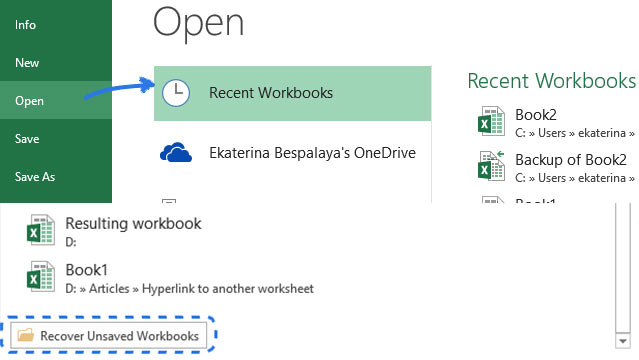
AutoRecover versions can be a few minutes behind your last edit, so you may lose a little work — but a slightly stale copy beats no copy at all.
For the full unsaved-workbook flow, recovering an unsaved Excel file has the dedicated steps.
It's worth knowing that AutoRecover files only exist for workbooks that were open when the crash happened. A file you closed normally and never saved won't have an autosaved copy — that's where the formatted-drive recovery path in Part 1 comes in. And on modern Excel with a Microsoft 365 subscription, AutoSave pushes changes to OneDrive continuously, which means an unsaved workbook's latest state can often be restored right from the cloud instead of hunting through local files.
Part 3: Find AutoRecover Files Manually
If nothing shows up in the Recover Unsaved Workbooks list, the AutoRecover files may still be sitting in a folder on your drive. You can grab them directly.
Step 1In Excel, go to File > Options > Save and note the path in the AutoRecover File Location box, then click Cancel.
Step 2Exit Excel.
Step 3Open that folder in File Explorer and look for files ending in .asd.
Step 4Copy the file to your desktop and rename it from .asd to .xlsx.
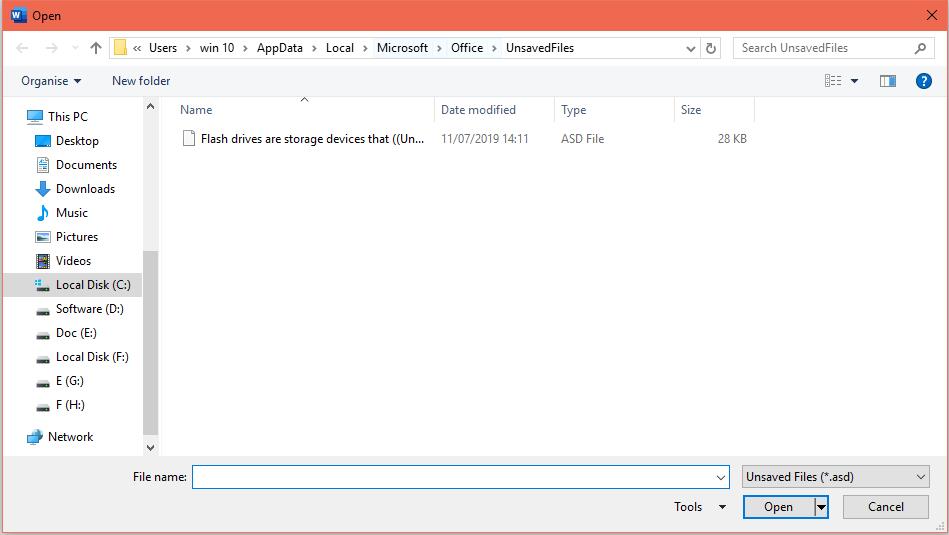
Step 5Open the renamed file in Excel to confirm the content is there.
This manual route works even when Excel's own recovery dialog can't find the file, because it goes straight to where the autosaved copies live.
Part 4: What Formatting Really Does to Your Data
There's a lot of confusion about formatting, so let's clear it up. When you format a drive, the file system — the table that tells the OS where each file lives — is rebuilt and emptied. The actual file data, including your Excel spreadsheets, remains on the disk in the form of ones and zeros. The OS simply no longer knows the files are there.
This is why recovery software works after a format: it scans the raw disk for recognizable file signatures (XLSX files have a distinct header), finds the leftover data, and reconstructs the files. A "full" format or a wipe goes further by writing zeros over the disk, which genuinely destroys the data — but a normal format doesn't do that.
It's also why the kind of format matters. A quick format, which is what most people run, only clears the file table. A full format on a modern drive may also check for bad sectors but doesn't necessarily zero every byte. If you're unsure which happened, there's no downside to running recovery software and seeing what it finds — worst case, it confirms the data is gone, and best case, you get your spreadsheets back.
Part 5: How to Avoid Losing Excel Files in the First Place
- Turn on AutoSave for cloud-stored workbooks so edits save continuously.
- Set AutoRecover to save every 5 minutes instead of the default 10.
- Keep an Excel backup in OneDrive, SharePoint, or a second drive.
- Before formatting any drive, double-check it isn't the one holding your work files.
- Use File History or a scheduled backup for drives with important spreadsheets.
These habits are cheap and remove most of the panic around lost Excel files.
If an Excel file is missing rather than unsaved, recovering deleted Excel files walks through the recovery.
One habit people overlook: use clear filenames with dates, like budget-2026-q3.xlsx instead of budget.xlsx. When you do need to recover, a dated name is instantly recognizable in a scan result or an autosave folder, and you won't waste time guessing which of several near-identical files is the right one.
Part 6: When Excel Recovery Might Fail
Recovery isn't guaranteed in every case. It usually fails when the drive has been heavily used after the format — new files written over the old data — or when a full format or secure wipe actually erased the disk. Physically damaged drives are another story: if the drive clicks, won't spin, or isn't detected, recovery software can't help, and a professional data recovery service is the only option. In those cases, the cost of a service is often worth it if the spreadsheets are truly irreplaceable.
A reasonable rule of thumb: if you formatted and immediately realized the mistake, act now rather than after a week of normal use. The recovery odds drop the longer the drive stays in service. And if the drive is mechanical and making noise, power it down and get it to a specialist rather than repeatedly retrying the scan, which can stress a failing disk further.
Part 7: FAQs About Excel Recovery from a Hard Drive
Can Excel files be recovered after a full format?
Usually yes, if the drive wasn't wiped with zeros or heavily reused after formatting. Recovery software scans the disk and rebuilds the files.
Where does Excel save AutoRecover files?
In the AutoRecover File Location shown under File > Options > Save. Files have an .asd extension and can be renamed to .xlsx to open.
Is it safe to use recovery software on a formatted drive?
Yes. FoneLab Data Retriever reads the drive and writes recovered files elsewhere, so it doesn't risk your remaining data.
It's also worth downloading the trial and running a scan before deciding — you can preview what's recoverable without paying, then only commit if your files show up.
Conclusion
Formatting a drive that held your Excel files isn't the end of the world — the data usually survives. Use FoneLab Data Retriever to scan and recover saved spreadsheets, and lean on AutoRecover for files you never saved. Stop using the drive, act quickly, and set up backups so next time is a non-event. Formatting happens to everyone once, and it doesn't have to cost you your spreadsheets — scan early, recover what you can, and keep a backup going forward.
FoneLab Data Retriever - recover the lost/deleted data from computer, hard drive, flash drive, memory card, digital camera and more.
- Recover photos, videos, contacts, WhatsApp, and more data with ease.
- Preview data before recovery.
- Recover photos, videos, documents, and more data with ease.
- Recover data from device, iCloud, and iTunes.