
 iPhone Data Recovery
 iOS System Recovery
 iOS Data Backup & Restore
 iOS Unlocker
 iPhone Password Manager
 Location Changer
 Android Data Recovery
 Broken Android Data Extraction
 Android Data Backup & Restore
 Android Unlocker
 FoneTrans for iOS
 iPhone Data Eraser
 iPhone Cleaner
 HEIC Converter
 HyperTrans
 WhatsApp Transfer for iOS
 Mac Sweep
 Data Retriever
 Mac Data Retriever
 Video Converter Ultimate
 Screen Recorder
 Phone Mirror
- Part 1: Fix High Sierra That Won't Install After Downloading
- Part 2: Solve Update Failure in Safe Mode
- Part 3: Do a Clean Installation with a Bootable Drive
- Part 4: Recover Lost Files After a Failed Update
- Part 5: Check the Common Causes First
- Part 6: Prevent Update Failures Next Time
- Part 7: FAQs About High Sierra Update Failure
 Recover PC Data Now
Recover the lost/deleted data from computer, hard drive, flash drive, memory card, digital camera and more.
Fix macOS 10.13 High Sierra Update Failure
 Posted by Lisa Ou / September 09, 2026 17:00
A macOS update that stalls halfway is frustrating — the download finishes, the Mac reboots, and then it sits on the "Installing software update" screen for hours, or fails with no explanation at all. High Sierra users run into this more than most, partly because the installer is strict about disk format and available space. The good news is that these failures have predictable causes and workable fixes.
Before you try anything drastic, a few honest notes. macOS 10.13 High Sierra is an older system, and if your Mac supports it, you likely can't jump straight to the newest macOS anyway. These fixes target the update itself — a stuck installer, a failed reboot, or a clean install — and they work in that order of escalation: clear the bad installer, boot into Safe Mode, then do a clean install if needed.

Guide List
- Part 1: Fix High Sierra That Won't Install After Downloading
- Part 2: Solve Update Failure in Safe Mode
- Part 3: Do a Clean Installation with a Bootable Drive
- Part 4: Recover Lost Files After a Failed Update
- Part 5: Check the Common Causes First
- Part 6: Prevent Update Failures Next Time
- Part 7: FAQs About High Sierra Update Failure
Part 1: Fix High Sierra That Won't Install After Downloading
If the update downloaded but the installation never completes, the first suspect is a corrupted installer file left behind in Launchpad. Clearing it out and re-downloading is quick and often fixes the problem.
Step 1Open Launchpad and find the Install macOS Sierra file — it often has a question mark attached to it.
Step 2Delete that file, then reboot your Mac.
Step 3Click the Apple icon in the top-left corner and open App Store (or System Settings > Software Update on newer versions).
Step 4Find the Update section and re-download the High Sierra update, then install it.
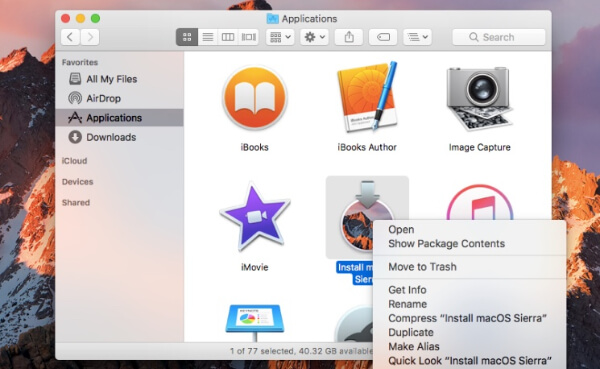
This handles the most common case: a partially downloaded installer that fails on launch. If the same error returns, move on to Safe Mode.
For more on download and install problems, troubleshooting macOS Sierra download and install issues goes deeper.
If you don't see the update in the App Store at all after deleting the installer, that's normal for older systems — the download may still be cached elsewhere. Use Spotlight to search for "Install macOS Sierra" and remove any leftover copies, then reopen Software Update so it pulls a fresh installer. It's also worth checking that your Mac's clock and date are correct; a wrong date makes the update server reject the connection, which shows up as a download or install failure with no clear error message.
Part 2: Solve Update Failure in Safe Mode
Safe Mode loads macOS with only the essential system extensions, which clears out third-party software and leftover files that can interfere with an update. It's the second line of defense.
Step 1Shut down your Mac completely.
Step 2Press the power button, then immediately hold the Shift key.
Step 3Keep holding Shift until the Apple logo appears, then release it.
Step 4Once the Mac boots into Safe Mode, run the High Sierra update again from Software Update or the App Store.
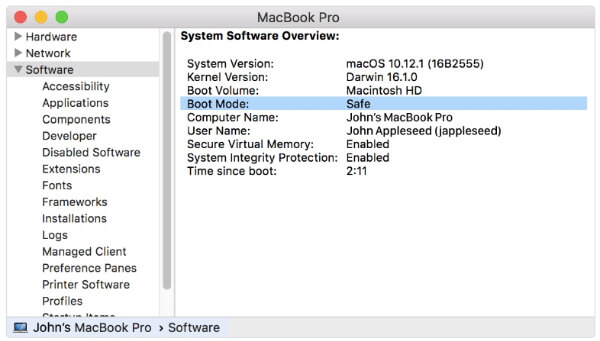
You can confirm you're in Safe Mode by opening System Information and checking the Boot Mode entry. After the update finishes, restart normally.
Part 3: Do a Clean Installation with a Bootable Drive
When the installer itself is stuck or the drive has become too tangled to update in place, a clean installation from a bootable USB drive is the reliable way out. This wipes the startup disk, so back up anything you need first.
Step 1Download the macOS High Sierra installer from the Mac App Store. Connect a USB drive (8 GB or larger) to your Mac.
Step 2Open Finder > Applications > Utilities > Disk Utility. Select the USB drive, click Erase, name it Untitled, and format it as Mac OS Extended (Journaled).
Step 3Open Terminal and run the createinstallmedia command pointing at the downloaded installer and the USB drive. This turns the drive into a bootable installer.
Step 4Restart the Mac holding the Option key until the startup disk list appears. Select the Install macOS drive.
Step 5In the installer's Utilities menu, open Disk Utility, select the internal drive, and Erase it. Then close Disk Utility and choose Install macOS to run the fresh install.
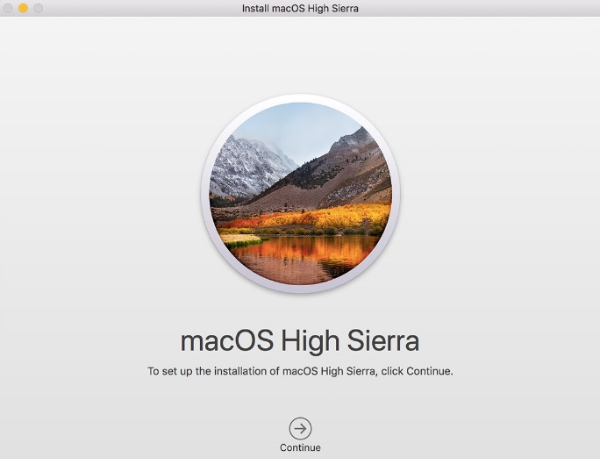
A clean install is the most thorough fix and usually resolves stubborn update failures. Just budget time for it — the whole process takes a while, and you'll need to reinstall apps and restore files afterward.
If the Mac won't boot after the update, fixing a Mac that won't boot after updating is the guide to follow.
Part 4: Recover Lost Files After a Failed Update
A failed or interrupted update — especially a clean install gone wrong — can leave files missing or the drive reformatted. If you didn't make a Time Machine backup first, don't panic. FoneLab Data Retriever scans the drive for deleted or lost files and lets you preview them before recovering, so you can pull back exactly what you need instead of a whole backup.
FoneLab Data Retriever - recover the lost/deleted data from computer, hard drive, flash drive, memory card, digital camera and more.
- Recover photos, videos, contacts, WhatsApp, and more data with ease.
- Preview data before recovery.
Step 1Download and install FoneLab Data Retriever on your Mac, then launch it.
Step 2Select the file types you want back and choose the drive that held them.
Step 3Click Scan and wait for the scan to finish. Use the Filter bar if the results are long.
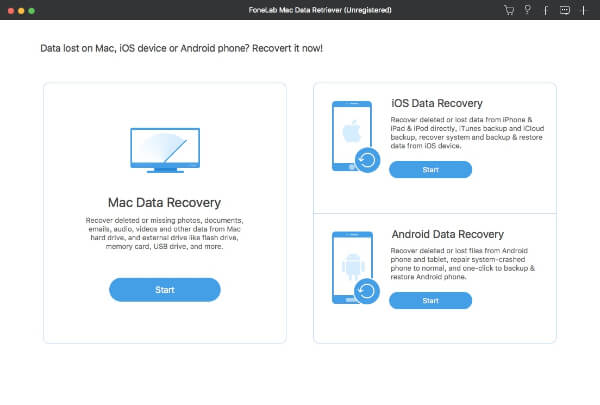
Step 4Preview the files, tick the ones you need, and click Recover. Save them to a different drive than the one you scanned.
This same tool works for the broader "my Mac won't boot after an update" scenario too — if the system is back online but files are gone, scanning the startup disk is the fastest way to check what's still recoverable.
Two practical tips when you run the scan. First, don't install the software onto the same drive you're recovering from — use another disk or the app's portable mode if available, so the scan doesn't overwrite the very files you want. Second, stop using the affected drive once you realize files are missing; every new write lowers the odds of a clean recovery. If the update failed and the system booted again, recover immediately rather than waiting until the drive has been used for days.
Part 5: Check the Common Causes First
- Not enough free space: macOS installers need several GB free. Check storage under About This Mac > Storage.
- Wrong disk format: High Sierra requires a compatible format. An HFS+ or APFS volume works; older formats can block the install.
- A slow or flaky connection: a dropped download leaves a broken installer. Redownload on a stable network.
- Third-party software: antivirus or system tweakers can interrupt the process. Boot into Safe Mode to sidestep them.
- Disk errors: run First Aid in Disk Utility to check for issues before reinstalling.
Running through this checklist takes five minutes and catches most update failures before you commit to a clean install.
And if the system won't start at all, macOS recovery mode gives you repair tools even without a bootable system.
If you're not sure which of these is the culprit, work through them in order: free space is the cheapest to fix and the most common, so start there. Then verify the disk format with Disk Utility — the sidebar shows each volume's format at a glance. After that, restart into Safe Mode once to see whether the update proceeds with third-party software out of the way. Only if none of that helps should you reach for the bootable-drive clean install, because that's the step with the real time cost and the one that makes a backup essential.
There's also a quieter failure mode worth mentioning: updates that look complete but never show the "macOS High Sierra" version in About This Mac afterwards. That usually means the installer finished writing but the system didn't update its boot volume. Rebooting once more and checking System Report usually resolves the display, and if it doesn't, the clean install path below sorts it out for good.
Part 6: Prevent Update Failures Next Time
- Back up with Time Machine before any major update — it's the safety net you'll thank yourself for.
- Free up at least 20 GB before starting, not just the minimum the installer asks for.
- Update over a wired or strong Wi-Fi connection, and don't let the Mac sleep during the install.
- Close all apps and turn off third-party antivirus before updating.
- If the update has been pending a long time, restart the Mac fresh before trying again.
None of these guarantee a flawless update, but together they remove the most common triggers. And if the worst happens, the recovery steps above will get your files back.
And remember to plug the Mac in — a battery that dies mid-install is one failure you can't fix by re-running the installer.
One more thing worth saying about High Sierra specifically: this release switches many drives from HFS+ to APFS during installation. That conversion is another place where an install can appear to hang. If your Mac is an older model without SSD, the conversion can take noticeably longer — don't interrupt it. Give the installer a couple of hours on older hardware before assuming it's frozen, and keep the Mac plugged into power the whole time.
Part 7: FAQs About High Sierra Update Failure
Why is my Mac stuck on "Installing software update"?
Usually a corrupted download, low disk space, or third-party software interfering. Restart in Safe Mode and retry, or re-download the installer.
Can I update from High Sierra directly to the newest macOS?
Only if your Mac model supports the newest version. Many older Macs cap out at an earlier release, so High Sierra may be the last update available.
Will a clean install delete my files?
Yes — it erases the startup disk. Back up first with Time Machine or copy important files elsewhere, or use recovery software to get them back afterward.
Conclusion
High Sierra update failures almost always come down to a corrupted installer, a software conflict, or a disk problem. Clear the bad installer, try Safe Mode, and fall back to a clean install when needed. If files go missing along the way, FoneLab Data Retriever can scan and recover them without a Time Machine backup.
FoneLab Data Retriever - recover the lost/deleted data from computer, hard drive, flash drive, memory card, digital camera and more.
- Recover photos, videos, contacts, WhatsApp, and more data with ease.
- Preview data before recovery.