
 iPhone Data Recovery
 iOS System Recovery
 iOS Data Backup & Restore
 iOS Unlocker
 iPhone Password Manager
 Location Changer
 Android Data Recovery
 Broken Android Data Extraction
 Android Data Backup & Restore
 Android Unlocker
 FoneTrans for iOS
 iPhone Data Eraser
 iPhone Cleaner
 HEIC Converter
 HyperTrans
 WhatsApp Transfer for iOS
 Mac Sweep
 Data Retriever
 Mac Data Retriever
 Video Converter Ultimate
 Screen Recorder
 Phone Mirror
 Recover PC Data Now
Recover the lost/deleted data from computer, hard drive, flash drive, memory card, digital camera and more.
Corrupted Image: 4 Leading Fixes with a Reliable Guide
 Updated by
 Struggling with a corrupted photo? Whether it is a single image or multiple images that hold years of memories, a crucial work file, etc., it can hold so much value that you can’t risk losing it. Hence, the worry is understandable, as you find the photo suddenly unreadable, whether it’s a blurry thumbnail, a pixelated mess, or a file that won’t even open.
But before you lose hope, know that most corruption issues are fixable, and some are even easier than you think. In the following sections, we have compiled the most reliable methods for repairing your damaged images, from quick software tricks and built-in system tools to professional programs. Review them and perform the most suitable one to save your images.

Guide List
Part 1. Change File Extensions & Use Native Legacy Editors
Sometimes, a corrupted image isn't actually broken; it's just been saved with the wrong file extension, like a that should be a .png. Or, you may have opened the photo using a program that doesn't fully support the data type or extension. In this case, changing the file extension is the simplest possible fix you can try, at no cost and in only a few seconds. By renaming the file to its correct format or using a basic built-in editor like Paint or Preview, you can trick the computer into reading the image properly again.
Follow the procedure below to repair corrupted images by changing file extensions and using native legacy editors:
Change file extensions: In File Explorer, right-click the image that’s been corrupted and select Rename. Simply change the file extension to a common format such as , .png, or .bmp, then open the newly renamed file in your default photo viewer.
Use native legacy editors: Open the image with a built-in editor, such as Paint, on your Windows computer. This native tool often handles image data more flexibly than third-party software, so you might be able to view and resave the photo in a working format.
Part 2. Repair Damaged Images Online
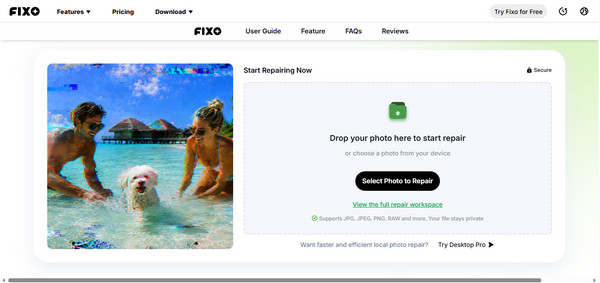
If changing the file extension didn’t help, the next easiest approach is to use a reliable online service. Many web-based tools are available to repair corrupted photos, including EaseUS Online Photo Repair. It can handle common corruption issues like pixelation, discoloration, or unreadable files. The best part? It requires no installation, and you can directly perform the process on its official photo repair page. Just note that it requires an internet connection.
Follow the guide below to fix a photo still in tact but file unsupported corrupt by repairing it online using EaseUS Online Photo Repair:
Step 1Visit the EaseUS Online Photo Repair official page in a trusted browser, then drop the photo into the designated box from your file folder.
Step 2Wait for the tool to scan and process your file, which usually takes just a few seconds. Once finished, preview the repaired image and acquire it on your computer.
Part 3. Fix Corrupted RAW Photos by Extracting Embedded JPEGs
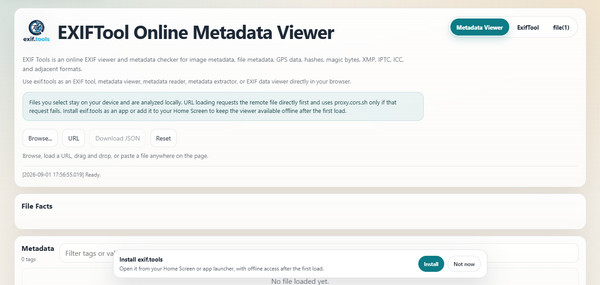
Are you a photographer with RAW format images? If so, a corrupted file can feel like a disaster. Thankfully, there's a hidden lifeline inside most RAW images. You may not know this, but every RAW file actually contains a smaller, embedded JPEG preview that your camera generates for quick viewing. So, when the main RAW image becomes unreadable, you can save that JPEG preview by extracting it. As with the previous method, you may use an online program, such as iLoveIMG, to do this.
Follow the steps below to repair a corrupt image by extracting embedded JPEGs from RAW photos:
Step 1Use a RAW extraction tool like ExifTool Online to extract the embedded JPEG preview from your corrupted RAW file. You may also rename the file extension to .
Step 2Once extracted, open it using your computer’s built-in or default image viewer. While you won't have the full editing flexibility of a RAW image, the photo will still be usable.
Part 4. Recover Images with FoneLab Data Retriever
powerful solution. It works differently from other methods because this tool scans for and recovers lost or deleted files, including those resulting from corruption, formatting, accidental deletion, and more. So, it gives you a chance to recover deleted photos from PC, even those that are already lost.
Additionally, FoneLab Data Retriever is also reliable in other recovery scenarios, especially since it supports numerous storage devices. Hence, if you need to recover deleted photos from SD card, flash drive, digital camera, etc., later, this tool can be your go-to solution. Besides, it is designed both for beginners and experts, offering an intuitive interface. Additionally, bonus features such as Security Preview and Advanced Search & Filter make recovery much easier.
FoneLab Data Retriever - recover the lost/deleted data from computer, hard drive, flash drive, memory card, digital camera and more.
- Recover photos, videos, documents and more data with ease.
- Preview data before recovery.
Follow the instructions below to recover a corrupted image with FoneLab Data Retriever:
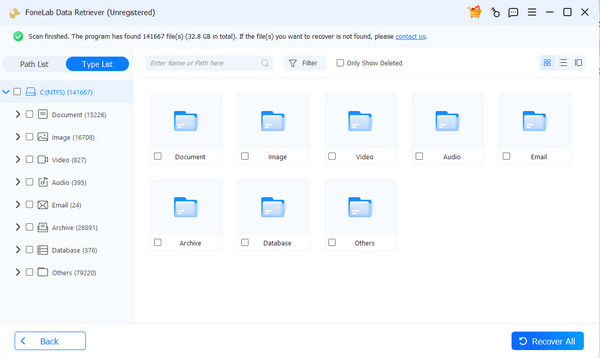
Step 1Click Free Download, and the FoneLab Data Retriever file will be saved. Open it from your Downloads section afterward. When ready, launch the tool to display its main interface. Storage disks and locations are available, so select accordingly and hit Start Scan.
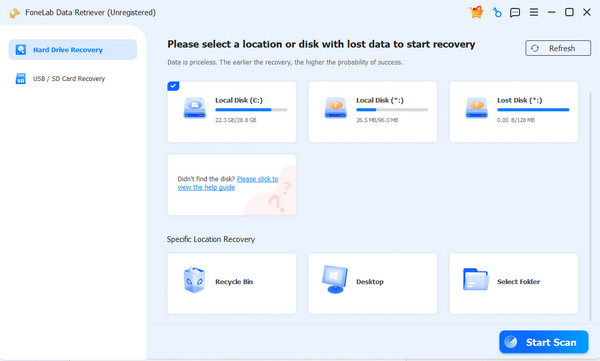
Step 2The Image folder will be among the results on the following interface. Open it and browse your data until you find the corrupted images you need to restore. Then mark the designated checkboxes, and choose Recover All to restore the photos.
Part 5. Comparison of Corrupted Image Solutions
| Solutions | Best For | Difficulty | Success Rate | Platform | Requires Internet | Risk of Data Loss |
| Change File Extensions & Use Native Editors | Minor file format issues | Very Easy | Low to Medium | Windows, Mac | No | Very Low |
| Repair Damaged Images Online | Quick fixes without installing software | Easy | Medium | Any (browser) | Yes | Low |
| Extract Embedded JPEGs from RAW Files | Corrupted RAW photos | Moderate | High | Windows, Mac | No | Low |
| Recover Images with FoneLab Data Retriever | Severe corruption, formatted drives, lost files | Easy | High | Windows, Mac | No | Low |
Part 6. FAQs about Corrupted Image
Can all corrupted images be repaired?
Unfortunately, not always. While many corrupted images can be recovered, the success rate depends on the method used and the extent of the damage. Minor issues often have a high success rate, while severely overwritten or damaged files may be beyond repair.
Is it safe to use online image repair tools?
Most reputable online tools are safe, such as the recommendations above. However, you should still be careful and always read their privacy policies to be sure. Also, avoid uploading sensitive or private images to unknown websites.
A corrupted image isn't always a lost cause. As outlined in this article, we suggest starting with the simplest fix and progressing to the more advanced ones. Also, act quickly to avoid overwriting the original file, and choose the right method for your situation. With these approaches, you have a great chance of bringing your photos back to life.