
 iPhone Data Recovery
 iOS System Recovery
 iOS Data Backup & Restore
 iOS Unlocker
 iPhone Password Manager
 Location Changer
 Android Data Recovery
 Broken Android Data Extraction
 Android Data Backup & Restore
 Android Unlocker
 FoneTrans for iOS
 iPhone Data Eraser
 iPhone Cleaner
 HEIC Converter
 HyperTrans
 WhatsApp Transfer for iOS
 Mac Sweep
 Data Retriever
 Mac Data Retriever
 Video Converter Ultimate
 Screen Recorder
 Phone Mirror
- Part 1. Reinsert the Card and Check the Camcorder
- Part 2. Restore AVCHD Files from a Backup
- Part 3. Repair a Damaged AVCHD File with VLC
- Part 4. Recover AVCHD Videos with FoneLab Data Retriever
- Part 5. Quick Comparison of the Methods
- Part 6. Tips to Protect Your Footage
- Part 7. Frequently Asked Questions
 Recover PC Data Now
Recover the lost/deleted data from computer, hard drive, flash drive, memory card, digital camera and more.
[4 Ways] How to Recover Deleted AVCHD Video Files from Camcorder or SD Card
 Updated by Somei Liam / November 11, 2026 10:00
AVCHD footage is precious. Whether it is a wedding, a child's first steps, or a once-in-a-lifetime trip, those .MTS and .M2TS clips are usually not re-shootable. Yet it is surprisingly easy to lose them: a "Format" press, a faulty import, a full SD card, or simply deleting the wrong folder after a shoot.

The reassuring part is that AVCHD files do not vanish the instant you delete them. The camcorder or card reader only frees up the space; the actual video data stays on the card until it is overwritten by new recording. So stop filming to that card, stop copying files around, and work through the methods below.
I have arranged the fixes from quickest free checks to a thorough scan. If the clips were just deleted moments ago, try the camcorder and backup steps first. If the card was formatted or the files will not play, go straight to FoneLab Data Retriever.
A quick note on timing: an SD card in a camcorder holds large, continuous video streams. If you want to recover deleted videos from an SD card, start before you record anything new, because the moment you do, chunks of the freed-up footage get overwritten at once. Treat the card as read-only from now on — no formatting, no deleting inside the camera, no more shooting — until you have either recovered the clips or confirmed they are truly gone.

Guide List
- Part 1. Reinsert the Card and Check the Camcorder
- Part 2. Restore AVCHD Files from a Backup
- Part 3. Repair a Damaged AVCHD File with VLC
- Part 4. Recover AVCHD Videos with FoneLab Data Retriever
- Part 5. Quick Comparison of the Methods
- Part 6. Tips to Protect Your Footage
- Part 7. Frequently Asked Questions
Part 1. Reinsert the Card and Check the Camcorder
Before touching recovery software, rule out a simple card glitch. Many "missing" AVCHD files are not actually deleted at all; the camera or computer just lost track of the folder.
Step 1Eject the SD card from the camcorder, wait a few seconds, and reinsert it firmly. Power the camera back on and open its playback gallery.
Step 2Check whether the clips reappear. Also look in the camera's own "Recently deleted" or trash folder, if the model has one, and restore anything there.
Step 3If the files still do not show, connect the camcorder to your computer with its USB cable (rather than a cheap card reader) and browse the PRIVATE\AVCHD\BDMV\STREAM folder directly. Your .MTS clips often sit in there even when editing software hides them.
A word on card readers: a cheap or incompatible reader sometimes makes a good card appear empty. If your computer shows zero files while the camera still plays the clips, swap in a USB reader that supports the card's speed class, or use the camera's own USB connection. Also check whether the card is locked by a tiny physical write-protect switch on its side — that can block both reading and recovery tools.
Do not format the card again "to see if it helps" — that is exactly the kind of write operation that can overwrite your recoverable footage.
Part 2. Restore AVCHD Files from a Backup
Imported AVCHD footage that has already been copied to your computer is the easiest to recover for free. If you turned on Windows backup or copied the clips to an external drive after a shoot, you are in good shape.
Step 1On Windows, open Settings > Update & Security > Backup and restore from File History, or open Control Panel > Backup and Restore.
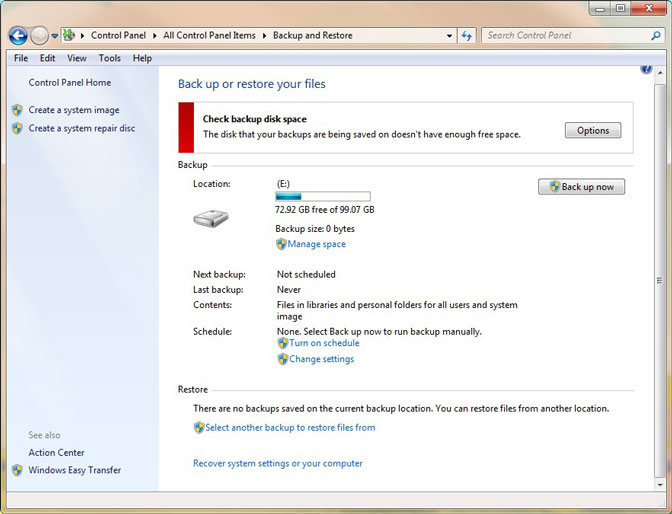
Step 2On Mac, enter Time Machine, navigate to the folder that held your imported videos, and click Restore.
Step 3Also check any external hard drive, NAS, or cloud folder where you archived footage after shooting. Videographers usually keep at least one off-camera copy of important projects.
Do not forget the software you used to import the footage. Many editing programs (and even the camera manufacturer's own transfer tool) keep an organized library of imported clips. If you once dragged the AVCHD folder into Premiere, Final Cut, Shotcut, or the camera's utility, the imported copies may still sit in your Movies folder or the project's media bin. Search your computer for ".MTS" and ".M2TS" by extension before assuming everything is gone. A simple Windows search in This PC for *.mts often surfaces clips you forgot you imported.
FoneLab Data Retriever - recover the lost/deleted data from computer, hard drive, flash drive, memory card, digital camera and more.
- Recover photos, videos, documents and more data with ease.
- Preview data before recovery.
Part 3. Repair a Damaged AVCHD File with VLC
Sometimes the file is still on the card but will not open or freezes halfway. That points to corruption rather than deletion, and the free VLC media player can often repair corrupt video files without any paid tool.
Step 1Download the free VLC media player, then make a copy of the problematic .MTS file so you do not touch the original.
Step 2In VLC, open Tools > Preferences > Input/Codecs and set the damaged file handling option to always fix when possible, then save.
Step 3Drag the copy into VLC and let it attempt to play. If it plays through, export or convert it from the Media > Convert/Save menu to a fresh MP4.
AVCHD corruption usually happens when the camera lost power mid-record, the card was yanked during a write, or the battery died. The index file (in BDMW) can get out of sync with the actual stream, which makes the player think the clip is gone even though the picture data is intact. VLC's fix mode rebuilds that index on the fly. If VLC cannot open the file at all, do not keep retrying — move on to scanning the card, because repeated failed attempts add unnecessary reads to the media.
This method fixes slightly broken files, but it cannot bring back clips that were fully deleted or recorded over. For those, keep going to Part 4.
Part 4. Recover AVCHD Videos with FoneLab Data Retriever
When the clips were deleted, the card was formatted, or there is no backup, a dedicated recovery tool is the practical answer. FoneLab Data Retriever runs on Windows and Mac and can scan memory cards, camcorder storage, and hard drives for lost video files. There is no separate Deep Scan button: once you pick a card and start, it runs an automatic deep scan.
FoneLab Data Retriever - recover the lost/deleted data from computer, hard drive, flash drive, memory card, digital camera and more.
- Recover photos, videos, documents and more data with ease.
- Preview data before recovery.
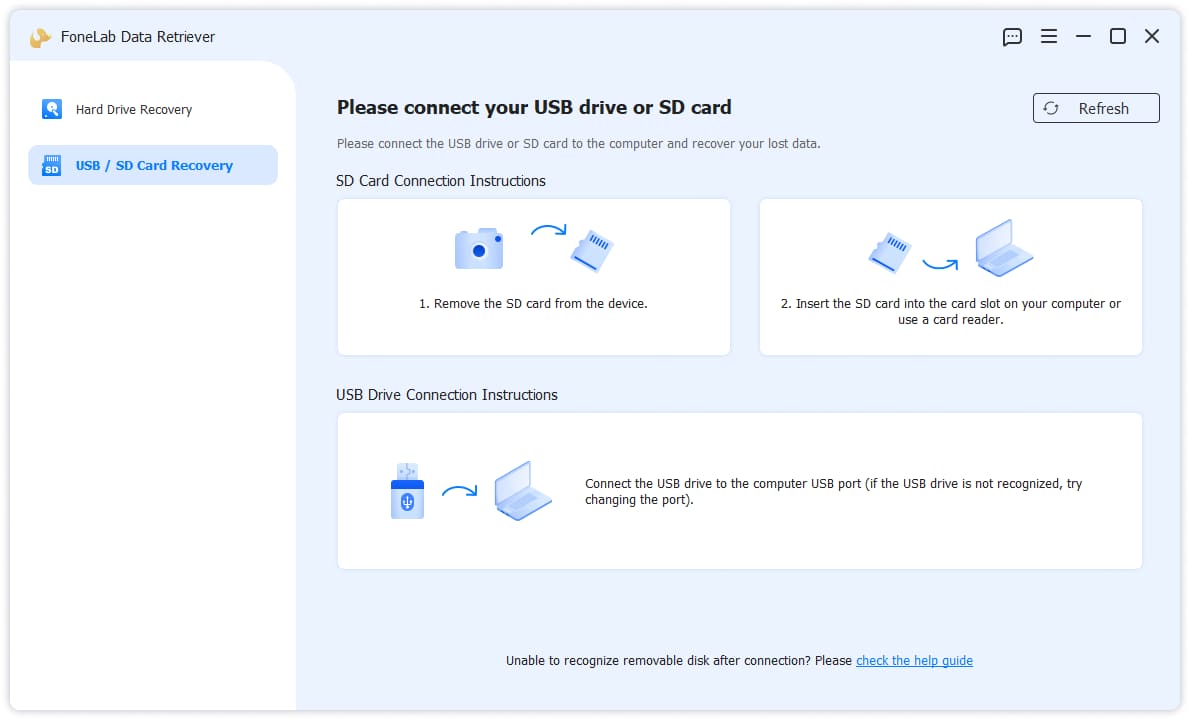
Step 1Insert the camcorder SD card into a card reader connected to your computer. Launch FoneLab Data Retriever and choose USB / SD Card Recovery, then pick the card and choose its type from the drop-down list so the scan targets the right disk.
Step 2Click Scan Disk. The software scans automatically, including a thorough deep pass, and lists the recoverable files by type.
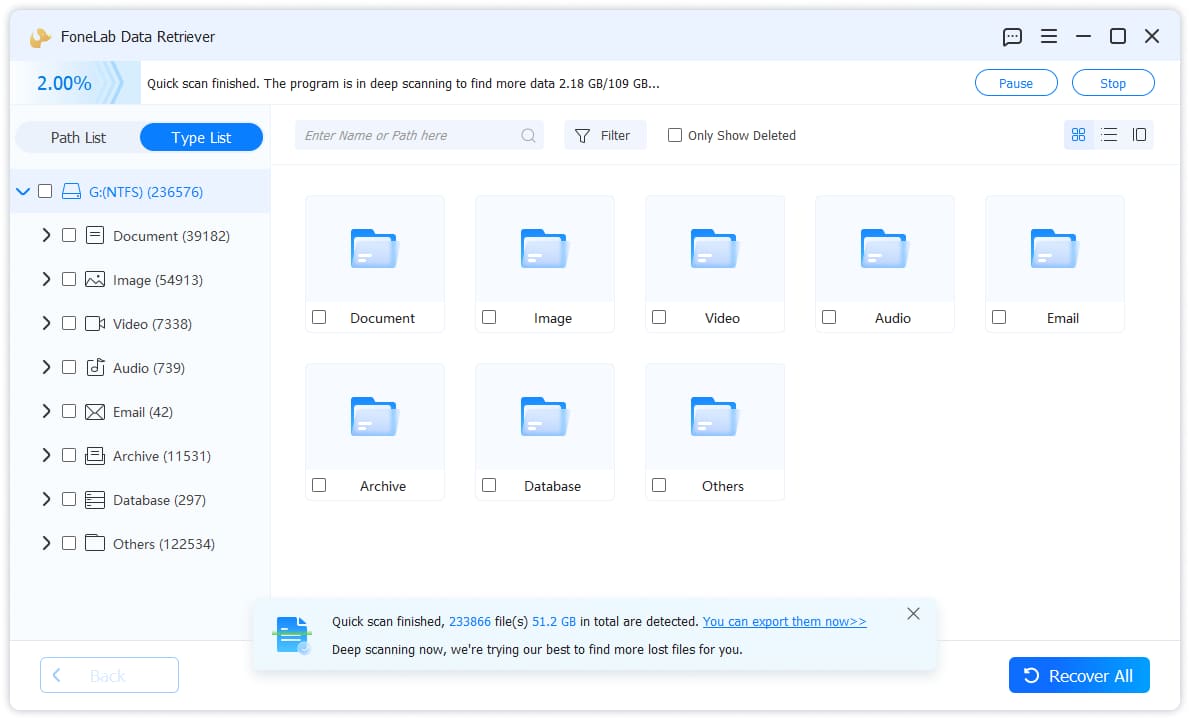
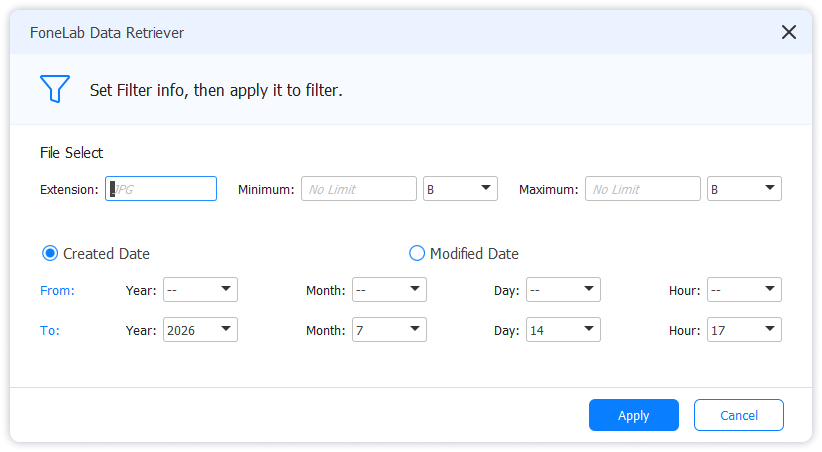
Step 3Open the Video category and use Filter or Only show deleted to locate your .MTS/.M2TS clips. Preview each one to confirm it is the right footage before recovering.
Step 4Tick the clips you need and click Recover. Save them to your computer's internal drive, not back to the same card.
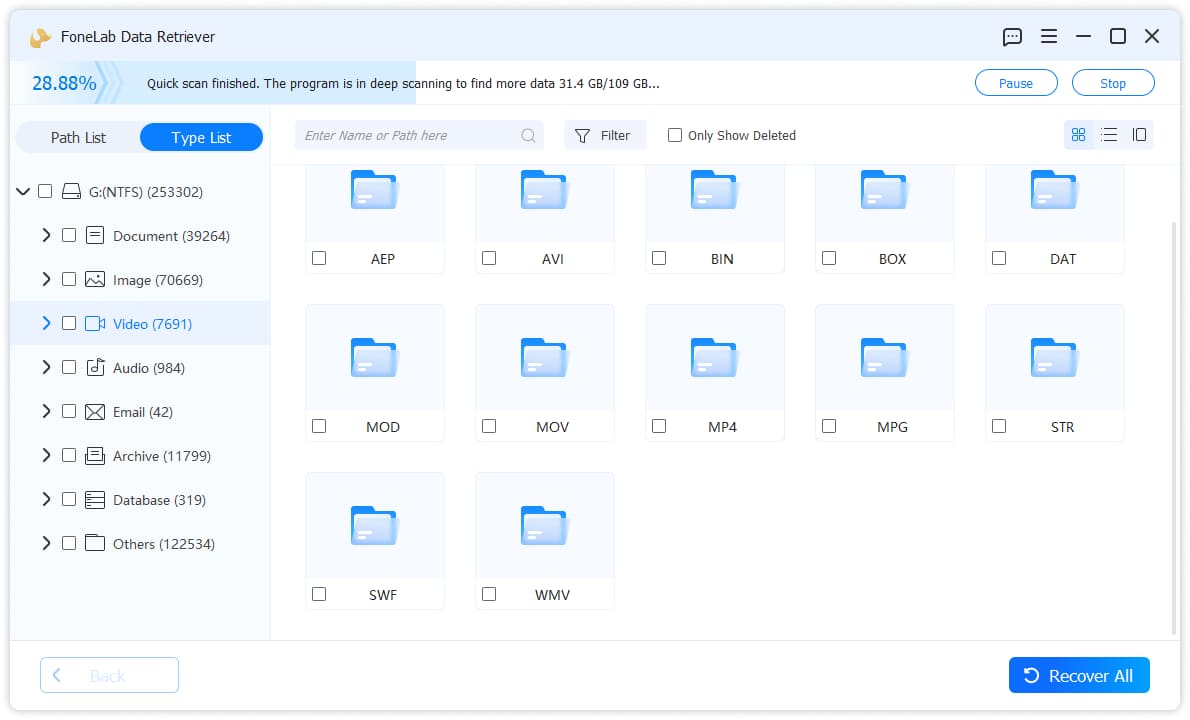
A fair note on coverage: this tool recovers standard video files very well. AVCHD .MTS/.M2TS from a camcorder is a specialized container, so for that specific format coverage may be limited, which is why the free backup and reinsertion checks above are worth trying first. If your clips were saved as MP4 or MOV, recovery is usually straightforward.
Why preview matters: camcorder cards often hold hundreds of clips, and recovering all of them takes time and disk space. By playing back thumbnails inside the tool first, you can tick only the wedding day, the graduation, or the trip you actually need instead of restoring every clip from the last two years. I always preview at least the first few seconds of each long clip, because a file that looks complete in the list can turn out to be truncated in the middle. Once the previews look good, the actual recovery is just one click.
FoneLab Data Retriever - recover the lost/deleted data from computer, hard drive, flash drive, memory card, digital camera and more.
- Recover photos, videos, documents and more data with ease.
- Preview data before recovery.
Part 5. Quick Comparison of the Methods
Here is how the AVCHD recovery options compare:
| Method | Free? | Handles Formatted Card | Automatic Deep Scan | Best For |
|---|---|---|---|---|
| Reinsert Card / Check Camcorder | Yes | No | No | A simple card glitch |
| Backup / Time Machine | Yes | Only if copied already | No | Imported footage on computer |
| VLC Repair | Yes | No | No | Corrupted but present files |
| FoneLab Data Retriever | Free to preview | Yes | Yes (automatic deep scan) | Deleted/formatted SD card, no backup |
Part 6. Tips to Protect Your Footage
A few habits save you from ever doing this again:
- After a shoot, import footage to at least two locations (an internal drive and an external drive) before formatting the card.
- Never format a card in-camera until you have verified the clips open on your computer.
- Use high-quality SD cards and avoid removing them while the camera is writing.
- If recovery software finds your clips, save them to a new drive immediately rather than back to the card.
- Format cards only inside the camcorder, not on a computer, so the camera keeps the folder structure it expects.
- Label each card and track what has been backed up, so a "full card" never tempts you into deleting clips before they are safely copied.
Part 7. Frequently Asked Questions
Can I recover AVCHD files after formatting the SD card?
Often, yes. Formatting usually removes the file table rather than the actual video data. As long as you have not recorded new footage over it, FoneLab Data Retriever can scan the card and recover the deleted .MTS clips.
Where are AVCHD files stored on the card?
They live in PRIVATE\AVCHD\BDMV\STREAM, usually with .MTS extensions. Browsing that folder directly on the computer is the fastest way to confirm the clips are still on the card.
Does Data Retriever recover .MTS files directly?
It recovers standard video files and groups results under the Video category. For the specialized AVCHD container coverage may be limited, so try backups and VLC repair first, then use Data Retriever as the thorough fallback.
Should I keep recording to the card while trying to recover?
No. Stop using the card immediately. Every new recording can overwrite the very sectors holding your deleted AVCHD files and permanently destroy them.
To sum up: reinsert the card and check the camcorder first, then fall back to backups and VLC repair. When the footage was deleted or the card formatted, FoneLab Data Retriever scans the card automatically and previews your clips before recovery, making it the most reliable option for lost video.