
 iPhone Data Recovery
 iOS System Recovery
 iOS Data Backup & Restore
 iOS Unlocker
 iPhone Password Manager
 Location Changer
 Android Data Recovery
 Broken Android Data Extraction
 Android Data Backup & Restore
 Android Unlocker
 FoneTrans for iOS
 iPhone Data Eraser
 iPhone Cleaner
 HEIC Converter
 HyperTrans
 WhatsApp Transfer for iOS
 Mac Sweep
 Data Retriever
 Mac Data Retriever
 Video Converter Ultimate
 Screen Recorder
 Phone Mirror
- Part 1. Recover Deleted TXT Files from the Recycle Bin or Trash
- Part 2. Restore TXT Files from File History or Time Machine
- Part 3. Recover Unsaved TXT Files from Temp Files & Previous Versions
- Part 4. Recover Deleted TXT Files with FoneLab Data Retriever
- Part 5. Quick Comparison of the Methods
- Part 6. Tips to Prevent TXT File Loss
- Part 7. FAQs about Deleted TXT File Recovery
 Recover PC Data Now
Recover the lost/deleted data from computer, hard drive, flash drive, memory card, digital camera and more.
[5 Proven Ways] How to Recover Deleted TXT Files on Windows and Mac
 Updated by Somei Liam / November 11, 2026 10:00
We have all been there: you close a Notepad or TextEdit window without saving, press Shift+Delete on the wrong .txt file, or clear the Recycle Bin only to realize the notes inside were the only copy. TXT files feel disposable, which is exactly why we rarely back them up until they are gone.
The good news is that a deleted plain-text file is almost always recoverable. When Windows or macOS removes a file, it only marks the space as free; the actual text stays on the disk until something new overwrites it. So stop writing to that drive, close extra apps, and work through the methods below in order from the quickest free fix to the most thorough recovery.
I have tested every approach on this page on both Windows 11 and a recent Mac. If you only need a couple of paragraphs back, start with the Recycle Bin and Temp folder. If the file was emptied or the drive was formatted, jump straight to FoneLab Data Retriever, which runs an automatic deep scan for you.
One rule before you begin: the moment you realize a text file is missing, stop saving new files, installing apps, or downloading anything onto that disk. Every write operation has a chance to overwrite the exact sectors where your deleted .txt is still hiding. If the file lived on a USB stick or SD card, remove it and put it aside until you are ready to scan. The less the drive is used, the higher your recovery odds.

Guide List
- Part 1. Recover Deleted TXT Files from the Recycle Bin or Trash
- Part 2. Restore TXT Files from File History or Time Machine
- Part 3. Recover Unsaved TXT Files from Temp Files & Previous Versions
- Part 4. Recover Deleted TXT Files with FoneLab Data Retriever
- Part 5. Quick Comparison of the Methods
- Part 6. Tips to Prevent TXT File Loss
- Part 7. FAQs
Part 1. Recover Deleted TXT Files from the Recycle Bin or Trash
Before anything fancy, check the obvious place. On Windows, a normal delete does not erase the file instantly; it parks it in the Recycle Bin. On macOS, deleted files land in Trash. This is the fastest free method and it works for files you deleted moments ago; if they are already gone from there, this guide to recovering deleted files on Mac covers the deeper options.
Step 1On Windows, double-click the Recycle Bin icon on your desktop. On Mac, click the Trash icon in the Dock.
Step 2Use the search box in the top-right to type .txt or part of the file name you remember.
Step 3Right-click the file and choose Restore (Windows) or put it back with Put Back (Mac). It returns to its original folder.
If the Recycle Bin was already emptied, Windows no longer shows the file here. In that case, the file is not truly gone yet, and you should move on to the methods below. You can also read our full guide on recovering deleted files from the Recycle Bin after it has been emptied.
A quick tip: if you remember roughly when you deleted it, sort the Recycle Bin by Date deleted to spot it faster. The same applies on Mac, where Trash keeps the file's original name and location. This whole check takes under a minute and solves the problem more often than you would expect, so do not skip it even if you are sure you emptied the bin.
Part 2. Restore TXT Files from File History or Time Machine
If you turned on built-in backup, restoring a deleted TXT file is a matter of browsing an older snapshot. Windows uses File History; macOS uses Time Machine. These are free, no-install options, but they only help if backup was switched on before the file disappeared.
Windows: File History / Backup and Restore
Step 1Open Settings, go to Update & Security > Backup.
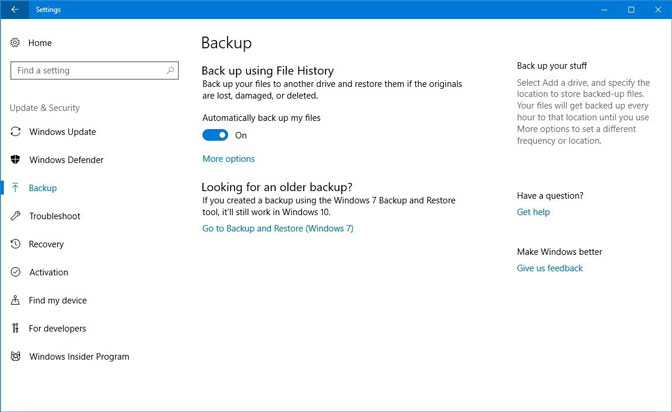
Step 2Click More options, then Restore files from a current backup. Browse back in time to the folder where the TXT file was saved.
Step 3Select the text file and click the green Restore button. To reach the older Backup and Restore (Windows 7) tool, open Control Panel > Backup and Restore and click Restore My Files.
Mac: Time Machine
Step 1Make sure Time Machine is enabled and your backup disk is connected. Open System Settings > General > Time Machine.
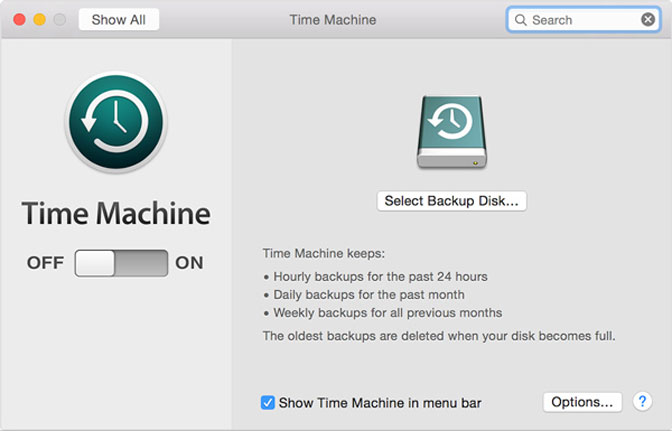
Step 2Enter Time Machine, navigate to the folder that held the .txt file, and press Restore. The file copies back exactly as it was.
Part 3. Recover Unsaved TXT Files from Temp Files & Previous Versions
For unsaved notes (you never hit Save), the operating system often keeps a temporary copy. This is a lifesaver when Notepad or TextEdit crashed. It works best if you have not used the computer heavily since the crash.
Step 1On Windows, press Windows + R, type %AppData%, and press Enter to open the Roaming folder.
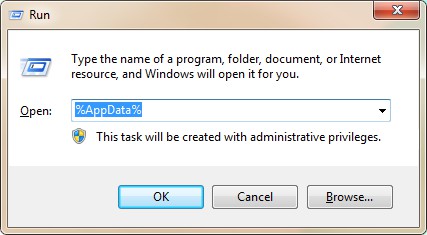
Step 2Search that folder (and the %LocalAppData% subfolders) for .tmp, .asd, or part of your file name. Copy any suspicious file to the desktop and rename it to .txt.
Step 3On Mac, open Finder > Go > Go to Folder and enter ~/Library/Application Support, then look inside the TextEdit or editor folder for autosaved versions.
You can also try a Windows Previous Version: right-click the folder that held the file, choose Properties > Previous Versions, and restore an older snapshot. Note that Temp recovery is a best-effort free method; if the text is not there, professional recovery is your next step.
Why does this work? When you edit a text file, many editors silently keep a .tmp or .bak copy alongside your work in case the app crashes. Once you properly save and close, those temp files are usually cleaned up. So the sooner you dig into this folder after a crash, the better your chance of finding a recent draft that still holds your missing paragraphs.
Part 4. Recover Deleted TXT Files with FoneLab Data Retriever
When the Recycle Bin is empty, there is no backup, and the Temp folder came up empty, a dedicated undelete tool is the reliable answer. FoneLab Data Retriever is a desktop program for Windows and Mac that scans your internal drive, external hard disk, USB stick and memory card for deleted files, including plain-text and document formats.
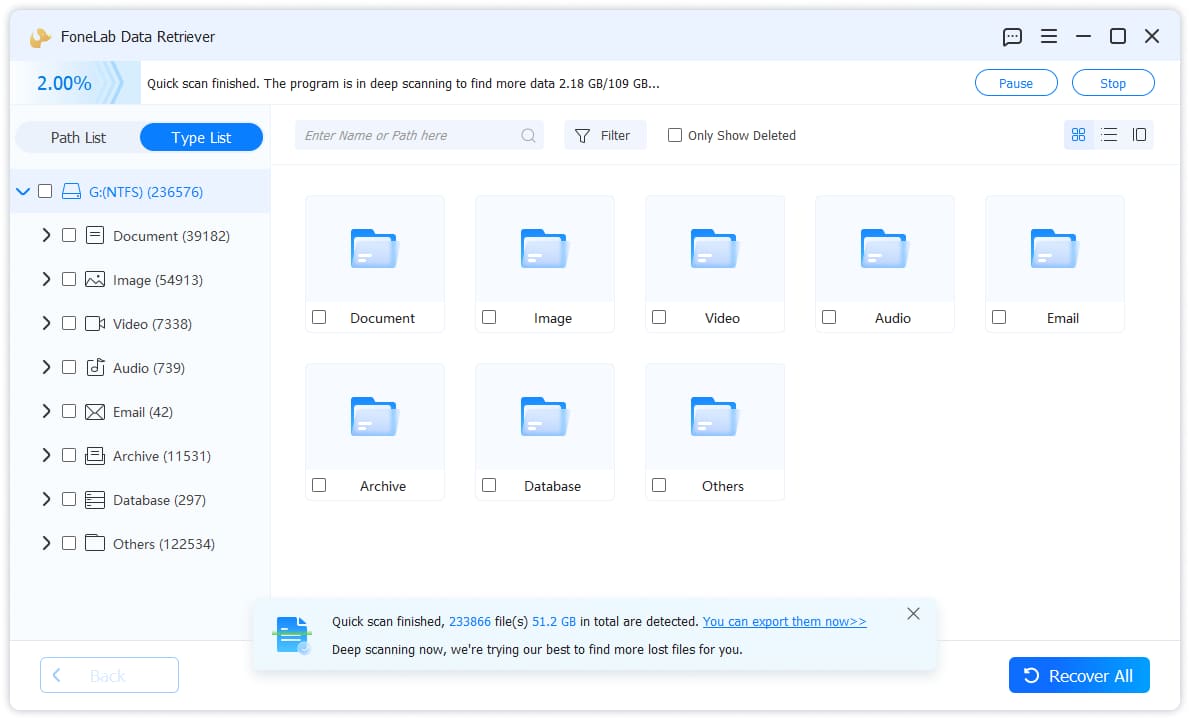
It groups found files by type so you can filter straight to documents, and it previews each file before you commit. There is no separate "Deep Scan" button to hunt for: once you choose a disk and start, the software runs an automatic deep scan to dig out files that a quick glance misses. For most TXT recovery situations, this is the recommended tool.
FoneLab Data Retriever - recover the lost/deleted data from computer, hard drive, flash drive, memory card, digital camera and more.
- Recover photos, videos, documents and more data with ease.
- Preview data before recovery.
Step 1Download and install FoneLab Data Retriever, then launch it. If the file was on an external drive or SD card, plug that in now. On the left side choose Hard Drive Data Recovery and select the disk where the TXT file used to live. If it sat in one specific folder, scroll down the same menu and pick Folder to target that folder directly.
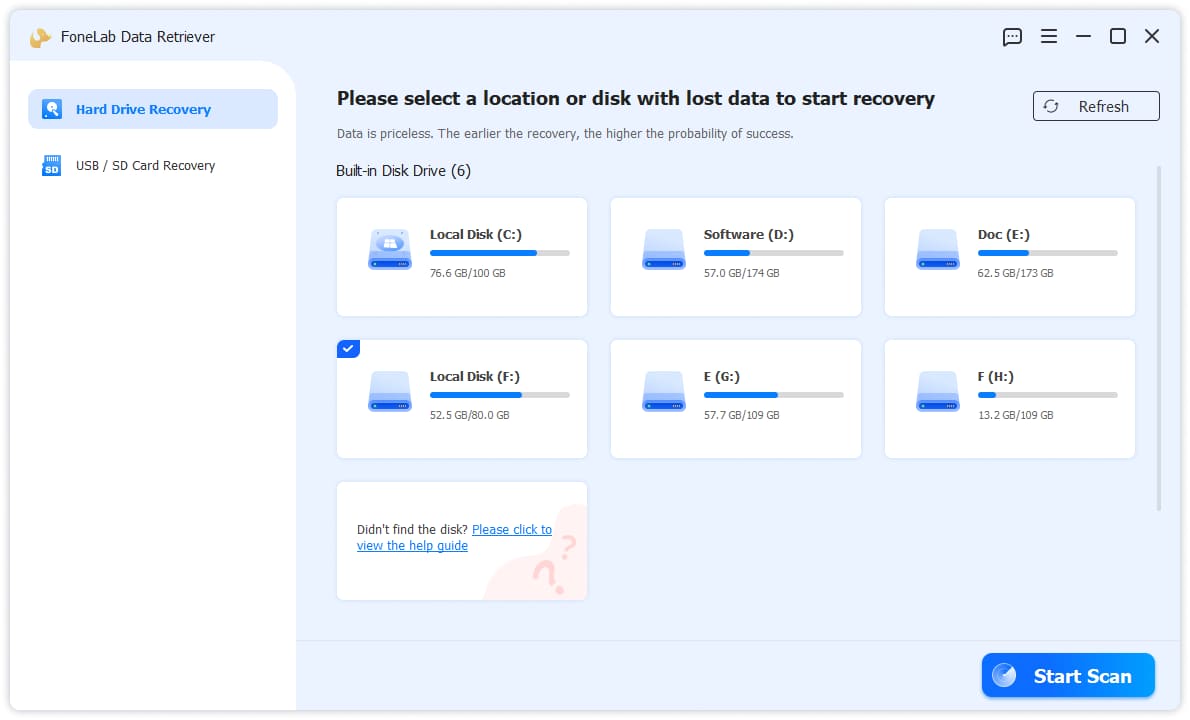
Step 2Click Start Scan. The program runs the scan automatically, including a thorough deep scan pass, and lists everything it finds on the left.
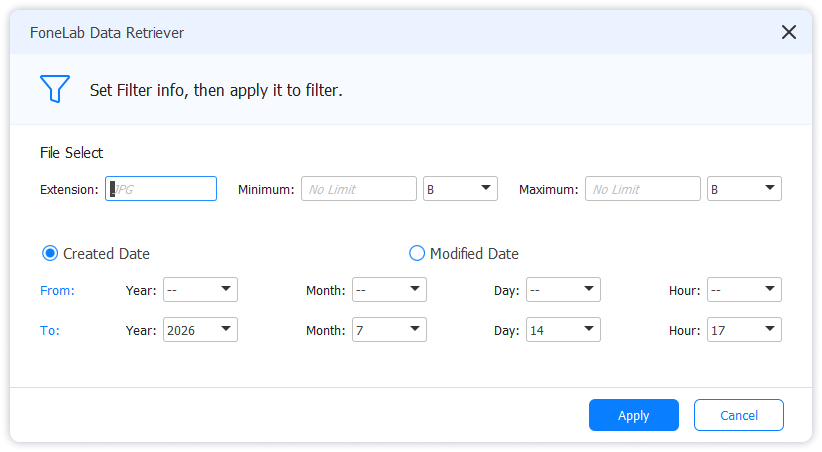
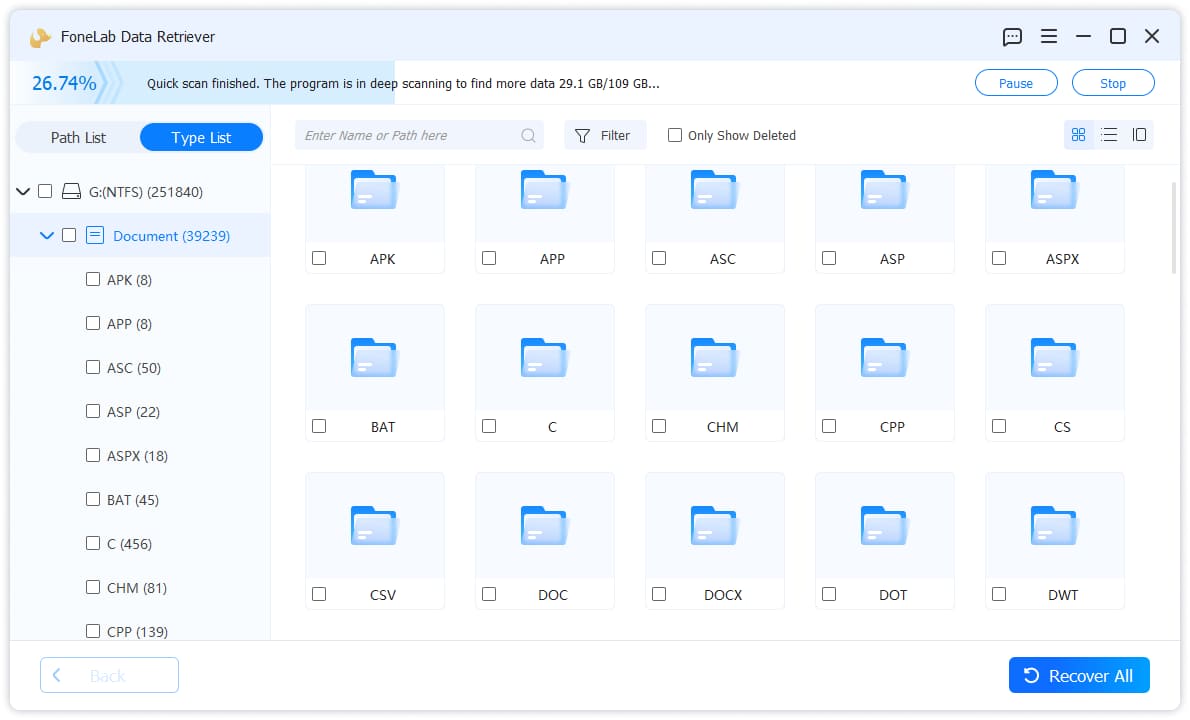
Step 3Open the Document category, then use the Filter box or tick Only show deleted to narrow results to .txt, .log and similar text files. Click any file to preview its content.
Step 4Tick the files you want and click the blue Recover button in the bottom-right. Save them to a different drive than the one you are scanning to avoid overwriting anything.
One honest note: this tool recovers standard plain-text and document files very well. If your lost "notes" were inside a specialized app's proprietary project database rather than a plain .txt, coverage may be limited, so the free Recycle Bin and backup methods above are worth trying first.
FoneLab Data Retriever - recover the lost/deleted data from computer, hard drive, flash drive, memory card, digital camera and more.
- Recover photos, videos, documents and more data with ease.
- Preview data before recovery.
Part 5. Quick Comparison of the Methods
To help you pick fast, here is how the main options compare for deleted TXT recovery:
| Method | Free? | Works on Empty Recycle Bin | Automatic Deep Scan | Best For |
|---|---|---|---|---|
| Recycle Bin / Trash | Yes | No | No | Files deleted moments ago |
| File History / Time Machine | Yes | Only if backup was on | No | Users with backups enabled |
| Temp Files / Previous Versions | Yes | Sometimes | No | Unsaved files after a crash |
| FoneLab Data Retriever | Free to preview | Yes | Yes (automatic deep scan) | Empty Recycle Bin, formatted drives, no backup |
Part 6. Tips to Prevent TXT File Loss
Once you have your files back, a few habits stop this from happening again:
- Turn on File History (Windows) or Time Machine (Mac) and keep a separate backup drive connected regularly.
- Save important notes as soon as you start typing, and avoid relying on auto-recovery alone.
- Never save recovered files back to the same disk you scanned, or you may overwrite other deleted data.
- For critical text, sync it to cloud storage such as OneDrive, Google Drive or iCloud so a local delete is never permanent.
Part 7. FAQs about Deleted TXT File Recovery
Can I recover a TXT file that I permanently deleted with Shift+Delete?
Yes. Shift+Delete skips the Recycle Bin, but the file data usually remains on the disk until overwritten. Stop using that drive and run FoneLab Data Retriever, which performs an automatic deep scan to locate it.
Where does Notepad save unsaved files on Windows?
Modern Notepad keeps autosaved drafts under your user AppData folder. Search %AppData% and %LocalAppData% for .tmp or .asd files right after a crash, before Windows overwrites them.
Does FoneLab Data Retriever work on both Windows and Mac?
Yes. There are separate Windows and Mac builds, and both scan internal drives, external disks, USB flash drives and memory cards for deleted text and document files.
How can I recover deleted text files from a hard drive with no backup?
This is exactly the case where recovery software shines. Install FoneLab Data Retriever, select the drive, start the scan, filter to documents, and preview then recover the .txt files you need.
To recap: check the Recycle Bin or Trash first, then lean on File History, Time Machine or Temp files if you had a backup or a crash. When none of those free routes brings your text back, FoneLab Data Retriever is the fastest route to a clean recovery, and its automatic deep scan means you do not have to be a technician to use it. Download it now, scan the right drive, and get your deleted TXT files back in minutes.
FoneLab Data Retriever - recover the lost/deleted data from computer, hard drive, flash drive, memory card, digital camera and more.
- Recover photos, videos, documents and more data with ease.
- Preview data before recovery.