
 iPhone Data Recovery
 iOS System Recovery
 iOS Data Backup & Restore
 iOS Unlocker
 iPhone Password Manager
 Location Changer
 Android Data Recovery
 Broken Android Data Extraction
 Android Data Backup & Restore
 Android Unlocker
 FoneTrans for iOS
 iPhone Data Eraser
 iPhone Cleaner
 HEIC Converter
 HyperTrans
 WhatsApp Transfer for iOS
 Mac Sweep
 Data Retriever
 Mac Data Retriever
 Video Converter Ultimate
 Screen Recorder
 Phone Mirror
- Part 1. Quick Matrix: Choose Your Recovery Method
- Part 2. Manage Workbook Tools
- Part 3. Check AutoRecover Settings
- Part 4. Check Cloud Versions
- Part 5. The Manual Hunt via AppData Windows Run
- Part 6. Digging into Windows Temp Files
- Part 7. Use FoneLab Data Retriever
- Part 8. Comparison of Methods on How to Recover Unsaved Files
- Part 9. FAQs about How to Recover Unsaved Excel File
 Recover PC Data Now
Recover the lost/deleted data from computer, hard drive, flash drive, memory card, digital camera and more.
Outstanding Guide to Recover Unsaved Excel File Easily
 Updated by
 Are you trying to learn how to recover Excel file not saved? Millions of professionals, students, and casual users find themselves in this exact situation. Hours of data entry, complex formulas, etc., have simply vanished. Whether it was a sudden power outage, an accidental click on Don't Save, or a system crash that forced your computer to restart, the loss of unsaved work is one of the most frustrating things you can experience in the digital workplace.
Luckily, having unsaved Excel files doesn't mean they really are gone forever. Because of the frequent occurrence of this problem, Microsoft Excel has built-in safety nets and auto-recovery features designed to rescue your work—even if you never clicked Save.. If you aren't yet aware of them, browsing the following parts will be the perfect way to learn the most effective methods to recover your unsaved Excel file, whether through the official techniques or professional tools. Simply continue reading.


Guide List
- Part 1. Quick Matrix: Choose Your Recovery Method
- Part 2. Manage Workbook Tools
- Part 3. Check AutoRecover Settings
- Part 4. Check Cloud Versions
- Part 5. The Manual Hunt via AppData Windows Run
- Part 6. Digging into Windows Temp Files
- Part 7. Use FoneLab Data Retriever
- Part 8. Comparison of Methods on How to Recover Unsaved Files
- Part 9. FAQs about How to Recover Unsaved Excel File
Part 1. Quick Matrix: Choose Your Recovery Method
Before taking any action, identifying what kind of data loss you are facing will greatly help. This way, you can immediately determine which recovery method will work best for you. Excel handles a never-saved file completely differently from one that was saved but later closed without saving changes. So, knowing the situation from the start will save you a lot of time.
That said, recognize that the most common loss scenarios are: a sudden crash where Excel closed unexpectedly, an accidental click on the Don't Save option when closing the Excel document, and a situation where you overwrote it and needed an older version. Each has a specific, proven recovery path, and if you use the right method, restoring the unsaved Excel file or its version you need will be much easier.
Part 2. Manage Workbook Tools
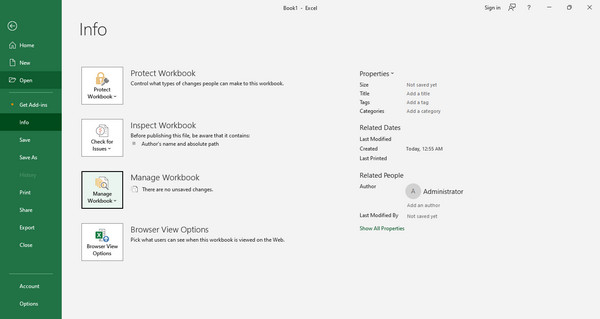
The first section you can access on your Excel to recover the unsaved document is the Manage Workbook. It offers the Recover Unsaved Workbooks option or tool that lets users browse the recent unsaved files and recover them accordingly. If you closed the document and accidentally clicked Don't Save, this method will help you restore it, providing the most straightforward process. The necessary options can be easily found on the Excel interface, so all you need do is choose them accordingly until the unsaved Excel file is successfully restored on your computer.
Follow the task below to grasp how to recover an unsaved Excel file by managing the Workbook tools:
Step 1Open a blank workbook in Excel. Next, select File on the uppermost right, then hit Info.
Step 2Options will appear on the right, so choose Manage Workbook, followed by Recover Unsaved Workbooks. Once the items are shown, you can recover the Excel file you need.
Part 3. Check AutoRecover Settings
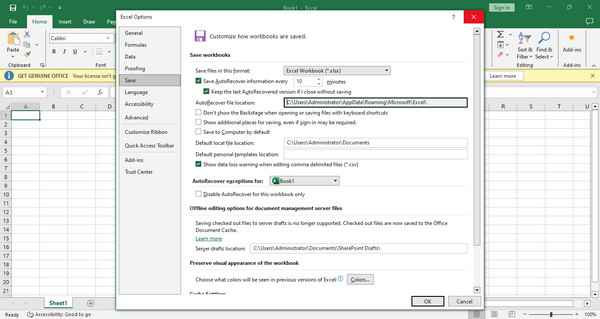
Meanwhile, your Excel program also has a dedicated AutoRecover settings section that holds the location of the automatically recovered Excel files. This feature works in the background, and knowing how to access it will give you a quick start in finding the file you wish to recover. Like the previous method, the process is straightforward, except it may take longer since you need to manually find the unsaved Excel document in the dedicated location.
Follow the instructions below to learn how to recover an Excel file that was not saved by checking the AutoRecover settings:
Step 1Select File on the blank workbook and click Options. Then, tick Save from the options.
Step 2When the section's interface appears, copy the AutoRecover file location and paste it into your File Explorer. The autosaved files will then be displayed, so recover the one you want.
Part 4. Check Cloud Versions
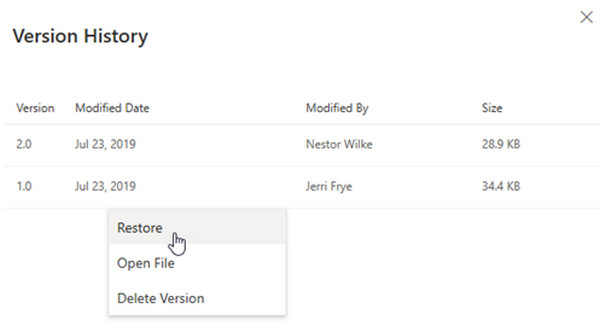
OneDrive and SharePoint are cloud platforms that automatically and continuously save every version of documents while working. Hence, if you store your Excel documents on either of them, you will be able to view the provided Version History of your file and recover the unsaved one you want. It is especially useful when you need to recover content that was lost from accidental deletions or unwanted changes, rather than just a crash or unsaved closure.
Follow the directions below to understand how to recover Excel files not saved by checking cloud versions:
Step 1Log in to the platform and right-click the Excel file with the version you want to recover.
Step 2After that, select Version history and pick the version you need from the list. Once decided, right-click the item and click Restore for recovery.
Part 5. The Manual Hunt via AppData Windows Run
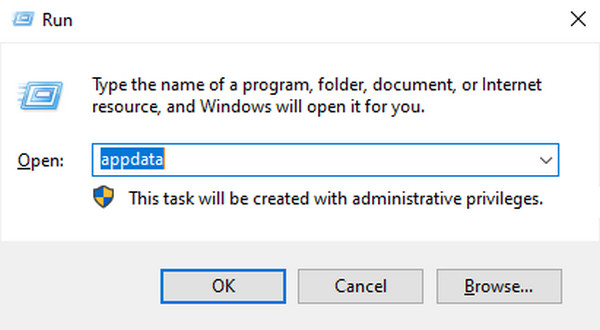
Other than Excel's built-in tools that you can find on the program's interface, recovering your unsaved file on the File Explorer is also possible through AppData Windows Run. It is basically browsing the App Data folder with the Windows + Run keyboard combination and manually hunting for the unsaved Excel file you intend to recover.
Follow the guide below to recover unsaved Excel via AppData Windows run:
Step 1Press Windows + R and enter AppData to open the designated folder.
Step 2Afterward, hit Local > Microsoft > Excel. Then, browse the available Excel data to find and open the unsaved document you desire to recover.
Part 6. Digging into Windows Temp Files
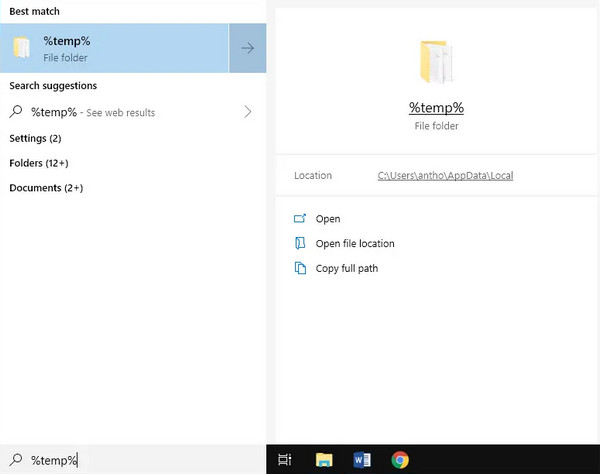
App Data isn't the only folder where you can search for deleted excel files. You can also dig into your Windows temp files and see if the unsaved file is available. However, unlike the previous method, the designated folder can be accessed via the desktop search bar rather than Windows Run.
Follow the procedure below to recover unsaved Excel file by digging into Windows temp files:
Step 1Using your Windows search bar, enter %temp%, and open the resulting folder.
Step 2From the available folders, select Diagnostics > EXCEL to find your unsaved file.
What if you cannot find what you want? Then you will need a deleted Excel recovery.
Part 7. Use FoneLab Data Retriever
If you can't recover files from Recycle Bin or with the built-in methods above, it is time to rely on a professional program, FoneLab Data Retriever. Don't worry, though. Unlike some professional tools, FoneLab Data Retriever is beginner-friendly and requires only basic knowledge. Not to mention its easy functions and interface designed with labels, descriptions, and guidelines.
FoneLab Data Retriever is designed to scan your computer's storage for lost or deleted documents; thus, it will be helpful to find and recover the unsaved Excel file you need. Meanwhile, the tool's additional features, like filter and search options, are also available for locating the files faster. Besides, other data types, like photos, music, etc., are also supported.
FoneLab Data Retriever - recover the lost/deleted data from computer, hard drive, flash drive, memory card, digital camera and more.
- Recover photos, videos, documents and more data with ease.
- Preview data before recovery.
See the operation below as a sample of how to recover unsaved Excel file with FoneLab Data Retriever:
Step 1Hit Free Download and install FoneLab Data Retriever using the saved file. Shortly, you can click Start, and on the interface, mark the disk drive where you formerly stored the Excel.
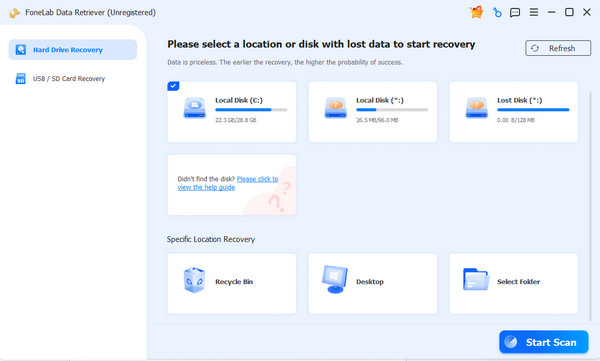
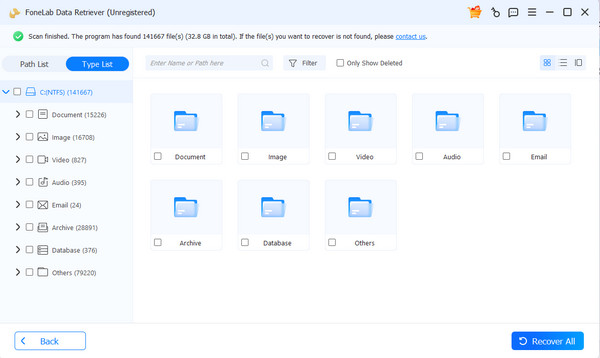
Step 2Click Start Scan afterward once the results appear, open the Document category to locate your unsaved Excel file. When found, check it before opting for the Recover All tab.
Part 8. Comparison of Methods on How to Recover Unsaved Files
| Method | Effectiveness | Ease of Use | Requires Technical Skills |
| Manage Workbook Tools | Very High | Very Easy | No |
| Check AutoRecover Settings | High | Easy | No |
| Check Cloud Versions | Very High | Very Easy | No |
| AppData Windows Run | Moderate | Moderate | Minimal |
| Windows Temp Files | Moderate | Moderate | No |
| FoneLab Data Retriever | Very High | Very Easy | No |
Part 9. FAQs about How to Recover Unsaved Excel File
How often does Excel save AutoRecover files?
By default, Excel saves AutoRecover information every 10 minutes.
Does restarting my computer affect recovery chances?
Unfortunately, it can since restarting may clear temporary files that Excel uses for recovery.
Recovering an unsaved Excel file is often easier than you think, and with the right approach or a tool like FoneLab Data Retriever when needed, your data is rarely gone for good.