
 iPhone Data Recovery
 iOS System Recovery
 iOS Data Backup & Restore
 iOS Unlocker
 iPhone Password Manager
 Location Changer
 Android Data Recovery
 Broken Android Data Extraction
 Android Data Backup & Restore
 Android Unlocker
 FoneTrans for iOS
 iPhone Data Eraser
 iPhone Cleaner
 HEIC Converter
 HyperTrans
 WhatsApp Transfer for iOS
 Mac Sweep
 Data Retriever
 Mac Data Retriever
 Video Converter Ultimate
 Screen Recorder
 Phone Mirror
- Part 1: Check Whether the Audio File Is Really Corrupted
- Part 2: Repair a Damaged Audio File Online
- Part 3: Recover Lost or Deleted Audio Files with FoneLab Data Retriever
- Part 4: What Causes Audio File Corruption
- Part 5: Prevent Audio Files from Getting Corrupted
- Part 6: When Recovery Fails
- Part 7: FAQs About Corrupted Audio Files
 Recover PC Data Now
Recover the lost/deleted data from computer, hard drive, flash drive, memory card, digital camera and more.
How to Recover and Repair Corrupted Audio Files on Windows
 Posted by Somei Liam / September 09, 2026 16:00
An audio file that suddenly won't play is one of those small panics — especially when it's a podcast episode, an interview, or a recording you can't redo. The file still has its name and size, but your player skips it, or an editor like Adobe Audition throws an error on open. This usually happens when a recorder loses power mid-recording, a file is interrupted during transfer, or a download came through incomplete.
Before you panic, know this: a "corrupted" audio file is often recoverable. Sometimes the header is fine and only the player is confused; other times the data is actually damaged and needs repair or recovery. This guide walks through the three practical routes — checking the file, repairing it online, and recovering a lost or deleted copy with FoneLab Data Retriever.

Guide List
- Part 1: Check Whether the Audio File Is Really Corrupted
- Part 2: Repair a Damaged Audio File Online
- Part 3: Recover Lost or Deleted Audio Files with FoneLab Data Retriever
- Part 4: What Causes Audio File Corruption
- Part 5: Prevent Audio Files from Getting Corrupted
- Part 6: When Recovery Fails
- Part 7: FAQs About Corrupted Audio Files
Part 1: Check Whether the Audio File Is Really Corrupted
Not every file that refuses to play is actually damaged. Sometimes the player is outdated, the file is still mid-download, or Windows simply can't read the metadata. Start with a quick property check before you assume the worst.
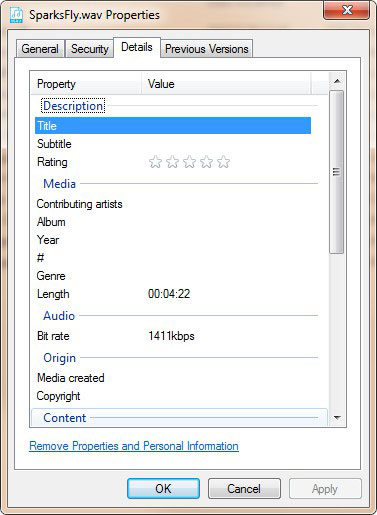
Step 1Open the folder that holds the audio file and locate it.
Step 2Right-click the file and select Properties.
Step 3Open the Details tab. You'll see sections like Description, Media, Audio, Origin, Content, and File.
Step 4Look at the Audio section. If the bit rate, sample rate, and length are all there, the header is intact and the file may just be misread. If those fields are empty, the file is likely corrupted.
You can also try opening the file in a second player or editor. If VLC plays it but your main app doesn't, it's usually a codec or app issue, not corruption.
If it won't play anywhere, recovering audio files in Windows is the next step.
Part 2: Repair a Damaged Audio File Online
For lightly damaged MP3 files, online repair tools are worth a try before anything heavier. They work best when only the header or metadata is broken, not when the audio data itself is missing.
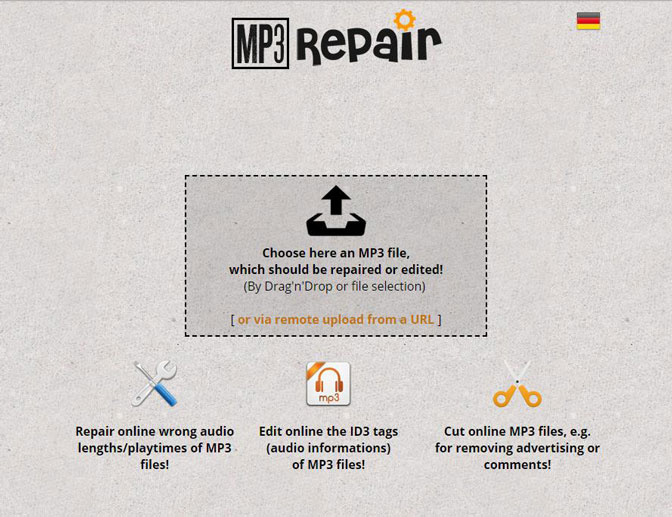
Step 1Open MP3Repair.net in your browser.
Step 2Click the Choose here an MP3 file box, pick the file, and click Open.
Step 3Press the Upload MP3 button.
Step 4Select the Repair audio length (playtime) option.
Step 5Click Repair/Edit your MP3 file now.
Step 6The site may switch to German at this point — click the orange Deine neue MP3-Datei herunterladen button to download the repaired file.
Online tools have limits: they're usually MP3-only, they can't rebuild missing audio data, and uploading private recordings to a third-party site is a privacy consideration. For anything serious, local recovery software is the safer route.
Repair with VLC Media Player
VLC can sometimes play a corrupted file that other players reject, and you can use its convert feature to re-encode the file into a clean copy.
- Open VLC and go to Media > Convert / Save.
- Add the corrupted audio file and click Convert / Save.
- Choose a profile like Audio - MP3 and pick an output location.
- Click Start and let VLC re-encode the file.
This works best when the file header is damaged but the audio data itself is intact. If VLC cannot read the file at all, the corruption is more severe and you may need a dedicated recovery tool.
Part 3: Recover Lost or Deleted Audio Files with FoneLab Data Retriever
When the file is deleted, the drive was formatted, or the corruption runs too deep for an online tool, the reliable fix is data recovery software. FoneLab Data Retriever scans your hard drive and removable devices, finds audio files by format, and lets you preview before recovering — whether the original was deleted, lost, or simply broken.
FoneLab Data Retriever - recover the lost/deleted data from computer, hard drive, flash drive, memory card, digital camera and more.
- Recover photos, videos, contacts, WhatsApp, and more data with ease.
- Preview data before recovery.
- Recover photos, videos, documents, and more data with ease.
- Recover data from device, iCloud, and iTunes.
Step 1Download and install FoneLab Data Retriever on your Windows PC, then launch it.
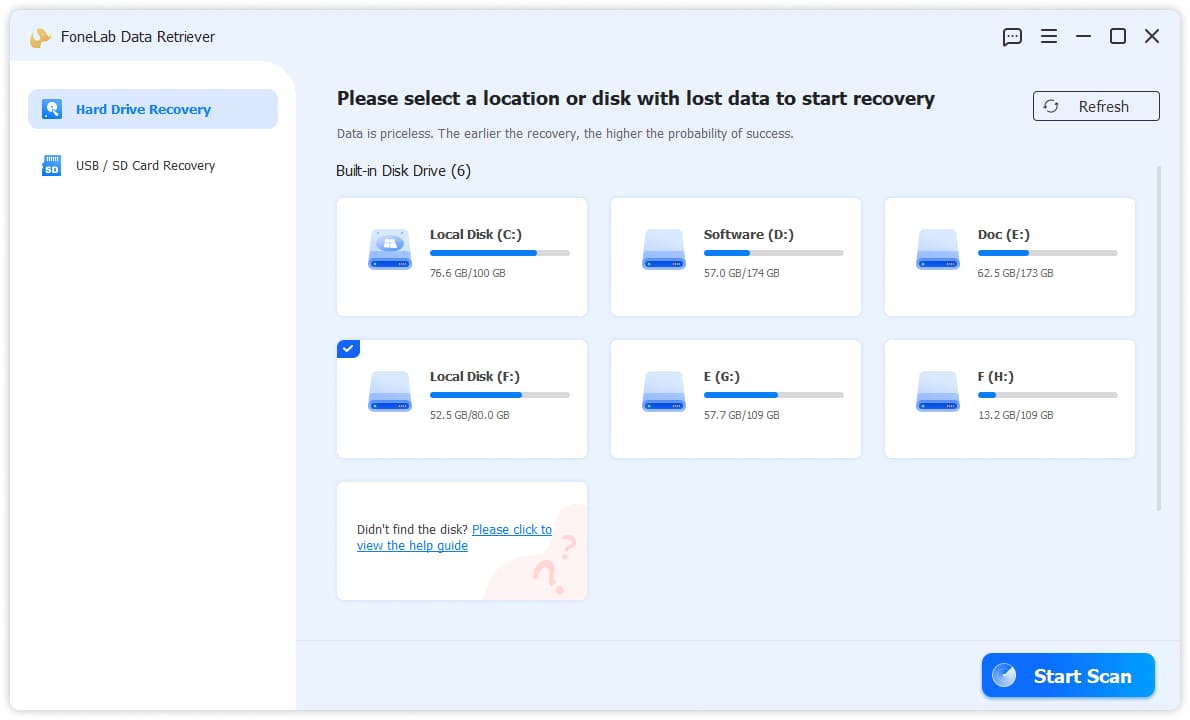
Step 2On the main screen, check the Audio file type, then choose the location where the file was stored — the C: drive, an external drive, or a memory card.
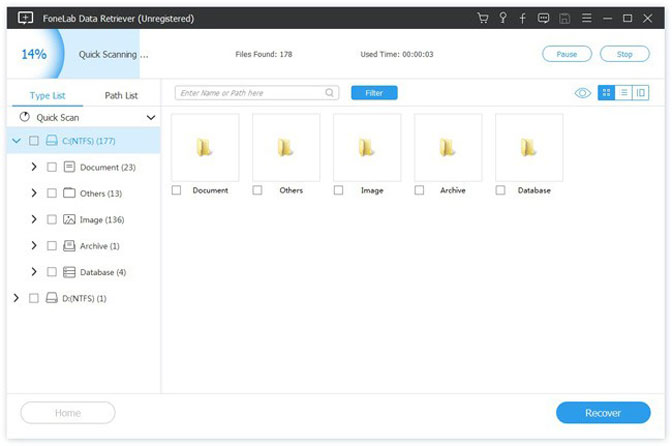
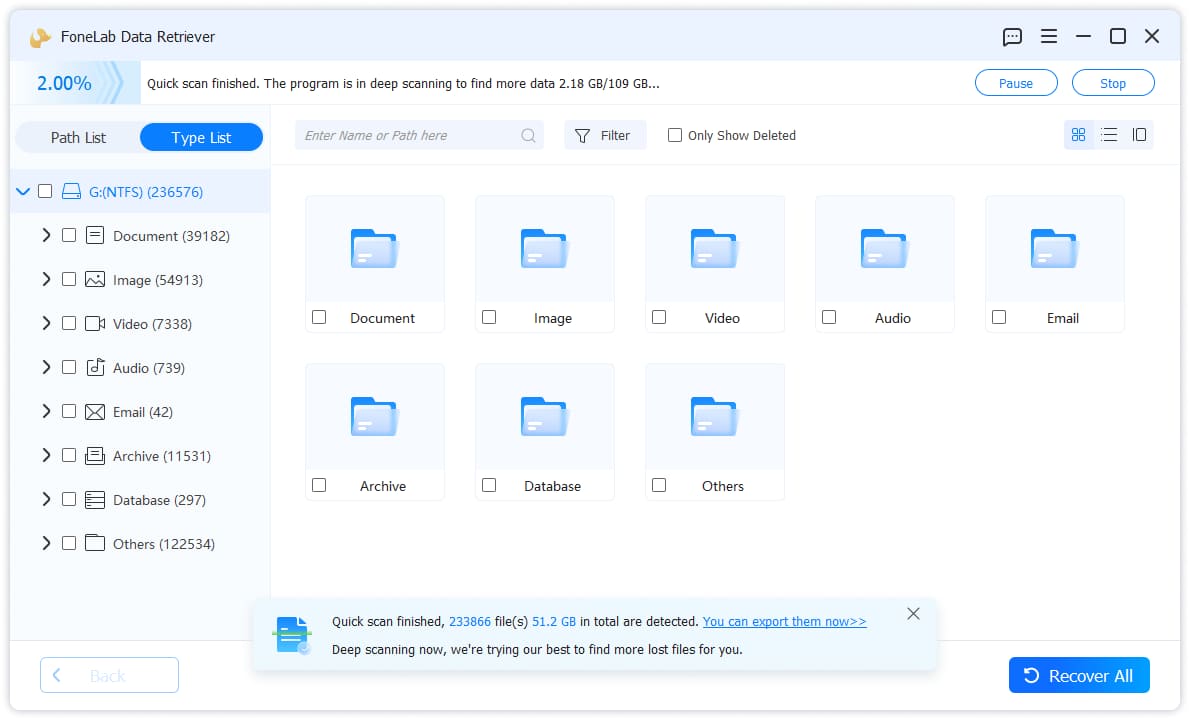
Step 3Click Scan. When it finishes, browse the results. If the file isn't in the first pass, run a Deep Scan.
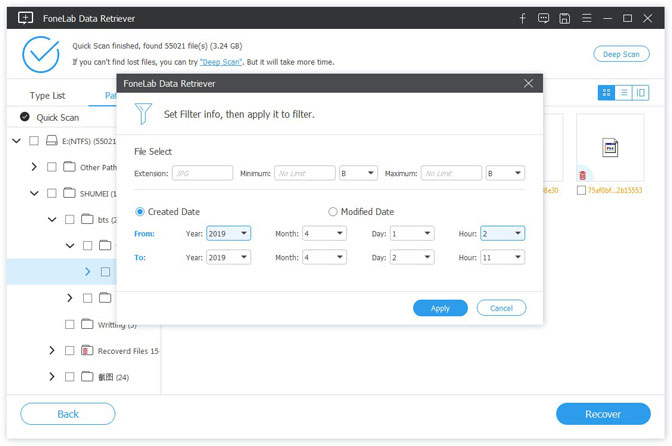
Step 4Use the Filter bar to narrow results by type or name when the list is long.
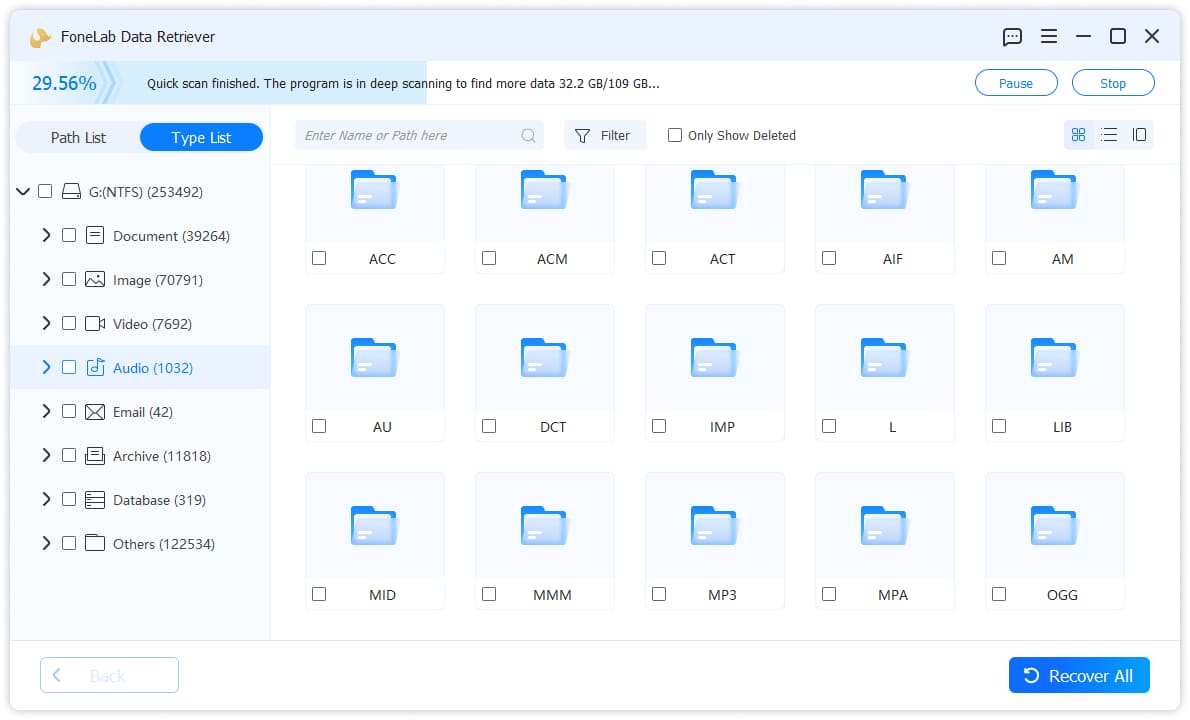
Step 5Select the audio file you need, click Recover, and choose a save location. The file is restored and ready to play.
Recovering a copy is often the fastest fix for corruption too: if the drive still holds a readable version — an earlier save, a shadow copy, or a version on another device — you skip the repair problem entirely.
For a full guide on pulling audio back from a drive, recovering audio files from a hard drive covers the scan in detail.
There's one habit that makes recovery dramatically more likely to succeed: stop using the drive the moment you realize an audio file is missing or unreadable. Every write — a new download, a running app's cache, even a Windows update — can overwrite the space where the deleted file still sits. If the file was on the C: drive, close heavy programs and recover as soon as you can; if it was on a removable card, take the card out and read it with a card reader instead of recording more onto it.
It's also worth knowing that recovery software finds files by scanning for recognizable format signatures, not just by reading the file table. That's why a file emptied from the Recycle Bin, or even a file on a reformatted drive, can still come back intact. The longer you wait and the more the drive gets used, the fewer recoverable copies remain.
Part 4: What Causes Audio File Corruption
- Interrupted recording: a recorder or phone that loses power or runs out of space mid-recording leaves a file that never got its closing header.
- Bad transfer: copying files over a flaky cable or network, or yanking a USB drive mid-write, truncates the data.
- Incomplete downloads: a browser that dies at 99% leaves an audio file that won't decode.
- Format conversion errors: converter tools that crash partway can leave a half-written MP3 or M4A.
- Drive problems: bad sectors or a dying hard drive can corrupt whatever lands on those sectors.
- Software crashes: an editor that closes uncleanly may fail to save the file's final chunks.
Understanding the cause matters because it points to the right fix: header damage is repairable online, missing data needs a recoverable copy, and a failing drive needs immediate backup before it gets worse.
Here's a useful test to tell light damage from serious damage: open the file in a hex viewer or a text editor and look at the first bytes. A healthy MP3 starts with the "ID3" tag or a recognizable frame header; a WAV starts with "RIFF" and "WAVE". If those markers are present, the file is mostly intact and an online repair or a metadata fix will usually bring it back. If they're gone or replaced by garbage, the damage runs deeper and recovery software is the better bet.
Another practical signal: the file's playable length. If a player shows "0:00" for a file that should be an hour long, the duration metadata is broken but the audio might still be there. Players like VLC sometimes offer "repair" hints, and dedicated tools can rebuild the header from the surviving audio stream.
Part 5: Prevent Audio Files from Getting Corrupted
- Always eject USB drives and memory cards properly before unplugging.
- Record with enough free space, and don't remove the card while the recorder is writing.
- Keep backup copies of anything irreplaceable — interviews, voice notes, finished mixes.
- Use a stable cable and connection when moving large audio libraries.
- Finish conversions and edits before shutting down the machine.
- Check drive health with tools like CrystalDiskInfo if files keep turning up damaged.
None of this is hard, but together these habits remove almost every common cause of a corrupted audio file.
And if you work on a shared or portable drive, make a habit of scanning it occasionally with a file-system check (chkdsk on Windows) so bad sectors are flagged before they take out a recording.
For people who record for a living — podcasters, journalists, musicians — the backup rule is worth stating plainly: three copies, two locations, one offsite. Keep the working file on your PC, a copy on an external drive, and a version in cloud storage or on a second machine. Audio is cheap to store, so there's no good reason to lose an interview or a take to a single failed disk.
Part 6: When Recovery Fails
If an online repair can't fix the file and the scan doesn't find a good copy, you're down to two honest options. First, check every device the file ever touched — another computer, a cloud sync folder, an old phone, a backup drive. Second, accept that heavily damaged files aren't always recoverable; the audio data itself may be physically gone. In that case, focus on recovering whatever else you can from the drive before it degrades further, and set up automatic backups so it doesn't happen again.
Part 7: FAQs About Corrupted Audio Files
Can a corrupted MP3 be fixed?
Often yes. If only the header or metadata is broken, online tools can repair it. If audio data is missing, recovery software or a backup is the way.
For WAV files specifically, recovering WAV files has the format-specific details.
Why won't my audio file play on Windows?
It could be corruption, a missing codec, or an outdated player. Check the file's Properties and try a second player like VLC before assuming data loss.
Is there a free way to recover deleted audio files?
Free trials of recovery tools exist, but full recovery usually needs the paid version. FoneLab Data Retriever offers a trial scan so you can see what's recoverable first.
Conclusion
A corrupted audio file is stressful, but it's rarely the end of the recording. Check the file's properties first, try an online repair for light damage, and use FoneLab Data Retriever when you need to recover a lost, deleted, or deeply damaged file. With a little luck and the right tool, that interview or podcast episode plays again.
FoneLab Data Retriever - recover the lost/deleted data from computer, hard drive, flash drive, memory card, digital camera and more.
- Recover photos, videos, contacts, WhatsApp, and more data with ease.
- Preview data before recovery.
- Recover photos, videos, documents, and more data with ease.
- Recover data from device, iCloud, and iTunes.