
 iPhone Data Recovery
 iOS System Recovery
 iOS Data Backup & Restore
 iOS Unlocker
 iPhone Password Manager
 Location Changer
 Android Data Recovery
 Broken Android Data Extraction
 Android Data Backup & Restore
 Android Unlocker
 FoneTrans for iOS
 iPhone Data Eraser
 iPhone Cleaner
 HEIC Converter
 HyperTrans
 WhatsApp Transfer for iOS
 Mac Sweep
 Data Retriever
 Mac Data Retriever
 Video Converter Ultimate
 Screen Recorder
 Phone Mirror
 Get Data Recovery Now
Recover the lost/deleted data from computer, hard drive, flash drive, memory card, digital camera and more.
[Solved] Folder Turned into Shortcut on Windows? Fix & Recover in 4 Ways
 Updated by Somei Liam / October 29, 2026 09:00

You plug in your USB drive or open a folder on the PC, and suddenly all your documents, photos, and videos are gone. In their place is a single tiny shortcut icon. That is the classic shortcut virus, and it is one of the most confusing things that can happen to a Windows user because the files look deleted when they are actually still on the drive, just hidden and locked.
The good news is that in nearly all cases your data is not lost. The virus hides the real folders and replaces them with malicious .lnk shortcuts. Once you unhide the files and remove the infection, everything comes back. In this guide, I will show you how to recover a folder that has turned into a shortcut, using built-in Windows tools first and a recovery tool as a backup.

Guide List
Part 1. Why a Folder Turns into a Shortcut
Understanding the cause helps you fix it without making things worse. This behavior is almost always caused by malware, not by Windows itself.
- Shortcut virus. A Trojan on a USB stick marks your real folders as hidden and system files, then drops fake .lnk shortcuts that run the virus again when clicked.
- AutoRun infection. Older Windows versions used to run a script automatically when a drive was mounted, which spread the virus between PCs.
- Accidental hidden attribute. Sometimes a sync tool or a clumsy script marks folders as hidden, making them appear to vanish.
- File system glitch. A corrupted table can make folders display as broken shortcuts.
Crucially, do not double-click the shortcut to open your files. That is exactly what the virus wants, and it will reinfect your PC. Treat the drive as infected, unhide the real folders, and then scan for the malware.
You will usually notice a few telltale signs: the drive feels emptier than it should, the file size drops to a tiny number of kilobytes, and every missing folder is replaced by a shortcut with the same name. Sometimes the shortcut points to a hidden executable inside a folder like .recycler or System Volume Information. Recognizing these signs stops you from panicking and from clicking something that makes the infection worse.
FoneLab Data Retriever - recover the lost/deleted data from computer, hard drive, flash drive, memory card, digital camera and more.
- Recover photos, videos, documents and more data with ease.
- Preview data before recovery.
Part 2. Method 1: Unhide Files with Folder Options
The shortcut virus hides your folders. So the first free fix is simply to tell Windows to show hidden and protected files again.
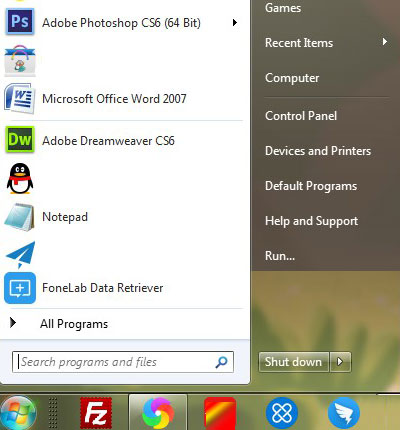
Step 1 Open the infected drive in File Explorer. On the top menu, click View and tick the Hidden items checkbox.
Step 2 Open Control Panel > File Explorer Options (on older Windows, Folder Options), then go to the View tab.
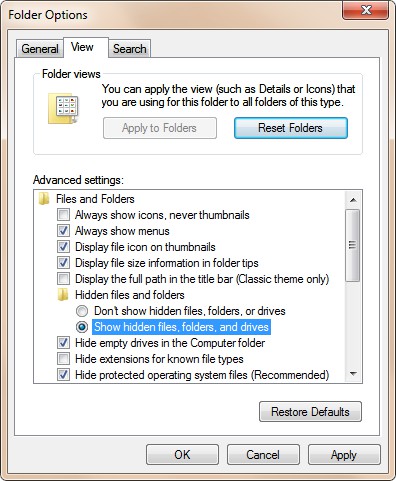
Step 3 Select Show hidden files, folders, and drives, and untick Hide protected operating system files. Click Apply.
Step 4 Your real folders should reappear. Copy them to a safe location on your PC, then delete the fake .lnk shortcuts and any suspicious executable files.
If the folders are still not visible after this, the virus likely set a system attribute that Folder Options cannot clear. Move to the ATTRIB command below.
Once the real folders are back, resist the urge to click the shortcuts immediately. First open the actual folders, confirm your photos and documents are all there, and copy them to a folder on your internal hard drive. Only after the backup is safe should you delete the shortcuts and the hidden executable the virus left behind. This order matters: if something goes wrong while deleting, your real files are already safe on the PC.
Part 3. Method 2: Fix It with the ATTRIB Command
The command line is the most reliable free way to unhide folders that have been locked by the shortcut virus. It resets the hidden and system attributes on the whole drive in one go.
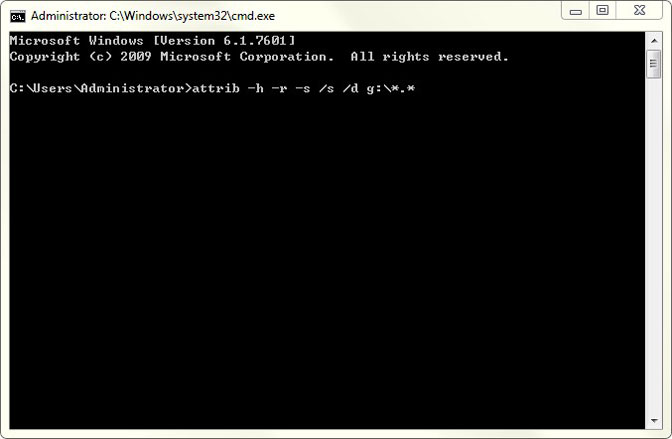
Step 1 Press Win + S, type cmd, right-click Command Prompt, and choose Run as administrator.
Step 2 Type the drive letter of the infected drive, for example e:, and press Enter.
Step 3 Type the following command and press Enter: attrib -h -r -s /s /d e:\*.*. Replace e: with your own drive letter.
Step 4 When it finishes, reopen the drive. Your folders should be visible again. Back them up, then delete the malicious shortcuts and run a full antivirus scan.
The ATTRIB command removes the hidden (-h), read-only (-r), and system (-s) attributes recursively. It does not delete anything, so it is safe to run. If your files were genuinely deleted rather than hidden, continue to the next method.
If the command returns an access-denied error, make sure you launched the command prompt as an administrator. If it says the path is not found, double-check the drive letter with File Explorer, because a single wrong letter will leave you looking at an empty disk. Once the folders reappear, copy them off the drive immediately before doing anything else.
Part 4. Method 3: Recover with FoneLab Data Retriever
If the folders are truly gone (you formatted the drive trying to fix it, or the virus deleted files after the cleanup), a dedicated recovery tool rebuilds the missing file table. FoneLab Data Retriever scans USB drives and hard disks directly and pulls back documents, photos, and videos. It will not remove the virus for you, but it recovers the files that the virus or your cleanup may have erased.
FoneLab Data Retriever - recover the lost/deleted data from computer, hard drive, flash drive, memory card, digital camera and more.
- Recover photos, videos, documents and more data with ease.
- Preview data before recovery.
Step 1 Install FoneLab Data Retriever on your internal drive, not on the USB stick you are recovering from.
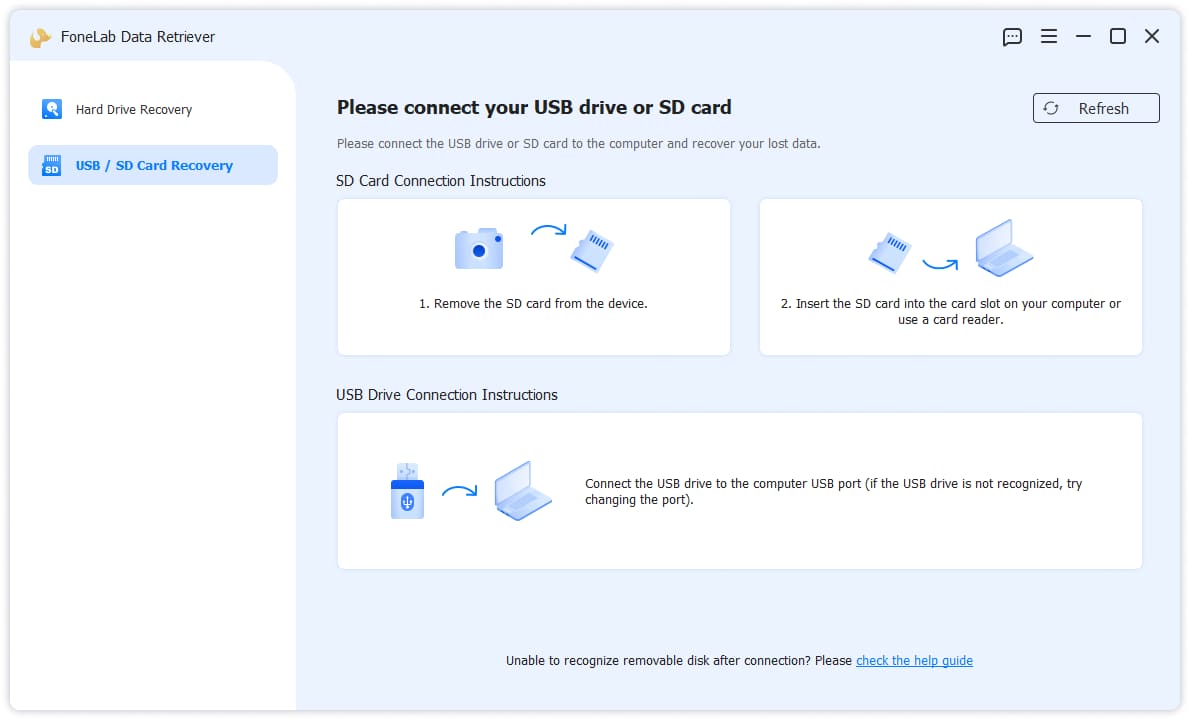
Step 2 On the left side, choose USB / SD Card Recovery, and let the program detect the infected drive.
Step 3 Click Scan Disk, and choose the file type from the drop-down list so the scan targets the right kind of data.
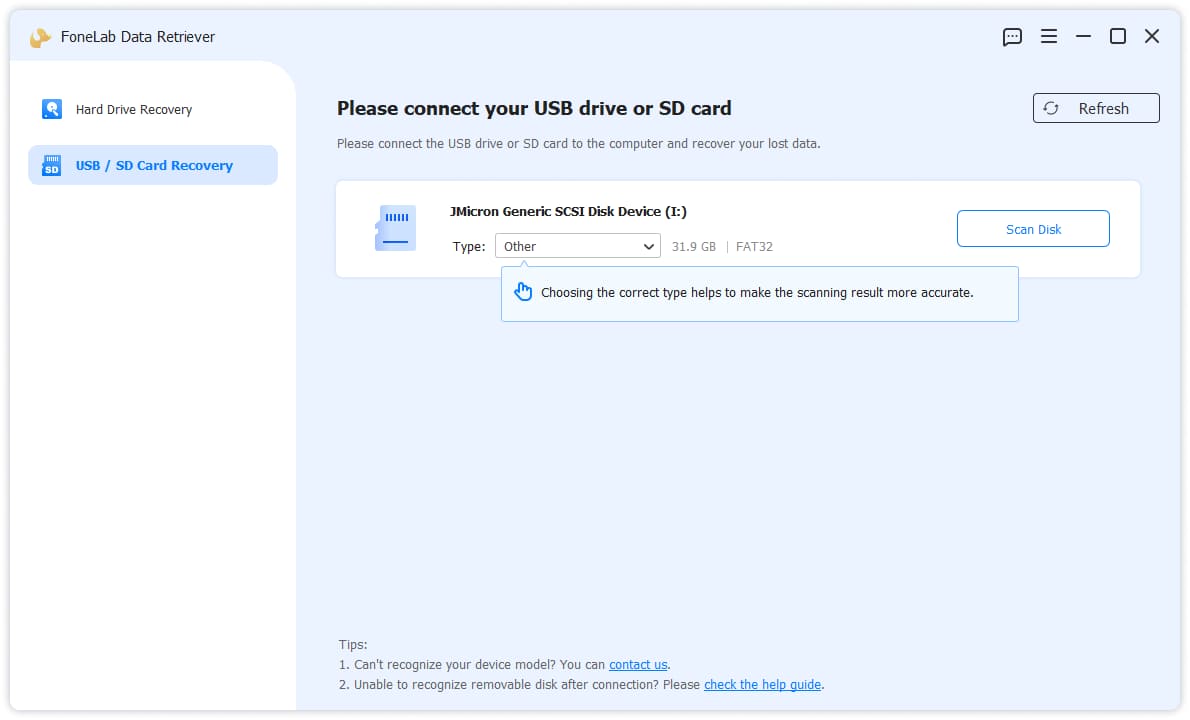
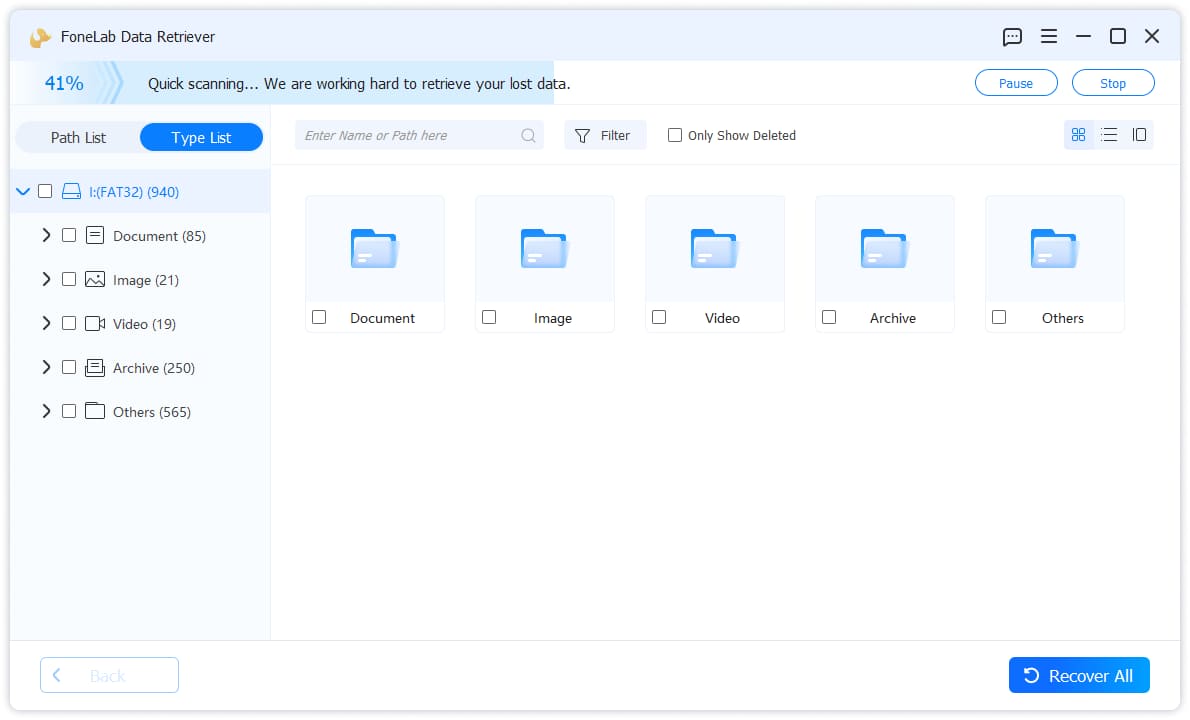
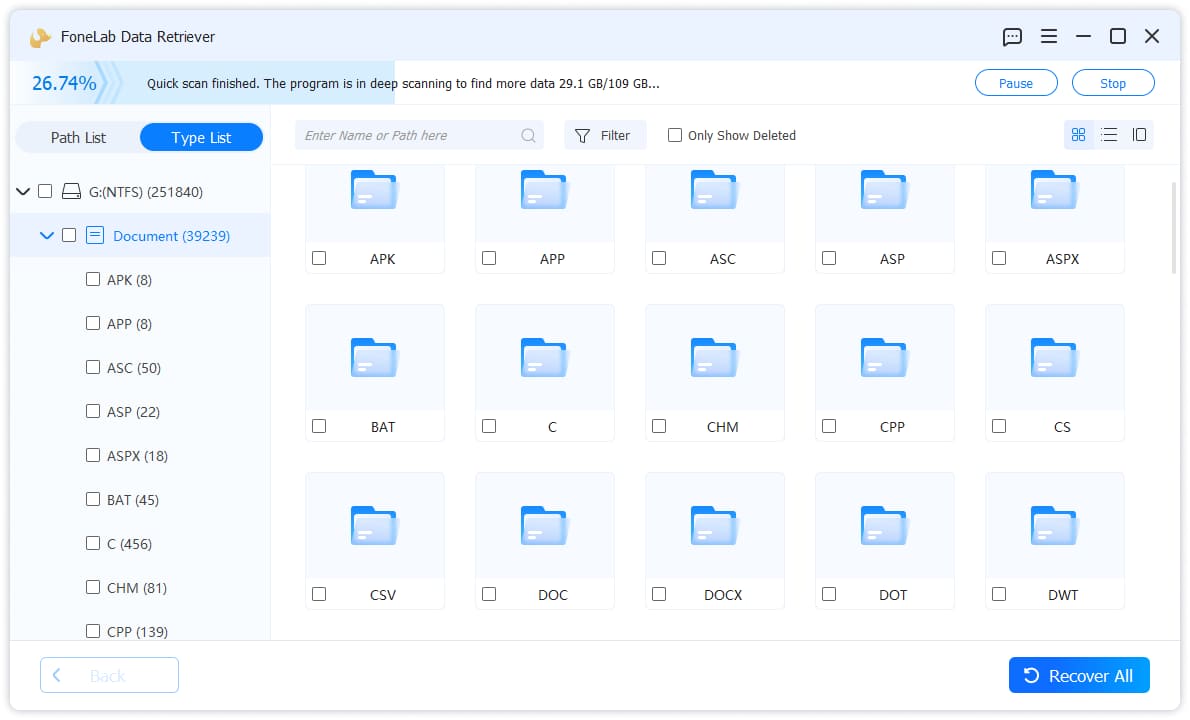
Step 4 When the scan finishes, click a file type and tick the boxes of the folders and files you want. Use the filter or only show deleted option to locate them faster, and preview each file to confirm it opens.
Step 5 Click the blue Recover button in the bottom-right corner and save the recovered files to your internal drive, never back to the USB.
After recovery, format the infected USB stick fully and copy your files back. Formatting removes the leftover virus and resets the drive to a clean state.
To be honest about what this tool can and cannot do: it rebuilds file entries the drive has lost, so it works when the folders were deleted or the file table got corrupted. It cannot disinfect the drive for you, and it cannot recover files that have been overwritten by new data. If the ATTRIB command already brought your folders back, you probably do not need it at all, but it is a useful safety net when the cleanup goes wrong.
| Folder Options | ATTRIB Command | FoneLab Data Retriever | |
|---|---|---|---|
| Best for | Folders only hidden | System-hidden folders | Files actually deleted/formatted |
| Cost | Free | Free | Free trial, paid license |
| Needs skills | Very easy | Easy | Easy |
| Removes virus | No | No | No (use antivirus after) |
Which method should you try first? Work through the free options in order: check the Recycle Bin or Trash and any backup, because restoring from a working backup is instant and risk-free. Reach for FoneLab Data Retriever when those come up empty, or when the drive was formatted, corrupted, or reinstalled. The comparison table above makes the trade-offs clear: backups are the safest option but require foresight, while the recovery tool works without a backup but cannot repair a physically failing drive.
If your recovery still fails, do not panic and do not keep writing to the disk. First confirm the drive is still readable in Disk Management on Windows or Disk Utility on Mac. If the drive is not detected at all, try a different cable, a different USB port, or plugging it into another computer. If files are found but will not open, they were likely partially overwritten, and a professional data recovery lab that works at the sector level may be your last resort. The earlier you stop using the disk, the more likely a normal software recovery succeeds.
FoneLab Data Retriever - recover the lost/deleted data from computer, hard drive, flash drive, memory card, digital camera and more.
- Recover photos, videos, documents and more data with ease.
- Preview data before recovery.
Part 5. Prevent the Shortcut Virus Again
- Disable AutoRun/AutoPlay. This stops a USB drive from running scripts the moment you plug it in.
- Scan every foreign USB stick before opening it, even ones from friends.
- Keep Windows and your antivirus up to date so known shortcut malware is blocked.
- Eject drives safely to avoid the corruption that makes folders act like broken shortcuts.
- Back up important folders so a single infected drive never wipes your only copy.
Part 6. Frequently Asked Questions
Is my data gone if my folder became a shortcut?
No. In a shortcut-virus infection the files are still on the drive, just hidden. The ATTRIB command or Folder Options usually brings them straight back. Only if the drive was formatted or the files were manually deleted do you need recovery software.
Is it safe to run the attrib command?
Yes. The attrib command only resets file attributes; it does not delete, move, or overwrite any data. Just make sure you use the correct drive letter so you do not alter files on the wrong disk.
Why do my folders keep turning back into shortcuts?
That means the virus is still active on the drive or your PC. Unhide the files, format the USB stick, and run a full antivirus scan. If it returns on the same computer, the infection lives on your PC, not the stick.
Can FoneLab Data Retriever remove the shortcut virus?
No. It is a data recovery tool, not an antivirus. It recovers files that were deleted or hidden, but you should pair it with a proper antivirus scan and a full format to clean the drive.
A folder that turns into a shortcut looks scary, but your files are usually still there. Start with Folder Options and the ATTRIB command, back everything up, then format and scan the drive. If some files were genuinely lost, let FoneLab Data Retriever pull them back. For more, see recovering deleted files from a USB drive.
FoneLab Data Retriever - recover the lost/deleted data from computer, hard drive, flash drive, memory card, digital camera and more.
- Recover photos, videos, documents and more data with ease.
- Preview data before recovery.