
 iPhone Data Recovery
 iOS System Recovery
 iOS Data Backup & Restore
 iOS Unlocker
 iPhone Password Manager
 Location Changer
 Android Data Recovery
 Broken Android Data Extraction
 Android Data Backup & Restore
 Android Unlocker
 FoneTrans for iOS
 iPhone Data Eraser
 iPhone Cleaner
 HEIC Converter
 HyperTrans
 WhatsApp Transfer for iOS
 Mac Sweep
 Data Retriever
 Mac Data Retriever
 Video Converter Ultimate
 Screen Recorder
 Phone Mirror
- Part 1. Restore Older Versions in Microsoft 365 / OneDrive
- Part 2. Recover Previous Versions using Windows File Explorer
- Part 3. Roll Back Excel Files on Mac using Time Machine
- Part 4. Check the Excel AutoRecover Cache
- Part 5. Restore Excel File with FoneLab Data Retriever
- Part 6. Comparison of Ways to Restore Previous Version of Excel File
- Part 7. FAQs about Restoring Previous Version of Excel File
 Recover PC Data Now
Recover the lost/deleted data from computer, hard drive, flash drive, memory card, digital camera and more.
How to Recover Previous Version of Excel File Efficiently
 Updated by
 Do you need to recover previous version of Excel? Many users face this problem after saving over or overwriting their work, losing the important content that it contained at an earlier time. It can be stressful, but the good news is that solutions are often quick and simple. From the Excel program's built-in features to more advanced methods, recovering your Excel is possible.
After all, Excel documents are among the most vital files in the professional field, whether at work, in business, or at school. So, several recovery solutions have been developed to help users restore their needed version of the Excel file. Simply explore the sections below to discover the eminent methods and choose the most appropriate process for your situation.


Guide List
- Part 1. Restore Older Versions in Microsoft 365 / OneDrive
- Part 2. Recover Previous Versions using Windows File Explorer
- Part 3. Roll Back Excel Files on Mac using Time Machine
- Part 4. Check the Excel AutoRecover Cache
- Part 5. Restore Excel File with FoneLab Data Retriever
- Part 6. Comparison of Ways to Restore Previous Version of Excel File
- Part 7. FAQs about Restoring Previous Version of Excel File
Part 1. Restore Older Versions in Microsoft 365 / OneDrive
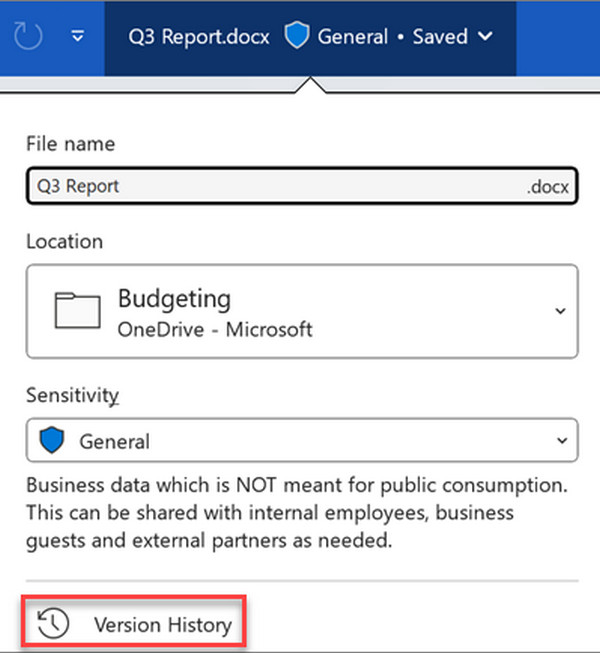
If you use Microsoft 365 or OneDrive, you have one of the easiest recovery options available. These platforms automatically save version history for your Excel files as you work. Hence, you will be able to go back to an earlier version of your document, and you can recover it anytime. Meanwhile, this feature is built in and requires no extra setup. So, it is the most convenient as long as your Excel file is stored on either Microsoft 365 or OneDrive.
Follow the procedure below to grasp how to restore an Excel file to a previous version in Microsoft 365/OneDrive:
Step 1Open your Excel file in the Microsoft 365 or OneDrive's desktop app or website, then click the file name at the top of the window and select Version History from the dropdown menu.
Step 2Once the list of saved versions is presented, click on the one you want to restore, and select Restore to recover and replace your current file with that older version.
Part 2. Recover Previous Versions using Windows File Explorer
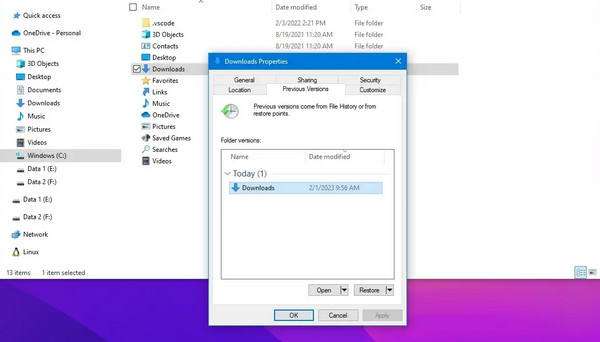
Not all users use the platforms mentioned above, but there are other options. Windows File Explorer offers another reliable way to retrieve the previous version of your Excel file. It relies on the built-in file history or restore point features of your Windows operating system, which is why it works best for files saved locally on your computer. Like before, no complicated or advanced steps are needed. Just make sure the File History feature is enabled beforehand.
Follow the steps below to determine how to recover previous version of Excel file after saving using the Windows File Explorer:
Step 1Right-click on your Excel file in File Explorer, select Properties, and then click the Previous Versions tab at the top to see all available older copies.
Step 2Once you find your desired version, click it from the list and tick Restore for recovery.
Part 3. Roll Back Excel Files on Mac using Time Machine
If Windows has the File History feature, Mac offers Time Machine. It is the equivalent function you can rely on, providing a straightforward way to recover previous versions of your Excel files. It automatically saves copies of your files at regular intervals, making it a great option if you regularly back up your system with an external drive or network storage. However, if you haven't yet saved a backup, there also won't be a previous version available for your Excel file. This method heavily relies on Time Machine backups, so having a backup is essential for restoring previous versions.
Follow the guide below to learn how to restore a previous version of Excel using Time Machine:
Step 1Open the folder containing your Excel file, then launch Time Machine from the menu bar. Once the feature interface appears, scroll through the timeline to find the version you need.
Step 2Afterward, select the file from that specific backup and click Restore. The file will then be copied back to its original location with the older version intact.

Part 4. Check the Excel AutoRecover Cache
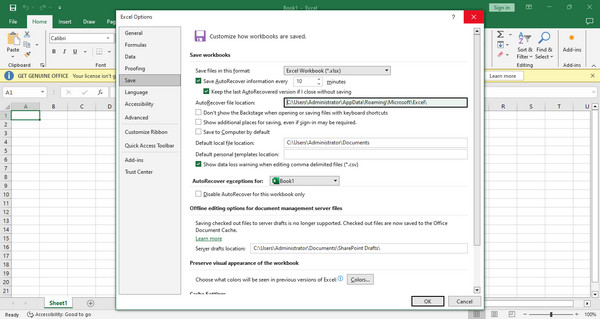
Finally, you can check the Excel AutoRecover cache as a last resort if all the other methods fail. This feature automatically saves temporary copies of your Excel documents at set intervals, but in the form of cache files. It is designed to help you recover unsaved work after a crash or unexpected shutdown, and these files are in a hidden folder on your computer. While not as reliable as version history or backups, it can still save you in an emergency. You just need to be patient and put in some effort to locate and recover your desired version of the Excel file.
Follow the operation below to recover previous version of Excel by checking the AutoRecover cache:
Step 1On your Excel interface, go to File > Options > Save, and copy the file path listed under AutoRecover file location to find where temporary files are stored.
Step 2Next, paste the path into File Explorer to look for your file and recover it afterward.
Part 5. Restore Excel File with FoneLab Data Retriever
For situations where built-in recovery tools cannot help, a professional like FoneLab Data Retriever offers another possible solution. This tool is designed to retrieve lost or deleted files from computers, hard drives, flash drives, and other storage devices. So, deleted Excel recovery is possible, especially if you're looking for the document that has been erased.
Meanwhile, another advantage you will love about this tool is how it can be installed on either Windows or macOS. Thus, regardless of the operating system you use, FoneLab Data Retriever will help you recover your Excel easily, especially with its intuitive interface. Additionally, media files, emails, and other documents are also supported, aside from Excel files.
FoneLab Data Retriever - recover the lost/deleted data from computer, hard drive, flash drive, memory card, digital camera and more.
- Recover photos, videos, documents and more data with ease.
- Preview data before recovery.
Perceive the convenient guidance below as a sample to restore previous version of Excel file via FoneLab Data Retriever:
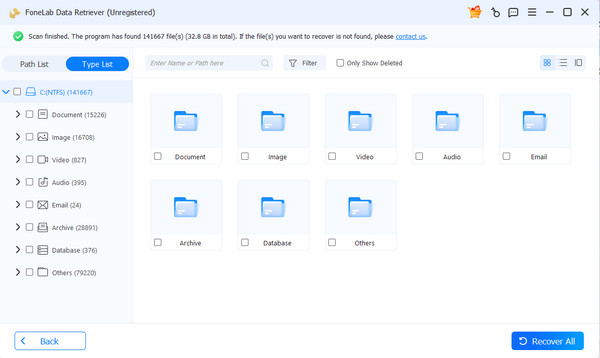
Step 1Start with the Free Download button to have the FoneLab Data Retriever file, then utilize it for the installation. When Start appears, select the button to launch the interface and select the disk drive that previously contained the Excel file before clicking Start Scan.
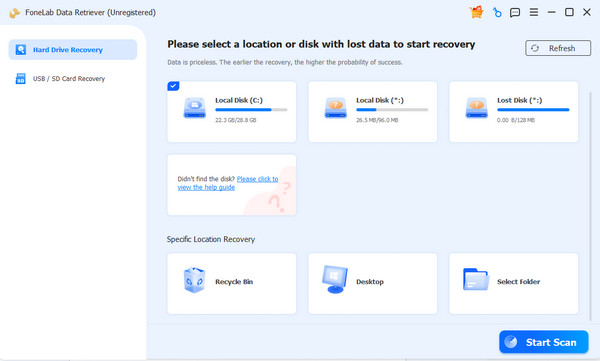
Step 2After scanning, proceed to the Documents folder to explore the deleted files and find your Excel document. Once located, mark its checkbox and select Recover All.
Part 6. Comparison of Ways to Restore Previous Version of Excel File
| Feature | Best For | Recovery Source | Works Without Prior Setup | Ease of Use |
| Microsoft 365 / OneDrive | Cloud-stored files | OneDrive cloud storage | Yes | Very Easy |
| Windows File Explorer | Locally saved files | Local restore points | No | Easy |
| Time Machine (Mac) | Mac users with backups | External backup drive | No | Easy |
| AutoRecover Cache | Recovering unsaved work | Hidden cache folder | No | Moderate |
| FoneLab Data Retriever | Lost, deleted, or permanently gone files | Hard drives, USB, SD cards, etc. | Yes | Easy |
Part 7. FAQs about Restoring Previous Version of Excel File
Will restoring a previous version overwrite my current file?
Yes, it will. The process replaces your existing file with the older version that you choose to restore.
Can I recover a version from a deleted Excel file?
Yes, you can. FoneLab Data Retriever can recover deleted files from your hard drive or external storage, even if they are not in the recycle bin.
No matter which method you choose, the key is to act quickly and always maintain regular backups or use a reliable tool like FoneLab Data Retriever to help prevent or recover from future data loss.