
 iPhone Data Recovery
 iOS System Recovery
 iOS Data Backup & Restore
 iOS Unlocker
 iPhone Password Manager
 Location Changer
 Android Data Recovery
 Broken Android Data Extraction
 Android Data Backup & Restore
 Android Unlocker
 FoneTrans for iOS
 iPhone Data Eraser
 iPhone Cleaner
 HEIC Converter
 HyperTrans
 WhatsApp Transfer for iOS
 Mac Sweep
 Data Retriever
 Mac Data Retriever
 Video Converter Ultimate
 Screen Recorder
 Phone Mirror
 Get Data Recovery Now
Recover the lost/deleted data from computer, hard drive, flash drive, memory card, digital camera and more.
Audacity Recovery: Recover Unsaved or Deleted Recording Projects
 Updated by Somei Liam / October 29, 2026 09:00
A recording session gone wrong is one of the worst feelings in audio work. You spent an hour recording a podcast, a voiceover, or a track, and then Audacity crashed, you forgot to save, or you deleted the project folder. The raw recording time can never be reproduced, so recovering those files matters.
The good news is that Audacity does a lot of automatic saving behind the scenes, and even when a project was never saved, the raw audio data is often still sitting on disk. In this guide I will show you how to recover an unsaved or deleted Audacity recording, starting with Audacity's own built-in recovery and temp files, then moving to a data recovery tool for projects that were truly deleted.

Guide List
Part 1. Why Audacity Recordings Go Missing
Audacity stores your work in two parts: the project file (a small .aup3 or older .aup) and a folder of raw audio data. Understanding this explains why recovery is often possible.
- Audacity crashed. If the program closed unexpectedly, it can offer to recover the session on the next launch.
- You never saved the project. The recording is in memory or a temp folder, not a real project file yet.
- You deleted the project or its _data folder. Deleting the data folder silences the project even if the .aup file remains.
- You moved the project. Moving the .aup file without its data folder breaks the link.
- The drive was cleaned. A disk cleanup or accidental deletion removed the audio files.
The moment you realize a recording is missing, stop recording and saving new work to that drive. The raw audio is large, and new files can overwrite it fast. Do not reinstall Audacity on the same disk if the files were deleted; install recovery tools elsewhere.
Audacity's project structure trips people up constantly. The .aup3 file is only a small database that points at audio blocks stored in a companion folder. If you ever see a project that opens but shows empty tracks or loud error beeps, it almost always means the data folder is missing or was moved. That distinction matters for recovery: recovering the tiny project file alone is useless, but recovering the folder of audio blocks brings the whole session back. So when you scan, look for both the project file and the folder of .au or WAV data together.
If Audacity crashed before you saved, the first thing to do is simply relaunch it. On the next open, Audacity often shows a "Project Recovery" dialog listing the unsaved sessions it has on disk, and a single click restores the whole timeline. If that dialog does not appear, the unsaved audio lives in Audacity's temp directory, which you can reveal from Edit > Preferences > Directories. Open that temp folder in your file manager and look for folders named after the crashed session; copying them out before rebooting is the free fix that works more often than people expect. Only if neither the recovery dialog nor the temp folder turns anything up should you move on to a full disk scan.
FoneLab Data Retriever - recover the lost/deleted data from computer, hard drive, flash drive, memory card, digital camera and more.
- Recover photos, videos, documents and more data with ease.
- Preview data before recovery.
Part 2. Method 1: Use Audacity's Own Crash Recovery
If Audacity crashed, it remembers the unsaved session. This is the fastest free recovery and the first thing to try.
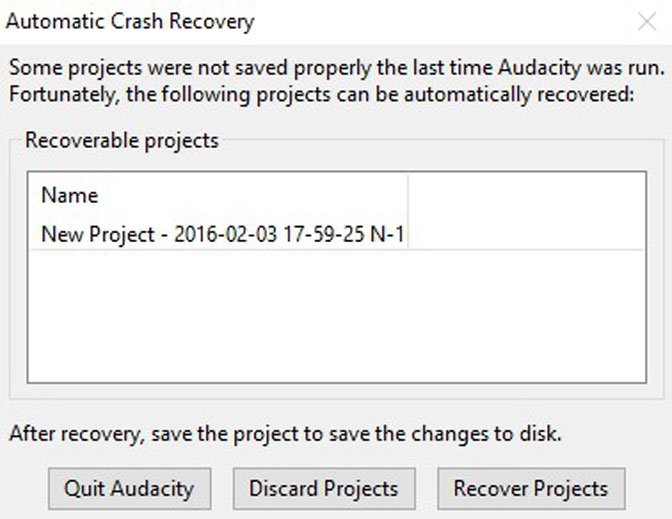
Step 1 Relaunch Audacity after a crash. It should show a dialog asking whether you want to recover the unsaved project.
Step 2 Choose Yes and let Audacity restore the tracks.
Step 3 Immediately save the recovered project with File > Save Project, and export a WAV or MP3 copy as a backup.
If no recovery prompt appears, the session was not saved by Audacity's auto-recovery. That does not mean the audio is gone; the raw data may still be in the temp folder, which is the next method.
Part 3. Method 2: Recover from the Temp Folder
Audacity writes a temporary copy of your recording while you work. If the project was never saved, this temp data is your best free shot.
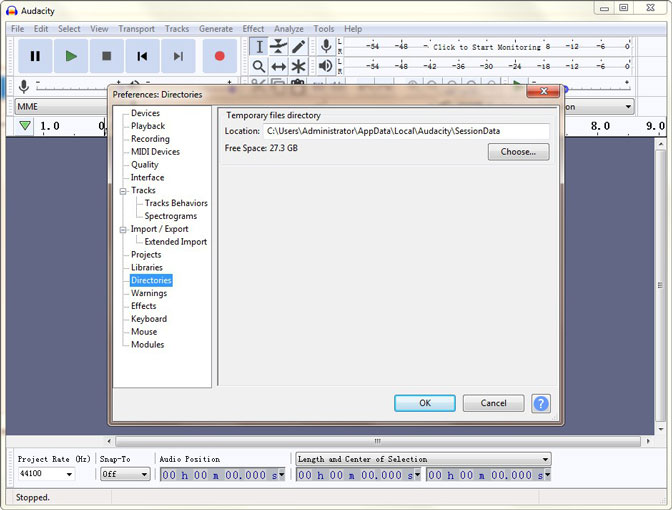
Step 1 In Audacity, open Edit > Preferences (on Mac, Audacity > Settings) and go to the Directories section.
Step 2 Note the path shown for the temporary directory, then open that folder in File Explorer or Finder.
Step 3 Look for files with names like audacity-data or numbered .au audio blocks. Copy them to a safe folder.
Step 4 You can drag the recovered .au blocks back into Audacity to listen and reassemble them, or import them as raw audio.
Temp files are deleted when you close Audacity normally, so this works best if Audacity crashed rather than closed cleanly. If the temp folder is empty and the project was deleted, use the recovery tool next.
Part 4. Method 3: Recover with FoneLab Data Retriever
If the project or its audio blocks were deleted, emptied from the Recycle Bin, or lost after a disk cleanup, a data recovery tool rebuilds the missing files. FoneLab Data Retriever scans the drive for WAV, MP3, AIFF, and other audio files and restores them. On Audacity projects specifically, the raw audio blocks are usually recoverable, though the .aup3 project database may not show up in the file-type list; recovering the whole session folder still lets Audacity reopen the recording. It works on both Windows and Mac.
FoneLab Data Retriever - recover the lost/deleted data from computer, hard drive, flash drive, memory card, digital camera and more.
- Recover photos, videos, documents and more data with ease.
- Preview data before recovery.
Step 1 Install and launch FoneLab Data Retriever, installing it on a different drive than the one you are recovering from.
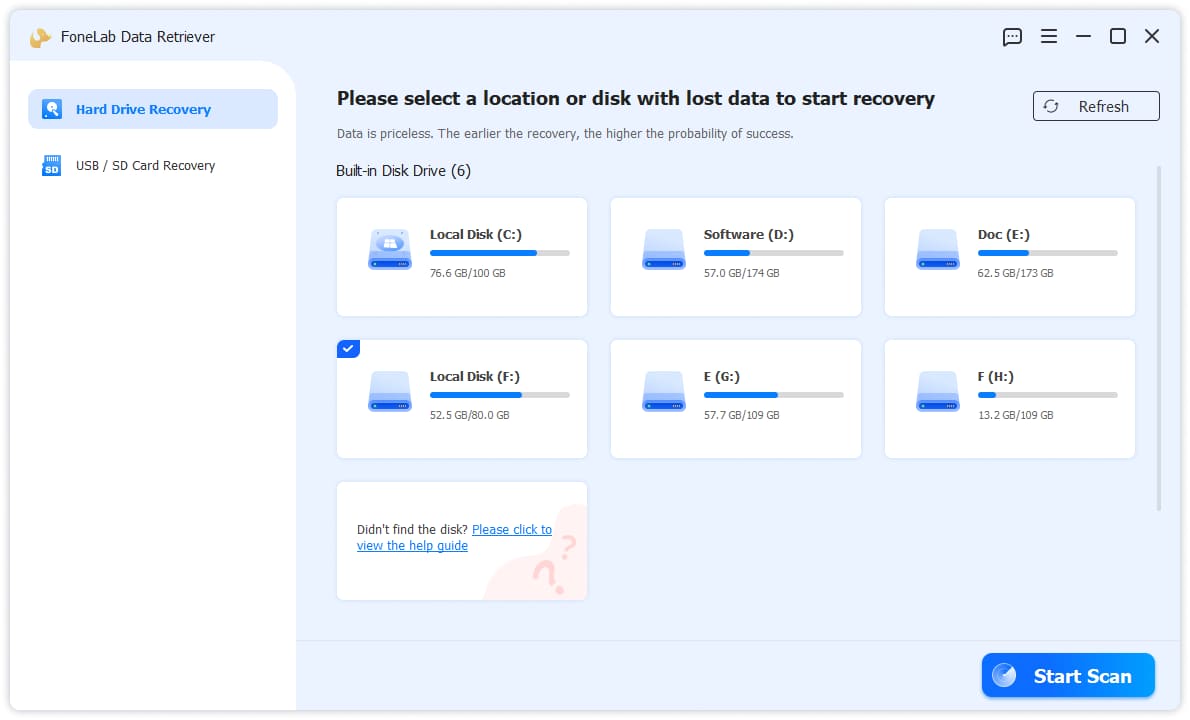
Step 2 On the left side, keep Hard Drive Recovery selected, then choose the disk or specific location where your files were lost.
Step 3 Click the blue Start Scan button in the bottom-right corner to scan the selected disk. The software will automatically run a deep scan to search for every recoverable file on the disk, so there is no separate button to press.
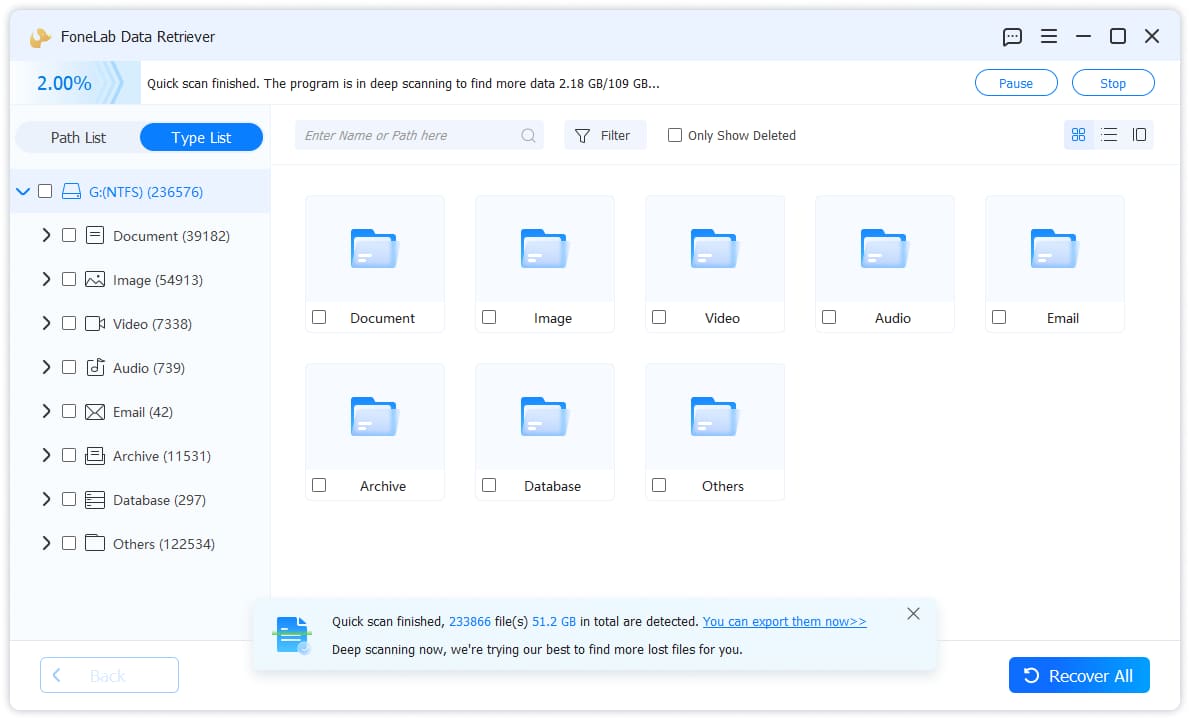
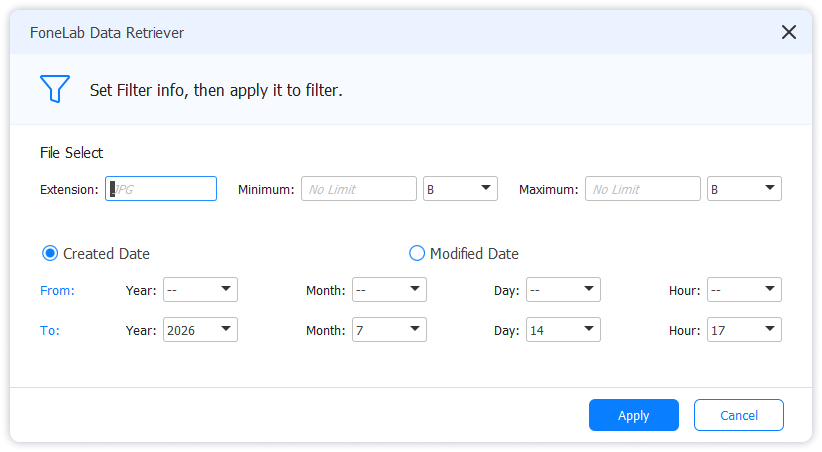
Step 4 When the scan finishes, click a file type on the left and tick the boxes of the files you want. Use the filter or only show deleted option to locate them faster, and preview each file to confirm it opens.
Step 5 Click the blue Recover button in the bottom-right corner and save the recovered files to a different drive.
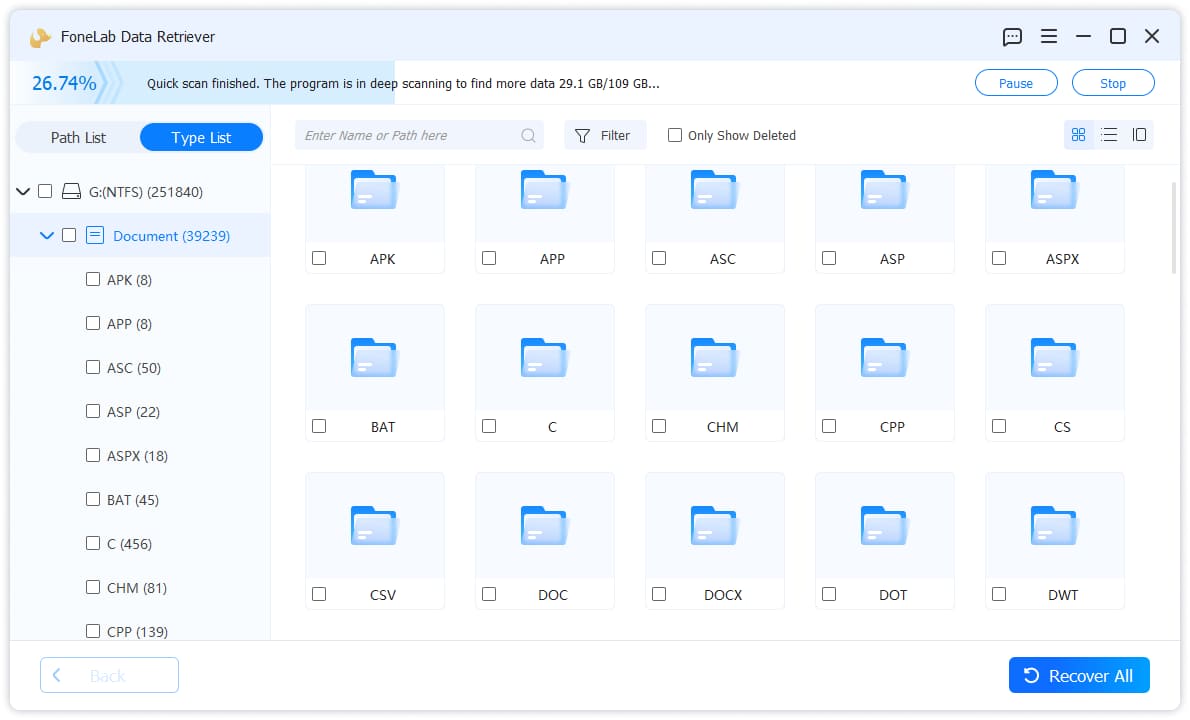
Honest limits: Data Retriever recovers standard audio files such as WAV, MP3, and AIFF, plus common documents, and it is the right tool when raw audio or project data was deleted from disk. Note that Audacity’s proprietary .aup3/.aup project database is not a standard document type, so it may not appear in the results; in practice you recover the raw .au and WAV audio blocks and reassemble or re-export them, which is why the free crash-recovery and temp-folder methods above are worth trying first. It cannot recover a recording that was lost in memory before it ever hit the disk, and it cannot repair a corrupted audio file that will not play. If the raw WAV or MP3 exists on the drive, the scan will usually find it.
During the scan, leave the computer undisturbed. Audio files are big, so the deep scan on a nearly full drive can take a while. When results appear, switch to the type view and look under Audio to group all the WAV, MP3, AIFF, and .au blocks together. The preview player lets you listen before recovering, which is the fastest way to spot the right take among dozens of recovered clips. Once you find the session, recover the whole data folder rather than individual blocks, so Audacity can reopen the project intact.
| Audacity Crash Recovery | Temp Folder | FoneLab Data Retriever | |
|---|---|---|---|
| Best for | Audacity crashed | Never-saved recording | Deleted project/data folder |
| Cost | Free | Free | Free trial, paid license |
| Recovers deleted files | No | Sometimes | Yes |
| Difficulty | Very easy | Easy | Easy |
Which method should you try first? Work through the free options in order: check the Recycle Bin or Trash and any backup, because restoring from a working backup is instant and risk-free. Reach for FoneLab Data Retriever when those come up empty, or when the drive was formatted, corrupted, or reinstalled. The comparison table above makes the trade-offs clear: backups are the safest option but require foresight, while the recovery tool works without a backup but cannot repair a physically failing drive.
If your recovery still fails, do not panic and do not keep writing to the disk. First confirm the drive is still readable in Disk Management on Windows or Disk Utility on Mac. If the drive is not detected at all, try a different cable, a different USB port, or plugging it into another computer. If files are found but will not open, they were likely partially overwritten, and a professional data recovery lab that works at the sector level may be your last resort. The earlier you stop using the disk, the more likely a normal software recovery succeeds.
One detail people underestimate is timing. Deleted files are not erased immediately; the operating system simply marks their space as free. That space is reused gradually as you keep working, so a file you deleted yesterday may still be fully recoverable, while one you deleted weeks ago on a busy drive may already be partly overwritten. This is why a deep scan is worth running even when the quick scan looks empty, and why saving new files to a different drive during the process matters.
When you preview recovered files, pay attention to size and whether they actually open. A document that previews correctly and opens in its original app is good. A file that previews as garbage or reports zero bytes means its clusters were already reused. Recover in batches and verify your most important files first, so if the scan is interrupted you have already secured what matters most.
FoneLab Data Retriever - recover the lost/deleted data from computer, hard drive, flash drive, memory card, digital camera and more.
- Recover photos, videos, documents and more data with ease.
- Preview data before recovery.
Part 5. Never Lose a Recording Again
- Save early and often. Press Ctrl+S right after you finish a take.
- Export a WAV copy of every important session as you go.
- Keep the project and its data folder together when you move or back it up.
- Back up to an external drive after long recording sessions.
- Do not empty the Recycle Bin until you have confirmed the session is safely exported.
For long recordings, the habit that saves you is exporting a finished mix to a standalone WAV or MP3 at the end of every session. That exported file is self-contained, so even if the Audacity project database or its audio folder gets corrupted later, the final audio survives on its own. When you archive a project, copy the whole project folder including the _data subfolder in one move — zipping it before you upload it to cloud storage avoids breaking the internal links. And if you are recording something that cannot be retaken, hit save between takes rather than after the whole session; Audacity's auto-save helps, but a manual save you control is the one you can count on.
Part 6. Frequently Asked Questions
Where does Audacity save unsaved recordings?
Unsaved work lives in Audacity's temporary directory, shown under Edit > Preferences > Directories (or Audacity > Settings on Mac). It is only kept until you close Audacity normally, so check it right after a crash.
Can I recover an Audacity project after deleting the _data folder?
The data folder holds the actual audio. If it was deleted, the .aup file alone is useless, but the audio blocks themselves can be recovered with FoneLab Data Retriever before they are overwritten.
Why is my Audacity project silent after I move it?
Because you moved the .aup file without its matching _data folder. Audacity links to the raw audio by relative path. Put the project and its data folder back in the same directory, or recover the missing data folder.
Does Audacity keep backups automatically?
It keeps a temporary copy of a session while it is open and offers crash recovery after an unexpected close, but it does not make persistent backups. Exporting a WAV or saving the project yourself is the only real backup.
Losing an Audacity recording hurts, but the raw audio is usually recoverable. Try Audacity's crash recovery, dig through the temp folder, and let FoneLab Data Retriever pull back any deleted audio. For related help, see recovering WAV files.
FoneLab Data Retriever - recover the lost/deleted data from computer, hard drive, flash drive, memory card, digital camera and more.
- Recover photos, videos, documents and more data with ease.
- Preview data before recovery.