
 iPhone Data Recovery
 iOS System Recovery
 iOS Data Backup & Restore
 iOS Unlocker
 iPhone Password Manager
 Location Changer
 Android Data Recovery
 Broken Android Data Extraction
 Android Data Backup & Restore
 Android Unlocker
 FoneTrans for iOS
 iPhone Data Eraser
 iPhone Cleaner
 HEIC Converter
 HyperTrans
 WhatsApp Transfer for iOS
 Mac Sweep
 Data Retriever
 Mac Data Retriever
 Video Converter Ultimate
 Screen Recorder
 Phone Mirror
 Transfer Phone Data Now
Transfer Data From iPhone, Android, iOS, Computer to Anywhere without Any Loss.
- Transfer Data from One Micro SD Card to Another Android
- How to Transfer Pictures from One Phone to Another
- How to Transfer Photos from Old LG Phone to Computer
- How to Transfer Photos from an Old Samsung to Another Samsung
- Transfer Contacts from Samsung to iPhone
- Transfer Data from LG to Samsung
- Transfer Data from Old Tablet to New
- Transfer Files from Android to Android
- Transfer iCloud Photos to Android
- Transfer iPhone Notes to Android
- Transfer iTunes Music to Android
How to Clone a Phone to a New Device: The Ultimate Data Migration Guide
 Posted by
 There's that moment when you unbox a new phone. Excitement mixes with a familiar knot of anxiety: Will I lose my photos? Will my WhatsApp history vanish? I've been there more times than I care to count, and in my years consulting on data management, I've watched too many users lose precious memories because they trusted an unstable cloud sync to do the heavy lifting.
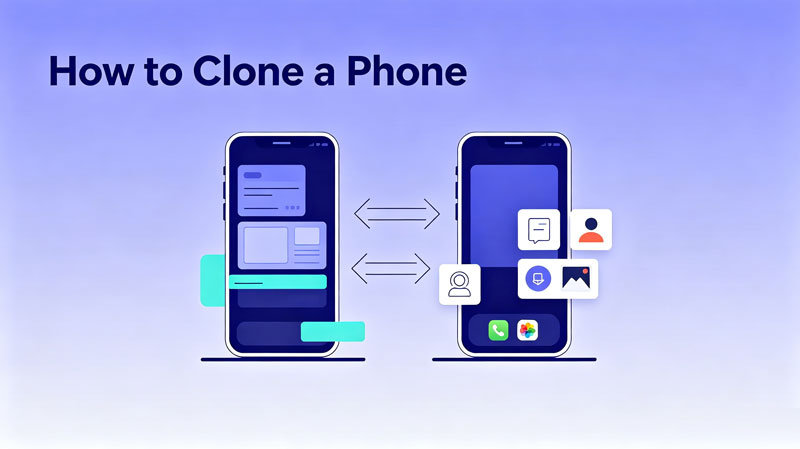
Let's clear something up right away: when we talk about "cloning" a phone, we're not talking about making a spy-movie duplicate. We're talking about secure data migration—the controlled, intentional transfer of your digital life from one device you own to another. This guide is about legitimate data management. We emphasize privacy, data integrity, and giving you control over the process.
Here's a hard truth I've learned: migration should be controlled, not automated. And the "easy" official tools don't always deliver.

Guide List
Part 1: Introduction
There's that moment when you unbox a new phone. Excitement mixes with a familiar knot of anxiety: Will I lose my photos? Will my WhatsApp history vanish? I've been there more times than I care to count, and in my years consulting on data management, I've watched too many users lose precious memories because they trusted an unstable cloud sync to do the heavy lifting.
Let's clear something up right away: when we talk about "cloning" a phone, we're not talking about making a spy-movie duplicate. We're talking about secure data migration—the controlled, intentional transfer of your digital life from one device you own to another. This guide is about legitimate data management. We emphasize privacy, data integrity, and giving you control over the process.
Here's a hard truth I've learned: migration should be controlled, not automated. And the "easy" official tools don't always deliver.
Transfer Data From iPhone, Android, iOS, Computer to Anywhere without Any Loss.
- Move Files between iPhone, iPad, iPod touch and Android.
- Import Files from iOS to iOS or from Android to Android.
- Move Files from iPhone/iPad/iPod/Android to Computer.
- Save Files from Computer to iPhone/iPad/iPod/Android.
Part 2: iOS to iOS
For users moving from one iPhone to another, Apple offers two primary methods: Quick Start (wireless, device-to-device) and iCloud Restore (cloud-based, no second device required). Both are reliable, but which one you choose depends on your situation.
What transfers: Contacts, messages, photos, videos, app data (for compatible apps), home screen layout, device settings, iCloud Keychain passwords, Apple Watch data, and more.
Option A: Quick Start (Fastest, Device-to-Device)
This is Apple's most seamless option. Place your old and new iPhones next to each other. During the setup screen, a prompt will appear on your old device. Tap Continue and follow the on-screen instructions to scan the animation on the new phone. The transfer begins immediately. I've used this method dozens of times, and when it works, it's genuinely magical.
The speed reality: Apple's wireless transfer runs at about 20–30 MB/s—that means 100GB of data takes roughly 75–120 minutes. For large libraries, this is a patience test.
Step 1 Charge both phones to at least 50% and update your old iPhone to the latest iOS. Ensure Bluetooth and Wi-Fi are enabled.
Step 2 Turn on your new iPhone and place it near your old one. The Quick Start screen appears on the new device.
Step 3 An animation appears on your new iPhone—scan it with your old iPhone's camera. Enter your Apple ID password if prompted.
Step 4 The transfer begins. Leave both devices alone—don't lock the screen, switch apps, or take calls.
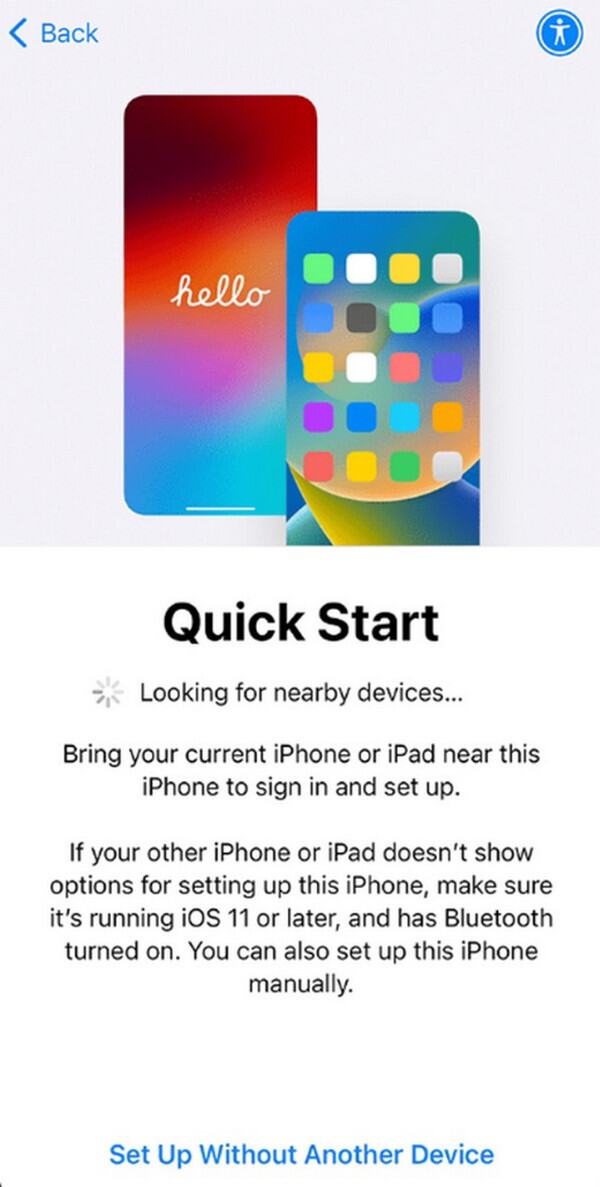
Expert tip: Apple's Quick Start uses a temporary peer-to-peer connection. Keep both devices within a few inches of each other for the best connection.
Option B: iCloud Restore (No Second Device Required)
If you don't have both phones on hand—for example, you've already traded in your old device or it's broken—iCloud Restore is your best option. This method pulls your data from Apple's secure cloud servers.
Step 1 On your old iPhone, ensure you have a recent iCloud backup: Settings > [Your Name] > iCloud > iCloud Backup > Back Up Now.
Step 2 Turn on your new iPhone and follow setup until you reach the Apps & Data screen.
Step 3 Select Restore from iCloud Backup. Sign in to your Apple ID.
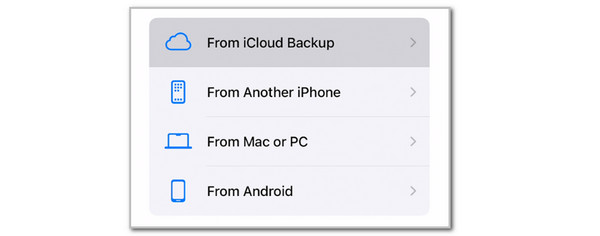
Step 4 Choose your latest backup from the list. Wait for the restore to complete.
The catch: This method requires a stable, fast Wi-Fi connection. Restoring 100GB over Wi-Fi can take several hours. Also, you'll need enough iCloud storage for the backup—if you have more than 5GB of data, you'll need a paid iCloud+ plan.
Transfer Data From iPhone, Android, iOS, Computer to Anywhere without Any Loss.
- Move Files between iPhone, iPad, iPod touch and Android.
- Import Files from iOS to iOS or from Android to Android.
- Move Files from iPhone/iPad/iPod/Android to Computer.
- Save Files from Computer to iPhone/iPad/iPod/Android.
Part 3: Android to Android
For Android-to-Android transfers, most brands have dedicated cloning tools pre-installed or available via app stores. Samsung users can utilize Samsung Smart Switch, Huawei/Honor phones use Phone Clone, and other brands use Google's built-in Device Clone settings. You also have the option of cloud restore via Google Drive.
Option A: Manufacturer Apps (Fastest, Most Complete)
This is the recommended method for Android-to-Android transfers. Brand-specific apps are optimized for each manufacturer's ecosystem and transfer apps, settings, and data more completely than generic tools.
Success rate: Brand-specific apps achieve 92–96% migration success for photos, contacts, messages, and settings.
Step 1 On your new Android phone during setup, you'll see a prompt to copy apps and data. Tap Copy and choose your old device's brand.
Step 2 On your old phone, open the pre-installed transfer app (e.g., Smart Switch, Phone Clone, or Google's Device Clone). If it's not pre-installed, download it from the Google Play Store.
Step 3 Follow the on-screen prompts to connect both devices—typically via Wi-Fi Direct, QR code scan, or USB-C cable.
Step 4 Select what to transfer—contacts, photos, messages, apps, settings—and tap Copy. Wait for completion.
Speed: Wired USB-C transfers hit 150–200 MB/s, moving 100GB in about 25–35 minutes. Wireless transfers are slower at 80–133 MB/s.
Option B: Google Drive Backup (Wireless, No Cable Needed)
For users who prefer wireless, or who don't have a USB-C cable handy:
Step 1 On your old phone: Settings > System > Google > Backup. Toggle Backup by Google One to On and tap Back up now.
Step 2 During setup of your new Android, choose "Can't use an old phone?" then select "A backup from the cloud."
Step 3 Sign in to the same Google account, choose your backup, and restore.
The catch: Cloud backup doesn't include app data for all apps—some need to be reinstalled manually with fresh logins. And if your Wi-Fi drops mid-restore, the process can fail.
Transfer Data From iPhone, Android, iOS, Computer to Anywhere without Any Loss.
- Move Files between iPhone, iPad, iPod touch and Android.
- Import Files from iOS to iOS or from Android to Android.
- Move Files from iPhone/iPad/iPod/Android to Computer.
- Save Files from Computer to iPhone/iPad/iPod/Android.
Part 4: Cross-Platform—Official Tools
Moving between iOS and Android is where things get tricky. The official tools are Move to iOS (Android to iPhone) and brand-specific apps like Samsung Smart Switch, Xiaomi Mi Mover, or Huawei Phone Clone (iPhone to Android). Both work, but they come with significant limitations.
Android → iPhone: Move to iOS
What transfers: Contacts, message history, photos/videos, photo albums, web bookmarks, email accounts, WhatsApp messages and media (if using a cable and both devices have the app installed), voice memos, call history, and calendars.
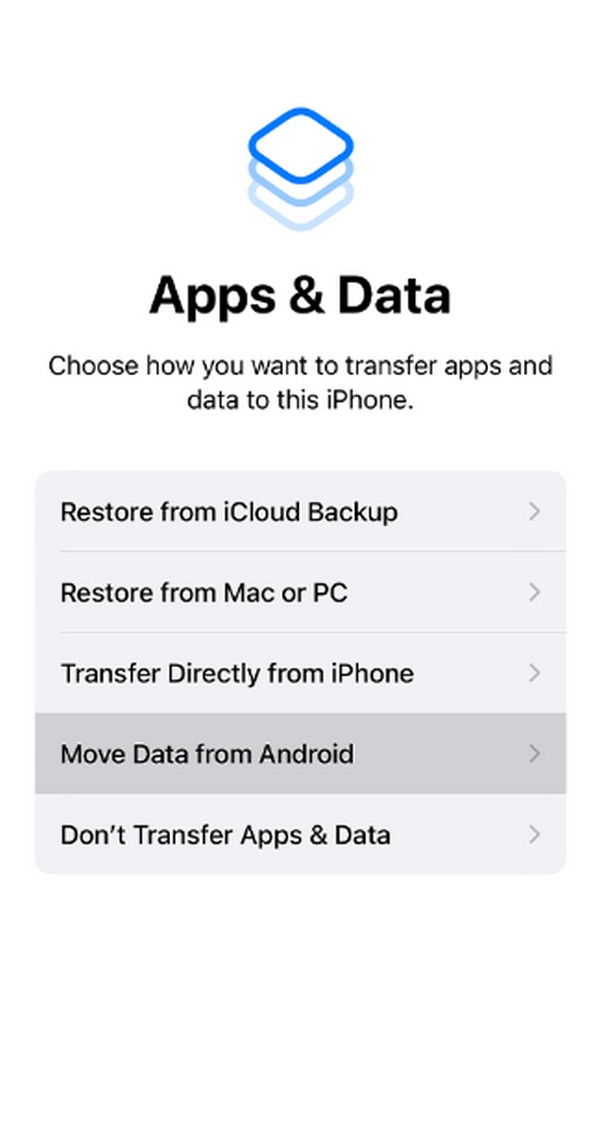
Step 1 On your new iPhone during setup (must be on the "Apps & Data" screen), tap Move Data from Android.
Step 2 On your Android, download the Move to iOS app from Google Play and open it. Tap Continue > Agree.
Step 3 A 6-digit code appears on your iPhone. Enter it on your Android device.
Step 4 Your iPhone creates a temporary Wi-Fi network—tap Connect on Android to join. Select the content you want to transfer and tap Continue.
Step 5 Wait for completion. Leave both devices alone until the loading bar finishes.
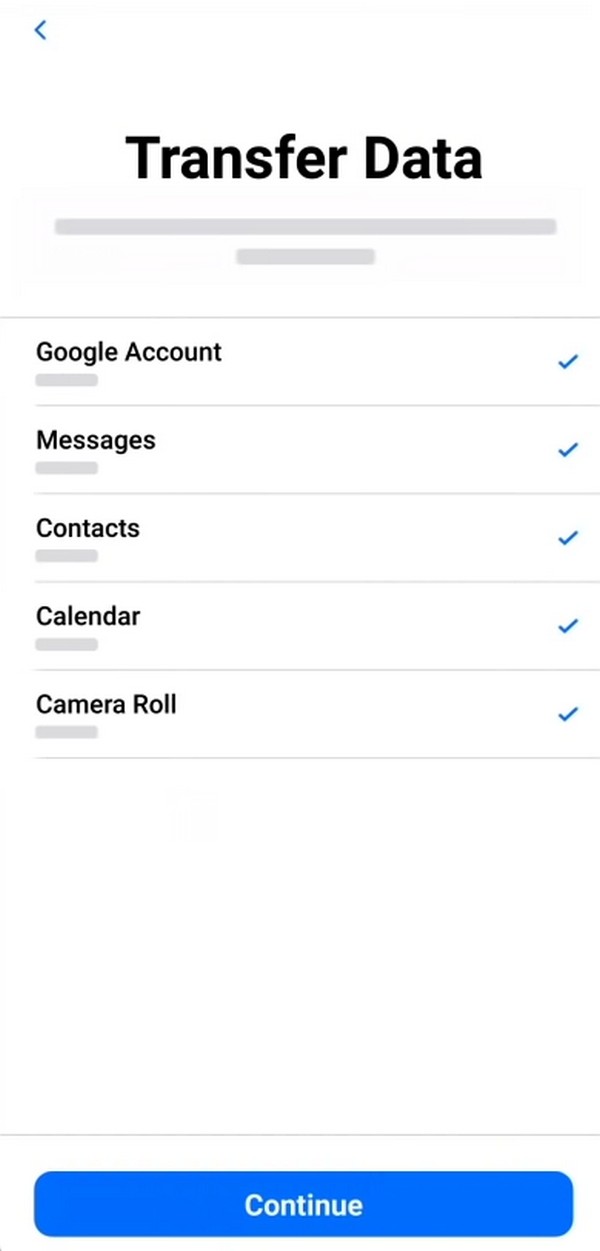
Important: This only works during iPhone setup. If your iPhone is already set up, you must erase it first.
iPhone → Android: Brand-Specific Apps
Apple doesn't provide an official "Move to Android" tool, so Android brands have stepped in. Success rate: Brand-specific apps achieve 92–96% migration success for photos, contacts, messages, and passwords.
Step 1 On your iPhone, download your new Android brand's transfer app (e.g., "Mi Mover," "Phone Clone," "Smart Switch") from the App Store.
Step 2 On the Android phone, open the transfer app and select "Transfer from iPhone." Both phones connect to the same Wi-Fi.
Step 3 The Android phone generates a QR code. On iPhone, open the corresponding app and scan the QR code.
Step 4 Select data categories you want to transfer and wait for completion. Keep both devices near each other and screen unlocked.
What transfers: Photos, videos, contacts, messages, calendar events, memos, and Wi-Fi passwords. What doesn't: App data (including WhatsApp—use WhatsApp's built-in backup), Apple Health data, iCloud-only files.
Transfer Data From iPhone, Android, iOS, Computer to Anywhere without Any Loss.
- Move Files between iPhone, iPad, iPod touch and Android.
- Import Files from iOS to iOS or from Android to Android.
- Move Files from iPhone/iPad/iPod/Android to Computer.
- Save Files from Computer to iPhone/iPad/iPod/Android.
Part 5: Professional Cross-Platform Bridge (FoneLab HyperTrans)
When official tools fail—or when you need control, selection, and cross-platform flexibility without setup-mode restrictions—a third-party tool like FoneLab HyperTrans is the best alternative. I've used this for clients with 200GB+ photo libraries who couldn't risk Wi-Fi interruptions.
Why I recommend it: No setup-mode requirement, no factory reset needed, and no cloud dependency. Data transfers over local USB channel, so your personal data never touches a third-party server. This is the most secure way to bridge the iPhone-Android divide.
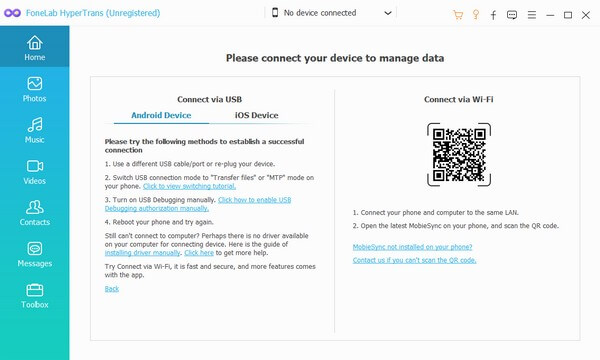
Step 1 Download and install HyperTrans on your PC or Mac. Launch the application.
Step 2 Use USB cables or Wi-Fi to connect both your source and target devices to your computer. The software automatically detects both.
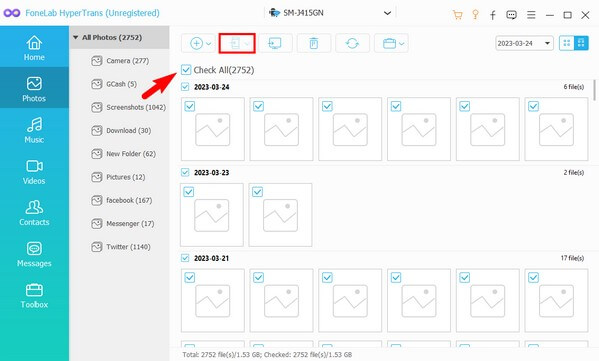
Step 3 Click on the data categories you want to transfer—Photos, Videos, Contacts, Messages. Preview before selecting—this is a major advantage over all-or-nothing official tools. If moving from iPhone to Android, check the HEIC to JPG conversion box.
Step 4 Select the files/folders you want, click Export, and choose your target device. The transfer begins over the USB connection.
Privacy focus: Because FoneLab HyperTrans uses a local USB channel, your personal data never touches a third-party server. This is non-negotiable for me when handling sensitive client files.
Transfer Data From iPhone, Android, iOS, Computer to Anywhere without Any Loss.
- Move Files between iPhone, iPad, iPod touch and Android.
- Import Files from iOS to iOS or from Android to Android.
- Move Files from iPhone/iPad/iPod/Android to Computer.
- Save Files from Computer to iPhone/iPad/iPod/Android.
Part 6: Comparison Table
| Feature | Apple Quick Start (iOS→iOS) | Manufacturer Apps (Android→Android) | Move to iOS / Brand Apps (Cross-Platform) | FoneLab HyperTrans |
|---|---|---|---|---|
| Setup Mode Required? | No | No | Yes (iPhone setup) | No |
| Computer Required? | No | No | No | Yes |
| Cross-Platform? | No | No | Yes | Yes |
| Data Selection | All-or-Nothing | All-or-Nothing | Selective | Selective |
| Privacy | Local P2P | Local P2P | Cloud or Local P2P | Local USB |
| Speed (100GB) | 75–120 min | 25–35 min (USB) | 47 min–2 hrs | Varies |
| HEIC Conversion | Manual | Manual | No (varies by brand) | Automatic |
Part 7: Expert Tips for a Flawless Migration
Cable Matters: Use data-certified cables. Cheap charging cables cause timeouts, especially for large photo libraries. I keep a certified cable in my kit specifically for transfers.
Power Awareness: Ensure both devices have >50% battery before starting. A phone dying mid-transfer is a recipe for corrupted files.
Screen Settings: Turn off auto-lock on both devices before starting. 67% of transfer failures are caused by the screen locking during transfer.
The Golden Rule: Always compare the file count on your source and target before you wipe your old device. I've seen users factory-reset their old phone, only to realize a folder didn't transfer. Check twice, wipe once.
Pre-Migration Cleanup: Remove unused apps, clear cache, and delete duplicate photos before migrating. This can reduce transfer time by up to 50%.
WhatsApp/WeChat: Transfer chat history separately using the app's built-in backup feature. Cross-platform migration tools won't move app data like WhatsApp, which is sandboxed by the OS.
Transfer Data From iPhone, Android, iOS, Computer to Anywhere without Any Loss.
- Move Files between iPhone, iPad, iPod touch and Android.
- Import Files from iOS to iOS or from Android to Android.
- Move Files from iPhone/iPad/iPod/Android to Computer.
- Save Files from Computer to iPhone/iPad/iPod/Android.
Part 8: Frequently Asked Questions
Can I clone a phone remotely?
No—and that's a security feature. A physical connection (whether USB cable or local Wi-Fi Direct) ensures your data stays between your devices.
What if my storage is almost full?
Check your destination device's available storage first. If the new phone has less storage, be selective about what you migrate. This is why I prefer granular selection over all-or-nothing transfers.
Why is some app data missing after migration?
App data is sandboxed by the operating system—third-party tools can't access it. Use the app's built-in backup feature for apps like WhatsApp.
Which method is fastest?
Android USB-C transfer is the fastest at 150–200 MB/s, moving 100GB in about 25–35 minutes. Apple's Quick Start is slower (20–30 MB/s) because it's wireless-only.
Does phone-to-phone cloning work without Wi-Fi?
Yes. Most modern migration tools use Wi-Fi Direct or peer-to-peer connections that don't require internet. 95% of phone cloning scenarios can be completed without internet access.
Part 9: Conclusion
Migrating to a new phone doesn't have to be stressful. The key is taking control of the process—understanding the limitations of official tools, selecting what to migrate, and protecting your data with local connections rather than cloud uploads.
My recommendation by scenario:
- Same ecosystem (iOS→iOS): Apple Quick Start—just be patient with the speed. If you don't have both phones, use iCloud Restore.
- Same ecosystem (Android→Android): Manufacturer apps (Smart Switch, Phone Clone) with USB-C cable for speed, Google Backup for convenience.
- Cross-platform (Android→iPhone): Move to iOS, but make sure you're setting up a new iPhone.
- Cross-platform (iPhone→Android): Your Android brand's official transfer app. For complex or selective migrations, use HyperTrans.
- Privacy-conscious or selective transfer: Use FoneLab HyperTrans with USB cables—your data never leaves your devices.
Transfer Data From iPhone, Android, iOS, Computer to Anywhere without Any Loss.
- Move Files between iPhone, iPad, iPod touch and Android.
- Import Files from iOS to iOS or from Android to Android.
- Move Files from iPhone/iPad/iPod/Android to Computer.
- Save Files from Computer to iPhone/iPad/iPod/Android.