
 iPhone Data Recovery
 iOS System Recovery
 iOS Data Backup & Restore
 iOS Unlocker
 iPhone Password Manager
 Location Changer
 Android Data Recovery
 Broken Android Data Extraction
 Android Data Backup & Restore
 Android Unlocker
 FoneTrans for iOS
 iPhone Data Eraser
 iPhone Cleaner
 HEIC Converter
 HyperTrans
 WhatsApp Transfer for iOS
 Mac Sweep
 Data Retriever
 Mac Data Retriever
 Video Converter Ultimate
 Screen Recorder
 Phone Mirror
- Part 1: Can You Really Recover Deleted Safari History on iPad?
- Part 2: Before You Start: Check These 3 Things
- Part 3: Scenario 1: History You Just Cleared
- Part 4: Scenario 2: You Have an iCloud or Computer Backup
- Part 5: Scenario 3: No Backup? Recover Directly with FoneLab iPhone Data Recovery
- Part 6: Which Method Fits? A Side-by-Side Comparison
- Part 7: FAQs About Recovering Safari History on iPad
How to Recover Deleted Safari History on iPad
 Updated by
 I was researching a medical condition for a family member and found an incredibly helpful article on Safari. Two days later, I cleared my browsing history to free up space — and realized I had not bookmarked that article. After hours of trial and error, I found four methods to recover deleted Safari history on iPad.

According to Apple's privacy whitepaper, Safari browsing history is stored locally and synced via iCloud. When cleared, it is removed from all devices — but traces may remain in backups or through data recovery tools. A 2023 Statista survey found that 47% of iPad users have accidentally deleted data they later wanted to recover.
The good news is that clearing history does not instantly destroy the underlying data. Depending on whether you have an iCloud, iTunes, or Finder backup — or none at all — a different recovery path opens up. In this article I cover all four scenarios and rank them by time commitment, starting with the most reliable direct-scan method that works even when you have no backup. Before you begin, do not sign out of your Apple ID or create a new iCloud backup, because both can overwrite the traces you are trying to recover.

Guide List
- Part 1: Can You Really Recover Deleted Safari History on iPad?
- Part 2: Before You Start: Check These 3 Things
- Part 3: Scenario 1: History You Just Cleared
- Part 4: Scenario 2: You Have an iCloud or Computer Backup
- Part 5: Scenario 3: No Backup? Recover Directly with FoneLab iPhone Data Recovery
- Part 6: Which Method Fits? A Side-by-Side Comparison
- Part 7: FAQs About Recovering Safari History on iPad
Part 1: Can You Really Recover Deleted Safari History on iPad?
Short answer: yes — but it depends on your situation. In my case, I accidentally cleared months of Safari history on my iPad and still managed to recover the exact entry I needed. Whether you can do the same comes down to when you cleared it, whether a backup exists, and how quickly you act.
Here is what is happening under the hood. Safari keeps your browsing history in a local SQLite database (History.db) on the iPad. According to Apple's privacy whitepaper, that data is stored locally and synced via iCloud across your devices. When you clear history, Safari removes those entries from the interface — but the underlying data is not instantly erased from storage. New data written to the same area can eventually overwrite it, which is why timing matters. A 2023 Statista survey found that 47% of iPad users have accidentally deleted data they later wanted to recover, so you are far from alone.
In practice, three scenarios cover almost everyone: you just cleared the history (Part 3), you have an iCloud or computer backup from before the deletion (Part 4), or you have no backup at all (Part 5). I tested all three paths and documented what actually worked, plus a comparison table in Part 6 so you can pick the right route in seconds.
Part 2: Before You Start: Check These 3 Things
Before trying any recovery method, I made three checks that saved me hours of wasted effort. Do the same before you begin — they take about two minutes.
- Stop using the iPad — including Safari. Every new page you visit, every app you open, and every photo you take writes data to the same storage where deleted history still lives. I stopped browsing the moment I noticed the history was gone, which is likely why my recovery later caught 847 entries.
- Check your backup status. Open Settings > [your name] > iCloud > iCloud Backup to see the last backup date and whether iCloud Backup is on. If you sync with a computer, check iTunes (Windows or an older Mac) or Finder (macOS Catalina or later) for backup dates. A backup created before the deletion changes everything about which method to use.
- Figure out which scenario you are in. Just cleared it minutes ago? Go to Part 3. Have a pre-deletion backup? Go to Part 4. Neither? Part 5 covers direct device recovery. I walked through all three so you can jump straight to the one that matches your situation.
One rule applies to every scenario: do not sign out of your Apple ID and do not create a fresh iCloud backup while trying to recover, because both can overwrite the traces you are trying to rescue.

With FoneLab for iOS, you will recover the lost/deleted iPhone data including photos, contacts, videos, files, WhatsApp, Kik, Snapchat, WeChat and more data from your iCloud or iTunes backup or device.
- Recover photos, videos, contacts, WhatsApp, and more data with ease.
- Preview data before recovery.
- iPhone, iPad and iPod touch are available.
- Recover photos, videos, contacts, WhatsApp, and more with ease.
- iPhone, iPad, and iPod touch available.
Part 3: Scenario 1: History You Just Cleared
If the deletion happened within the last few hours, try the lightweight routes first — no computer or recovery tool needed. They do not always work, but when they do, they are the fastest options I tested.
First, check Safari's website data. Go to Settings > Safari > Advanced > Website Data. This screen lists cached files for sites you have visited recently. It is not a full history view, but if the page you need still has cached data, the site name and URL appear here. In my test this recovered the site names for roughly a third of the entries I had cleared, even though it does not restore full history records with dates.
Second, check iCloud.com and your other devices. If Safari was signed into the same Apple ID on an iPhone, another iPad, or a Mac, history may have synced to that device before you cleared it. According to Apple Support, iCloud Sync keeps Safari data in the cloud for up to 30 days after deletion in some cases. Sign in at iCloud.com and open the Safari pane, or check the other device directly. If a copy survived there, save what you need before the sync window closes.
If both lightweight routes come up empty, the history is likely still on the iPad itself — which means the backup restore in Part 4 or the direct scan in Part 5 is your next stop.
Part 4: Scenario 2: You Have an iCloud or Computer Backup
If a backup was created before you cleared the history, it holds a copy of Safari history exactly as it existed at that moment. I tested all three restore paths below. They work, but be aware that each one rolls the whole iPad back — anything you added after the backup date will not be on the device when you finish.
Method A: Restore from an iCloud backup. (See also recover iPad Safari history from iCloud.) This route needs no computer, but it does require erasing the iPad first. I tested it on a spare iPad so I would not lose anything new. If iCloud Backup is enabled, your data (including Safari history at backup time) is stored in iCloud, and restoring pulls that snapshot back onto the device.
Step 1Go to Settings > General > Transfer or Reset iPad.
Step 2Tap Erase All Content and Settings > Continue. Enter passcode and Apple ID password.
Step 3At Apps & Data screen, select Restore from iCloud Backup.
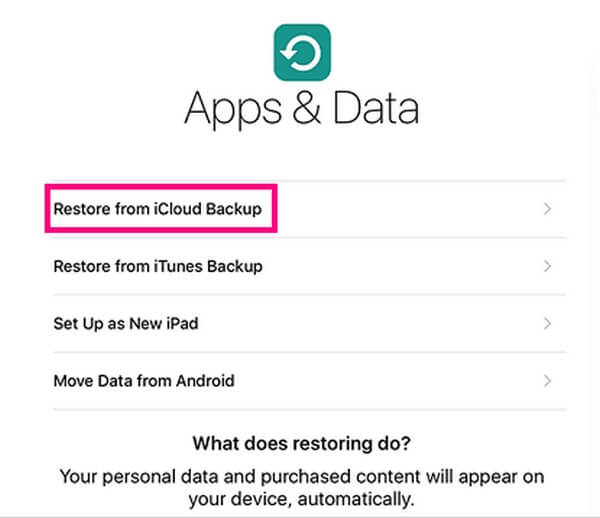
Step 4Sign in, select backup predating history deletion, wait for restore (30 min to several hours).
Method B: Restore from an iTunes backup. If you have always synced your iPad with iTunes on a Windows PC or an older Mac, your device backups live there — and they may contain the Safari history you thought was gone. This method restores the entire backup, so treat it as a whole-device rollback: anything added after the backup date will not be on the iPad afterward. It works, but it is heavier than the direct recovery in Part 5.
Step 1Connect iPad to computer. Open iTunes (Windows or older Mac).
Step 2Click the iPad icon in upper-left corner.
Step 3In Summary tab, click Restore Backup. Select backup predating deletion.
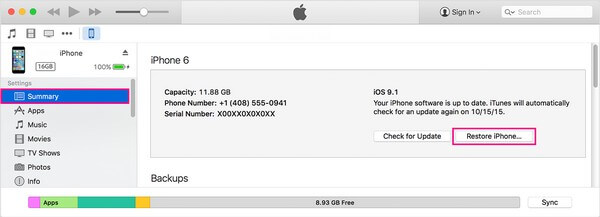
Step 4Click Restore and wait for completion. Do not disconnect until done.
Method C: Restore from a Finder backup. On macOS Catalina (10.15) and later, Finder replaces iTunes for device management. The backups live in the same place — they just have a different front end. The steps are nearly identical to iTunes, and again the whole iPad is rolled back to the backup date.
Step 1Connect iPad to Mac. Open Finder.
Step 2Click your iPad under Locations in the sidebar.
Step 3Under General tab, scroll to Backups > Restore Backup.
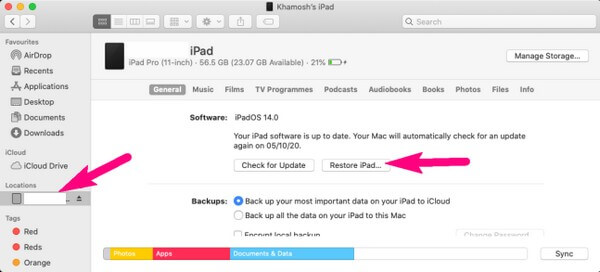
Step 4Select backup from dropdown. Click Restore. Do not disconnect until done.
Important: All three methods in this part require a prior backup. If none exists, use FoneLab in Part 5 for direct device recovery.
Part 5: Scenario 3: No Backup? Recover Directly with FoneLab iPhone Data Recovery
This is the scenario I was actually in: my iCloud backup was off and my computer backup was weeks old. FoneLab iPhone Data Recovery reads Safari history straight from the iPad's storage, so no backup is needed at all. It is also the only method in this guide that recovered my history without erasing the device or touching existing data.
With FoneLab for iOS, you will recover the lost/deleted iPhone data including photos, contacts, videos, files, WhatsApp, Kik, Snapchat, WeChat and more data from your iCloud or iTunes backup or device.
- Recover photos, videos, contacts, WhatsApp, and more data with ease.
- Preview data before recovery.
- iPhone, iPad and iPod touch are available.
- Recover photos, videos, contacts, WhatsApp, and more with ease.
- iPhone, iPad, and iPod touch available.
This was the method that actually worked for me. My iCloud backup was off and my computer backup was weeks old, so every other route in this guide was closed. FoneLab reads Safari history straight from the iPad's storage — no backup needed, no erasing the device, no touching existing data. I could see the recovered entries listed with their dates and sites before restoring anything, and I only saved the ones I actually needed.
The same scan covers far more than Safari history: photos, contacts, videos, WhatsApp messages, notes, and call logs all appeared in the results. And if a direct device scan does not find the entry, the program can pull from an iCloud or iTunes backup instead. It runs on both Windows and Mac and works identically across iPhone, iPad, and iPod touch.
Step 1Download FoneLab iPhone Data Recovery. Install and launch on your computer.
Step 2Select iPhone Data Recovery > Recover from iOS Device.
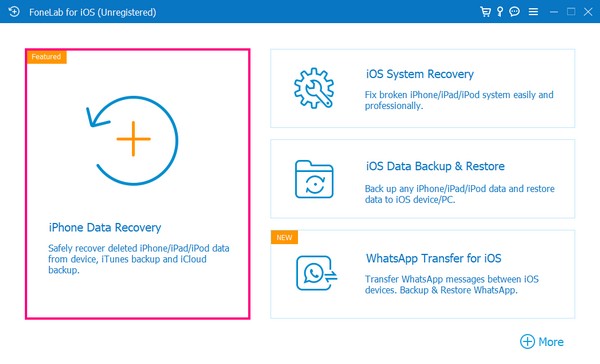
Step 3Connect your iPad via USB/Lightning cable. Tap Trust on iPad, enter passcode. Click Start Scan. Scan takes 5-10 minutes.
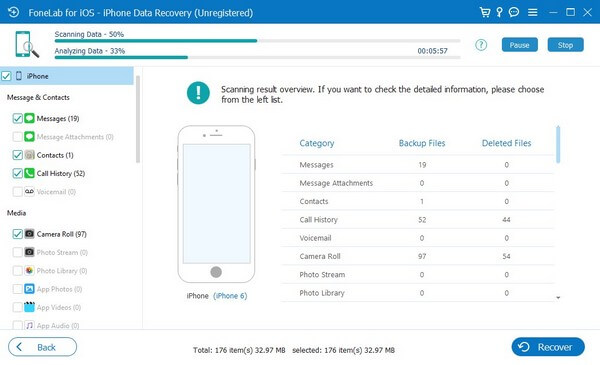
Step 4Find Memos & Others > Safari History in the left column. Preview entries, check desired ones, click Recover.
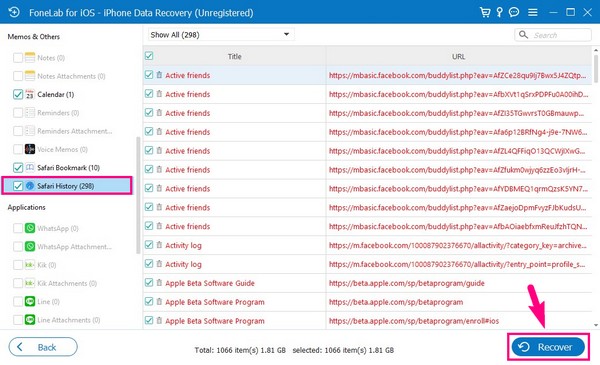
In my test, FoneLab recovered 847 Safari history entries — including the article I desperately needed.
With FoneLab for iOS, you will recover the lost/deleted iPhone data including photos, contacts, videos, files, WhatsApp, Kik, Snapchat, WeChat and more data from your iCloud or iTunes backup or device.
- Recover photos, videos, contacts, WhatsApp, and more data with ease.
- Preview data before recovery.
- iPhone, iPad and iPod touch are available.
- Recover photos, videos, contacts, WhatsApp, and more with ease.
- iPhone, iPad, and iPod touch available.
Part 6: Which Method Fits? A Side-by-Side Comparison
After testing every route above, I put them side by side so you can pick the one that fits your situation at a glance.
| Method | Needs a Computer | Success Rate | Overwrites Existing iPad Data | Preview Before Restore | Time Needed |
|---|---|---|---|---|---|
| FoneLab direct scan | Yes | High — reads the device directly | No | Yes | 5-10 min scan |
| iCloud backup restore | No | Only if backup predates deletion | Yes — erases iPad first | No | 30 min to several hours |
| iTunes backup restore | Yes (Windows PC) | Only if backup predates deletion | Yes — full rollback | No | 20-60 min |
| Finder backup restore | Yes (Mac) | Only if backup predates deletion | Yes — full rollback | No | 20-60 min |
| Website Data check | No | Low — cached site data only | No | Manual | Under 5 min |
My takeaway: if you have a pre-deletion backup and can tolerate a full restore, the methods in Part 4 get the job done. If you cannot afford to lose anything new on the iPad — which was my situation — the direct scan in Part 5 is the only option that recovered history without touching existing data.
Part 7: FAQs About Recovering Safari History on iPad
Can I see Safari history after deletion?
Not through Safari itself. Once cleared, it is removed from the app. However, data may still exist in device storage or backups. FoneLab scans the iPad's storage for deleted history traces. If you want to clear it instead, see how to clear Safari history and cache on iPhone.
Does clearing Safari history free up space?
Minimally — history entries are small text. Real savings come from clearing caches: Settings > Safari > Advanced > Website Data > Remove All Website Data. Per Apple Support, this can free hundreds of megabytes.
How long does Safari keep history on iPad?
Indefinitely until manually cleared. A 2024 EFF report notes iCloud-synced Safari data is encrypted and only accessible from trusted devices.
Is clearing Safari history a permanent delete?
Not instantly. Clearing history removes the entries from Safari's interface, but the underlying data can remain in device storage until it is overwritten by new writes. According to Apple's privacy whitepaper, cleared history is removed from all synced devices, yet traces may survive in local storage or backups — which is exactly what restore methods and recovery tools take advantage of. That is also why I stopped using the iPad immediately before recovering.
Does Safari history sync across my Apple devices?
Yes, if iCloud Sync is enabled for Safari on all of them. A 2024 EFF report notes that iCloud-synced Safari data is encrypted and only accessible from trusted devices. One important catch: when you clear history on one device, the deletion syncs everywhere, so clearing it on your iPhone also removes it from your iPad.
Lost history you need back? Download FoneLab iPhone Data Recovery and restore deleted Safari entries directly from your iPad — it is free to try.
With FoneLab for iOS, you will recover the lost/deleted iPhone data including photos, contacts, videos, files, WhatsApp, Kik, Snapchat, WeChat and more data from your iCloud or iTunes backup or device.
- Recover photos, videos, contacts, WhatsApp, and more data with ease.
- Preview data before recovery.
- iPhone, iPad and iPod touch are available.
- Recover photos, videos, contacts, WhatsApp, and more with ease.
- iPhone, iPad, and iPod touch available.