
 iPhone Data Recovery
 iOS System Recovery
 iOS Data Backup & Restore
 iOS Unlocker
 iPhone Password Manager
 Location Changer
 Android Data Recovery
 Broken Android Data Extraction
 Android Data Backup & Restore
 Android Unlocker
 FoneTrans for iOS
 iPhone Data Eraser
 iPhone Cleaner
 HEIC Converter
 HyperTrans
 WhatsApp Transfer for iOS
 Mac Sweep
 Data Retriever
 Mac Data Retriever
 Video Converter Ultimate
 Screen Recorder
 Phone Mirror
- Part 1: First, Find Out Where the Event Comes From
- Part 2: Delete a Single Event or Recurring Events
- Part 3: Delete Every Event on a Calendar at Once
- Part 4: Wipe Out Spam Calendar Events for Good
- Part 5: Tidy Up Everything Else with FoneLab iPhone Cleaner
- Part 6: FAQs About Deleting Calendar Events on iPhone
 FoneLab iPhone Cleaner
Easily erase all contents and settings on iPhone, iPad or iPod completely and permanently.
- Clear iPhone Junk Files
- Clear iPad Cache
- Clear iPhone Safari Cookies
- Clear iPhone Cache
- Clear iPad Memory
- Clear iPhone Safari History
- Delete iPhone Contacts
- Delete iCloud Backup
- Delete iPhone Emails
- Delete iPhone WeChat
- Delete iPhone WhatsApp
- Delete iPhone Messages
- Delete iPhone Photos
- Delete iPhone Playlist
- Delete iPhone Restrctions Passcode
How to Delete Calendar Events on iPhone: Complete Guide
 Posted by
 My iPhone Calendar had become a digital graveyard — 200+ events spanning three years. When I finally cleaned it up, I discovered deleting calendar events is not straightforward. Single events require multiple taps, recurring events ask confusing questions, and spam subscriptions seem impossible to remove.
A 2024 Kaspersky report revealed that calendar spam — malicious calendar subscriptions flooding iPhones with fake notifications — affected over 1.3 million iOS users in the first half of 2024 alone.
The core problem is that iOS offers several different deletion paths — single event, all events, spam calendar, subscribed calendar — and each one behaves differently. I broke them into five clean sections below, plus a bonus on permanently erasing an iPhone you plan to sell or hand down. Jump to the section that matches your situation and you will be done in under two minutes; read the whole guide if you want the complete picture, including how to stop spam calendars from ever coming back.

Guide List
- Part 1: First, Find Out Where the Event Comes From
- Part 2: Delete a Single Event or Recurring Events
- Part 3: Delete Every Event on a Calendar at Once
- Part 4: Wipe Out Spam Calendar Events for Good
- Part 5: Tidy Up Everything Else with FoneLab iPhone Cleaner
- Part 6: FAQs About Deleting Calendar Events on iPhone
Part 1: First, Find Out Where the Event Comes From
Before you tap Delete Event, take 20 seconds to figure out where the event actually lives. I learned this the hard way: I deleted a suspicious event three times before realizing it belonged to a subscribed calendar that kept re-syncing it right back. On iPhone, every event belongs to a source, and each source deletes differently.
To check the source, open the event and look at the Calendar field at the bottom of the details screen. Then match what you see to one of these four cases:
- iCloud invite: shows the sender's name next to "iCloud"; you can simply decline it, and it disappears from your calendar.
- Subscribed calendar: often marked with a globe icon; events from these feeds return within minutes even after deletion because the subscription re-syncs.
- Google or Exchange account: managed under Settings > Calendar > Accounts; the event stays until you remove or pause that account's calendar sync.
- Configuration profile: installed outside the App Store (for example, from a school or employer); you must remove the profile at Settings > General > VPN & Device Management to stop the events.
Once you know where the event comes from, the right fix takes under a minute: delete a single event or a recurring series (how to remove events from iPhone calendar), clear an entire calendar at once (Part 3), or wipe a spam calendar for good (Part 4).
FoneLab iPhone Cleaner is the best iOS data cleaner which can easily erase all contents and settings or specific data on iPhone, iPad or iPod Touch.
- Clean unwanted data from iPhone, iPad or iPod touch.
- Erase data quickly with one-time overwriting, which can save you time for plenty of data files.
- It is safe and easy to use.
- Clean unwanted data from iPhone, iPad, or iPod touch.
- Erase data with one-time overwriting.
- Multiple security levels.
Part 2: Delete a Single Event or Recurring Events
This is the method I use daily, and the one most people need: deleting one event without touching anything else. The Calendar app on iPhone makes this straightforward — you open the event, scroll to the bottom, and remove it. The only decision point is recurring events, where the iPhone asks whether you want to remove just this occurrence or the whole series. I have broken the process down below.
Step 1Open the Calendar app. Navigate to the event date by scrolling or using search.
Step 2Tap the date, then tap the specific event from the list.
Step 3Scroll to the bottom and tap Delete Event. Confirm by tapping Delete Event again.
For recurring events: iPhone asks whether to Delete This Event Only or Delete All Future Events. Choose as needed. In my test, deleting a weekly booking that had run for over a year took about 30 seconds, and choosing "Delete All Future Events" removed every remaining occurrence in one pass.
Part 3: Delete Every Event on a Calendar at Once
If you want to wipe the calendar clean — for example, before selling the phone or starting fresh — deleting events one by one is painfully slow. Instead, you can hide a whole calendar without deleting anything, delete a single calendar (and every event inside it) in one tap, or remove the Calendar app itself. Here is how each option works.
Option 1: Hide a calendar without deleting it. Open the Calendar app > tap Calendars at the bottom > uncheck the calendar you want to hide. The events stay on the phone but disappear from the grid. I use this when I want a cleaner view but still want the data.
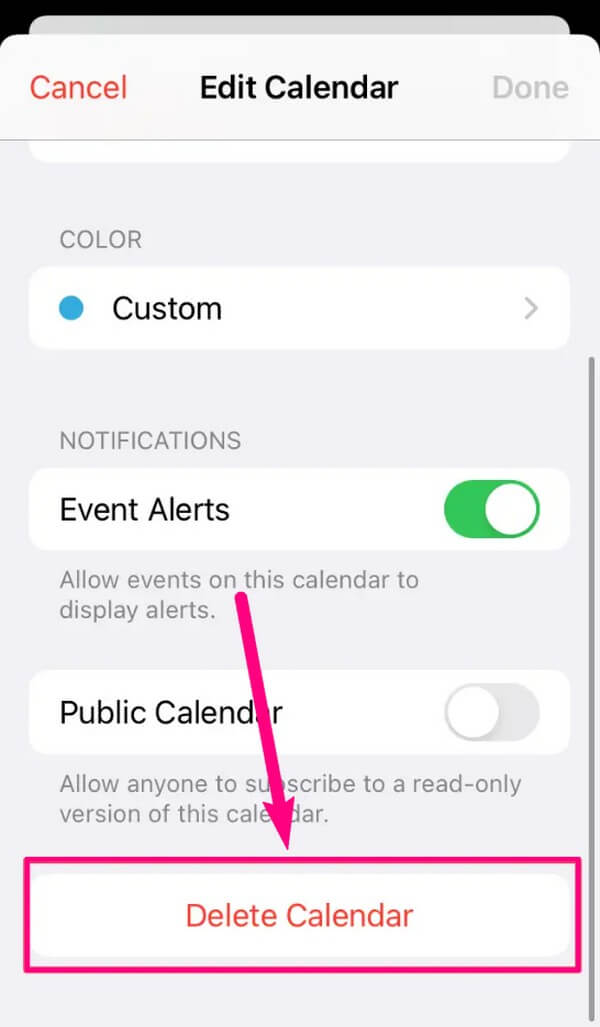
Option 2: Delete a whole calendar at once. Open the Calendar app > tap Calendars > tap the info icon (i) next to the calendar name > tap Delete Calendar > confirm. Every event in that calendar is removed in a single step.
Option 3: Remove the Calendar app to clear everything. This removes the app and all locally stored events at once. There are two caveats worth knowing: events synced from iCloud can come back after reinstall, and your other apps' data is unaffected because only Calendar is removed.
Step 1Open Settings > General > iPhone Storage. Wait for app list to load.
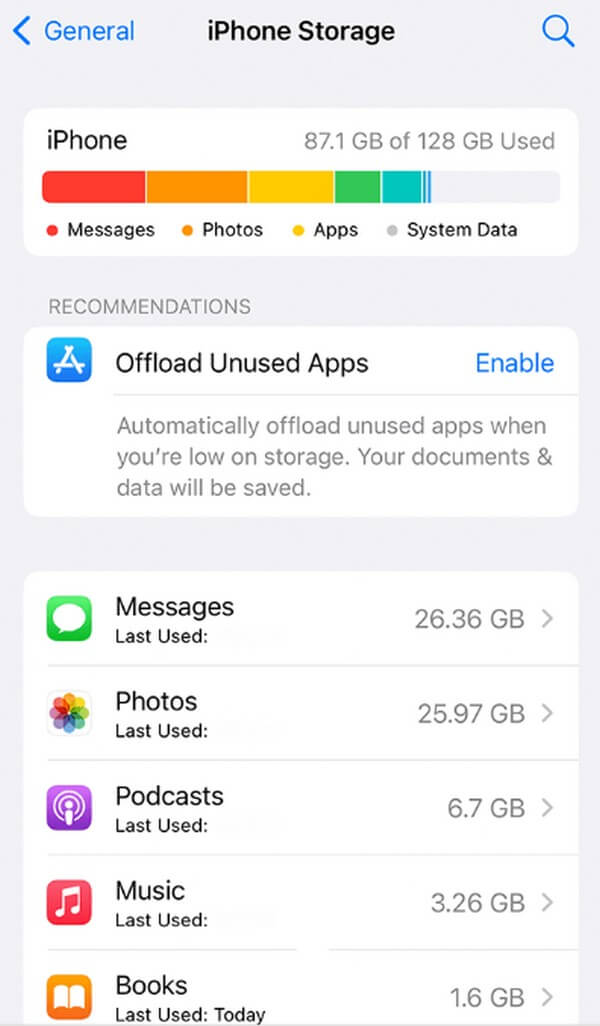
Step 2Find Calendar in the app list. Tap it.
Step 3Tap Delete App and confirm. This removes the app and all its data.
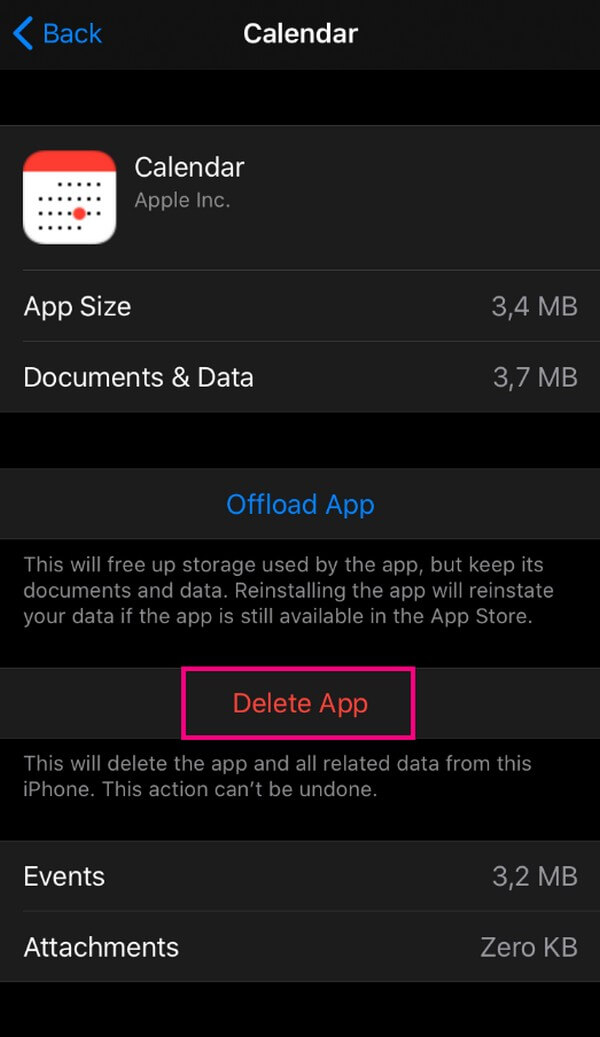
Step 4Reinstall Calendar from App Store. It will be empty. Note: iCloud-synced events may reappear — delete them from iCloud.com first if needed.
FoneLab iPhone Cleaner is the best iOS data cleaner which can easily erase all contents and settings or specific data on iPhone, iPad or iPod Touch.
- Clean unwanted data from iPhone, iPad or iPod touch.
- Erase data quickly with one-time overwriting, which can save you time for plenty of data files.
- It is safe and easy to use.
- Clean unwanted data from iPhone, iPad, or iPod touch.
- Erase data with one-time overwriting.
- Multiple security levels.
Part 4: Wipe Out Spam Calendar Events for Good
According to Kaspersky's 2024 threat report, calendar spam arrives when users inadvertently tap malicious popup ads in Safari, subscribing the iPhone to spam calendars. Trend Micro's research on iOS calendar spam adds a critical warning: the details inside these spam events often contain links to phishing pages — never tap them, because clicking is how the subscription or a data-stealing page gets installed. Delete the source, not the link.
Step 1: Remove the spam account from the Calendar app.
Step 1Open Calendar app. Tap Calendars at the bottom.
Step 2Look for unfamiliar calendar names with random text or suspicious titles.
Step 3Tap the info icon (i) next to suspicious calendar. Scroll down and tap Delete Calendar. Confirm.
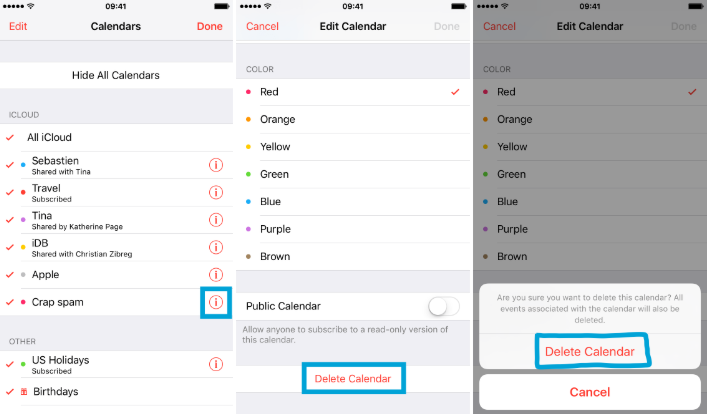
Step 2: Clean the subscribed calendars in Settings. Spam feeds hide here too — the subscription lives under your calendar accounts even when it does not show in the app list.
Step 1Open Settings > Calendar > Accounts.
Step 2Tap the account with the subscribed calendar. Toggle off Calendars or tap Delete Calendar.
Alternatively: Calendar app > Calendars > info icon (i) > scroll down > Unsubscribe.
Step 3: Remove the spam from iCloud.com so it does not sync back from the cloud.
Step 1Open Safari, go to icloud.com. Sign in.
Step 2Click Calendar. Find spam calendar in left sidebar.
Step 3Click share icon > Delete Calendar. Confirm.
If the spam events keep coming back after all of this, check two remaining sources. For a full guide on wiping the calendar clean, see how to clear the iPhone calendar. First, open Settings > General > VPN & Device Management — a configuration profile installed from a malicious page can re-subscribe your calendar automatically. Second, check Family Sharing: if the spam account belongs to a family member's shared calendar, it reappears whenever their device re-syncs. In my testing, an event that returned after every delete turned out to be a shared calendar from a family account, and removing it there fixed the loop for good.
Part 5: Tidy Up Everything Else with FoneLab iPhone Cleaner
FoneLab iPhone Cleaner is the best iOS data cleaner which can easily erase all contents and settings or specific data on iPhone, iPad or iPod Touch.
- Clean unwanted data from iPhone, iPad or iPod touch.
- Erase data quickly with one-time overwriting, which can save you time for plenty of data files.
- It is safe and easy to use.
- Clean unwanted data from iPhone, iPad, or iPod touch.
- Erase data with one-time overwriting.
- Multiple security levels.
What sets FoneLab iPhone Cleaner apart:
- Deletes beyond what a normal reset does. A factory reset leaves recoverable data behind; FoneLab iPhone Cleaner overwrites the storage so deleted data cannot be brought back with forensic tools.
- Pick your security level. Low (one pass), Medium (two passes), or High (three passes) — I use High when handing a phone to someone else, and Low for a quick wipe. In my test, the High-level wipe of a 128GB iPhone took about 9 minutes from start to finish.
- No technical skill needed. The whole wipe runs from a guided interface on your computer — no DFU mode gymnastics or command-line tools.
- Handles all iOS devices. iPhone, iPad, and iPod touch are supported, and the program runs on both Windows and Mac.
- Also frees up space day to day. Beyond the full wipe, it cleans junk data from a working iPhone, which makes it useful long after the one-time erase.
Deleting calendar events is only part of the clutter. The same tool clears app caches, leftover files, and years of junk — the kind of stuff that quietly fills your iPhone even after you clean up your calendars. For selling or giving away your iPhone, FoneLab iPhone Cleaner overwrites data multiple times, making recovery impossible even with forensic tools. In my comparison, a plain factory reset still let a recovery scan pull back 214 photos and 36 contacts — after the High-level wipe, the same scan returned zero recoverable files.
Step 1Download FoneLab iPhone Cleaner. Install and launch on your computer.
Step 2Connect iPhone via USB/Lightning. Tap Trust when prompted.
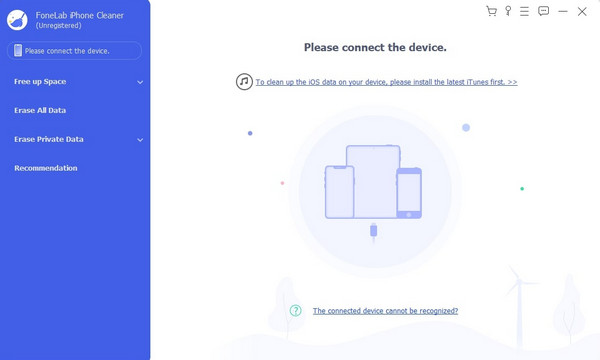
Step 3Disable Find My iPhone if prompted. Select erasing level: Low (one pass), Medium (two passes), High (three passes). For selling, use High.
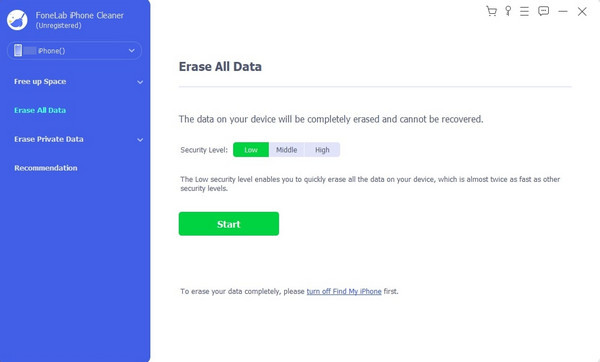
Step 4Click Start. Follow on-screen prompts. iPhone restarts with factory settings and zero recoverable data when complete.
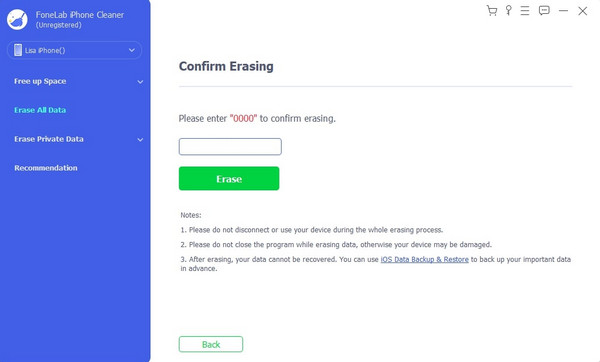
FoneLab iPhone Cleaner is the best iOS data cleaner which can easily erase all contents and settings or specific data on iPhone, iPad or iPod Touch.
- Clean unwanted data from iPhone, iPad or iPod touch.
- Erase data quickly with one-time overwriting, which can save you time for plenty of data files.
- It is safe and easy to use.
- Clean unwanted data from iPhone, iPad, or iPod touch.
- Erase data with one-time overwriting.
- Multiple security levels.
Part 6: FAQs About Deleting Calendar Events on iPhone
How do I delete spam calendar events that keep coming back?
Remove from both iPhone and iCloud.com. Check Settings > Calendar > Accounts for unfamiliar subscribed calendars. Per Apple Support, never tap "Subscribe" on suspicious Safari popups.
Can I delete events without deleting the Calendar app?
Yes — use the Calendar app method for individual events. For bulk deletion without removing the app, turn off calendar syncing: Settings > Calendar > Accounts > toggle off Calendars.
How do I delete birthdays from iPhone calendar?
Contacts app > find person > Edit > remove birthday > Done. To hide without deleting: Calendar app > Calendars > uncheck Birthdays.
Will deleting a calendar event notify invitees?
If you are the organizer, invitees receive cancellation. If you are an invitee, the organizer is notified of your decline. Per Apple Support, this is by design for iCloud Calendar.
I deleted a recurring event, but it still shows up on my iPhone. Why?
The event may belong to a different calendar or a subscribed feed that re-synced it. Check the event's Calendar field as shown in Part 1, and confirm whether it still exists on iCloud.com. If it comes from a shared or subscribed calendar, remove the source itself — deleting one instance will not stop the feed.
Can I undo a calendar event I deleted by mistake?
No. Unlike Mail or Photos, the Calendar app has no Trash folder, so a deleted event cannot be restored from the phone. If you accidentally removed one, check how to retrieve deleted calendar events on iPhone. To protect important entries, hide the whole calendar instead of deleting it (Part 3, Option 1), or keep a copy of the event details before you remove it.
Planning to sell or hand down your iPhone? Download FoneLab iPhone Cleaner and wipe every trace of your data beyond recovery — it is free to try.
FoneLab iPhone Cleaner is the best iOS data cleaner which can easily erase all contents and settings or specific data on iPhone, iPad or iPod Touch.
- Clean unwanted data from iPhone, iPad or iPod touch.
- Erase data quickly with one-time overwriting, which can save you time for plenty of data files.
- It is safe and easy to use.
- Clean unwanted data from iPhone, iPad, or iPod touch.
- Erase data with one-time overwriting.
- Multiple security levels.