
 iPhone Data Recovery
 iOS System Recovery
 iOS Data Backup & Restore
 iOS Unlocker
 iPhone Password Manager
 Location Changer
 Android Data Recovery
 Broken Android Data Extraction
 Android Data Backup & Restore
 Android Unlocker
 FoneTrans for iOS
 iPhone Data Eraser
 iPhone Cleaner
 HEIC Converter
 HyperTrans
 WhatsApp Transfer for iOS
 Mac Sweep
 Data Retriever
 Mac Data Retriever
 Video Converter Ultimate
 Screen Recorder
 Phone Mirror
How to Backup iPhone Call Logs Safely (3 Ways)
 Updated by
 Call logs do not feel like something you need to back up, until the day you need to prove a call, check a missed number, or recover records after a reset. I have seen too many people lose important call history simply because they assumed it was stored somewhere safe. It is not, unless you make a copy yourself.
In this guide I show you how to backup iPhone call logs in two reliable ways: through iCloud, and directly to your computer with a dedicated backup tool. I also explain what each method actually saves, so you can choose the one that fits how you use your phone.

Guide List
Part 1. Why You Should Back Up iPhone Call Logs
Here is what most people do not realize: your iPhone's call history lives only on the phone itself. iCloud does not sync call logs between devices the way it syncs photos or notes, and there is no iCloud.com page where your call history is waiting for you. That means a reset, a broken phone, or a switch to a new iPhone can erase your call records for good.
Another thing people overlook is how short the on-device record really is. The Phone app keeps only a limited window of recent calls, and as you make and receive new calls, the oldest entries are quietly pushed out. So even without any accident, your call history is constantly shrinking on its own. That alone is a strong reason to back it up while the records you care about still exist.
- Legal or billing disputes. Call logs can serve as evidence of when and how often you contacted someone.
- Work records. Client calls, delivery calls, and business numbers are easy to lose and hard to reconstruct.
- Peace of mind. A backup means a lost or stolen phone no longer means lost call history.
Two backup paths actually protect call logs: a full iCloud backup, which includes them, and a computer backup that saves call data to your own disk. Both are explained below, and you can use either or both depending on your needs.
There is a third, partial option worth mentioning: your carrier. Most carriers keep itemized call records for several months and let you download them from their website or app. That copy is not the same as the iPhone's call log, but it records the same calls with times and durations, and it is generated on the network side, so it survives even if your phone is lost entirely. It is a useful supplement, though it cannot replace a backup of the phone's own records.
Part 2. Back Up Call Logs with iCloud Backup
The simplest way to protect call history is to let iCloud include it in a regular full backup. Call logs are part of the device data that iCloud backs up, so as long as iCloud backup is on, your call history is saved automatically.
Step 1Connect your iPhone to Wi-Fi and make sure it is charging.
Step 2Open Settings and tap your name, then iCloud.
Step 3Tap iCloud Backup (or Backups on newer iOS) and turn on Back Up This iPhone.
Step 4Tap Back Up Now to create an immediate backup, and check the time shown next to Last Successful Backup.
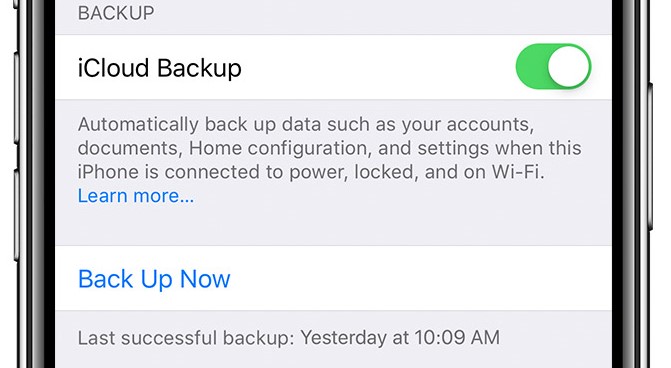
From now on, iCloud backs up your phone automatically when it is connected to Wi-Fi and charging. One thing to keep in mind: an iCloud backup saves the whole phone, so restoring it later brings back all your data, not just the call logs. If you only want a copy of your call history that you can browse or keep forever, the computer method in Part 3 is more flexible.
If you are using a newer iPhone, you may also see an option called iCloud backup encryption for advanced data protection. Turning that on adds end-to-end encryption to your backup, which is a good idea if your call history or messages are sensitive. Write down your recovery key or keep it somewhere safe, because without it Apple cannot help you recover the backup.
One more note: the free iCloud tier only holds 5 GB, and a full device backup can use a large part of that. If you hit the storage limit, backups will stop running, so check your iCloud storage now and again, and upgrade or clean up old backups if needed.
And if you use an Apple Watch or iPad with the same Apple Account, those devices are backed up through the iPhone's backup as well, so call history and other data on them are covered by the same protection. There is nothing extra you need to set up for them.
Part 3. Back Up Call Logs to Computer with FoneLab iOS Data Backup & Restore
When I want call logs saved to my own computer, I use FoneLab iOS Data Backup & Restore. It backs up your iPhone data to your PC or Mac as a local backup, so the copy is yours and does not depend on iCloud storage or an internet connection. Call history is included, and you can also restore it later with the same tool.

FoneLab enables you to backup and restore iPhone/iPad/iPod without data loss.
- Backup and restore iOS data to your PC/Mac easily.
- Preview data in detail before you restore data from backups.
- Selective backup for call logs, contacts, messages, photos and more.
Here is how to backup iPhone call logs with it:
Step 1Download, install, and launch FoneLab iOS Data Backup & Restore on your computer.
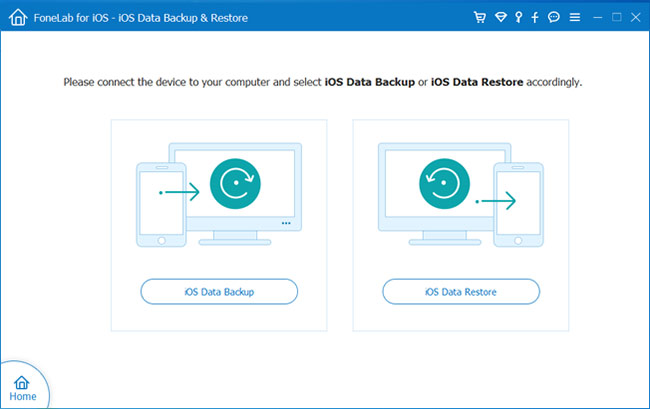
Step 2Choose Backup iOS Data, then connect your iPhone with a USB cable and tap Trust when prompted.
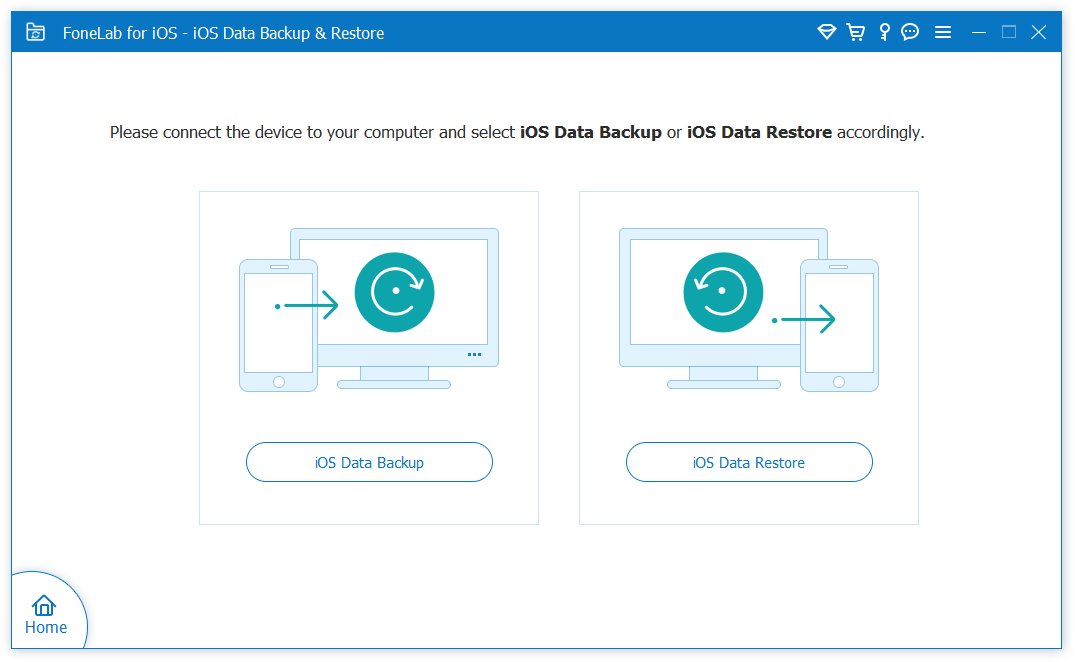
Step 3In the data-type list, tick Call History (plus any other data you want to include, such as contacts or messages).
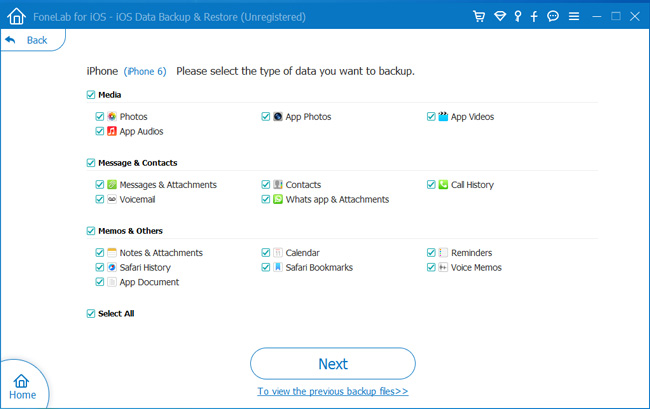
Step 4Click Next and wait for the backup to finish. Your call logs are now saved on your computer.
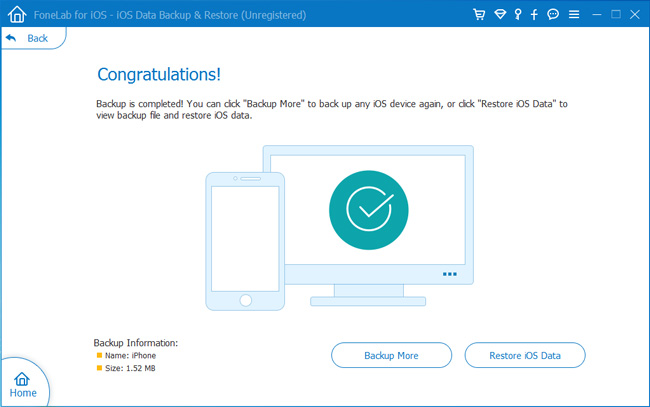
Later, if your call history disappears, open the same tool, choose Restore iOS Data, pick the backup, preview the call logs inside it, and restore them to your iPhone. That makes this method a complete backup and recovery cycle, all stored on hardware you control. For related help, see how to recover deleted call history on iPhone or how to back up other data with iPhone contacts backup.
Before the backup starts, the program asks you to choose between standard and encrypted backups. If you are storing sensitive call records, pick the encrypted option and set a password, because an encrypted backup protects your data even if the backup file falls into the wrong hands. Keep that password somewhere safe, since you will need it for every restore.
FoneLab enables you to backup and restore iPhone/iPad/iPod without data loss.
- Backup and restore iOS data to your PC/Mac easily.
- Preview data in detail before you restore data from backups.
- Selective backup for call logs, contacts, messages, photos and more.
It is also a good idea to give your backup a recognizable name or note the date when you create it. Over time you will accumulate several backups on the same computer, and being able to tell which one contains which call records makes a future restore far easier.
If your phone runs out of space and the backup seems to stall, free up a little room first, then run it again. The tool needs a small amount of temporary space to process the data, and a nearly full phone can cause the process to hang at the very end.
Part 4. Comparison of the Two Backup Ways
Here is a quick comparison to help you decide.
| Aspect | iCloud Backup | FoneLab iOS Data Backup & Restore |
|---|---|---|
| Storage | iCloud (limited free space) | Your PC/Mac |
| Automatic | Yes, on Wi-Fi + charging | Manual, on your schedule |
| Selective backup | No, whole phone | Yes, pick call logs etc. |
| Restore | Whole phone restore | Selective restore |
If you want a hands-off safety net, iCloud backup is the easy choice. If you want a copy you can browse, keep forever, and restore selectively, the computer backup with FoneLab iOS Data Backup & Restore is the stronger option. Many people use both, which gives double protection.
Whichever method you pick, write the schedule down somewhere. Backups only help if they are recent, and call logs change every single day. A monthly computer backup plus an automatic iCloud backup means you are never more than a few weeks away from a full copy of your call history.
Part 5. FAQs about Backing Up iPhone Call Logs
Does iCloud backup include call history?
Yes. A full iCloud backup includes call history as part of the device data. However, iCloud does not sync call logs between devices or let you view them on iCloud.com, so a backup or a computer copy is the only way to keep them.
Can I export call logs from iPhone to computer without a tool?
No official export option exists for the Phone app's call history. Your carrier's website may let you download call detail records, and a computer backup tool like FoneLab iOS Data Backup & Restore is the way to back up the call logs themselves.
How long does iPhone keep call history?
The Phone app keeps a limited number of recent records, and older entries are dropped automatically. That is exactly why backing up is important, since the records you need can disappear on their own over time.
Is it safe to back up iPhone call logs to a computer?
Yes. Backing up with FoneLab iOS Data Backup & Restore only reads data from your iPhone and saves a copy on your computer; nothing is changed or removed on the phone. You control where the backup file is stored and who can access it.
Backing up iPhone call logs takes minutes and protects records that are otherwise easy to lose. Let iCloud handle the automatic full backup, and use FoneLab iOS Data Backup & Restore when you want a personal, selective copy on your computer. If your logs are already gone, see how to recover deleted call history on iPhone or get call history back from iCloud.
The habit that saves the most people: back up before you need to, not after. Set a reminder on your calendar for the first day of each month, run the computer backup, and let iCloud handle the rest. Ten minutes a month is a small price for never losing another call record.
FoneLab enables you to backup and restore iPhone/iPad/iPod without data loss.
- Backup and restore iOS data to your PC/Mac easily.
- Preview data in detail before you restore data from backups.
- Selective backup for call logs, contacts, messages, photos and more.