
 iPhone Data Recovery
 iOS System Recovery
 iOS Data Backup & Restore
 iOS Unlocker
 iPhone Password Manager
 Location Changer
 Android Data Recovery
 Broken Android Data Extraction
 Android Data Backup & Restore
 Android Unlocker
 FoneTrans for iOS
 iPhone Data Eraser
 iPhone Cleaner
 HEIC Converter
 HyperTrans
 WhatsApp Transfer for iOS
 Mac Sweep
 Data Retriever
 Mac Data Retriever
 Video Converter Ultimate
 Screen Recorder
 Phone Mirror
- Part 1. Check the Recently Deleted Folder First
- Part 2. Restore Reminders from iCloud.com
- Part 3. Restore Your iPhone from an iCloud Backup
- Part 4. Extract Reminders from iCloud Backup with FoneLab iPhone Data Recovery
- Part 5. Which Method Works Best?
- Part 6. Keep Your Reminders Safe Going Forward
- Part 7. FAQs About Recovering Deleted Reminders
How to Recover Deleted Reminders on iPhone from iCloud
 Posted by Valyn Hua / September 09, 2026 09:00
 Is there a folder for deleted reminders on iPhone? I knew there was one for photos, but I could not find it in the Reminders app. Two of my reminders disappeared, probably deleted by accident. Is there still a way to get them back?
Losing a reminder can mean missing a deadline, a bill, or a birthday. The good news is Apple gives you several ways to get them back — a Recently Deleted folder inside the app, a restore tool on iCloud.com, a full iCloud backup restore, and a desktop tool that pulls reminders out of a backup without wiping your phone. Start with the fastest method and work down.
Part 1. Check the Recently Deleted Folder First
Since iOS 13, the Reminders app keeps deleted items for 30 days in a Recently Deleted folder. This is always the first place to look because it takes seconds and needs no computer. The folder lives at the top level of the Reminders app, alongside your other lists like Reminders, Scheduled, and All. If you use a Mac, the same folder appears in the Reminders app under View > Show Recently Deleted, and recovering there syncs back to your iPhone automatically.
Step 1Open the Reminders app and tap Back until you see the list of reminder lists.
Step 2Tap Recently Deleted. If you do not see it, tap the More button (three dots) and look for it there.
Step 3Swipe left on a reminder and tap Recover, or tap Edit, select the reminders, and choose Recover.
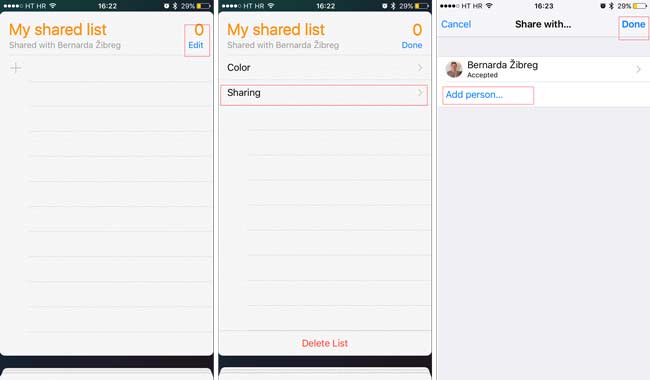
Reminders stay in Recently Deleted for 30 days. After that they are gone for good, so act fast. If the folder is empty or the reminder is older than 30 days, move to the next method. Note that the Recently Deleted folder only appears when you have at least one deleted reminder — if it is missing entirely, there is nothing to recover there.
Part 2. Restore Reminders from iCloud.com
iCloud.com keeps archived versions of your calendars and reminders for about a month. Restoring from here brings back an entire set of reminders to every device signed in to your Apple ID. Before you restore, make sure your current reminders are backed up or exported — the restore replaces everything, so any reminder you created after the archive date will be overwritten. You can see the date and time of each archive before you choose one, so pick the one that is closest to but before the deletion.
Step 1Sign in to icloud.com and click Account Settings (your name at the top right).
Step 2Scroll to the bottom and click Restore Calendars and Reminders under Advanced.
Step 3Pick an archive from before the deletion and click Restore. Confirm again on the popup.
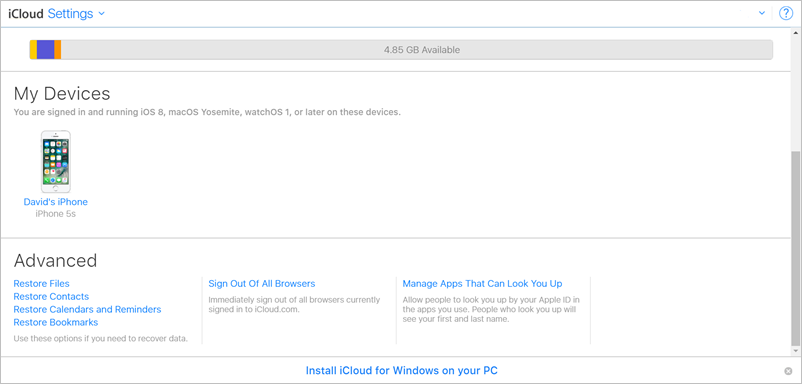
A few things to know: this restores every reminder list, not just the one you lost. Shared reminder lists lose their shared members after a restore, so you will need to re-invite people. Upgraded reminders (the style introduced in iOS 13) cannot be restored this way — for those, use the backup methods below. The restore also overwrites your current calendars and reminders with the archived version, so any reminder you created after the archive date will disappear.
Part 3. Restore Your iPhone from an iCloud Backup
If you had iCloud Backup turned on before the reminder disappeared, a full restore can bring it back. The catch is that it wipes everything currently on your phone and replaces it with the backup, so only do this if the lost reminder is worth the trade-off. Before you erase, make sure you know your Apple ID password and that you have a recent backup — you can check under Settings > [your name] > iCloud > iCloud Backup to see the date of the last successful backup.
Step 1Go to Settings > General > Transfer or Reset iPhone > Erase All Content and Settings.
Step 2After the phone restarts, follow the setup screens until you reach Apps & Data.
Step 3Tap Restore from iCloud Backup, sign in, and choose the backup that predates the deletion.
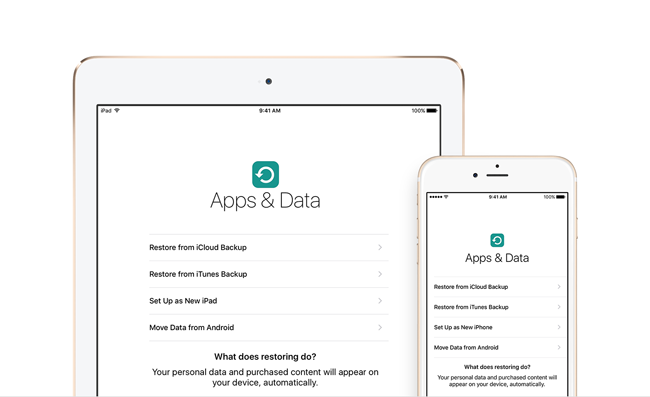
Everything on the phone — photos, messages, apps, settings — reverts to the backup state. Any data created after the backup date is lost unless you saved it elsewhere. If you back up to a computer with Finder (Mac) or Apple Devices (Windows), you can restore from that backup the same way by connecting the phone and choosing Restore Backup. Computer backups often contain more data than iCloud backups because they are not limited by iCloud storage, so if you regularly sync to a computer, that backup may be more complete.
One important note: restoring from a backup is an all-or-nothing process. You cannot pick just the reminders and leave everything else as-is. If you need to recover a single reminder without touching the rest of your phone, skip to Part 4 for a selective recovery tool. Also, make sure the backup you choose actually contains the reminder — if the backup was made after the deletion, the reminder will not be in it. You can check the backup date in the restore menu before committing.
Part 4. Extract Reminders from iCloud Backup with FoneLab iPhone Data Recovery
FoneLab iPhone Data Recovery lets you open an iCloud backup, preview the reminders inside it, and recover only the ones you need — no factory reset, no overwriting your current phone. It also works with iTunes/Finder backups and can scan the device directly. The preview window shows each reminder's title, notes, due date, and list name, so you can confirm you have the right one before recovering.

With FoneLab for iOS, you will recover the lost/deleted iPhone data including photos, contacts, videos, files, WhatsApp, Kik, Snapchat, WeChat and more data from your iCloud or iTunes backup or device.
- Recover photos, videos, contacts, WhatsApp, and more data with ease.
- Preview data before recovery.
- iPhone, iPad and iPod touch are available.
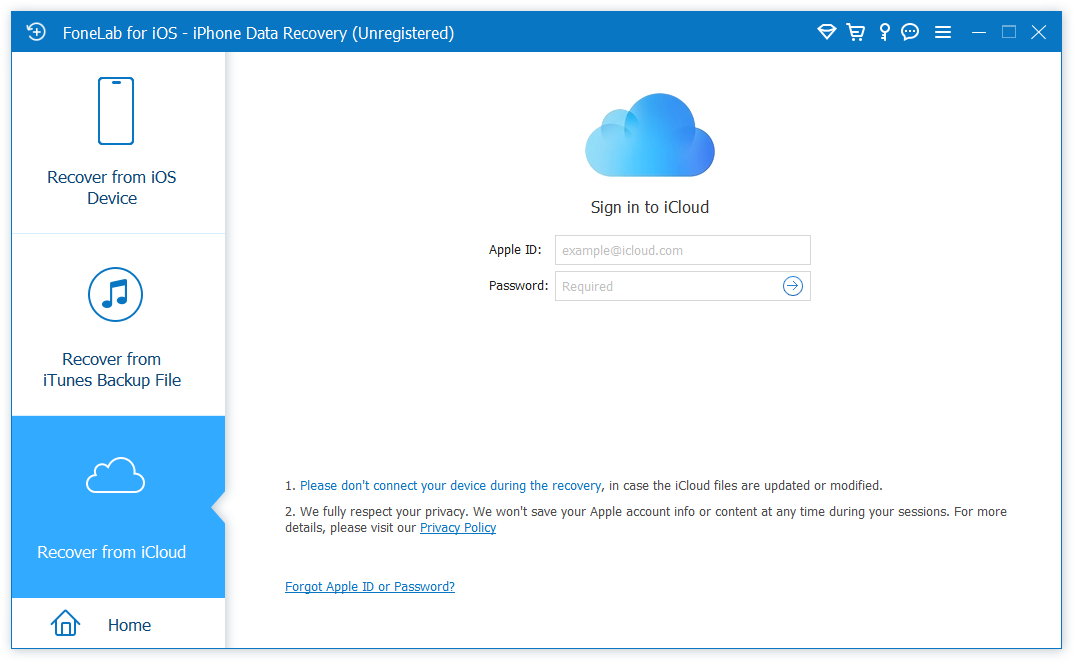
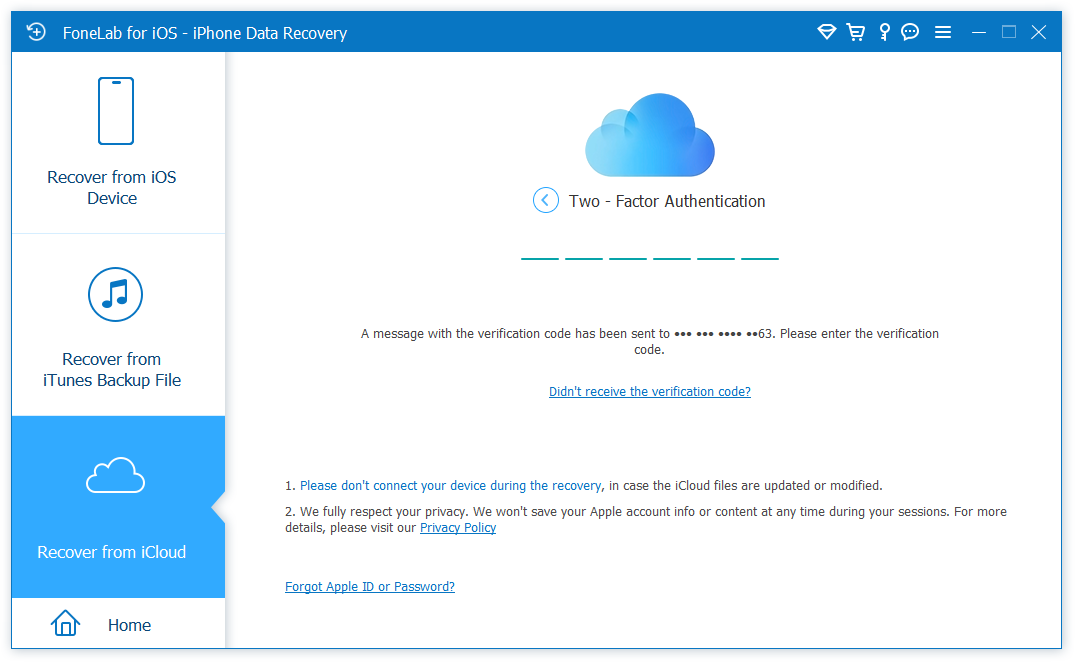
Step 1Install and open FoneLab iPhone Data Recovery. Choose Recover from iCloud and sign in with your Apple ID. If two-factor authentication is on, enter the verification code sent to your trusted device.
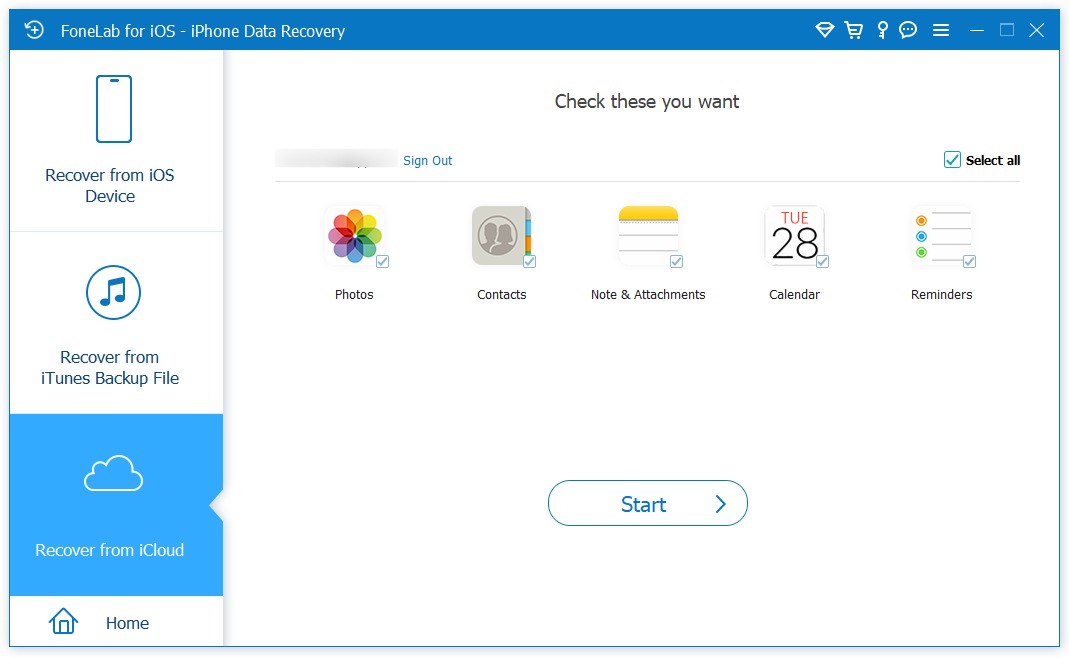
Step 2Choose Reminders from the data types and click Start to scan your iCloud. The scan reads iCloud data directly and does not affect anything currently on your phone.
Step 3Preview the reminders, check the ones you want, and click Recover to save them to your computer.
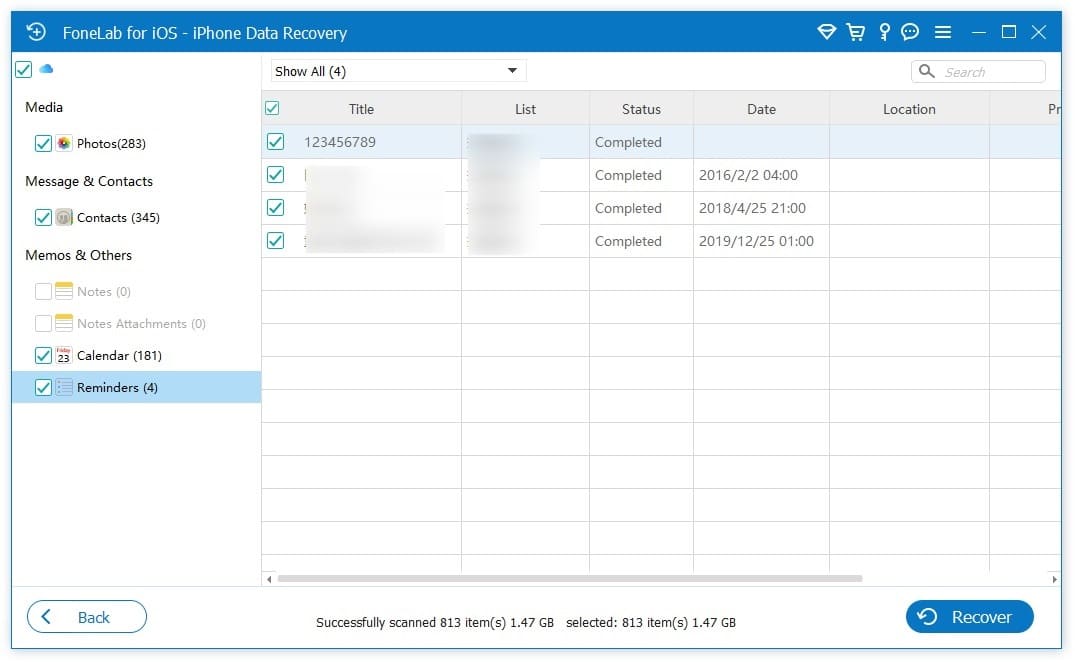
The recovered reminders save as a file on your computer, which you can then reference or re-enter on your phone. If you need them back on the iPhone directly, you can also use the device recovery mode to scan the phone and restore reminders to the app. The software supports all recent iPhone models and iOS versions, so you do not need to worry about compatibility. Scans usually take a few minutes, and you can pause or cancel at any time without affecting the data on your phone.
The same tool can recover reminders directly from the iPhone when no backup exists, and it handles notes, contacts, photos, and messages too. If you also lost notes, the same scan will find them. You can also use it to recover calendars from iCloud, since the same iCloud backup contains both reminders and calendar events. The three recovery modes cover every scenario: device mode for when the phone still works, iCloud mode for when you only have a cloud backup, and iTunes mode for when you back up to a computer.
Part 5. Which Method Works Best?
| Method | Speed | Wipes current data | Can select specific reminders |
|---|---|---|---|
| Recently Deleted | Seconds | No | Yes |
| iCloud.com restore | Minutes | No (replaces all lists) | No |
| iCloud backup restore | 30-60 min | Yes | No |
| FoneLab iPhone Data Recovery | Minutes | No | Yes |
Part 6. Keep Your Reminders Safe Going Forward
The best recovery plan is not needing one. Make sure Reminders is turned on under Settings > [your name] > iCloud so every reminder syncs to the cloud instantly. Keep iCloud Backup enabled over Wi-Fi, and occasionally back up notes and other app data the same way. If you share reminder lists with family or coworkers, remember that a restore on iCloud.com removes shared members — re-invite them afterward. For important reminders, consider duplicating the list or exporting a screenshot before making bulk changes, so you always have a fallback. You can also set up recurring reminders for critical tasks so even if one copy gets deleted, the next occurrence is already on the calendar. Taking a minute to set up these safeguards now saves hours of recovery work later.
Part 7. FAQs About Recovering Deleted Reminders
How long do deleted reminders stay recoverable?
The Recently Deleted folder keeps them for 30 days. iCloud.com archives also go back about a month. After that, only an iCloud or iTunes/Finder backup made before the deletion can help.
Why does iCloud.com say my reminders cannot be restored?
Upgraded reminders (introduced in iOS 13) are not supported by the iCloud.com restore tool. Use an iCloud backup restore or FoneLab iPhone Data Recovery instead, both of which handle the upgraded format.
Can I recover a reminder without a backup?
Yes. FoneLab iPhone Data Recovery can scan the iPhone directly and pull deleted reminders from the device storage, as long as the data has not been overwritten. Stop using the phone and run the scan as soon as possible.