
 iPhone Data Recovery
 iOS System Recovery
 iOS Data Backup & Restore
 iOS Unlocker
 iPhone Password Manager
 Location Changer
 Android Data Recovery
 Broken Android Data Extraction
 Android Data Backup & Restore
 Android Unlocker
 FoneTrans for iOS
 iPhone Data Eraser
 iPhone Cleaner
 HEIC Converter
 HyperTrans
 WhatsApp Transfer for iOS
 Mac Sweep
 Data Retriever
 Mac Data Retriever
 Video Converter Ultimate
 Screen Recorder
 Phone Mirror
- Part 1. Where Deleted Audio Goes on a Motorola Phone
- Part 2. Check the File Manager Trash First
- Part 3. Restore Audio from a Google Backup
- Part 4. Recover Deleted Audio with FoneLab Android Data Recovery
- Part 5. Pull Audio Off the microSD Card
- Part 6. Compare the Audio Recovery Methods
- Part 7. Frequently Asked Questions
 Recover Android Data Now
Recover the lost/deleted iPhone data including photos, contacts, videos, files, call log and more data from your SD card or device.
How to Recover Deleted Audio from Motorola Phones (3 Ways)
 Posted by Boey Wong / October 15, 2026 09:00
I lost a family voice recording on a Motorola phone the week before a long trip, and it taught me a lesson I will not forget. The moment you delete an audio file, the phone does not actually erase it right away. It marks the space as free, and your next downloads, photos, and app installs can quietly overwrite it. So the first rule of audio recovery is simple: put the phone down, stop recording, and stop installing apps until you get the file back.
In this guide I will walk you through three practical ways to recover deleted audio on a Motorola phone, starting with the free methods that need no computer. By the end, you will know whether your recordings are gone for good or waiting in a backup.

Guide List
- Part 1. Where Deleted Audio Goes on a Motorola Phone
- Part 2. Check the File Manager Trash First
- Part 3. Restore Audio from a Google Backup
- Part 4. Recover Deleted Audio with FoneLab Android Data Recovery
- Part 5. Pull Audio Off the microSD Card
- Part 6. Compare the Audio Recovery Methods
- Part 7. Frequently Asked Questions
Part 1. Where Deleted Audio Goes on a Motorola Phone
Before trying to recover anything, it helps to understand where the audio actually lives. On a Motorola phone, your files are split between internal storage and, if you have one, a microSD card. Voice Recorder saves recordings as AMR or M4A files, downloaded music lands in the Music or Downloads folder, and WhatsApp voice messages hide inside the app's own data folder.
When you delete a file, Android removes the pointer to it rather than the audio itself. That is why recovery software can still see it for a while. It is also why continuing to use the phone is the single biggest threat: every new photo or app update writes over the exact blocks you need. So if the recording matters, switch on airplane mode and keep usage light until you finish the steps below.
In practice, audio disappears in a few predictable ways. A factory reset wipes internal storage without warning. A careless tap on the trash icon while clearing the Downloads folder removes a lecture recording you meant to keep. Formatting a microSD card, clearing an app's cache, or moving files to free up space are the usual culprits. Knowing which one applied to you narrows down where to look, but the recovery steps below cover all of them.
Part 2. Check the File Manager Trash First
This is the fastest free method and most people skip it. Modern Motorola phones keep a trash or recycle bin inside the Files app for up to 30 days, and it often holds the exact file you just deleted.
Step 1Open the Files or File Manager app on your Motorola phone.
Step 2Look for Trash, Recycle bin, or Recently deleted in the side menu.
Step 3Use the search box inside the trash and type .amr, .m4a, or .mp3 to filter for audio.
Step 4Long-press the recording you want, then tap Restore to put it back where it was.
If the file is not in the trash, also open your Voice Recorder app itself, because some versions keep their own deleted-items folder. If you used a cloud recorder, check its account online too. If nothing turns up, the file was likely permanently removed, and you need the methods that follow.
Part 3. Restore Audio from a Google Backup
If you have Google One or Motorola's built-in backup turned on, your audio may already be sitting safely in the cloud. This is the cleanest free recovery path because it needs no special software.
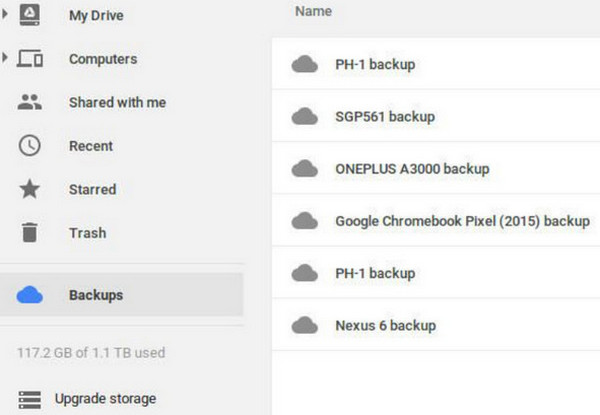
Step 1Open the Google Drive app or visit drive.google.com and sign in with the same Google account.
Step 2Use the search bar and filter by type, or browse the Backup folder for audio files.
Step 3Tap the file, then choose Download to save it back to your phone.
If your Motorola phone backs up media automatically, the recording may also restore during a device reset. That is heavier than you want, but worth knowing if the file is irreplaceable. You can read more about restoring an Android phone from a Google backup when that becomes necessary.
Part 4. Recover Deleted Audio with FoneLab Android Data Recovery
When there is no trash copy and no cloud backup, you need a tool that scans the phone's storage directly. I use FoneLab Android Data Recovery for this. To be upfront: it cannot rescue audio from a phone that is physically dead, and recovery depends on the deleted file not yet being overwritten. But for a working Motorola phone with no backup, it is the most reliable option I have found.
With FoneLab for Android, you will recover the lost/deleted iPhone data including photos, contacts, videos, files, call log and more data from your SD card or device.
- Recover photos, videos, contacts, WhatsApp, and more data with ease.
- Preview data before recovery.
- Android phone and SD card data are available.
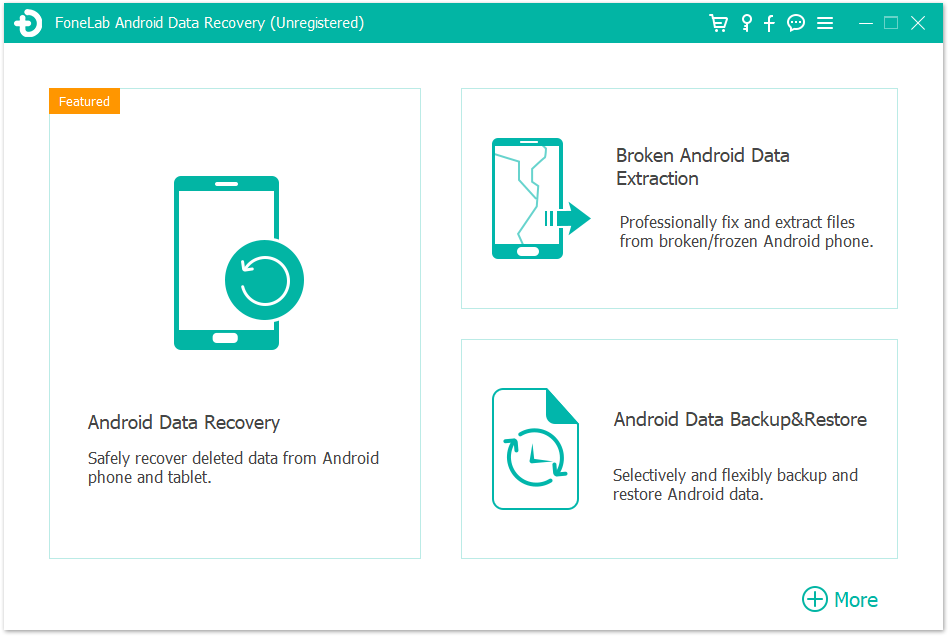
Step 1Launch FoneLab Android Data Recovery on your computer and choose Android Data Recovery on the interface, then connect the phone to the computer with a USB cable.
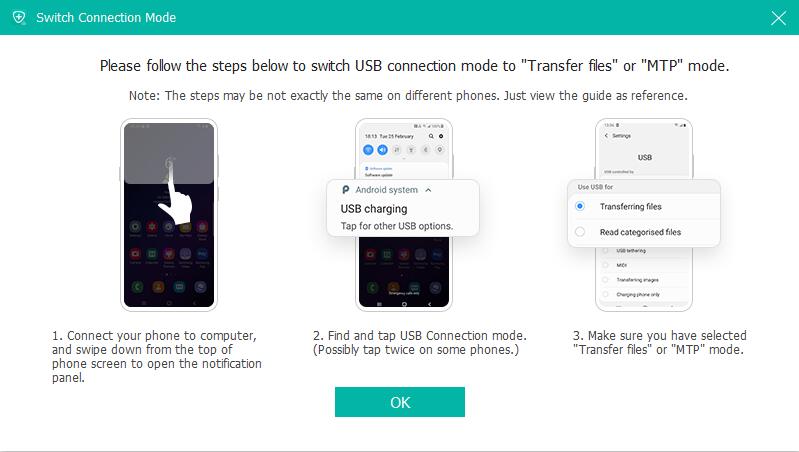
Step 2Follow the on-screen instruction to open USB debugging and switch the USB mode to Transfer files (or MTP). Then tick Audio (under Media), uncheck everything else, and click Next.
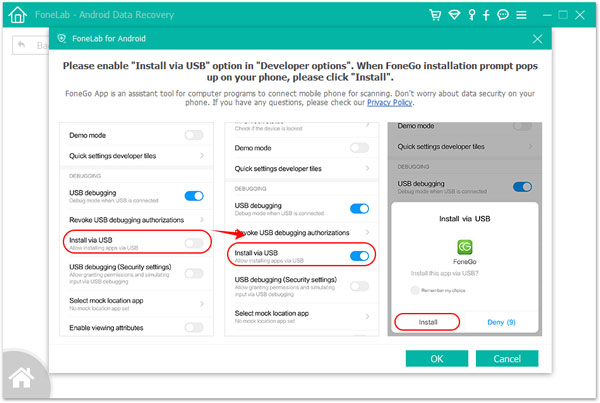
Step 3The program needs privileged access, so install the FoneGo app and turn on Install via USB in Developer options. Tap Allow on the phone to authorize FoneGo; if the program does not detect the authorization, click I Have Authorized.
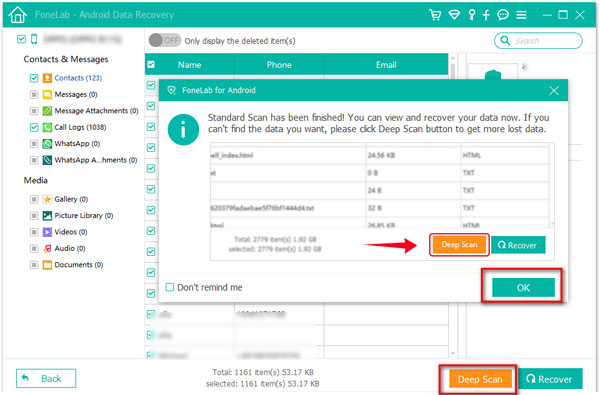
Step 4When Standard Scan has been finished, click Ok, preview the recordings in the categories on the left, tick the ones you want, and click Recover. If a recording is missing, click Deep Scan and then Start Deep Scan to dig deeper.
Because you can listen to each recording before committing, you avoid restoring a pile of junk. Save the recovered audio to your PC, then copy it back to the phone or your cloud storage. For other media that vanished the same way, you can also see how to recover deleted videos from Android.
A few habits will raise your success rate before you even start the scan. Charge the phone above twenty percent so the scan does not die halfway through. Use an original or good-quality USB cable, because a flaky connection drops the scan and forces you to start over. Most importantly, do not root or flash anything yourself just to speed things up; let the tool request the access it needs and tap Allow when the phone prompts. If the authorization dialog never appears, unplug and reconnect the cable rather than forcing it.
With FoneLab for Android, you will recover the lost/deleted iPhone data including photos, contacts, videos, files, call log and more data from your SD card or device.
- Recover photos, videos, contacts, WhatsApp, and more data with ease.
- Preview data before recovery.
- Android phone and SD card data are available.
Part 5. Pull Audio Off the microSD Card
If your Motorola phone stores music or recordings on a microSD card, recovery is even easier and does not require rooting. Power the phone off, pop the card out, and plug it into your computer with a card reader. The same scanning tool can read the card directly and recover deleted MP3, WAV, and voice recordings from it.
Why does this matter? Files on an SD card are not touched by the phone's internal recovery process, and they are far less likely to be overwritten the moment you keep using the phone. If the deleted audio was saved to the card, this is often the fastest route. You can learn more about that workflow in this guide to recovering data from a phone memory card.
One caution: do not save the recovered files back onto the same card you are scanning. That can overwrite the very sectors you are trying to read. Instead, let the tool write the recovered audio straight to your computer's hard drive, and only once the scan is fully done should you copy things back. If the card shows as blank or asks to be formatted, stop immediately and do not accept the format prompt, since writing a new file system destroys recoverable data.
Part 6. Compare the Audio Recovery Methods
Not sure which method to try first? Here is how they compare.
| File Manager Trash | Google Drive backup | FoneLab Android Data Recovery | |
|---|---|---|---|
| Needs a computer | No | No | Yes |
| Cost | Free | Free | Paid tool |
| Works without backup | Limited | No | Yes |
| Preview before restore | Yes | Limited | Yes |
| Best for | Just-deleted files | Cloud-backed audio | No backup, internal memory |
Part 7. Frequently Asked Questions
Can I recover permanently deleted audio from a Motorola phone without a computer?
Sometimes, if the file is still in the File Manager trash or a cloud backup. If it is truly permanently deleted with no backup, you usually need a desktop recovery tool because the phone alone has no way to read overwritten storage blocks.
How long do deleted audio files stay recoverable?
There is no fixed deadline. It depends on how much you use the phone after deletion. The more you save photos, install apps, and stream, the faster the audio blocks get overwritten. Acting within hours or days gives you the best chance.
Where are voice recordings stored on a Motorola phone?
The built-in Recorder saves them to internal storage under a Recordings or Voice Recorder folder, often in M4A or AMR format. Files you downloaded or received may sit in the Downloads or WhatsApp Media folders instead.
Does recovering audio require rooting my phone?
For many audio and media files it does not. Tools like FoneLab Android Data Recovery can pull back music and voice recordings without root. Rooting is mainly needed for deeper, internal-app data like WhatsApp messages.
Recovering deleted audio on a Motorola phone comes down to speed: check the trash, check your Google backup, and if both fail, scan the phone before the files are overwritten. Turn on automatic backup next time so the next recording is never this stressful.
My own rule now is to never keep irreplaceable audio only on the phone. I let the recorder sync to the cloud in the background, and I copy important voice notes to my computer once a week. A few seconds of backup beats an afternoon of trying to rescue a file that may already be gone. If you are reading this because a recording already disappeared, start with Part 2 and work down the list.
With FoneLab for Android, you will recover the lost/deleted iPhone data including photos, contacts, videos, files, call log and more data from your SD card or device.
- Recover photos, videos, contacts, WhatsApp, and more data with ease.
- Preview data before recovery.
- Android phone and SD card data are available.