
 iPhone Data Recovery
 iOS System Recovery
 iOS Data Backup & Restore
 iOS Unlocker
 iPhone Password Manager
 Location Changer
 Android Data Recovery
 Broken Android Data Extraction
 Android Data Backup & Restore
 Android Unlocker
 FoneTrans for iOS
 iPhone Data Eraser
 iPhone Cleaner
 HEIC Converter
 HyperTrans
 WhatsApp Transfer for iOS
 Mac Sweep
 Data Retriever
 Mac Data Retriever
 Video Converter Ultimate
 Screen Recorder
 Phone Mirror
[4 Fixes] iPad Power Button Not Working? Try These First
 Updated by
My mother-in-law called panicking because her iPad would not turn off. She had been pressing the power button for a week with no response, and was convinced she needed to buy a new tablet. In almost every case like this, the button works fine — something simple is just blocking it, or the software has stopped listening.

This guide walks through four fixes in order, starting with the free, no-tools checks and ending with a system-repair tool for when the button itself is fine but iOS is stuck. I also explain how to keep using the iPad while you sort it out, because a dead power button should not mean a dead tablet in the meantime.
Work top to bottom. Most people find their problem is the case (Part 2) or a software freeze (Part 3), and they never need to open the device up.

Guide List
Part 1: Why the iPad Power Button Stops Responding
A power button that does nothing usually falls into one of three buckets. First, it is physically blocked — a thick case, a screen protector, or pocket lint jamming the switch. Second, the iPad's software is frozen, so the button is being pressed but iOS is not listening. Third, the actual hardware switch inside has worn out, which is more common on older iPads after thousands of presses.
You can tell which one you have pretty quickly. If the button feels loose or wobbly, or it clicks without any resistance, that points to hardware. If it clicks normally but nothing happens on screen, that is almost always software. And if a case recently went on, or the iPad was in a bag, the blocker is the obvious suspect to test first.
The reason to diagnose before jumping to a repair shop is money. Apple and independent shops charge real money to open an iPad and reseat the power switch, yet a large share of "broken button" calls turn out to be a case or a frozen tablet. Spend ten minutes on Parts 2 and 3 first.
It also helps to separate two different failures that people lump together. One is the button that will not wake the screen or sleep it — the switch feels dead. The other is a button that works for waking but does not bring up the "slide to power off" option when held. The first points at hardware or a freeze; the second is almost always the software not registering the long-press, which a restart or repair fixes. Naming which one you have saves you from chasing the wrong cause.
Part 2: Clean the Button and Remove the Case
Start with the cheapest possible test: take the case off entirely. I have lost count of the times an over-tight third-party case has pressed the button slightly out of alignment, making it feel dead when the iPad itself was fine.

Step 1Slide the iPad out of its case and press the power button a few times firmly but gently.
Step 2If it works with the case off, the case was the problem. Try a better-fitting one.
Step 3If it still does nothing, look at the gap around the button. Use a dry, soft brush or a burst of compressed air to clear out dust and lint — never liquid, which can run inside.
After this, charge the iPad for at least fifteen minutes before deciding it is truly dead. A fully drained battery can look exactly like a broken power button, because holding the button down does nothing until there is enough charge to boot.
While it charges, watch for the battery icon. If it appears on screen after a few minutes, the button and screen are working and the original problem was just a dead battery. If the screen stays completely black for half an hour on a known-good charger and cable, try a different cable and wall adapter — cheap cables and tiny adapters are often the silent culprit.
Part 3: Restart and Use AssistiveTouch
If the button clicks but the screen will not sleep or wake, the software may be frozen. You can still restart without the button using the on-screen AssistiveTouch menu, and it is also how you keep using the iPad while the button is broken.
Step 1Open Settings > Accessibility > Touch > AssistiveTouch, and turn it on. A floating button appears on the screen.
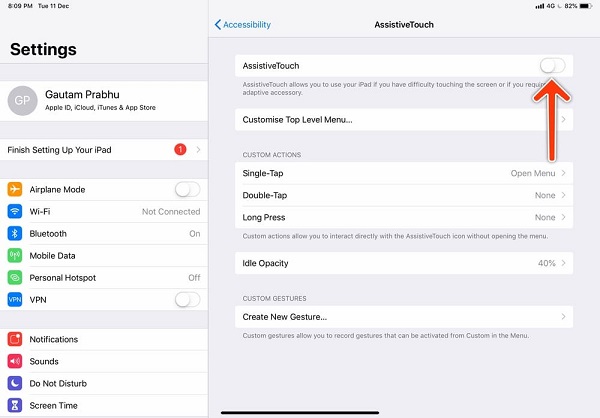
Step 2Tap the floating button, then Device, to lock the screen or restart on demand. This replaces the power button for daily use.
Step 3To restart, tap the floating button > Device > More > Restart. A restart clears the frozen state that was ignoring the button.
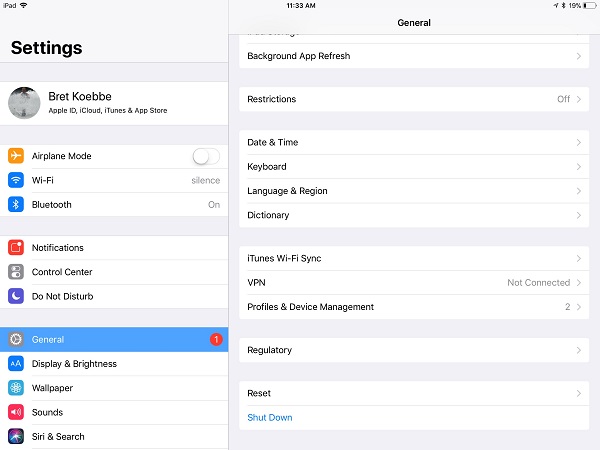
AssistiveTouch is not just a workaround — it is a long-term option. With it on, you can lock, rotate, and even take screenshots without ever touching the physical button. If the restart fixes the response, you are done; if the button stays dead but AssistiveTouch works, you can use the iPad normally until you decide on a hardware repair.
One more trick if the iPad is completely locked up and you cannot reach the menus: plug it in and wait. Connecting a charger wakes the screen on many models, which is enough to get into Settings and turn AssistiveTouch on. And remember that the on-screen button is movable — drag it to the edge of the screen where it does not get in the way of reading or drawing.
Part 4: Fix a Software Glitch with FoneLab
When the button and the hardware seem fine but the iPad's system is misbehaving — refusing to wake, ignoring the lock command, or stuck on a screen — the issue is the operating system, not the switch. FoneLab iOS System Recovery repairs that system so the power and wake functions respond again.

FoneLab iOS System Recovery could fix your disabled, frozen, bricked, recovery/DFU mode iPhone/iPad back to normal without data loss.
- Fix abnormal iOS system to normal without data loss.
- Fix frozen iPad, recovery mode, DFU mode and more.
- Work for iPhone, iPad and iPod touch.
The honest limits: this repairs software. It cannot fix a physically broken switch — if the button is wobbly or loose inside, no program makes the hardware contact again, and that needs a repair shop. Standard repair mode keeps your data; the advanced mode, used only when standard fails, erases the iPad, so back up first. Given the power button is part of how you back up, do that through the computer now while AssistiveTouch gets you into the settings.
Step 1Install FoneLab iOS System Recovery, connect the iPad, and choose iOS System Recovery.
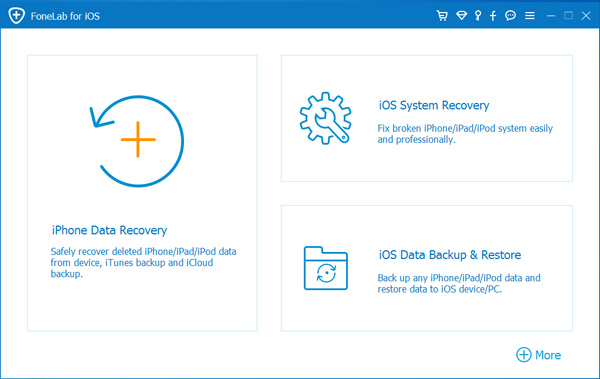
Step 2On the welcome screen, click Start to begin.
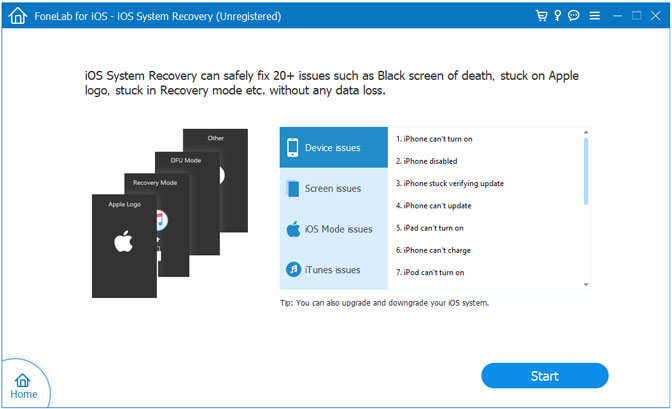
Step 3Choose Standard Mode (it keeps your data) or Advanced Mode, confirm the device information shown on screen, then click Repair to download the matching firmware.
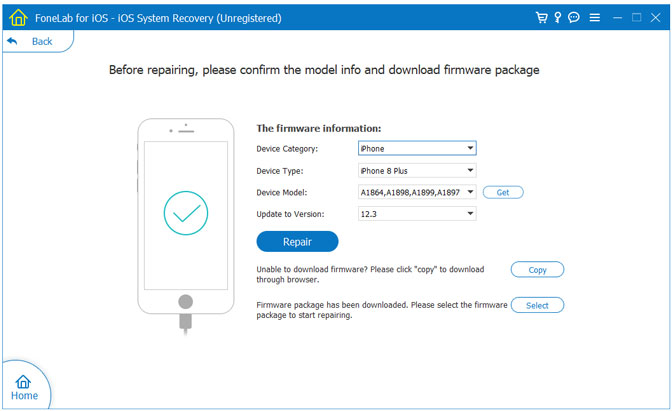
Step 4Keep the iPad connected until the repair finishes. When it restarts, test the power button again.
If the iPad also will not switch on at all, this guide for an iPad that does not turn on covers the battery-and-boot side of the problem.
Why go through a computer tool for a button problem? Because when iOS is wedged, the tablet can look exactly like dead hardware — screen on, unresponsive to every press, no matter how solid the button clicks. A standard repair re-flashes the system while keeping your apps and photos, which is far cheaper than opening the case. Only choose the advanced mode if standard repair cannot recognize the device, and expect it to wipe the iPad so you can restore from a fresh backup afterward.
One more thing to try before booking a repair: a forced restart does not actually need the power button to be perfect if you can trigger it through AssistiveTouch, and sometimes the button only fails because the touchscreen itself is frozen rather than the switch. Swipe around the screen — if the whole tablet is unresponsive, wait for the battery to drain, plug it back in, and it may boot cleanly. If, after all of this, the button still feels loose or recessed, that is a hardware contact issue and no software will bring it back; at that point a reputable repair shop reseats the switch, which is a common, affordable fix on well-used iPads.
FoneLab iOS System Recovery could fix your disabled, frozen, bricked, recovery/DFU mode iPhone/iPad back to normal without data loss.
- Fix abnormal iOS system to normal without data loss.
- Fix frozen iPad, recovery mode, DFU mode and more.
- Work for iPhone, iPad and iPod touch.
Part 5: Method Comparison
| Comparison | Remove Case / Clean | AssistiveTouch Restart | FoneLab System Recovery |
|---|---|---|---|
| Cost | Free | Free | Free trial |
| Fixes a blocked button | Yes | No | No |
| Fixes a software freeze | No | Sometimes | Yes |
| Fixes broken hardware | No | No | No |
| Risks data | No | No | Standard no; advanced erases |
My recommendation: take the case off and charge it (Part 2); restart with AssistiveTouch (Part 3); use FoneLab iOS System Recovery for a stuck system (Part 4); if the button is physically loose, book a hardware repair.
Part 6: FAQs
How do I turn off my iPad if the power button is broken?
Use AssistiveTouch: turn it on in Settings > Accessibility > Touch, then tap the floating button > Device > Lock Screen, or go to Settings > General and scroll to Shut Down.
Can a software tool really fix a physical button?
Only if the problem is that iOS is frozen and ignoring the button. If the switch itself is loose, wobbly, or clicks with no resistance, that is hardware and needs a repair shop. A tool like FoneLab iOS System Recovery fixes the software layer, not the physical contact.
Why does my iPad not wake when I press the power button?
This is often a frozen display or a drained battery rather than the button itself. Charge for fifteen minutes, take the case off, and restart with AssistiveTouch if you can unlock the iPad. If the screen stays black, it may be a different hardware issue.
Is AssistiveTouch safe to leave on long term?
Yes. It is an accessibility feature that simply adds an on-screen menu; it does not harm the iPad. You can keep it on permanently while you decide whether to repair the physical button.
Still stuck? Try a no-data-loss repair with FoneLab iOS System Recovery to rule out a frozen system before paying for a hardware fix.
FoneLab iOS System Recovery could fix your disabled, frozen, bricked, recovery/DFU mode iPhone/iPad back to normal without data loss.
- Fix abnormal iOS system to normal without data loss.
- Fix frozen iPad, recovery mode, DFU mode and more.
- Work for iPhone, iPad and iPod touch.