
 iPhone Data Recovery
 iOS System Recovery
 iOS Data Backup & Restore
 iOS Unlocker
 iPhone Password Manager
 Location Changer
 Android Data Recovery
 Broken Android Data Extraction
 Android Data Backup & Restore
 Android Unlocker
 FoneTrans for iOS
 iPhone Data Eraser
 iPhone Cleaner
 HEIC Converter
 HyperTrans
 WhatsApp Transfer for iOS
 Mac Sweep
 Data Retriever
 Mac Data Retriever
 Video Converter Ultimate
 Screen Recorder
 Phone Mirror
- Part 1: Why Contacts Disappear When a Phone Breaks (Diagnosis)
- Part 2: Recover Contacts from Google Account (Free - Google Contacts)
- Part 3: Restore Contacts with Samsung Cloud or Smart Switch (Official)
- Part 4: Extract Contacts from a Broken Phone with FoneLab Broken Android Phone Data Extraction
- Part 5: Comparison: Free vs. Official vs. Professional Extraction (Comparison Table)
- Part 6: Keep Your Contacts Safe Next Time (Checklist)
- Part 7: FAQs About Recovering Contacts from Broken Phones
 Recover Android Data Now
Recover the lost/deleted iPhone data including photos, contacts, videos, files, call log and more data from your SD card or device.
How to Recover Contacts from a Broken Samsung Phone
 Updated by
 I watched my Samsung hit the pavement face-down, and my heart sank with it. The screen cracked in a dozen places and went completely black within the hour. But my first panicked thought wasn't about the phone itself — it was about the hundreds of contacts I had built up over years of work, family, and friendships. Without them, I couldn't call anyone.
Here's what I learned after testing every recovery route I could find, from free cloud tricks to official Samsung tools and dedicated extraction software. A broken screen does not delete your contacts. The contact database lives on the phone's internal flash memory, and it usually survives a cracked display, water exposure, or even a boot loop. The real challenge is access, not data loss.
According to a 2023 report by Kaspersky, data loss incidents affect a significant share of consumer devices every year, and a large portion of those losses involve data that was never backed up. I fell squarely into that camp myself. This guide is the playbook I wish I'd had — tested, ordered from free to professional, and written in the first person so you know exactly what worked for me.
If you're in a hurry, here's the short version: check Google Contacts first because it's free and instant, then Samsung Cloud or Smart Switch if you ever backed up, and if none of those has your data, go straight to Part 4 — the only method on this list that works without any backup at all.

Guide List
- Part 1: Why Contacts Disappear When a Phone Breaks (Diagnosis)
- Part 2: Recover Contacts from Google Account (Free - Google Contacts)
- Part 3: Restore Contacts with Samsung Cloud or Smart Switch (Official)
- Part 4: Extract Contacts from a Broken Phone with FoneLab Broken Android Phone Data Extraction
- Part 5: Comparison: Free vs. Official vs. Professional Extraction (Comparison Table)
- Part 6: Keep Your Contacts Safe Next Time (Checklist)
- Part 7: FAQs About Recovering Contacts from Broken Phones
Part 1: Why Contacts Disappear When a Phone Breaks (Diagnosis)
Before you touch anything, it helps to understand where your contacts actually live. On modern Samsung phones, contacts are stored on the internal storage by default, with the option to save them to the SIM card (which holds a limited number — typically around 250) or to cloud accounts like Google and Samsung. A broken screen rarely destroys the data itself. It simply locks you out of the phone's interface.
In my experience, the failure falls into one of four categories, and each one points to a different recovery path:
- Screen cracked but display works. You can see the screen, but touch input is dead. A cheap OTG mouse adapter is your fastest fix.
- Black screen, phone still powers on. The device vibrates or rings, and the computer detects it over USB. A data extraction tool is your best route.
- Boot loop or stuck on the Samsung logo. The system crashes before it finishes starting. Tools that repair the Android system and then read the storage work well here.
- Completely dead. No vibration, no ring, no PC detection. This is the hardest case and may require a professional service.
Diagnose honestly before you spend time on a method that can't work. I wasted an entire evening on the free cloud route before realizing my phone had never synced contacts to Google — which is exactly why the method that saves your neighbor's data might do nothing for you. One setting matters more than any other in every scenario: USB Debugging. If it was enabled before the break, software-based extraction becomes dramatically easier. If you are unsure how contacts are backed up on your device, read how to back up Android contacts to a PC first — it will save you a lot of trial and error.
According to Statista, Samsung consistently ships more Android smartphones than any other vendor, so the steps below apply to a very large share of Android users. They work on Galaxy and other Samsung devices regardless of model or age.
Part 2: Recover Contacts from Google Account (Free - Google Contacts)
If you signed in to your Samsung phone with a Google account and left contact sync enabled, this is the fastest and completely free recovery route. Google automatically keeps a copy of your contacts in the cloud, and you can pull them onto any new phone in minutes.
The hidden gem here is the built-in Restore Contacts feature. Google keeps snapshots of your contact list, so you can roll back to any point within the last 30 days. That means even recently deleted or missing contacts can usually be brought back, as long as they were synced at some point.
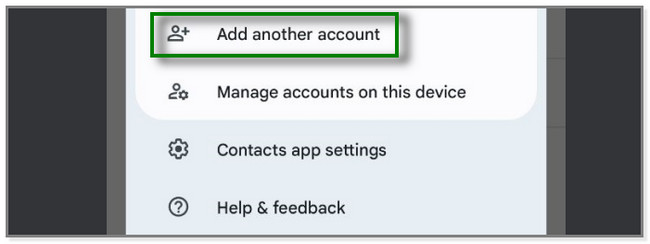
Step 1Open the Google Contacts app on your new phone. Tap the profile icon at the top right, then tap Add Another Account and sign in with the Google account you used on the broken phone.
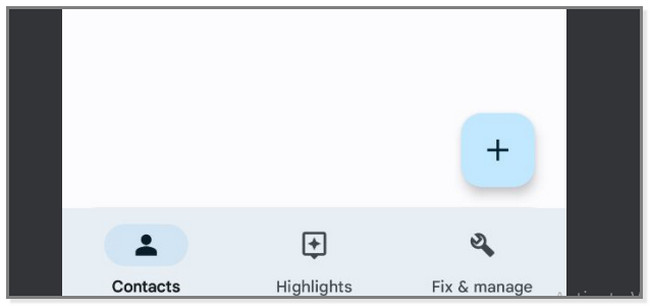
Step 2At the bottom of the screen, tap the Fix & Manage button. This opens extra options for your synced data.
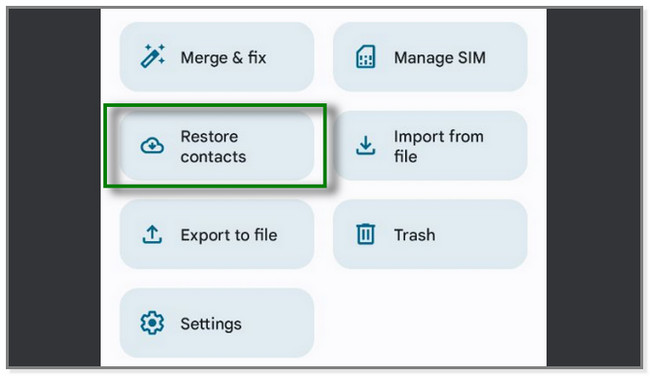
Step 3Tap Restore Contacts, choose a restore point (anything within the last 30 days), select your account, and confirm. The restore process takes only a few minutes.
Before you do anything on the phone, you can verify on a PC by signing in at contacts.google.com. If your contacts appear there, the Google route is viable and you can skip the rest of this guide. If they don't, your phone was never synced, so move on to the next method.
This approach also pairs well with the device's own contact management. If you need to recover contacts that were stored locally on a Samsung device, see how to recover deleted contacts from a Samsung Galaxy for a complementary walkthrough.
Part 3: Restore Contacts with Samsung Cloud or Smart Switch (Official)
Samsung offers two official, free channels to restore contacts: Samsung Cloud and Smart Switch. Both are legitimate and safe, but both share one unavoidable catch — they only work if you backed up before the phone broke.
Restore Contacts from Samsung Cloud
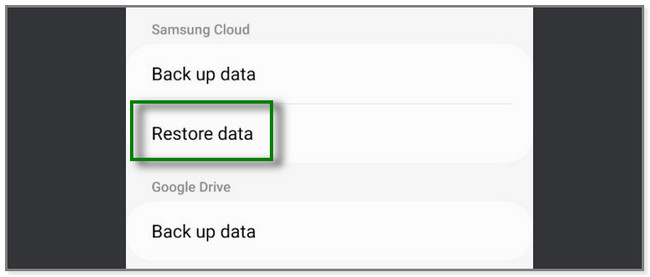
Samsung Cloud backs up contacts, call logs, and messages to Samsung servers. Accounts come with free storage (15 GB in my region), and once enabled, backups run automatically in the background. On your new phone, restoring is straightforward.
Step 1Open the Settings app, search for Accounts and backup, then tap Restore Data.
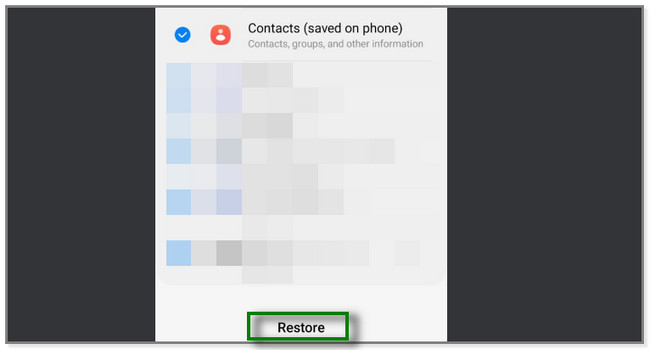
Step 2Under your account name, tap the Contacts section, then tap Restore and wait a few minutes for the process to finish.
Restore Contacts with Samsung Smart Switch
Smart Switch is Samsung's transfer tool, and it also handles full backups. If you previously backed up your phone to a PC or an external drive, you can restore the contacts from that backup onto any new phone.
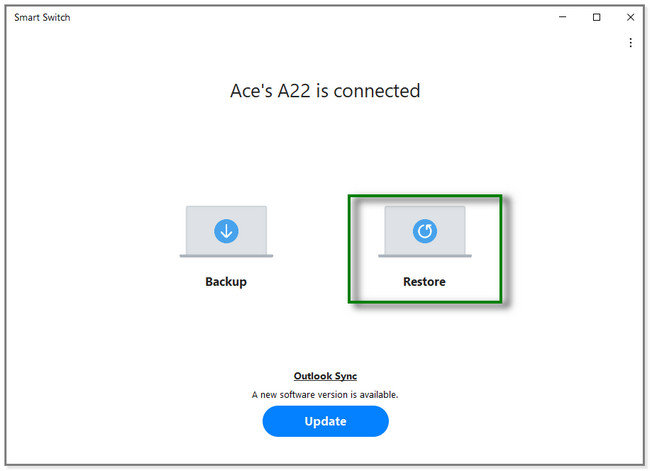
Step 1Install Smart Switch on both the phone and the computer. Connect the new phone to the computer with a USB cable, then click the Restore button on the right side of the computer window.
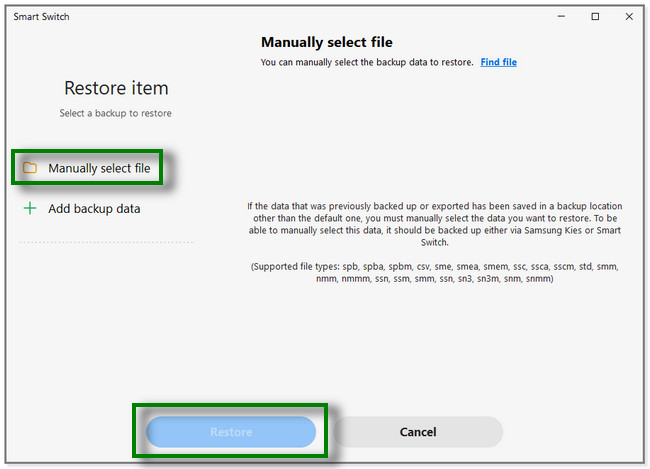
Step 2Click Manually Select File on the left, choose the backup file, select the Contacts you want, and click Restore to finish.
Both tools are official and free, which makes them attractive — but remember the shared limitation: no backup, no restore. For a detailed routine that keeps your data current between backups, read how to back up Android data efficiently.
Part 4: Extract Contacts from a Broken Phone with FoneLab Broken Android Phone Data Extraction
When you don't have a backup — which, if you're reading this in a panic, is probably your situation — the cloud and official routes above can't help. That's where FoneLab Broken Android Phone Data Extraction comes in. It reads data directly from a broken Samsung phone through USB, even when the screen is black, cracked, or locked, and it does not require any previous backup.
Fix your frozen, crashed, black-screen or screen-locked Android system to normal or Recover data from broken Android phone or SD card.
- Fix your Android disabled problems and recover data from phone.
- Extract Contacts, Messages, WhatsApp, Photos, etc. from broken android device or memory card.
- Android phone and SD card data are available.
I tested it on a Samsung with a completely dead screen, and the flow was impressively simple. The tool walks you into Download Mode, repairs the Android system enough to mount the storage, and then lets you browse and recover contacts with a preview before you save anything. In my test, the contact database came back intact — names, numbers, email addresses, and custom fields all survived.
Step 1Download FoneLab Broken Android Phone Data Extraction by clicking the Free Download button above. Install the file and launch the program.
Step 2On the main screen, select the Broken Android Data Extraction feature. This is the mode designed for phones with broken, black, or unresponsive screens.
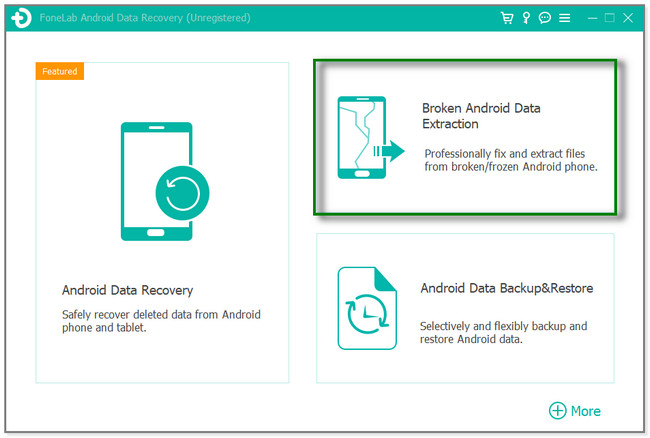
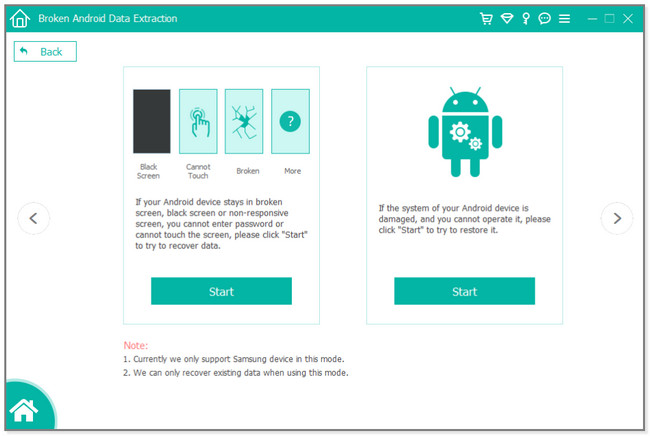
Step 3Click the Start button, then enter the Name and Model of your phone so the tool can download the matching recovery package.
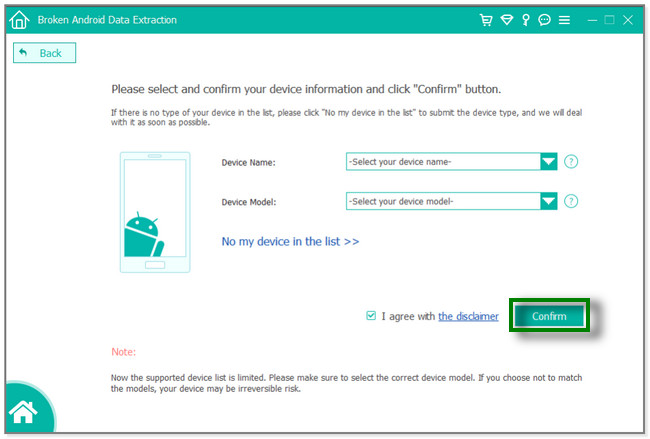
Step 4Put the phone into Download Mode following the on-screen instructions, connect it, and click Confirm. Wait for the scan to finish. When the data list appears, select Contacts and click Recover.
Fix your frozen, crashed, black-screen or screen-locked Android system to normal or Recover data from broken Android phone or SD card.
- Fix your Android disabled problems and recover data from phone.
- Extract Contacts, Messages, WhatsApp, Photos, etc. from broken android device or memory card.
- Android phone and SD card data are available.
Where FoneLab Broken Android Phone Data Extraction fills the gap:
- No backup required. Google Contacts, Samsung Cloud, and Smart Switch all depend on a previous backup. This tool reads the phone's storage directly through USB, so it works even if you never backed up a single contact.
- Built for broken screens. You never have to see or touch the screen. The entire recovery process is driven from the computer, which makes it ideal for black screens, cracked displays, and frozen systems.
- Selective recovery with preview. You can preview every contact before recovering it, so you only export what you actually need instead of dumping everything.
- More than just contacts. The same scan can extract messages, call logs, WhatsApp chats, photos, and other data types from the broken phone, so one tool covers your whole recovery.
- Repairs system issues along the way. The process fixes the Android system enough to mount the storage — which is exactly what you need for boot loops and devices stuck on the Samsung logo. See how to fix an Android phone stuck on the Samsung logo for the related issue.
This is the method I recommend most to readers whose phone won't turn on or whose screen is completely black — and it's the only software route on this list that doesn't depend on a backup you may never have made.
Part 5: Comparison: Free vs. Official vs. Professional Extraction (Comparison Table)
To make the decision easier, here is how the four methods I tested stack up against each other. I compared them on three questions: whether a backup is needed, whether a broken screen can be handled, and who should use the method.
| Method | Backup Required? | Works with a Broken Screen? | Best For |
|---|---|---|---|
| Google Contacts | No, if sync was enabled before the break | No — you use another device | Free, instant cloud restore for synced accounts |
| Samsung Cloud | Yes | No — you use another device | Free official restore when you backed up |
| Samsung Smart Switch | Yes | No — you use a PC | Official backup restore via a computer |
| FoneLab Broken Android Phone Data Extraction | No | Yes — reads the device directly | Broken screen, black screen, or no backup at all |
My rule of thumb after testing all four: check Google first because it is free and takes minutes, then Samsung Cloud if you ever backed up, and if neither holds your data, jump straight to the extraction tool in Part 4. Choosing in that order saves both time and money.
Part 6: Keep Your Contacts Safe Next Time (Checklist)
Everything in this guide is a workaround for a problem that a few minutes of setup would have prevented entirely. After my own scare, I now run through this checklist on every phone I own. Do it now, while the phone still works — five minutes of setup is cheaper than any recovery tool.
- Turn on Google Contacts sync. Go to Settings → Accounts and backup → Accounts → Google, and make sure Contacts sync is enabled.
- Enable Samsung Cloud backup. Turn on automatic backup for contacts and call logs in Settings → Accounts and backup.
- Run a monthly Smart Switch backup. Back up the whole phone to a PC or external drive so you have an offline copy.
- Enable USB Debugging. Open Developer Options (tap Build Number seven times) and toggle on USB Debugging, then pre-authorize your own computer.
- Keep a secondary copy of critical contacts. Export a vCard file or store your most important contacts on the SIM as a fallback.
Combined with a 3-2-1 backup habit — three copies, two different types of storage, one offsite — this routine means the next broken screen is an inconvenience instead of a crisis.
Fix your frozen, crashed, black-screen or screen-locked Android system to normal or Recover data from broken Android phone or SD card.
- Fix your Android disabled problems and recover data from phone.
- Extract Contacts, Messages, WhatsApp, Photos, etc. from broken android device or memory card.
- Android phone and SD card data are available.
Part 7: FAQs About Recovering Contacts from Broken Phones
Can I recover contacts from a broken Samsung phone without a backup?
Yes, if the phone still powers on and the computer can detect it over USB. A tool like FoneLab Broken Android Phone Data Extraction reads the storage directly without needing a previous backup. If the phone is completely dead with no power at all, a professional data recovery service may be the only option.
How far back can I restore Google contacts?
Google keeps snapshots of your contact list and lets you restore to any point within the last 30 days. Open Google Contacts, tap Fix & Manage, then tap Restore Contacts to pick a restore point and account.
Do SIM cards store contacts?
Yes, but capacity is limited — typically around 250 contacts. Modern Samsung phones save contacts to internal storage by default, so removing the SIM card will not retrieve your full contact list.
Does repairing a broken screen delete my contacts?
No. Screen replacement does not touch the storage chip, so your data stays intact. However, some repair shops reset the device as part of their workflow, so extract or back up your data first to be safe.
Ready to get your contacts back? If your phone has a broken or black screen and no backup exists, download FoneLab Broken Android Phone Data Extraction and run a scan — it is free to try, and it works without any previous backup.
Fix your frozen, crashed, black-screen or screen-locked Android system to normal or Recover data from broken Android phone or SD card.
- Fix your Android disabled problems and recover data from phone.
- Extract Contacts, Messages, WhatsApp, Photos, etc. from broken android device or memory card.
- Android phone and SD card data are available.