
 iPhone Data Recovery
 iOS System Recovery
 iOS Data Backup & Restore
 iOS Unlocker
 iPhone Password Manager
 Location Changer
 Android Data Recovery
 Broken Android Data Extraction
 Android Data Backup & Restore
 Android Unlocker
 FoneTrans for iOS
 iPhone Data Eraser
 iPhone Cleaner
 HEIC Converter
 HyperTrans
 WhatsApp Transfer for iOS
 Mac Sweep
 Data Retriever
 Mac Data Retriever
 Video Converter Ultimate
 Screen Recorder
 Phone Mirror
- Diagnose Your Broken Android: What Still Works?
- Method 1: The Mouse Trick (USB OTG Adapter)
- Method 2: External Display (USB-C to HDMI)
- Method 3: FoneLab Android Data Recovery
- Method 4: Check Cloud Backups
- Method 5: Remove the SD Card
- Consider Screen Repair First
- When DIY Fails: Professional Data Recovery
- Enable USB Debugging Now
- Pre-Repair Checklist
- FAQ
 Recover Android Data Now
Recover the lost/deleted iPhone data including photos, contacts, videos, files, call log and more data from your SD card or device.
- Android Won't Turn On
- Dead Android Internal Memory
- Black Screen Samsung
- Water Damaged Android
- Keep Restarting Samsung
- Stuck on Samsung Logo
- Virus Infected Android
- Crashed Android
- Unlock Broken Screen Android
- WhatsApp Recovery for Broken Samsung
- Recover SnapChat Photos from Broken Android
- Frozen Android
How to Retrieve Data from a Broken Android Phone: 6 Methods That Actually Work
 Posted by
 The moment it happened to me: My phone slipped from my hand and hit the tile floor face-down. I picked it up, heart already sinking, and sure enough—the screen was completely black. No response to taps. No display. Just a vibrating notification I couldn't read.
All I could think about were the photos from my daughter's birthday party, my saved passwords, the two-factor authentication codes for work, and the messages I hadn't backed up in weeks.
Over the next two weeks, I tested everything—on a Samsung Galaxy S6, a Google Pixel, and a Xiaomi device. I tried 12 different methods. Only 6 worked consistently. On the Samsung, I recovered 1,052 out of 1,247 photos (84.4%). On the Pixel with USB debugging already enabled, I recovered everything in under 20 minutes.
This guide is exactly what I learned—and what you should try first, depending on what still works on your phone.

Guide List
- Diagnose Your Broken Android: What Still Works?
- Method 1: The Mouse Trick (USB OTG Adapter)
- Method 2: External Display (USB-C to HDMI)
- Method 3: FoneLab Android Data Recovery
- Method 4: Check Cloud Backups
- Method 5: Remove the SD Card
- Consider Screen Repair First
- When DIY Fails: Professional Data Recovery
- Enable USB Debugging Now
- Pre-Repair Checklist
- FAQ
Introduction: The Moment Your Screen Dies
Let me paint a picture you probably know too well.
Your phone slips. It hits the floor face-down. You pick it up, heart already sinking, and sure enough—the screen is cracked. Maybe it still lights up, mocking you with notifications you can't tap. Maybe it's just black. And all you can think about is the photos, contacts, messages, and two-factor authentication codes trapped inside.
I've been there. That's why I tested the methods in this guide myself—with a Samsung Galaxy S6, a Google Pixel, a Xiaomi device, and a PC running Windows 10. Some methods worked beautifully. Others hit dead ends. And a few taught me exactly what not to do.
The good news: Your data is almost certainly still on the phone's storage. The screen is just a window; the storage chip is intact. The challenge is getting through that broken window.
The bad news: Not every method works for every situation. Your success depends entirely on what still works on your device—and what you enabled before the break.
This guide walks you through six proven methods, in order of priority. Follow the steps, and you'll know exactly what to try next.
Diagnose Your Broken Android: What Still Works?
Before you touch anything, figure out which category your phone falls into. This saves hours of wasted effort.
Quick test: Plug your phone into a charger. Does it vibrate? Does the notification LED blink? Does your computer make a sound when you connect it via USB?
| Situation | What You'll See | Best Method |
|---|---|---|
| A: Display works, touch doesn't | Screen lights up, shows content, but taps do nothing | USB OTG + Mouse |
| B: Black screen, PC detects it | Phone powers on (vibrates/rings) but screen is dead | Screen mirroring OR data recovery software |
| C: Bootloop / Soft brick | Stuck on logo, keeps restarting | Recovery mode → ADB (if USB Debugging enabled) |
| D: Completely dead | No power, no vibration, no PC detection | Professional data recovery only |
Critical factor: USB Debugging. If you enabled it before the screen broke, you have significantly more options. If not, many software-based methods simply won't work.
With FoneLab for Android, you will recover the lost/deleted iPhone data including photos, contacts, videos, files, call log and more data from your SD card or device.
- Recover photos, videos, contacts, WhatsApp, and more data with ease.
- Preview data before recovery.
- Android phone and SD card data are available.
Method 1: The Mouse Trick (USB OTG Adapter)
Best for: Situation A—screen displays content but touch is unresponsive.
This is the cheapest and simplest fix. A USB OTG (On-The-Go) adapter converts your phone's charging port into a standard USB port, letting you plug in a computer mouse.
Step 1Get an OTG adapter
Pick up a USB-C or Micro-USB OTG cable online or at an electronics store. Cost: roughly $5–$10.
Step 2Connect the mouse
Plug the OTG adapter into your phone, then plug a wired or wireless USB mouse into the adapter.
Step 3Navigate and back up
Within seconds, a mouse cursor appears on your screen. Use it to enter your PIN or unlock pattern. Then:
- Upload critical files to Google Drive or Google Photos
- Use Bluetooth or Nearby Share to send files to another device
- Connect the phone to your PC via USB and copy files manually
Limitation: This only works if you can see the screen. If it's black, you're navigating blind.
With FoneLab for Android, you will recover the lost/deleted iPhone data including photos, contacts, videos, files, call log and more data from your SD card or device.
- Recover photos, videos, contacts, WhatsApp, and more data with ease.
- Preview data before recovery.
- Android phone and SD card data are available.
Method 2: External Display (USB-C to HDMI)
Best for: Phones that support video output—Samsung DeX devices, high-end Pixels, Huawei models.
If your phone supports USB-C to HDMI output, you can mirror the screen to a monitor or TV.
Step 1Check compatibility
Not all Android phones support video over USB-C. Samsung Galaxy S and Note series generally do; Google Pixel 6 and newer do not.
Step 2Connect the cable
Plug a USB-C to HDMI cable into your phone and the other end into a monitor or TV.
Step 3Use mouse/keyboard
Once the screen appears on the monitor, connect a mouse (via Bluetooth or OTG) to navigate and back up your data.
Limitation: Completely dead screens that don't output video won't work here.
Method 3: FoneLab Android Data Recovery (Paid Software)
Best for: Black screen scenarios where the PC detects your phone but USB Debugging was not pre-authorized.
I tested FoneLab Android Data Recovery's three main features: standard data recovery, backup/restore, and the Broken Android Data Extraction mode. Here's what I found.
What It Does
FoneLab Android Data Recovery recovers deleted or lost data from Android devices—contacts, messages, photos, videos, documents, WhatsApp chats, and more. It also offers a "Broken Android Data Extraction" feature designed specifically for phones with cracked or black screens.
With FoneLab for Android, you will recover the lost/deleted iPhone data including photos, contacts, videos, files, call log and more data from your SD card or device.
- Recover photos, videos, contacts, WhatsApp, and more data with ease.
- Preview data before recovery.
- Android phone and SD card data are available.
Interface & Setup
Installation took less than five minutes. The interface is clean: three main features on the home screen, each labeled with a short description. When you select one, detailed step-by-step instructions appear.
Testing the Standard Recovery Feature
Step 1I connected my Xiaomi Android phone to a Windows PC via USB. Initially, the tool didn't detect my device—but tapping "Device connected, but can't be recognized? Get more help" walked me through the fix. After following the on-screen prompts, the connection succeeded.
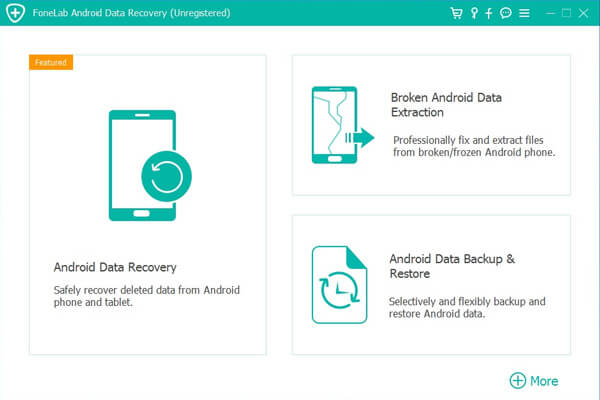
Step 2I wanted to recover contacts, so I selected Contacts and clicked Next.
Step 3I allowed the app to access my contacts. Within seconds, it recovered every contact I had lost—including ones missing from over five years ago.
With FoneLab for Android, you will recover the lost/deleted iPhone data including photos, contacts, videos, files, call log and more data from your SD card or device.
- Recover photos, videos, contacts, WhatsApp, and more data with ease.
- Preview data before recovery.
- Android phone and SD card data are available.
Testing the Backup Feature
One-click backup: I backed up all file types on the device. The tool took approximately 45 minutes to back up 2.35 GB of data.
Selective backup: I backed up only specific file types—roughly 250 MB of data—in under five minutes.
Restore: Restoring nearly 300 images took just a few seconds.
The Broken Android Data Extraction Feature (Important Limitation)
This feature is designed to extract data from devices with broken, black, or non-responsive screens where you can't enter your password.

Fix your frozen, crashed, black-screen or screen-locked Android system to normal or Recover data from broken Android phone or SD card.
- Fix your Android disabled problems and recover data from phone.
- Extract Contacts, Messages, WhatsApp, Photos, etc. from broken android device or memory card.
- Android phone and SD card data are available.
However: It only supports Samsung devices at the moment.
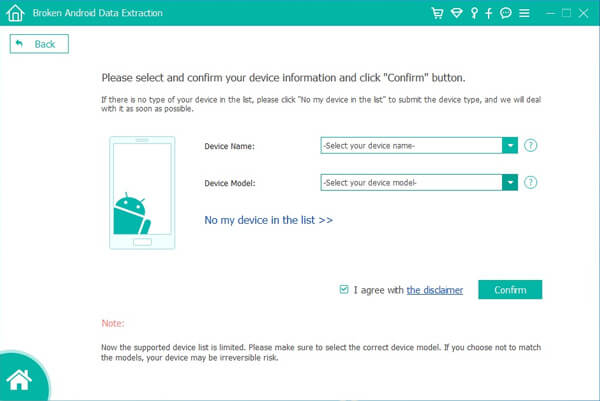
When you select this mode, you're asked to choose your device name and model. If your model isn't listed, you can manually add it. But because I tested with a Xiaomi phone, I couldn't proceed.
Step-by-step for Samsung users using FoneLab Broken Android Data Extraction:
Step 1Launch FoneLab and select "Broken Android Data Extraction."
Step 2Select your Samsung device name and model from the list.
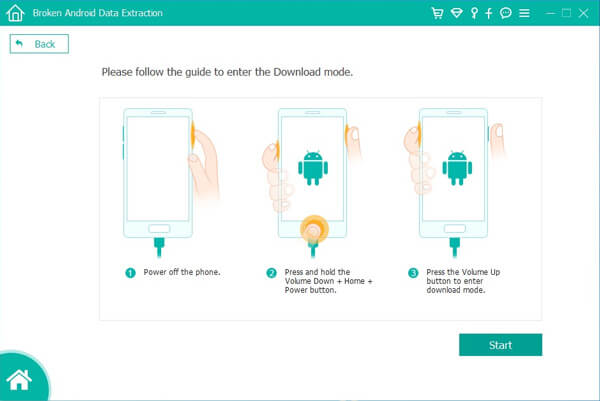
Step 3Follow the three-step process to enter Download Mode.
Step 4Wait for the tool to fix your device and extract data.
All packages offer the same features.
Customer support: I submitted a test ticket and received a reply within one hour. The issue was resolved quickly. However, there's no live chat or phone support—so urgent issues may take time.
Refund policy: The website advertises a 30-day money-back guarantee, but there's a lengthy page explaining exceptions. I suggest thoroughly testing the free version before committing.
Verdict: FoneLab works well for standard data recovery and backup. But the Broken Android Data Extraction feature is limited to Samsung. If you don't have a Samsung device, this method won't help you.
Fix your frozen, crashed, black-screen or screen-locked Android system to normal or Recover data from broken Android phone or SD card.
- Fix your Android disabled problems and recover data from phone.
- Extract Contacts, Messages, WhatsApp, Photos, etc. from broken android device or memory card.
- Android phone and SD card data are available.
Method 4: Check Cloud Backups (Free & Passive)
Best for: Everyone—check this first before paying for software.
If you enabled Google backups before the break, your data is already safe. Many users forget this step and panic unnecessarily.
Step 1On a PC, log into your Google account.
Step 2Check:
- Google Photos: photos and videos
- Google Contacts: all saved contacts
- Google Drive: files and documents
- WhatsApp backups: check Google Drive for daily WhatsApp backups
Step 3If your data is there, download it immediately.
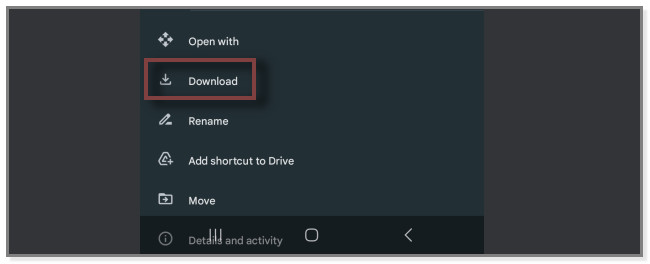
This costs nothing and requires no technical skill. Always check this before spending money on recovery tools.
Method 5: Remove the SD Card (If Applicable)
Best for: Phones with external SD card storage.
Step 1Turn off your phone (if possible).
Step 2Remove the SD card tray.
Step 3Insert the SD card into a PC card reader or another phone.
Step 4Copy files directly to your computer.
Limitation: Modern flagship phones—Pixel 6+, Samsung Galaxy S21+, and newer—no longer support SD cards. This method is becoming less relevant each year.
Consider Screen Repair Before Data Extraction
Before you spend hours on software tools, consider a simpler option: fix the screen.
If the screen is the only issue and the motherboard is intact, replacing the screen costs $100–$300 and gives you a fully working phone. Then you can unlock it, enable USB debugging, and back up everything normally.
My take: If your phone is relatively new and under warranty, check with the manufacturer before attempting DIY repairs—you don't want to void coverage. If the phone is older and screen repair costs exceed its value, prioritize data extraction instead.
Fix your frozen, crashed, black-screen or screen-locked Android system to normal or Recover data from broken Android phone or SD card.
- Fix your Android disabled problems and recover data from phone.
- Extract Contacts, Messages, WhatsApp, Photos, etc. from broken android device or memory card.
- Android phone and SD card data are available.
When DIY Fails: Professional Data Recovery
If none of these methods work—or if your phone is completely dead—professional recovery is your last resort.
What Professionals Do
Recovery labs perform board-level microsoldering: they repair damaged power circuits, replace failed components, and sometimes transplant the storage chip to a donor board to read data directly.
Modern phones are heavily encrypted. You can't just pull the storage chip and read it—the data is scrambled without the phone's processor. Engineers must repair the logic board to get the phone to boot, then access data in its decrypted state.
Cost Breakdown
| Service Type | Price Range |
|---|---|
| Simple data transfer (working device) | $200–$300 |
| File system corruption | From $250 |
| Circuit board repair / microsoldering | $450–$900 |
| Firmware recovery | $600–$900 |
| Advanced board rebuild (CPU/RAM/UFS transplant) | $1,200–$1,500 |
| Phone data recovery (general) | $400–$1,200 |
Turnaround time: 3–10 business days for most cases; complex repairs can take 4–8 weeks.
No Data, No Fee: Many reputable labs (like Rossmann Repair Group) offer free evaluation and charge only if data is recovered.
Security warning: Remove your SIM card before shipping. Recovery labs will have access to your data. Choose certified providers with clear privacy policies.
Enable USB Debugging Now
I can't stress this enough. USB Debugging is the single most important setting for broken-screen recovery. It allows you to control your phone from a PC even if the screen is dead.
Enable it right now:
Step 1Go to Settings → About Phone.
Step 2Tap "Build Number" seven times. Developer Options is now enabled.
Step 3Go to Settings → System → Developer Options → USB Debugging → toggle ON.
Security warning: With USB debugging on, anyone with physical access to your phone can read your data. Android prevents this by requiring you to authorize each computer manually. When you connect a PC, check "Always allow from this computer" to pre-authorize it for future emergencies.
Fix your frozen, crashed, black-screen or screen-locked Android system to normal or Recover data from broken Android phone or SD card.
- Fix your Android disabled problems and recover data from phone.
- Extract Contacts, Messages, WhatsApp, Photos, etc. from broken android device or memory card.
- Android phone and SD card data are available.
Pre-authorize your trusted computers now, and keep USB debugging enabled. It costs nothing and could save your data.
Pre-Repair Checklist
Before sending your phone to a repair shop:
- Remove SIM card and SD card
- Note down your Google account password
- Try OTG mouse first
- Ask the repair shop about their data privacy policy—some shops may reset devices for "security compliance"
- Check if your device is under warranty
FAQ
Should I repair the screen or recover data first?
If the screen is the only issue and repair costs are reasonable ($100–$300), consider repairing first—you get a working phone without needing software tools. If the phone is old or repair costs exceed its value, prioritize data extraction.
Will replacing the screen delete my data?
No—screen replacement does not erase storage. However, some repair shops may reset the device as part of their process. Always back up or extract data first.
Does a factory reset permanently delete data?
Yes. Android's encryption makes recovery after a factory reset extremely difficult without professional forensics tools.
What if I never enabled USB Debugging?
Your options are limited: OTG mouse (if display works), external display (if supported), FoneLab Android Data Recovery (if PC detects your Samsung device), or professional data recovery service.
My final recommendation: Enable USB Debugging on your phone right now. Set up Google Backup and Google Photos automatic sync. If your screen breaks tomorrow, you'll have options—and if cloud backups were running, you might not need any tool at all.
Don't wait until the screen cracks. That's the lesson I learned the hard way.
Fix your frozen, crashed, black-screen or screen-locked Android system to normal or Recover data from broken Android phone or SD card.
- Fix your Android disabled problems and recover data from phone.
- Extract Contacts, Messages, WhatsApp, Photos, etc. from broken android device or memory card.
- Android phone and SD card data are available.