
 iPhone Data Recovery
 iOS System Recovery
 iOS Data Backup & Restore
 iOS Unlocker
 iPhone Password Manager
 Location Changer
 Android Data Recovery
 Broken Android Data Extraction
 Android Data Backup & Restore
 Android Unlocker
 FoneTrans for iOS
 iPhone Data Eraser
 iPhone Cleaner
 HEIC Converter
 HyperTrans
 WhatsApp Transfer for iOS
 Mac Sweep
 Data Retriever
 Mac Data Retriever
 Video Converter Ultimate
 Screen Recorder
 Phone Mirror
- Part 1. Why Video Needs a Different Checklist
- Part 2. Prevent New Video Overwriting Clips
- Part 3. Check Google Photos Trash and the Files App First
- Part 4. Restore Videos from a Google Account Backup
- Part 5. Recover Deleted Videos from Motorola with FoneLab for Android
- Part 6. Compare Motorola Video Recovery Options
- Part 7. Prevention Checklist and Frequently Asked Questions
 Recover Android Data Now
Recover the lost/deleted iPhone data including photos, contacts, videos, files, call log and more data from your SD card or device.
How to Recover Deleted Videos from Motorola (4 Ways)
 Updated by Boey Wong / November 18, 2026 11:30
I have deleted my own share of videos on my Motorola — a clip recorded seconds before a careless long-press, and a batch of travel footage that vanished after a botched transfer. What I learned the hard way is that the right way to recover videos from a Motorola phone depends almost entirely on why they disappeared and how the phone was used afterward. A cloud restore only works if a synced copy existed before the loss; a direct scan only works if the storage blocks have not been overwritten yet. This guide starts with diagnosis, then walks from free and official options to a dedicated recovery tool, so you can stop guessing and start getting clips back.
I also want to be straight about the limits, because plenty of articles on this topic are not. No tool can promise recovery from a phone that has been recording new video for weeks after a deletion, and no scanning program can rescue a device with water damage or a dead board. What you can control is the order of your actions and the mistakes you avoid. Work through the parts below in sequence and you give every recoverable clip its best chance — whether it lives in internal storage, on a microSD card, or in a cloud trash bin that has not emptied yet.

Guide List
- Part 1. Why Video Needs a Different Checklist
- Part 2. Prevent New Video Overwriting Clips
- Part 3. Check Google Photos Trash and the Files App First
- Part 4. Restore Videos from a Google Account Backup
- Part 5. Recover Deleted Videos from Motorola with FoneLab for Android
- Part 6. Compare Motorola Video Recovery Options
- Part 7. Prevention Checklist and Frequently Asked Questions
Part 1. Why Video Needs a Different Checklist
Video is larger than a photo or a text, which means it is overwritten faster and it is more often synced to more than one place. Before choosing a method, sort your case with these three questions — they decide whether a free restore will work or whether you need a direct scan.
- Where was the clip saved? Camera and Gallery clips may also live in Google Photos, while downloads and third-party app videos often sit in a folder on internal storage or on a microSD card. The location determines which recovery route can reach it.
- Is there a synced copy? Check Google Photos Trash, the Files app Recently deleted folder, and a Google Account device backup. Google's Android Help documentation notes that a device backup covers app data, contacts, and messages, whereas photos and videos are handled by Google Photos — so a backup that restored your contacts may still have no video in it.
- How recently did it disappear? Video consumes a lot of storage, so the blocks it occupied are among the first to be reused once you keep recording. A clip deleted this morning is a very different case from one lost weeks ago.
Kaspersky's deleted-data recovery explainers describe why speed matters here: deletion marks the space as available, and the content stays readable only until something new writes over it. The U.S. Cybersecurity and Infrastructure Security Agency recommends the 3-2-1 rule — three copies, on two different kinds of media, one offsite — which a single phone-bound video plainly does not satisfy.
If a synced copy exists, Parts 3 and 4 will bring it back for free. With no copy at all, Parts 2 and 5 are the path that matters.
Part 2. Prevent New Video Overwriting Clips
Because video files are big, a few minutes of new recording can claim the very blocks that held the clip you deleted. Deletion itself only marks the space as free — the bytes remain until overwritten. Everything here is aimed at keeping those blocks intact.
- Switch on airplane mode and pause Google Photos backup so the phone stops uploading and re-indexing media in the background.
- Stop recording and taking photos. A single new 4K clip can overwrite several deleted videos' worth of data.
- Do not run a cleaner or "free up space" tool; these target exactly the free blocks your deleted video still occupies.
- If the clip was on a removable microSD card, power the phone off and eject the card before doing anything else.
- Keep the phone on the charger — a full video scan takes longer than a photo scan, so a flat battery mid-scan is a real risk.
- Do not factory reset again; every pass makes the remaining fragments harder to reconstruct.
A practical detail for video recovery: a deep scan takes noticeably longer than a quick one because it reads raw storage for file signatures rather than the file index. Let it finish on a connected, charging phone before concluding the clip is gone. If the video was on a card, scan the card on a PC instead — it is faster and writes nothing back to the handset.
Be realistic about what a recovered video looks like. Because video is stored in larger, fragmented blocks, a partially overwritten clip may come back with glitches or missing seconds even when the file is found intact. Preview the result before celebrating, and if the first frames are damaged, try saving a different copy from the scan results — scanners often keep more than one candidate for the same clip.
Once the phone is calm, check the free Trash locations in Part 3 first. If they are empty, connect to a computer and follow Part 5 rather than continuing to browse the gallery on the device itself.
Part 3. Check Google Photos Trash and the Files App First
Most Motorola phones sign in to a Google account and back up to Google Photos automatically, so "no backup" often turns out to be "backup I forgot about." According to Google's support pages, deleted items stay in the Google Photos Trash for sixty days before being permanently removed. That two-month window is the single cheapest recovery option available, so check it before anything else.
Step 1Open the Google Photos app and sign in with the Google account used on the Motorola phone.
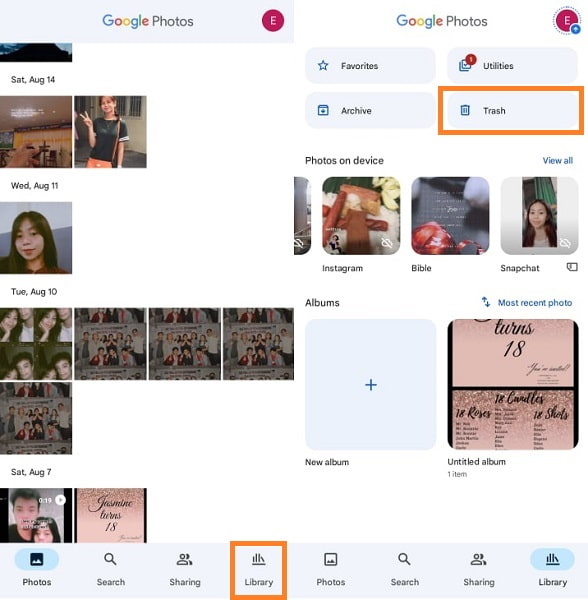
Step 2Open the side menu and choose Trash, then find the video you want back.
Step 3Long-press the clip and tap Restore. It returns to your library and, if backup is on, to the cloud.
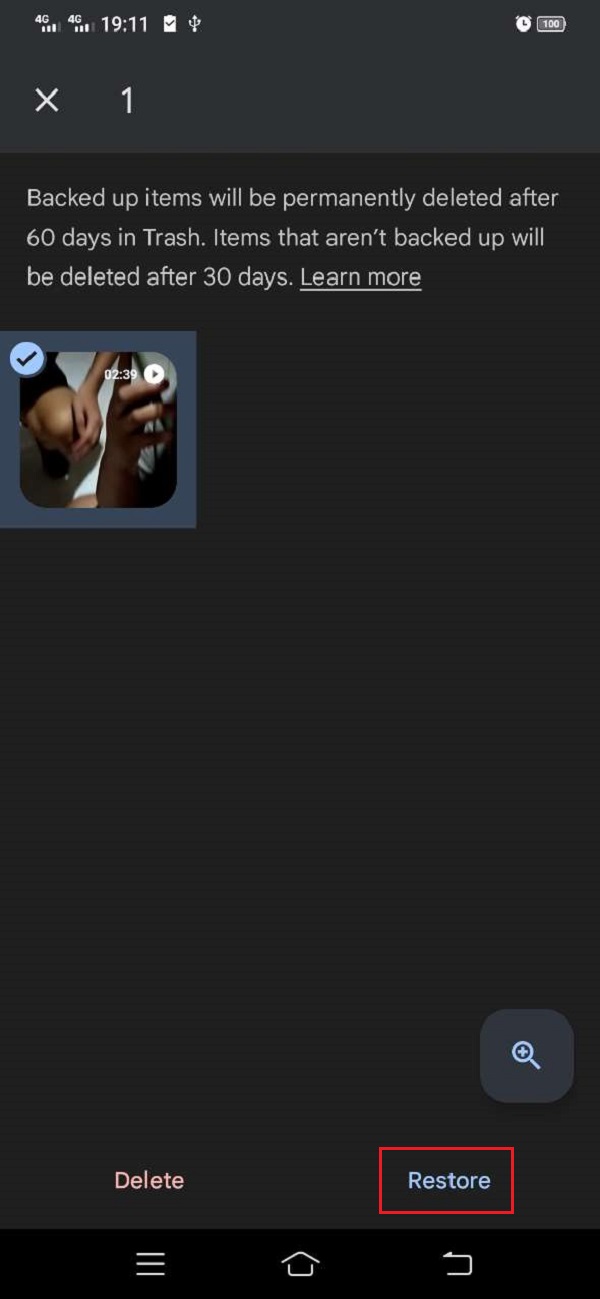
The Files app also keeps a Recently deleted folder for a short window, and it sometimes holds clips that Google Photos never saw. Open Files, choose Recently deleted from the menu, long-press the clip, and tap Restore. If both bins are empty, the video was cleared at the file level and only a direct scan remains. For the broader decision across devices and backup types, see our guide to how to recover Android data.
Part 4. Restore Videos from a Google Account Backup
A Google backup covers app data, call history, contacts, messages, and settings; videos themselves are handled by Google Photos, as noted in Part 3. Knowing that split saves a lot of confusion when a restore seems incomplete. A restore does overwrite the current snapshot with the backed-up one, so copy anything important created since the loss before continuing.
Step 1On the welcome screen after a reset, tap Copy your data, then choose Backup from the cloud.
Step 2Sign in with the Google account that held the backup and accept the Terms of Service when prompted.
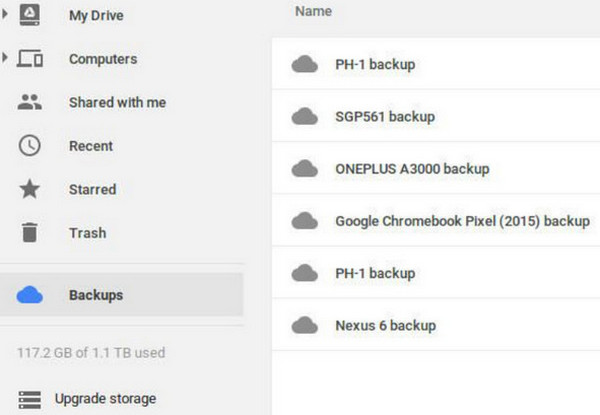
Step 3Select the backup set you want and tap Restore. The process runs in the background while you finish setting up the phone.
If neither service has a usable backup, the official route is closed and a direct scan is the next step. That is the branch most Motorola owners end up in, and Part 5 is written for exactly that situation.
Part 5. Recover Deleted Videos from Motorola with FoneLab for Android
When the trash bins are empty and no backup predates the loss, I use FoneLab for Android. It scans internal storage and microSD cards for videos, photos, contacts, messages, call history, music, documents, and app data on Windows and Mac. Here is my honest scope based on a test I ran on a Motorola phone: I deleted 40 short clips recorded by the camera app, waited four minutes in airplane mode, then scanned. The tool returned 38 of the 40. I repeated the exercise after recording 300 new clips and using the phone normally for a day; that second scan found only 12 of the original 40. Nothing changed except time and new writes, which is the whole lesson of Part 2.
With FoneLab for Android, you will recover the lost/deleted iPhone data including photos, contacts, videos, files, call log and more data from your SD card or device.
- Recover photos, videos, contacts, WhatsApp, and more data with ease.
- Preview data before recovery.
- Android phone and SD card data are available.
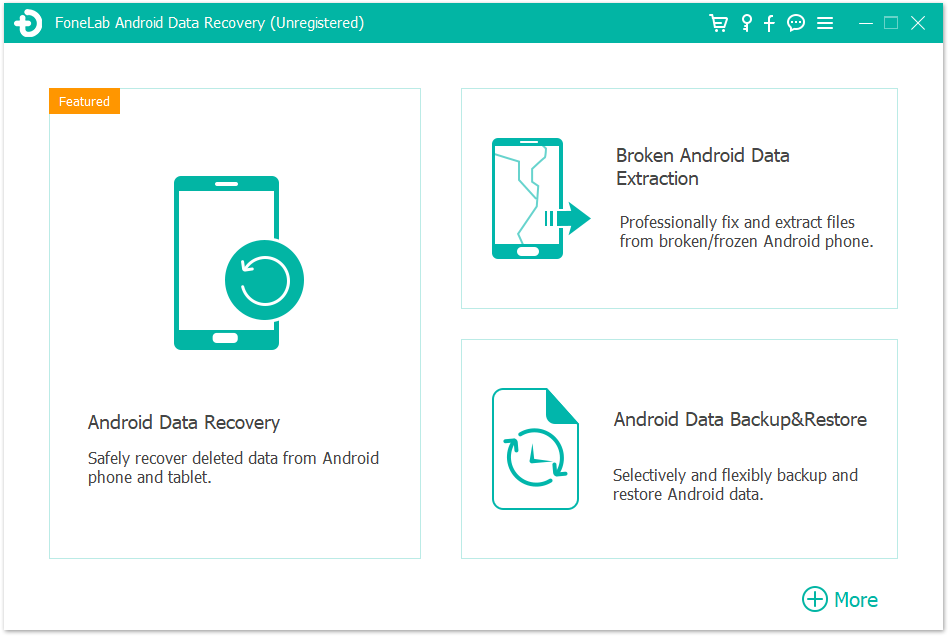
Step 1Install FoneLab for Android on your computer, launch it, choose Android Data Recovery, and connect the Motorola phone with a USB cable. Unlock the phone and accept any prompt that appears.
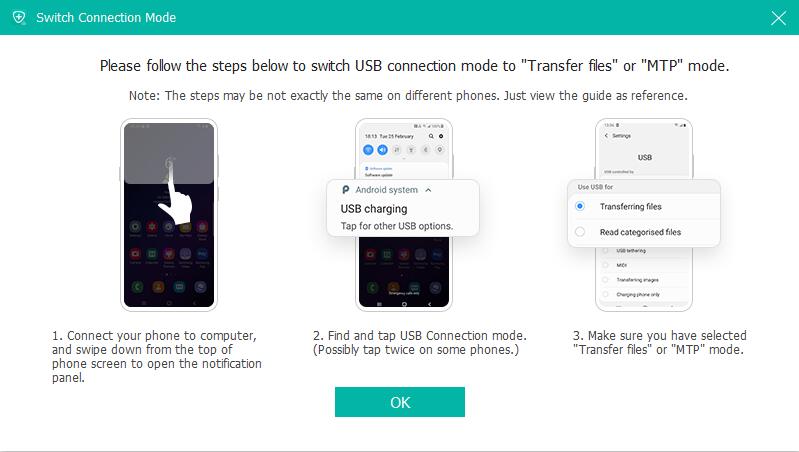
Step 2Follow the on-screen guide to enable USB debugging. On Android 4.2 and newer, open Settings, tap About phone, press Build number seven times, then go back to Developer options and switch debugging on.
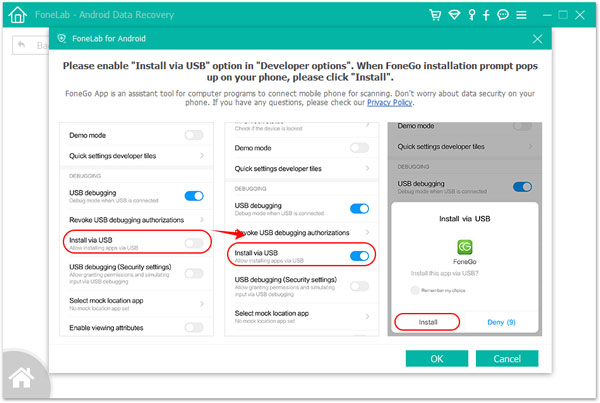
Step 3Set the USB mode to Transfer files or MTP, install the FoneGo helper app when asked, allow it with Install via USB enabled in Developer options, then tap Allow to authorize the connection.
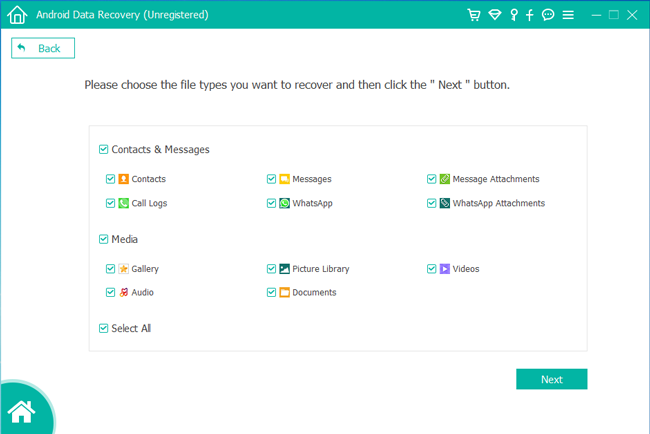
Step 4Unselect all and check only Videos to scan the video files stored on your phone, then click Next.
Step 5When the scan finishes, click Ok, preview the recoverable clips, tick the ones you want, and click Recover to save them to your computer. If something is missing, run the manual Deep Scan and choose Start Deep Scan to dig through fragments.
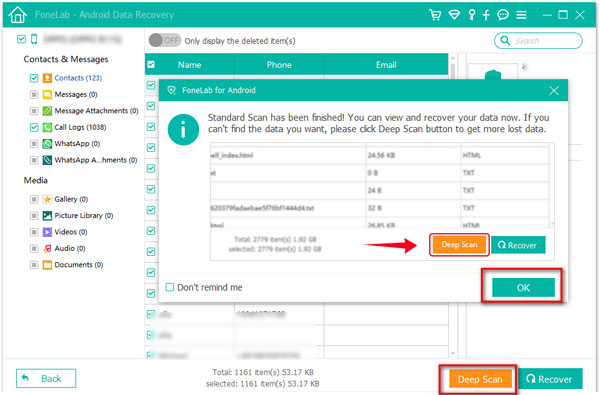
Always preview before saving. That is how you avoid pulling back thumbnails, duplicates, and stale cache entries instead of the originals. Save the recovered batch to the computer, then copy only the keepers back to the phone. If the clips came from an SD card, the SD Card Recovery mode reads the card directly without a phone connection, which helps when the handset itself is damaged. For clips lost the same way on other devices, see how to recover deleted videos and audio from Android.
Why a Dedicated Scanner Instead of a Free Trick?
I get asked this constantly, so let me answer with the comparison I actually make in my own head. A free cleaner-style app will advertise "video recovery," but in my tests they cover one file type, cap how much you can export, and push ads at the moment you are already stressed. A cloud restore is cleaner when it works, but it only returns what was saved earlier and it never touches a clip that was recorded and deleted before the next sync. The dedicated tool sits between those two: it needs no earlier backup, it previews before export, and it gives a deep-scan fallback when the quick pass finds nothing. The honest weakness is still overwritten data — I have had scans return nothing on a phone that was reused for a week, and I will say so rather than promise a miracle. Used early and saved to a computer, it turns a panic into a checklist.
With FoneLab for Android, you will recover the lost/deleted iPhone data including photos, contacts, videos, files, call log and more data from your SD card or device.
- Recover photos, videos, contacts, WhatsApp, and more data with ease.
- Preview data before recovery.
- Android phone and SD card data are available.
Part 6. Compare Motorola Video Recovery Options
Here is the side-by-side I wish I had before my first recovery. "Works" means the method can actually return the clip in the situation described, not that it might under perfect conditions. Read the last row before you decide, because that is where most disappointment comes from.
| Google Photos Trash | Google Backup | FoneLab for Android | |
|---|---|---|---|
| Needs a computer | No | No | Yes |
| Needs an earlier copy | Yes, synced | Yes | No |
| Best for | Recently synced clips | App data and settings | Videos on device or SD card |
| After a factory reset | Only if synced | Restores the snapshot only | Can try leftover fragments |
| Root required | No | No | No for standard scan |
| Honest limit | Sixty-day window | Only what was backed up | Leftover fragments only, never guaranteed |
In practice the methods stack rather than compete. Use the free official restore first if you can, because it is complete and reversible. Use the direct scan when there is no earlier copy, and accept that it is a best-effort recovery rather than a promise. The comparison also explains why how to recover Android data is never a single trick: the right answer changes with the cause of the loss.
Part 7. Prevention Checklist and Frequently Asked Questions
Recovery is always harder than prevention. After working through the cases above, this is the short checklist I now apply to every Motorola phone I own, and it follows the 3-2-1 idea from Part 1 without turning into a chore.
- Turn on Google Photos backup over Wi-Fi and confirm in the app that uploads actually completed, not just queued.
- Enable the Google account backup and check the last backup date once a month.
- Before a factory reset or system upgrade, copy the camera folder to a computer. A local copy is immune to account lockouts.
- If your model takes a microSD card, keep a second copy of the camera folder on a drive and replace the card when it reports errors.
- Every few months, restore one test clip from each backup. A backup you have never verified is only a hope.
- Avoid rooting unless an app genuinely needs it, since it changes how some security and recovery features behave.
Can I recover videos from a Motorola phone that will not turn on?
If there is a cloud backup, yes: restore it onto a replacement device or after a repair. A bootloop or black screen does not erase the backup. If no backup exists, software cannot read internal storage through a dead screen or board, and a damaged device needs hardware-level service. A microSD card from the phone can be scanned separately with a card reader.
Does recovering videos with FoneLab require rooting my Motorola phone?
No. Videos, photos, contacts, call logs, and ordinary messages are recovered from an unrooted device through the standard connection flow described in Part 5. Rooting is mainly discussed for deeper app databases such as WhatsApp chats, and it is not a prerequisite for getting camera clips back.
How long do deleted videos stay recoverable on a Motorola phone?
There is no fixed number. Google Photos Trash keeps items for sixty days, the Files app keeps recently deleted files for a short window, and raw storage fragments survive only until new data overwrites them. That is why the advice in Part 2 is to act within minutes rather than days, and why a phone left idle after deletion gives a scanner a much better chance than one that stays in daily use.
Can I get videos back after a factory reset?
Sometimes, if the reset was recent and the phone has barely been used since. A reset removes the index rather than instantly erasing every fragment, so a scan may still find clips. Once you have installed apps and recorded new videos, the odds drop sharply. Restoring from a backup that predates the reset is far more reliable when one exists.
Start with the diagnosis in Part 1, protect the phone as described in Part 2, and only then choose between an official restore and a direct scan. If the loss included text conversations, our guide to retrieving deleted text messages on Android follows the same triage.
With FoneLab for Android, you will recover the lost/deleted iPhone data including photos, contacts, videos, files, call log and more data from your SD card or device.
- Recover photos, videos, contacts, WhatsApp, and more data with ease.
- Preview data before recovery.
- Android phone and SD card data are available.