
 iPhone Data Recovery
 iOS System Recovery
 iOS Data Backup & Restore
 iOS Unlocker
 iPhone Password Manager
 Location Changer
 Android Data Recovery
 Broken Android Data Extraction
 Android Data Backup & Restore
 Android Unlocker
 FoneTrans for iOS
 iPhone Data Eraser
 iPhone Cleaner
 HEIC Converter
 HyperTrans
 WhatsApp Transfer for iOS
 Mac Sweep
 Data Retriever
 Mac Data Retriever
 Video Converter Ultimate
 Screen Recorder
 Phone Mirror
- Part 1. Check and Try Another Cable/USB Port
- Part 2. Restart iPod/iTunes/PC/Mac
- Part 3. Update iTunes/Windows OS/macOS
- Part 4. Fix iPod Touch Using FoneLab iOS System Recovery
- Part 5. Check "Apple Mobile Device Support" on Windows
- Part 6. Use iPod Recovery Mode / Disk Mode
- Part 7. Try Safe Mode on Windows
- Part 8. Reinstall Windows Drivers
- Part 9. Open Finder Instead of iTunes on Mac
- Part 10. Comparison: iPod Models & Troubleshooting Approach
- Part 11. FAQ about iPod Doesn't Show Up in iTunes
- Part 12. Conclusion & Final Recommendation
iPod Not Showing Up in iTunes? Troubleshooting Guide
 Posted by Lisa Ou / April 28, 2026 10:30
Still rocking your iPod Classic, Nano, or Touch? If iTunes won't recognize your device, don't worry. This guide covers everything from driver conflicts to potential hardware failures.
Choose Solutions Accordingly
| If you see this... | Try this first... |
|---|---|
| No reaction when plugging in | Part 1 |
| iPod lights up but iTunes is blank | Part 2 |
| Error message about driver | Part 5 or Part 8 |
| Clicking noise from iPod | Part 6 |
| iPod Touch only | Part 8 |
| Using a Mac without iTunes | Part 9 |

Guide List
- Part 1. Check and Try Another Cable/USB Port
- Part 2. Restart iPod/iTunes/PC/Mac
- Part 3. Update iTunes/Windows OS/macOS
- Part 4. Fix iPod Touch Using FoneLab iOS System Recovery
- Part 5. Check "Apple Mobile Device Support" on Windows
- Part 6. Use iPod Recovery Mode / Disk Mode
- Part 7. Try Safe Mode on Windows
- Part 8. Reinstall Windows Drivers
- Part 9. Open Finder Instead of iTunes on Mac
- Part 10. Comparison: iPod Models & Troubleshooting Approach
- Part 11. FAQ about iPod Doesn't Show Up in iTunes
- Part 12. Conclusion & Final Recommendation
Part 1. Check and Try Another Cable/USB Port
30-pin and Lightning cables degrade over time due to wear and tear. A faulty cable or dirty USB port can interrupt the connection between your iPod and iTunes. This is the most common reason iPods fail to appear.
Step 1Try a different USB port on your PC — avoid USB hubs.
Step 2If using a 30-pin cable, inspect for bent pins or blackened contacts.
Step 3Test with another known-working cable if available.
Note: Original Apple 30-pin cables are becoming rare. Third-party MFI-certified cables from Anker or Belkin remain reliable alternatives.
Part 2. Restart iPod/iTunes/PC/Mac
Temporary software glitches or driver conflicts can prevent communication between your iPod and computer. A full restart clears these temporary issues and resets all connections.
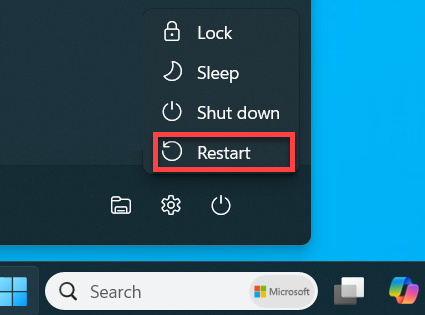
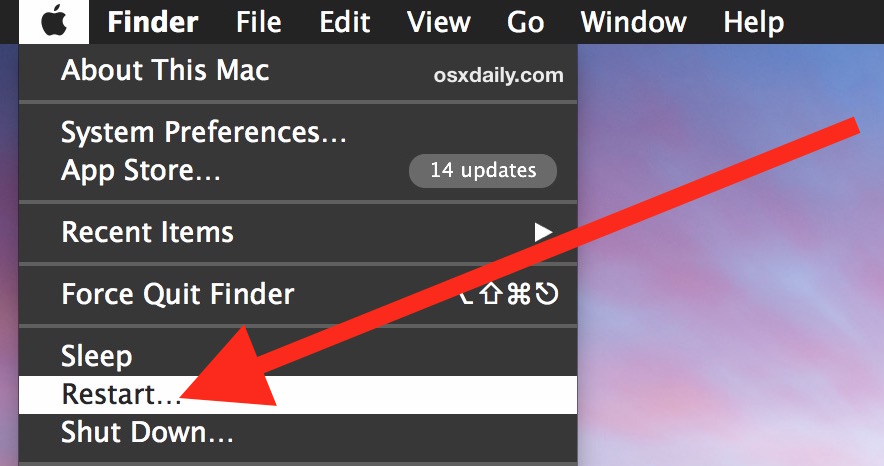
Restart your computer — PC or Mac
- Restart your Windows: Click Start > Power > Restart.
- Restart your Mac: Apple menu > Restart. If the Mac is unresponsive, press and hold Command + Control + Power button.
Restart iTunes — fully quit and reopen
- Windows: Click iTunes > Exit, then reopen.
- Mac: Press Cmd + Q, then reopen.
Restart your iPod
For iPod Classic, Nano, Mini (30-pin models):
- Toggle the Hold switch on then off (if your model has one).
- Press and hold Menu + Select (Center) together for about 6-10 seconds.
- Keep holding until the Apple logo appears, then release.
For iPod Touch (iOS devices):
- With Home button (4th-6th gen): Press and hold Power + Home until Apple logo appears.
- Without Home button (7th gen): Press and release Volume Up, press and release Volume Down, then press and hold Power until Apple logo appears.
Part 3. Update iTunes/Windows OS/macOS
Outdated software is a common reason iPods fail to appear. Apple regularly releases updates that fix device detection bugs and improve compatibility.
Update iTunes on Windows
Step 1Open iTunes on your computer.
Step 2Click Help in the menu bar (if you don't see the menu bar, press Ctrl + B).
Step 3Select Check for Updates.
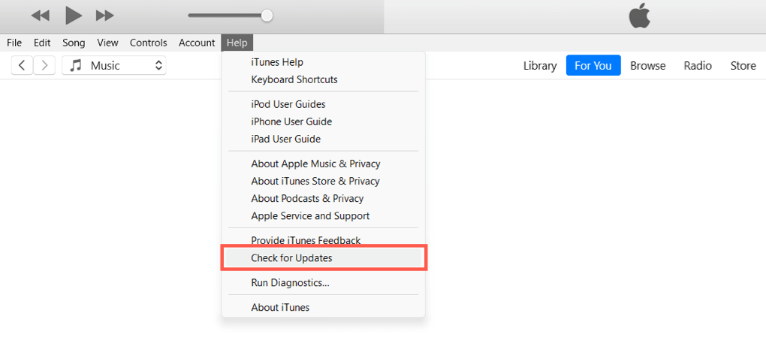
Step 4Follow the on-screen prompts to install the latest version.
Alternative method: Download the latest iTunes directly from Apple's website. (Note: The Microsoft Store version may have limitations for classic iPods.)

FoneLab enables you to fix iPhone/iPad/iPod from DFU mode, recovery mode, Apple logo, headphone mode, etc. to normal state without data loss.
- Fix disabled iOS system problems.
- Extract data from disabled iOS devices without data loss.
- It is safe and easy to use.
Update Windows OS
Step 1Click the Start button and select Settings.
Step 2Click Windows Update (on Windows 11) or Update & Security (on Windows 10).
Step 3Click Check for updates. Windows will automatically scan for available updates.

Step 4Click Download and install if updates are found.
Step 5Restart your computer after the updates complete.
Tip: Windows 11 2026 updates have improved legacy device support, but some updates may break Apple Mobile Device drivers — see Part 5 and Part 8.
Update macOS
For macOS Catalina (10.15) and earlier:
Step 1Click the Apple menu > System Preferences.
Step 2Click Software Update.
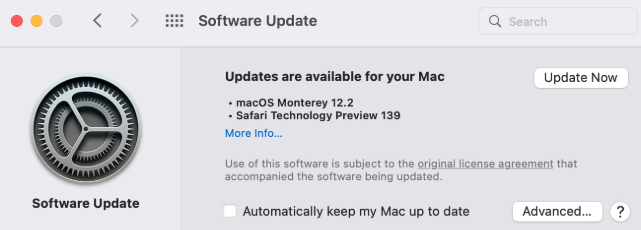
Step 3If updates are available, click Update Now.
For macOS Big Sur (11) through macOS 2026:
Step 1Click the Apple menu > System Settings (or System Preferences on older versions).
Step 2Click General > Software Update.
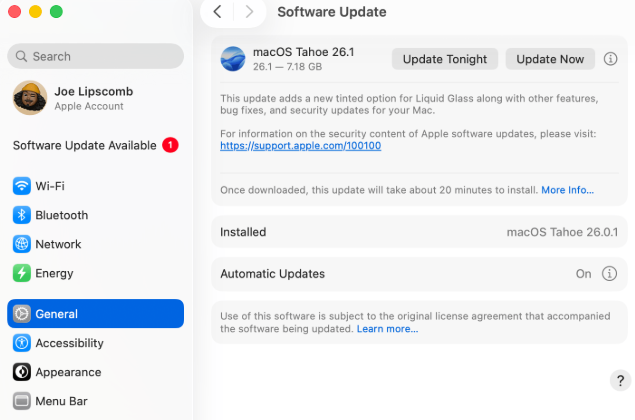
Step 3Click Update Now if updates are available.
Step 4Your Mac will restart during the update process.
Important Note: Modern macOS (Catalina 10.15 and later) does not have iTunes. After updating, use Finder to manage your iPod (see Part 9).
FoneLab enables you to fix iPhone/iPad/iPod from DFU mode, recovery mode, Apple logo, headphone mode, etc. to normal state without data loss.
- Fix disabled iOS system problems.
- Extract data from disabled iOS devices without data loss.
- It is safe and easy to use.
Part 4. Fix iPod Touch Using FoneLab iOS System Recovery
If your iPod Touch is detected but stuck in recovery mode, or shows a black screen, third-party tools can help bypass iTunes limitations.
FoneLab iOS System Recovery can:
- Exit recovery mode without data loss.
- Repair iPod Touch stuck on Apple logo.
- Fix "not showing up" issues caused by system glitches.
- Fix most issues with Standard or Advanced mode with ease.
Step 1Download and install FoneLab on your PC or Mac.
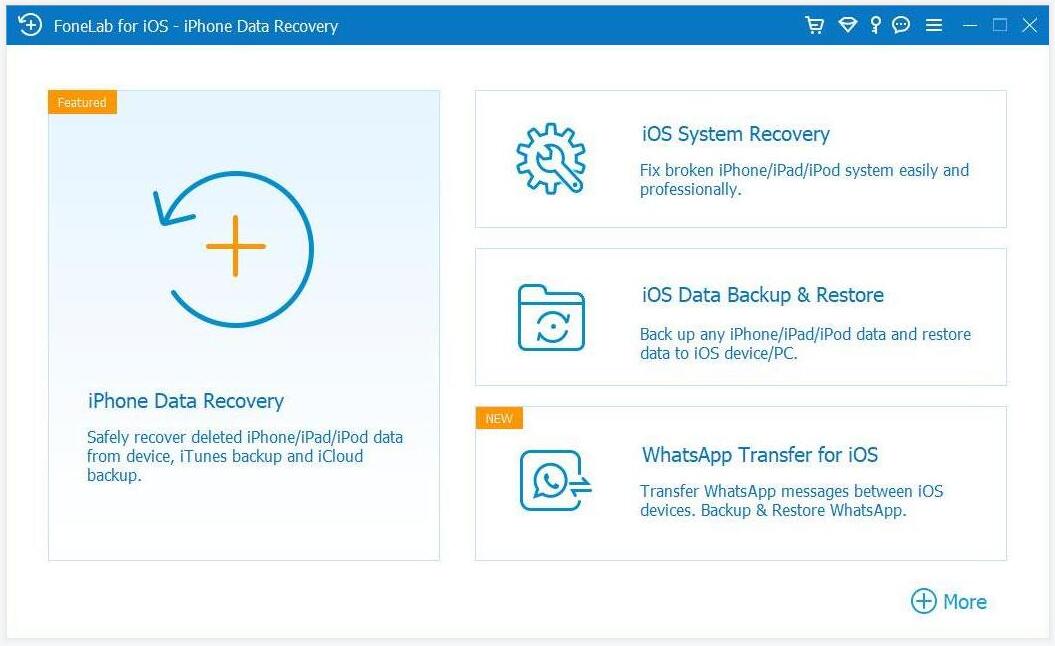
Step 2Select iOS System Recovery.
Step 3Connect your iPod Touch and follow on-screen prompts.
Note: This applies to iPod Touch models only (iOS-based). Does not work for iPod Classic/Nano/Mini.
FoneLab enables you to fix iPhone/iPad/iPod from DFU mode, recovery mode, Apple logo, headphone mode, etc. to normal state without data loss.
- Fix disabled iOS system problems.
- Extract data from disabled iOS devices without data loss.
- It is safe and easy to use.
Part 5. Check "Apple Mobile Device Support" on Windows
Windows requires the Apple Mobile Device Service to recognize any iPod. If this service is stopped or crashed, your iPod will not appear in iTunes even if the hardware is working perfectly.
Step 1Press Win + R, type services.msc, press Enter.
Step 2Scroll to Apple Mobile Device Service.
Step 3Right-click > Restart.
Step 4If stopped, right-click > Start.
Step 5Set Startup type to Automatic.
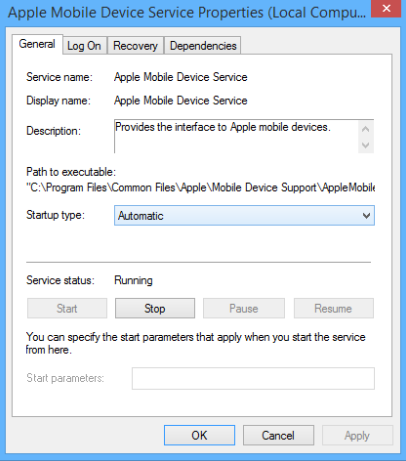
If missing: Reinstall iTunes (which reinstalls the service).
FoneLab enables you to fix iPhone/iPad/iPod from DFU mode, recovery mode, Apple logo, headphone mode, etc. to normal state without data loss.
- Fix disabled iOS system problems.
- Extract data from disabled iOS devices without data loss.
- It is safe and easy to use.
Part 6. Use iPod Recovery Mode / Disk Mode
If your iPod has a failing hard drive, corrupted firmware, or a software crash, it may not boot normally. Recovery Mode (for iPod Touch) and Disk Mode (for iPod Classic/Nano/Mini) force your iPod to be visible to iTunes or Finder for recovery, even when the device is otherwise unresponsive.
For iPod Classic, Nano, Mini (30-pin models) – Disk Mode
Step 1Press and hold Menu + Select (Center) on iPod until Apple logo appears.
Step 2Immediately switch to holding Play/Pause + Select until the Disk Mode screen appears (shows OK to disconnect).
Step 3Connect to your PC. iTunes should prompt: "iPod in recovery mode. Restore?"
Step 4If it still doesn't appear, check Disk Management (diskmgmt.msc). If the iPod shows as No Media or 0 bytes, the hard drive has failed.
Warning: A clicking or scratching sound indicates mechanical hard drive failure. Time to consider an SSD upgrade or replacement.
For iPod Touch (iOS devices) – Recovery Mode
Why this matters: If your iPod Touch is stuck on the Apple logo, has a black screen, or is in a boot loop, Recovery Mode allows iTunes or Finder to reinstall iOS without needing the device to boot normally.
Step 1Connect your iPod Touch to your computer using a USB cable.
Step 2Open iTunes (on Windows or old Mac) or Finder (on macOS Catalina and later).
Step 3Force restart your iPod Touch while keeping it connected:
- iPod Touch with Home button (4th-6th gen): Press and hold Power + Home for 10 seconds, then release Power but keep holding Home until the "Connect to iTunes" screen appears.
- iPod Touch without Home button (7th gen): Press and release Volume Up, press and release Volume Down, then press and hold Power until the recovery mode screen appears.
Step 4Your computer will detect an iPod in recovery mode. Click Restore or Update.
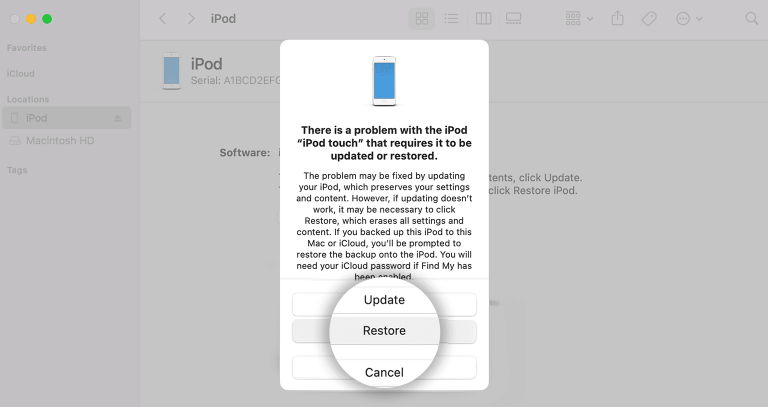
Step 5Follow the on-screen prompts to reinstall iOS or update the software.
Note: Restoring will erase all data on your iPod Touch. If possible, try Update first to keep your data.
FoneLab enables you to fix iPhone/iPad/iPod from DFU mode, recovery mode, Apple logo, headphone mode, etc. to normal state without data loss.
- Fix disabled iOS system problems.
- Extract data from disabled iOS devices without data loss.
- It is safe and easy to use.
Part 7. Try Safe Mode on Windows
Background software like antivirus programs, firewalls, or third-party USB drivers can block iPod detection. Safe Mode starts Windows with only essential drivers, allowing you to isolate the conflict.
Step 1Hold Shift while clicking Restart from the Start menu.
Step 2Go to Troubleshoot > Advanced Options > Startup Settings > Restart.
Step 3Press 4 or F4 for Safe Mode.
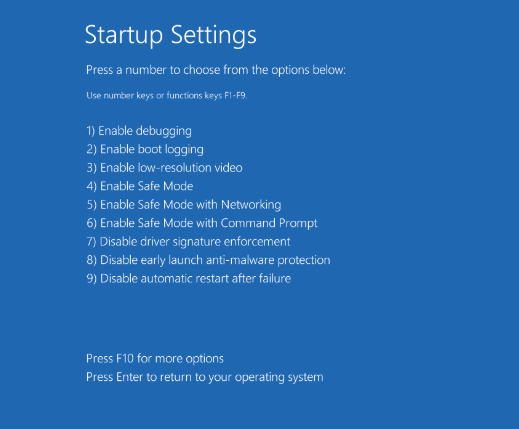
Step 4Connect your iPod. Does it appear in iTunes?
Step 5If yes, a third-party driver or security app is interfering. Disable antivirus or perform a clean boot.
Part 8. Reinstall Windows Drivers
Driver corruption is the #1 reason iPod Touch (and occasionally Classic) stops showing up in iTunes. When the driver is missing or damaged, Windows cannot communicate with your device.
Step 1Open Device Manager (right-click Start button).
Step 2Expand Portable Devices or Universal Serial Bus controllers.
Step 3Look for:
- "Apple iPod"
- "Apple Mobile Device USB Driver"
- Unknown device with yellow triangle
Step 4Right-click > Uninstall device.
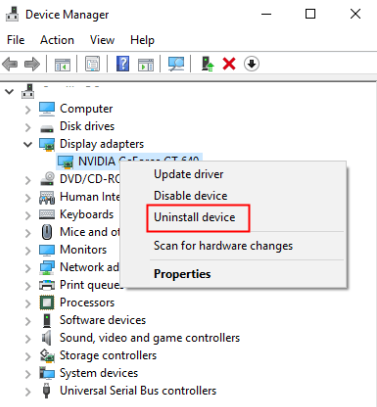
Step 5Disconnect iPod, restart PC, reconnect — Windows reinstalls fresh drivers.
If driver still missing: Download "Apple Mobile Device USB Driver" directly from Apple's support site (2026 version available). Or reinstall iTunes completely (uninstall > restart > install latest).
Part 9. Open Finder Instead of iTunes on Mac
This is the most common mistake. Modern macOS (Catalina 10.15 and later) does not have iTunes. If you are looking for iTunes on a new Mac, you won't find it — you need to use Finder to manage your iPod.
- macOS Mojave and earlier: Use iTunes.
- macOS Catalina, Big Sur, Monterey, Ventura, Sonoma, and 2026 macOS: Use Finder.
Step 1Connect iPod via USB.
Step 2Open a Finder window.
Step 3Look for your iPod under Locations in the sidebar.
Step 4Click it — you'll see the same sync interface previously in iTunes.
Legacy iPod Classic/Nano users on modern Mac: Finder still supports 30-pin iPods. If not showing, try a USB 2.0 hub (some USB-C adapters cause issues).
FoneLab enables you to fix iPhone/iPad/iPod from DFU mode, recovery mode, Apple logo, headphone mode, etc. to normal state without data loss.
- Fix disabled iOS system problems.
- Extract data from disabled iOS devices without data loss.
- It is safe and easy to use.
Part 10. Comparison: iPod Models & Troubleshooting Approach
| iPod Model | Connection | Most Likely Fix | iTunes or Finder? |
|---|---|---|---|
| iPod Classic (5th–6th gen) | 30-pin | Check hard drive (Part 6) | Windows: iTunes / Mac: Finder |
| iPod Nano (all gens) | 30-pin (or dock connector) | Disk Mode + driver reinstall | Same as above |
| iPod Mini | 30-pin | Clicking sound = dead drive | Same as above |
| iPod Touch (any iOS version) | 30-pin (1st–3rd gen) or Lightning (4th–7th) | Windows driver fix (Part 8) | Windows: iTunes / Mac: Finder |
| iPod Shuffle | USB (built-in) | Restart + USB port | Same, but appears as simple drive |
Quick decision tree:
- No reaction at all > Part 1 + Part 2
- iTunes sees "unknown device" or errors > Part 5 + Part 8
- Clicking or grinding noise > Part 6 (drive failure likely)
- Modern Mac user > Part 9 first
Part 11. FAQ about iPod Doesn't Show Up in iTunes
Q: Does iTunes still support iPod Classic in 2026?
A: Yes. On Windows, iTunes remains the primary way to manage classic iPods. On Mac, Finder provides equivalent support. Apple has not discontinued legacy iPod compatibility as of April 2026.
Q: Why does my iPod show a "Red X" error?
A: A Red X on an iPod Classic/Nano screen indicates a serious hard drive or firmware error. Unfortunately, this usually means the mechanical drive is failing. Recovery is possible only via Disk Mode (Part 6), but if the drive is dead, iTunes will not detect the device.
Q: Can I use a Mac to connect my old iPod?
A: Yes, but not with iTunes. Modern macOS (Catalina and later) does not have iTunes. You need to use Finder to manage legacy iPods (see Part 9). If Finder doesn't show it, try a different USB adapter or a USB 2.0 hub.
Q: My iPod Touch is detected in Windows but not in iTunes. Why?
A: This is almost always a driver issue. Go to Device Manager > Universal Serial Bus controllers > Uninstall "Apple Mobile Device USB Driver" > restart (Part 8). Also ensure Apple Mobile Device Service is running (Part 5).
Q: Can I still sync music to an iPod in 2026?
A: Yes. iTunes (Windows) and Finder (Mac) still sync local music files. However, the iTunes Store no longer sells songs as of 2026 — you'll need to use Apple Music (subscription) or import your own MP3/AAC files.
Q: What if I've tried everything and my iPod still doesn't show up?
A: On 30-pin models (Classic/Nano/Mini), the most likely cause is a dead hard drive or failed logic board. On iPod Touch, it may be a failed Lightning/30-pin port or battery. Consider professional repair or data recovery services.
Part 12. Conclusion & Final Recommendation
Quick Summary:
- Bad cable or USB port? > Start with Part 1.
- Software glitch? > Restart everything (Part 2).
- Windows driver issue? > Check Part 5 and Part 8.
- Mac user? > Use Finder, not iTunes (Part 9).
- Clicking noise? > Hard drive failure (Part 6).
Final Recommendation:
If your iPod Touch is detected but won't sync, keeps freezing, or shows a recovery screen, try FoneLab iOS System Recovery first. It fixes system-level issues without iTunes and often saves devices that Apple's own tools cannot recognize.
FoneLab enables you to fix iPhone/iPad/iPod from DFU mode, recovery mode, Apple logo, headphone mode, etc. to normal state without data loss.
- Fix disabled iOS system problems.
- Extract data from disabled iOS devices without data loss.
- It is safe and easy to use.