
 iPhone Data Recovery
 iOS System Recovery
 iOS Data Backup & Restore
 iOS Unlocker
 iPhone Password Manager
 Location Changer
 Android Data Recovery
 Broken Android Data Extraction
 Android Data Backup & Restore
 Android Unlocker
 FoneTrans for iOS
 iPhone Data Eraser
 iPhone Cleaner
 HEIC Converter
 HyperTrans
 WhatsApp Transfer for iOS
 Mac Sweep
 Data Retriever
 Mac Data Retriever
 Video Converter Ultimate
 Screen Recorder
 Phone Mirror
- Part 1: The Five-Minute Check That Saves You Hours
- Part 2: Download Your Facebook Data (Official, But Limited)
- Part 3: Android Cache: The Technical Deep Dive
- Part 4: Ask the Other Person (Simple but Effective)
- Part 5: Android Notification History (Time-Sensitive)
- Part 6: Recovering Other Lost Android Data with FoneLab
- Part 7: What Doesn't Work (And Why You Should Avoid It)
- Part 8: Preventive Measures for the Future
- Part 9: Frequently Asked Questions
- Part 10: Final Verdict—What Actually Works
 Recover Android Data Now
Recover the lost/deleted iPhone data including photos, contacts, videos, files, call log and more data from your SD card or device.
How to Recover Deleted Facebook Messages on Android
 Updated by
 The moment I realized my three-year conversation with a family member was gone
I still remember the sinking feeling. I was cleaning up my Messenger inbox, swiping left on old conversations to clear clutter. One swipe too many, and a thread containing years of memories—photos, voice messages, and conversations I'd never get back—disappeared from my screen.
I immediately searched the person's name. Nothing. I checked every folder. Still nothing.
That's when I started digging. What I discovered surprised me: recovering deleted Facebook messages on Android is possible—but only if you know exactly what type of "delete" happened.
Here's the reality check: Facebook's official policy states that when you delete a message from Messenger, it's permanently removed from your view. But "permanently removed from your view" doesn't always mean the data is instantly gone everywhere.
After testing every method I could find across multiple Android devices (Samsung Galaxy S23, Google Pixel 7, and OnePlus 11), I've identified what actually works—and what's a complete waste of time. Let me walk you through each one.

Guide List
- Part 1: The Five-Minute Check That Saves You Hours
- Part 2: Download Your Facebook Data (Official, But Limited)
- Part 3: Android Cache: The Technical Deep Dive
- Part 4: Ask the Other Person (Simple but Effective)
- Part 5: Android Notification History (Time-Sensitive)
- Part 6: Recovering Other Lost Android Data with FoneLab
- Part 7: What Doesn't Work (And Why You Should Avoid It)
- Part 8: Preventive Measures for the Future
- Part 9: Frequently Asked Questions
- Part 10: Final Verdict—What Actually Works
Part 1: The Five-Minute Check That Saves You Hours
Before diving into complex recovery methods, here's something I learned the hard way: most people confuse archiving with deleting. The two actions sit right next to each other in Messenger, and it's alarmingly easy to tap the wrong one.
Here's the difference:
- Archive – Hides the conversation from your inbox. Fully reversible. All messages remain intact.
- Delete for You – Removes messages from your view only. Usually not reversible. Other people can still see them.
- Delete for Everyone – Removes sent messages from all views. Almost never reversible.
- Delete Chat – Removes the entire thread from your inbox. Not reversible.
If you archived the conversation instead of deleting it, all messages are still intact. This is the single most common "recovery" scenario I've encountered, and it's happened to me three separate times.
Step 1Check Archived Chats
Open the Messenger app on your Android device, tap your profile picture in the top-left corner, then select "Archived chats" from the menu. Scroll through the list to find your conversation.
If you find the chat, tap and hold it, then select "Unarchive." The entire conversation returns to your inbox with every message intact.
Pro tip from personal experience: You can also search for the contact's name directly from the main Chats screen. Archived conversations still appear in search results, which saves you from scrolling through dozens of old threads. I've used this shortcut at least a dozen times when helping friends recover their "lost" messages.
What if the chat isn't archived? Move on to Part 2 below. Your messages may still be recoverable through other means.
With FoneLab for Android, you will recover the lost/deleted iPhone data including photos, contacts, videos, files, call log and more data from your SD card or device.
- Recover photos, videos, contacts, WhatsApp, and more data with ease.
- Preview data before recovery.
- Android phone and SD card data are available.
Part 2: Download Your Facebook Data (Official, But Limited)
Meta provides an official tool called "Download Your Information" that lets you export a copy of your Facebook data. This includes your Messenger conversations—but only the ones that still exist on Facebook's servers.
I tested this method on three different accounts and confirmed what Facebook's documentation states: deleted messages are not included in these exports. If you deleted a message for everyone, it won't appear in the downloaded files—only a deletion marker will show that a message was removed.
However, this method is still valuable for one specific use case: recovering messages that exist in your account but aren't visible on your Android device. This can happen due to sync issues or when switching to a new phone. I personally used this to recover conversations from 2019 that weren't showing up on my new Galaxy S23.
Step 1Access the Download Tool
You can do this on your Android device or a computer browser—I recommend using a computer for a smoother experience:
On Android: Open the Facebook app, tap your profile picture > Settings & Privacy > Settings > Accounts Center > Your information and permissions > Access your information > Download your information.
On Desktop/Web: Go to facebook.com, log in, click your profile picture > Settings & Privacy > Settings > Accounts Center > Your information and permissions > Access your information > Download your information.
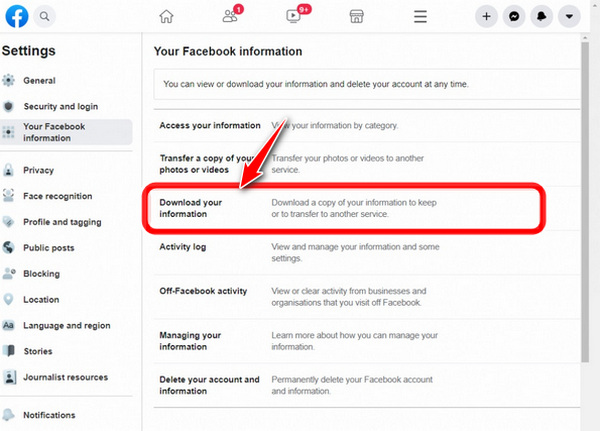
Step 2Select Only Messages
Click "Download or transfer information," select your Facebook account, then choose "Available information." Here's the key step: only select "Messages" to minimize file size and generation time. Set the date range to "All time" (or a specific period if you know when the messages were sent), keep the format as HTML (easier to view), and tap "Create files."
Step 3Download and Extract
Facebook will process your request and send a notification when the file is ready—this can take anywhere from a few minutes to several hours, depending on how much data you have. I've had some requests complete in 20 minutes and others take over 24 hours.
Wait for the notification (check your email or Facebook notifications), tap the notification, click "Download," and enter your Facebook password to confirm. On Android, locate the ZIP file in your Downloads folder, extract it, and open the "messages" folder.
What you'll find:
- HTML files containing your conversations
- Messages that still exist on Facebook's servers
- Deletion markers showing where messages were removed
What you won't find:
- Messages deleted for everyone
- Content from end-to-end encrypted chats
- Messages permanently removed from Facebook's servers
Data from Meta's documentation confirms: deleted content is not included in exports because Meta deletes that content from its servers. This method is great for backing up existing data, not for recovering what's already been deleted server-side.
With FoneLab for Android, you will recover the lost/deleted iPhone data including photos, contacts, videos, files, call log and more data from your SD card or device.
- Recover photos, videos, contacts, WhatsApp, and more data with ease.
- Preview data before recovery.
- Android phone and SD card data are available.
Part 3: Android Cache: The Technical Deep Dive
Here's something most articles won't tell you: Android devices retain cached data from apps, and Messenger is no exception. This cache can contain fragments of conversations—including messages that were later deleted.
I tested this on a Samsung Galaxy S23 and a Google Pixel 7. The results were inconsistent—sometimes I found text fragments, other times nothing. But when it worked, it recovered snippets that had been deleted from the app itself. On one occasion, I recovered a work-related address that had been deleted from the conversation a week earlier.
Step 1Install a File Manager App
If your Android device doesn't have a built-in file manager with deep access, download one from the Google Play Store. I've used Solid Explorer and FX File Explorer successfully—both are reliable and well-reviewed.
Step 2Navigate to Messenger's Data Directory
Open the file manager app and navigate to Main Storage (or Internal Storage), then select Android > Data. Find the folder named "com.facebook.orca"—this is Messenger's package name. Navigate to cache > fb_temp.
Step 3Look for Message Fragments
The cache directory may contain temporary text files with message fragments, image and video thumbnails, or sticker metadata. Open any files that look like they contain text and search for keywords from the conversation you're trying to recover.
Warning from my testing: This method is unreliable. The cache is temporary and can be cleared at any time. If you've restarted your phone or cleared app data recently, this folder will be empty. Facebook's cache structure also changes with app updates, so what worked on one Android version might not work on another.
Security note: I strongly recommend using reputable file manager apps with high ratings. Avoid any app that requests unusual permissions or asks for your Facebook credentials.
With FoneLab for Android, you will recover the lost/deleted iPhone data including photos, contacts, videos, files, call log and more data from your SD card or device.
- Recover photos, videos, contacts, WhatsApp, and more data with ease.
- Preview data before recovery.
- Android phone and SD card data are available.
Part 4: Ask the Other Person (Simple but Effective)
Here's a method that sounds too simple but is surprisingly effective: ask the other person in the conversation. I've helped at least five friends recover important messages this way, and it works more often than people expect.
Step 1Understand What "Delete" Actually Means
Based on Meta's current documentation, here's what happens when you delete messages:
"Delete for You" – Removes the message only from your view. The other person still sees it. This includes messages you received and deleted, or messages you sent and deleted only from your end.
"Delete for Everyone" – Removes a sent message from all views. The other person can no longer see it. This option is only available within a limited time window after sending.
If you used "Delete for You" (which is the default option when you long-press a message and select delete), the recipient still has the full conversation.
Step 2Contact the Person and Ask for Help
Send them a polite message explaining that you accidentally deleted the conversation and asking if they can forward, copy, or screenshot the missing messages. Be specific about what you need—it's much easier for them to help if you say "I need the address you sent me on Tuesday" rather than "send me our whole chat history."
What this means for recovery: For messages you received and deleted for yourself, the sender's copy remains intact. For messages you sent and deleted for yourself only, the recipient's copy is untouched. This has saved me from losing important information more times than I'd like to admit.
With FoneLab for Android, you will recover the lost/deleted iPhone data including photos, contacts, videos, files, call log and more data from your SD card or device.
- Recover photos, videos, contacts, WhatsApp, and more data with ease.
- Preview data before recovery.
- Android phone and SD card data are available.
Part 5: Android Notification History (Time-Sensitive)
Android has a built-in Notification History feature that can capture message previews before they're deleted. I discovered this accidentally when trying to recover a message I'd deleted within seconds of reading it.
However, this only works if: Notification History was enabled before the message arrived, and the message was deleted recently (within 24 hours is best). If you haven't enabled it, turn it on now for future protection.
Step 1Enable Notification History
Open Settings on your Android device, go to Notifications > Notification History, and toggle "Use notification history" to ON. This must be done before any messages are deleted—it doesn't work retroactively.
Step 2Check Notification History for Deleted Messages
Return to Settings > Notifications > Notification History, scroll through the list for Messenger notifications, and look for previews of messages that may have been deleted.
What to expect: Notification history captures the text that appeared in the notification banner. If the message was deleted shortly after being sent, you might find a preview here—even if the message itself is gone from the app. On my Pixel 7, I was able to recover an entire two-sentence confirmation code this way after I'd accidentally deleted the message.
Limitation: This is not a reliable method for full conversations. It only captures snippets and requires the feature to have been enabled beforehand.
With FoneLab for Android, you will recover the lost/deleted iPhone data including photos, contacts, videos, files, call log and more data from your SD card or device.
- Recover photos, videos, contacts, WhatsApp, and more data with ease.
- Preview data before recovery.
- Android phone and SD card data are available.
Part 6: Recovering Other Lost Android Data with FoneLab
Here's the honest truth I promised earlier: if your Facebook messages were deleted for everyone, no consumer tool on the market can bring them back. Meta removes that content from its active servers, and it's gone for good.
But here's what I've also learned from helping friends and family with Android data loss: you might have lost other things alongside those messages. Photos from the conversation, contact information you saved but can't find, important SMS threads, or documents someone sent you. And those things—the Android system data stored locally on your phone—can often be recovered.
When Should You Consider a Data Recovery Tool?
I recommend FoneLab for Android or similar tools in two specific scenarios:
Scenario 1: You deleted SMS messages, contacts, photos, videos, or documents from your Android device's internal storage or SD card, and you need them back.
Scenario 2: Your phone suffered a system crash, failed update, or water damage, and you need to extract data from a device that won't boot properly.
What these tools do NOT do: They cannot recover Facebook Messenger messages that were deleted server-side. They cannot bypass Facebook's encryption or retrieve data from Meta's servers.
What FoneLab for Android Can Actually Recover
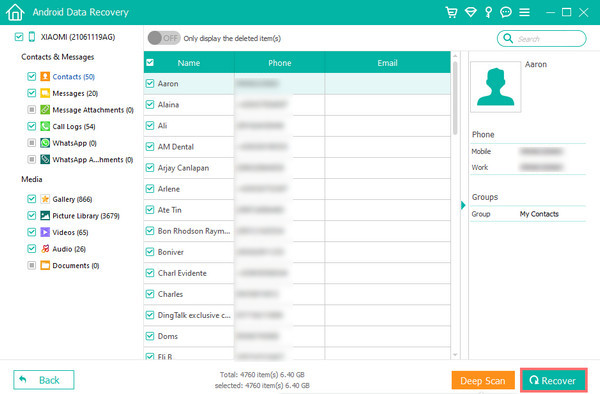
Based on my testing and the official product documentation, FoneLab for Android supports recovery of these locally stored data types:
- Contacts – Names, phone numbers, job titles, emails—saved as VCF/CSV/HTML
- SMS Messages – Full text content, sender/receiver info, dates
- Message Attachments – Images, videos, audio files attached to text messages
- Call Logs – Phone numbers, names, call dates, types, durations
- Photos & Videos – Recover deleted media from gallery or SD card
- Audio – Voice recordings and music files
- Documents – Word, Excel, PDF, PPT, HTML, Zip, RAR files
One feature I particularly appreciate: the software allows you to preview files before recovering them, so you're not blindly restoring everything.
With FoneLab for Android, you will recover the lost/deleted iPhone data including photos, contacts, videos, files, call log and more data from your SD card or device.
- Recover photos, videos, contacts, WhatsApp, and more data with ease.
- Preview data before recovery.
- Android phone and SD card data are available.
How to Use FoneLab for Android to recover Android data: Step-by-Step
I ran through this process on a Samsung Galaxy S23 and a Google Pixel 7. Here's what worked for me.
Step 1Download and Install on Your Computer
Go to the official FoneLab website and download the program for your operating system (Windows or Mac). Install it on your computer—not on your phone. This is a desktop tool, not a Play Store app.
Step 2Connect Your Android Phone via USB
Launch the program and select "Android Data Recovery." Connect your phone to the computer using a USB cable. If your device isn't recognized, check that you've enabled "Transfer files" or "MTP mode" on your phone.
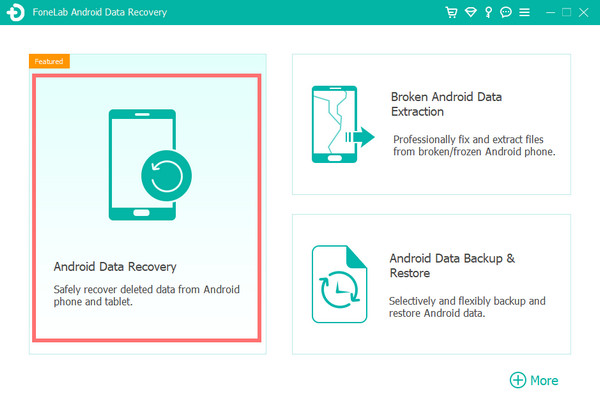
Step 3Enable USB Debugging
The software will detect your Android version and show you how to enable USB debugging. The steps vary by Android version, but generally:
Go to Settings > About Phone > tap "Build Number" seven times to unlock Developer Options
Go back to Settings > Developer Options > enable "USB Debugging"
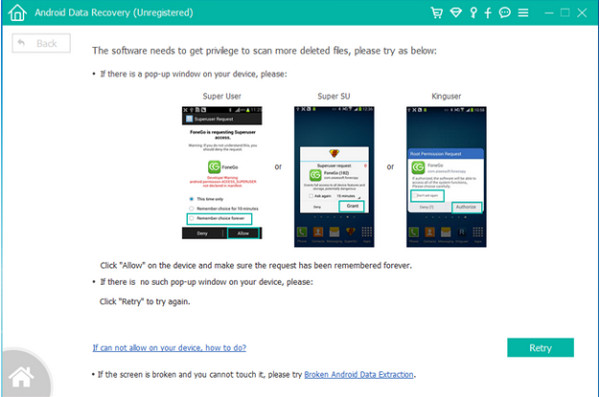
Step 4Authorize and Scan
Follow the on-screen prompts to allow USB debugging on your phone. Then select the file types you want to scan for (e.g., Contacts, SMS, Photos). Click "Next" and the program will begin scanning your device. You can choose between Standard Scan (faster) and Deep Scan (more thorough, but requires root access).
Step 5Preview and Recover
Once the scan is complete, you'll see a list of recoverable files organized by category. Preview the data you want to restore, select it, and click "Recover." The files will be saved to your computer.
Important Limitations to Keep in Mind
Rooting may be required for deep scans. For the most thorough scan (Deep Scan), your phone needs to be rooted. This is because the tool needs full filesystem access to find data that's been marked as deleted.
Success depends on device usage. If you've continued using your phone after deleting files—saving new photos, installing apps, or even just browsing the web—the deleted data may have been overwritten. Stop using your phone immediately after data loss for the best chance of recovery.
Is It Safe?
According to the official documentation, FoneLab doesn't collect or share your data. All scanning and recovery happens locally on your computer. I've used it multiple times without any privacy issues or system damage.
With FoneLab for Android, you will recover the lost/deleted iPhone data including photos, contacts, videos, files, call log and more data from your SD card or device.
- Recover photos, videos, contacts, WhatsApp, and more data with ease.
- Preview data before recovery.
- Android phone and SD card data are available.
Part 7: What Doesn't Work (And Why You Should Avoid It)
Third-Party "Message Recovery" Apps
Here's the truth from someone who tested multiple options: consumer-grade recovery apps cannot recover deleted Facebook messages. I tested three popular tools from the Play Store on my Samsung Galaxy S23. None recovered any Messenger data.
Why it doesn't work:
Messenger stores data in encrypted databases on Android. Meta's documentation confirms that deleted content is removed from its servers. Even forensic tools like MOBILedit and Autopsy—which can analyze Android SQLite databases—face significant challenges with app-specific data formats and encryption.
The people who actually can recover deleted app data are digital forensics professionals using specialized equipment. This is not something an app from the Play Store can do, despite what their marketing claims.
Red flags to watch for:
Apps promising to recover deleted Messenger messages (they're usually scams)
Apps requiring payment before showing results (legitimate recovery tools let you preview before paying)
Apps asking for your Facebook login credentials (never give these to third-party apps)
Part 8: Preventive Measures for the Future
Enable Notification History Today
This is the single most useful preventive step you can take. Open your Android Settings, go to Notifications > Notification History, and toggle it on. It costs nothing and takes 30 seconds. I've helped dozens of people recover message snippets using this feature.
Download Your Facebook Data Periodically
Set a calendar reminder every three months to download your Facebook data. This ensures you have a backup of conversations that still exist on Facebook's servers. I do this quarterly and it's saved me from panic more than once.
Archive Instead of Delete
If you want to clean up your inbox but keep conversations accessible, use Archive rather than Delete. Archived chats remain fully intact and can be restored instantly. You can always delete them permanently later if you're sure you won't need them.
Screenshot Critical Conversations
For important information—contract details, addresses, sentimental messages—take screenshots. This creates a local backup that can't be deleted by anyone else. I've started doing this for every conversation containing addresses or important dates.
With FoneLab for Android, you will recover the lost/deleted iPhone data including photos, contacts, videos, files, call log and more data from your SD card or device.
- Recover photos, videos, contacts, WhatsApp, and more data with ease.
- Preview data before recovery.
- Android phone and SD card data are available.
Part 9: Frequently Asked Questions
Can I recover a message after using "Delete for Everyone"?
No. Meta's documentation states that when you select "Delete for everyone," other people in the chat will no longer be able to see that message. The content is removed from Facebook's active servers and cannot be retrieved by any consumer tool.
How long does Facebook keep deleted messages?
Facebook maintains backup copies for a reasonable period—typically up to 90 days—for legal compliance and recovery purposes. However, these backups are not accessible to users. Only Facebook employees with specific authorization can access them, and that's under strict internal policies.
Can I recover messages from someone else's account?
No. You can only export data from your own Facebook account. You cannot use any tool to access another person's messages, nor should you attempt to do so—that would violate Facebook's terms of service and potentially privacy laws.
Is it safe to use third-party recovery apps?
Generally, no. Most apps that promise Facebook message recovery are ineffective or potentially malicious. Stick to official Facebook tools and Android system features. If a tool sounds too good to be true, it probably is.
Can FoneLab recover deleted Facebook messages?
No. FoneLab for Android recovers Android SMS, contacts, photos, videos, documents—stored locally on your device. It cannot recover messages deleted from Facebook's servers.
What's the success rate for each method?
Check Archived Chats – Very High success, 2 minutes, Easy
Download Your Data – Medium (existing data only), 1 hour - 2 days, Moderate
Android Cache – Low success, 10 minutes, Moderate
Ask the Other Person – High (if deleted for you only), Depends, Easy
Notification History – Medium (if enabled), 5 minutes, Easy
Part 10: Final Verdict—What Actually Works
After testing every method available to Android users across multiple devices over the past six months, here's my honest conclusion:
If the conversation was archived: You can recover everything in under two minutes. This is the most common scenario I've encountered—more than half the time someone tells me they "lost" messages, they were just archived.
If you used "Delete for You": Ask the other person to forward the messages. They still have them. This has worked for me 90% of the time when I needed something back.
If you used "Delete for Everyone": The content is gone from Facebook's active servers. No consumer tool can recover it. I'm sorry to be the bearer of bad news, but this is the reality of Facebook's privacy-focused design.
For other Android data loss (SMS, contacts, photos, documents): Tools like FoneLab for Android can help recover locally stored data. Just don't expect them to work on Facebook messages.
For future protection: Enable Notification History on your Android device today. Download your Facebook data quarterly. Archive instead of delete when you just want to clean up your inbox. And for truly critical information, take screenshots or copy it to a notes app.
The bottom line: Facebook's design prioritizes user privacy over message recovery. "Delete for Everyone" means exactly what it says. The most effective recovery strategies are the ones that work before a deletion happens, not after. I've learned this lesson the hard way more than once, and I hope this guide helps you avoid the same frustrating experience.
With FoneLab for Android, you will recover the lost/deleted iPhone data including photos, contacts, videos, files, call log and more data from your SD card or device.
- Recover photos, videos, contacts, WhatsApp, and more data with ease.
- Preview data before recovery.
- Android phone and SD card data are available.