
 iPhone Data Recovery
 iOS System Recovery
 iOS Data Backup & Restore
 iOS Unlocker
 iPhone Password Manager
 Location Changer
 Android Data Recovery
 Broken Android Data Extraction
 Android Data Backup & Restore
 Android Unlocker
 FoneTrans for iOS
 iPhone Data Eraser
 iPhone Cleaner
 HEIC Converter
 HyperTrans
 WhatsApp Transfer for iOS
 Mac Sweep
 Data Retriever
 Mac Data Retriever
 Video Converter Ultimate
 Screen Recorder
 Phone Mirror
- Part 1: Where Downloads Actually Live on a Samsung Phone
- Part 2: The Fastest Way — Notification Panel
- Part 3: Browse Everything with the My Files App
- Part 4: Finding Downloads in Chrome and Other Apps
- Part 5: Recover Lost or Deleted Downloads with FoneLab
- Part 6: Keeping Your Samsung Downloads Organized
- Part 7: FAQs About Finding Downloads on Samsung
 Recover Android Data Now
Recover the lost/deleted iPhone data including photos, contacts, videos, files, call log and more data from your SD card or device.
How to Find Downloads on My Samsung Galaxy (Quick Guide)
 Posted by Boey Wong / Aug 28, 2026 16:00
You just downloaded a PDF from email, or a photo from WhatsApp, and now you can't find it anywhere on your Samsung Galaxy. Where a file ends up depends entirely on which app downloaded it.
In this guide, I'll walk you through every way to locate downloaded files — from the notification panel shortcut to the My Files app — plus what to do if you deleted a download and need it back.

Guide List
- Part 1: Where Downloads Actually Live on a Samsung Phone
- Part 2: The Fastest Way — Notification Panel
- Part 3: Browse Everything with the My Files App
- Part 4: Finding Downloads in Chrome and Other Apps
- Part 5: Recover Lost or Deleted Downloads with FoneLab
- Part 6: Keeping Your Samsung Downloads Organized
- Part 7: FAQs About Finding Downloads on Samsung
Part 1: Where Downloads Actually Live on a Samsung Phone
There is no single Downloads folder every app uses. On a Samsung Galaxy, each app stores its downloads in its own folder. Here's where things usually end up:
- Browser downloads (Chrome, Samsung Internet, Firefox): These go to a shared Download folder in your internal storage. You'll find them in the same place regardless of which browser you used.
- WhatsApp media (photos, videos, documents): Stored in a dedicated WhatsApp folder. Photos and videos go to WhatsApp/Media/WhatsApp Images and WhatsApp Video, while documents land in WhatsApp Documents.
- Email attachments (Gmail, Samsung Email): Usually saved to the same Download folder as browser files, but some email apps create their own subfolders.
- Telegram, Signal, and other messaging apps: Each has its own media folder under the app's name in your internal storage.
- SD card vs. internal storage: If you have an SD card, some apps may save there instead. You can usually check and change this in the app's settings.
The app you used to download the file determines where it lives. Remember the app and jump straight to the right method; otherwise use the My Files search in Part 3.
Part 2: The Fastest Way — Notification Panel
If you just downloaded the file and haven't cleared notifications, this is the quickest method — every download posts a notification that opens the file directly.
Step 1Swipe down from the top of the screen and find the 'Download complete' notification.
Step 2Tap it to open the file directly. Long-press it and choose Show in folder to see where it's stored.
Step 3If the notification is gone, the file is still on the phone — use the methods below.
This is perfect for those 'where did that file go?' moments. One tap and you're looking at the file. The catch: notifications disappear when you restart or swipe them away.
Part 3: Browse Everything with the My Files App
Samsung's My Files app is the preinstalled file manager on every Galaxy phone. It shows everything on your device — internal storage, SD card, and linked cloud storage — so it's the most reliable way to find any download.
Step 1Open the My Files app (the yellow folder icon in your app drawer).
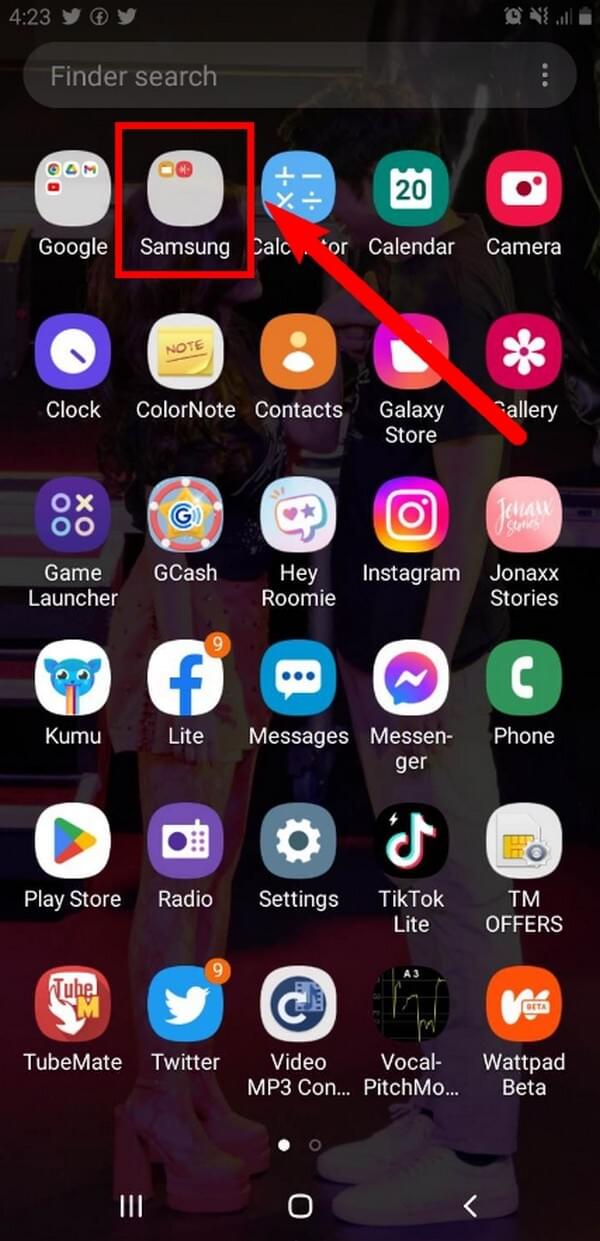
Step 2Tap Downloads on the main screen to see browser downloads and email attachments.
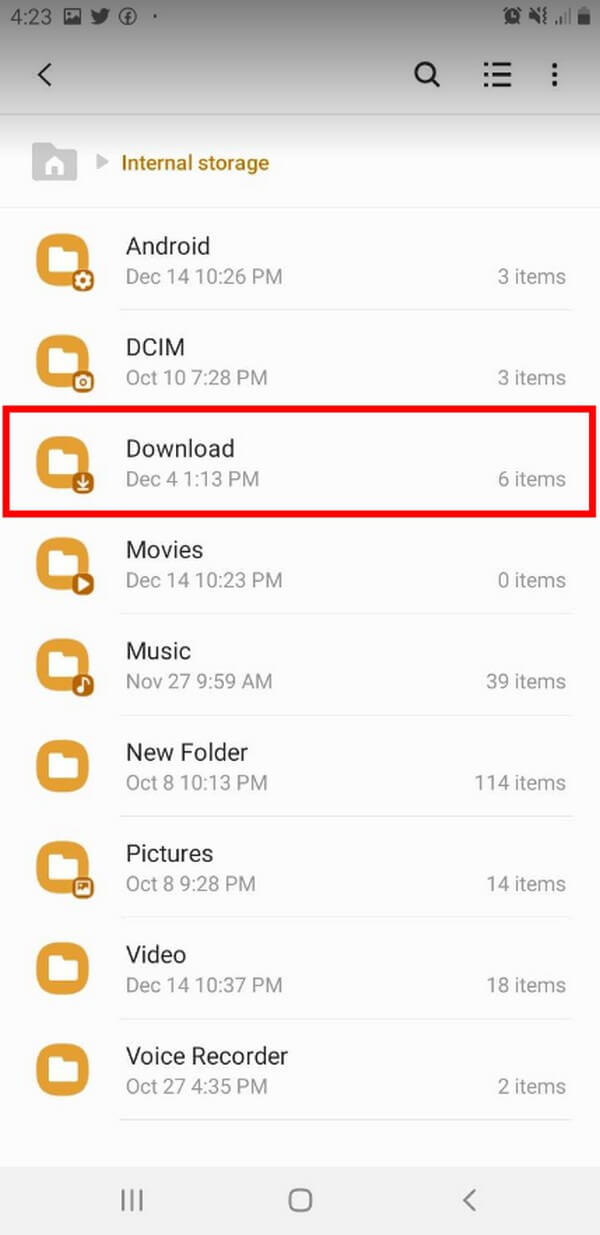
Step 3If it's not there, open Internal storage and look for app folders like WhatsApp, Telegram, or Signal.
Step 4Use the search bar to find any file on the device by name or keyword.
My Files also lets you move, copy, delete, rename, and share. Long-press a file, tap Move, and pick a destination to keep things organized.
Part 4: Finding Downloads in Chrome and Other Apps
Sometimes the fastest way is to go back to the app that downloaded the file — most browsers and messaging apps keep a built-in download list.
Chrome keeps a dedicated downloads page: tap the three-dot menu, then Downloads, for a chronological list. Tap to open, or long-press to share, delete, or locate.
Samsung Internet works the same way — tap the menu icon, then Downloads, to see your history with options to open, share, or delete.
WhatsApp has no downloads section, but Settings > Storage and data > Manage storage shows all received media. For a specific file, reopen the chat and tap it. Downloaded photos land in the folders covered in my Samsung photo recovery guide.
Gmail attachments can be re-downloaded from the email itself; if you saved one, it's in the Downloads folder. To find one fast, search has:attachment in Gmail.
The pattern is simple: every app that can download files keeps a record of what it downloaded. Checking the app's history is often faster than browsing folders.
One tip that saves people constantly: after you track a file down in My Files, long-press it and choose Move if you use it often, or just pin a shortcut on your home screen. The real fix for 'where did it go' is a Downloads folder you actually check, not a fresh hunt through menus every time.
Part 5: Recover Lost or Deleted Downloads with FoneLab
What if the file isn't in its folder? Maybe you deleted it or a cleanup app removed it. Deleted files on Android aren't always gone forever — a data recovery tool can often get them back.
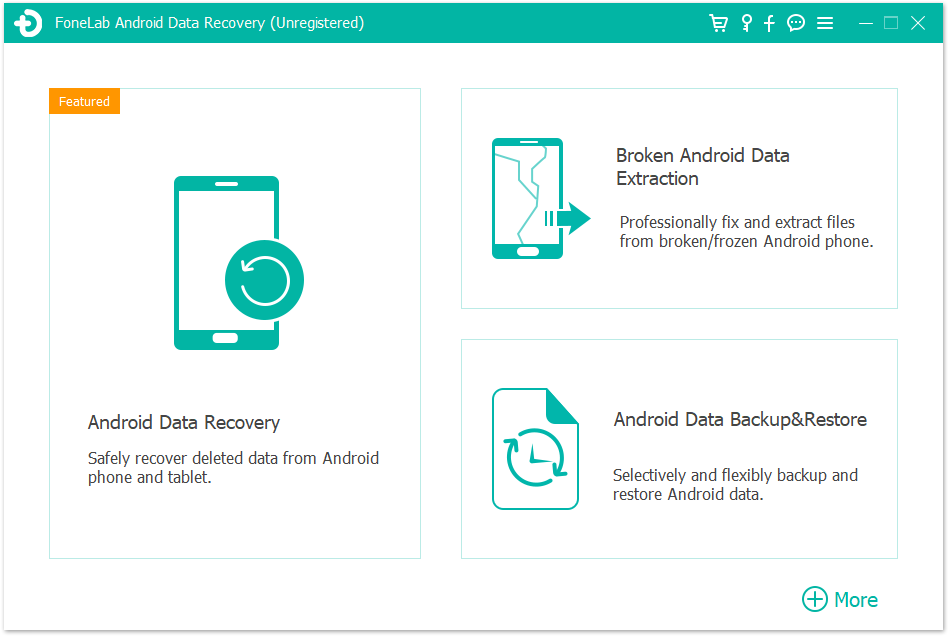
FoneLab Android Data Recovery scans your Samsung's storage for deleted files — downloads, photos, videos, documents — and lets you preview and recover them to your computer. Android file recovery follows the same logic I outlined for LG phones.
With FoneLab for Android, you will recover the lost/deleted iPhone data including photos, contacts, videos, files, call log and more data from your SD card or device.
- Recover photos, videos, contacts, WhatsApp, and more data with ease.
- Preview data before recovery.
- Android phone and SD card data are available.
The tool doesn't require rooting. It connects your phone to a Windows PC or Mac via USB and scans the storage directly, with previews so you can see what's recoverable before restoring.
Step 1Install and launch FoneLab Android Data Recovery, connect your Samsung via USB, and allow USB debugging when prompted.
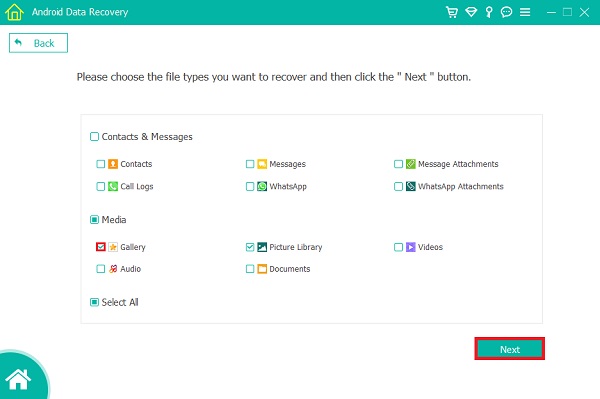
Step 2Select Documents (or All File Types) and click Next to start the scan.
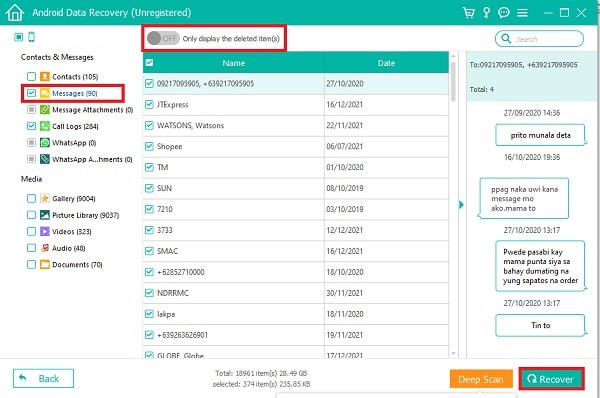
Step 3When the scan finishes, preview files in the right pane to confirm they're the ones you want.
Step 4Check the files you need and click Recover, saving to your computer first so you don't overwrite other deleted data.
Act fast: Android doesn't erase deleted files — it just marks the space available. New data can overwrite it, so stop using the phone as much as possible and run recovery right away.
Whether the file is recoverable mostly comes down to how long ago it was deleted and how much the phone has been used since. Photos and documents that vanished yesterday are usually easy; ones from months back are a gamble.
Part 6: Keeping Your Samsung Downloads Organized
Once you've found your downloads, a few habits will keep your Galaxy storage organized and easy to navigate:
- Create dedicated folders for important files. Instead of leaving everything in the generic Downloads folder, create folders like "Work Documents," "Receipts," "Travel," and "Photos to Print." Move files into these folders as you download them using the My Files app. This takes a few seconds per file but saves minutes of searching later.
- Change your browser's default download location if needed. Both Chrome and Samsung Internet let you choose where files are saved. In Chrome, go to Settings > Downloads and tap Download location. You can choose internal storage or an SD card folder. I keep mine set to the Downloads folder for consistency, but you might prefer a different location.
- Regularly clean out old downloads. The Downloads folder has a way of accumulating files you no longer need — old app APKs, duplicate PDFs, random images. Once a month, open My Files, go to Downloads, sort by date, and delete anything you don't need. This frees up storage and makes it easier to find the files you do need.
- Use the "Add to Favorites" feature in My Files. If you access certain folders frequently — like a work documents folder or a WhatsApp photos folder — long-press the folder in My Files and tap Add to Favorites. Favorite folders appear at the top of the My Files main screen for one-tap access.
- Back up important downloads to the cloud. For files you really can't afford to lose — tax documents, work contracts, family photos — upload a copy to Google Drive, Samsung Cloud, or OneDrive. This way, even if you delete the file from your phone and can't recover it, you'll have a backup in the cloud. I set Google Drive to automatically back up my Documents folder so I never have to think about it.
These habits take little time and save a lot of frustration — do a little regularly rather than letting downloads pile up.
Set a weekly five-minute tidy if downloads are a constant in your life. Wipe the clutter, rename the keepers, and move them somewhere findable. It sounds small, but it's the difference between knowing exactly where your files are and digging through a folder that's grown out of control.
Part 7: FAQs About Finding Downloads on Samsung
Why can't I find my downloaded files on my Samsung phone?
You're probably looking in the wrong folder. Browsers use a shared Downloads folder, while messaging apps like WhatsApp and Telegram use their own. Search with My Files or check the download history inside the app.
How do I find recently downloaded files on my Samsung?
Swipe down and tap the "Download complete" notification to open the file directly. Otherwise open My Files > Downloads and sort by newest.
Where do WhatsApp downloads go on a Samsung phone?
WhatsApp stores media in subfolders under WhatsApp/Media — Images, Video, Audio, and Documents. Open My Files > Internal storage and scroll to the WhatsApp folder.
Can I recover a deleted download on my Samsung without a computer?
Only if you have a cloud backup with the file still in its Trash or Recycle Bin. Otherwise you need a computer tool like FoneLab Android Data Recovery, because Android has no built-in recycle bin for file storage.
Conclusion
Finding downloads on a Samsung Galaxy doesn't have to be a mystery: the notification panel opens recent files in one swipe, My Files browses and searches everything, and apps like Chrome and WhatsApp keep their own histories. If you deleted something important, FoneLab Android Data Recovery can often get it back.
With FoneLab for Android, you will recover the lost/deleted iPhone data including photos, contacts, videos, files, call log and more data from your SD card or device.
- Recover photos, videos, contacts, WhatsApp, and more data with ease.
- Preview data before recovery.
- Android phone and SD card data are available.