
 iPhone Data Recovery
 iOS System Recovery
 iOS Data Backup & Restore
 iOS Unlocker
 iPhone Password Manager
 Location Changer
 Android Data Recovery
 Broken Android Data Extraction
 Android Data Backup & Restore
 Android Unlocker
 FoneTrans for iOS
 iPhone Data Eraser
 iPhone Cleaner
 HEIC Converter
 HyperTrans
 WhatsApp Transfer for iOS
 Mac Sweep
 Data Retriever
 Mac Data Retriever
 Video Converter Ultimate
 Screen Recorder
 Phone Mirror
 Transfer Phone Data Now
Transfer Data From iPhone, Android, iOS, Computer to Anywhere without Any Loss.
[3 Working Ways] How to Move Apps to SD Card on Samsung Galaxy
 Updated by Lisa Ou / October 10, 2026 09:00
Samsung phones have a micro SD slot, and everyone wants to shove every app onto it to free internal storage. The honest answer: it works for some apps, and for the rest you have to clear space another way. This guide walks through which apps actually move, the official Settings route, and how to free up real space by offloading photos and videos.

Guide List
Part 1. Move Apps to SD Card via Settings
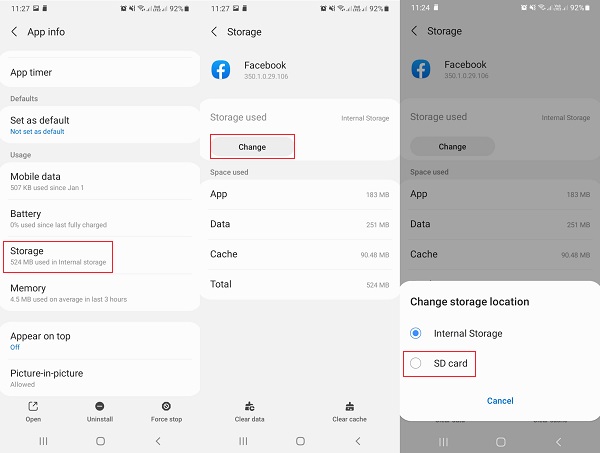
Samsung lets you move some apps to the SD card natively. The option only appears if the developer allowed it; many banking and widget apps have to stay on internal storage.
Step-by-step
Step 1Open Settings, tap Apps, and choose the app you want to move.
Step 2Tap Storage, then Change under "Storage used."
Step 3Pick SD card and wait for the move to finish. Do not use the phone during the copy.
What to watch out for
When you remove the SD card, apps on it stop working until the card is back. Banking apps, widgets, and anything on the home screen almost always have the Change button greyed out. This is normal Android behavior, not a bug.
Transfer Data From iPhone, Android, iOS, Computer to Anywhere without Any Loss.
- Move Files between iPhone, iPad, iPod touch and Android.
- Import Files from iOS to iOS or from Android to Android.
- Move Files from iPhone/iPad/iPod/Android to Computer.
- Save Files from Computer to iPhone/iPad/iPod/Android.
Troubleshooting the Settings move
- If the move fails halfway, the app usually stays on internal storage and nothing is lost. Retry once.
- If it fails again, the card may be too slow. Move the app back to internal storage and use a UHS-I card.
- Clear the app cache first: Settings > Apps > pick the app > Storage > Clear cache. This frees a few hundred MB instantly without deleting logins.
Part 2. Free Up Space with FoneLab HyperTrans
Let me be direct: FoneLab HyperTrans does not move or migrate apps to the SD card. It is a file-transfer tool, not an app mover. What it does is move photos, videos, music, and contacts between the Samsung phone and a Windows computer, or between Android devices.
Transfer Data From iPhone, Android, iOS, Computer to Anywhere without Any Loss.
- Move Files between iPhone, iPad, iPod touch and Android.
- Import Files from iOS to iOS or from Android to Android.
- Move Files from iPhone/iPad/iPod/Android to Computer.
- Save Files from Computer to iPhone/iPad/iPod/Android.
Why offloading photos matters more than moving apps
The biggest storage hogs on a Samsung are not apps, they are photos and videos. A year of camera footage can take 30 GB; moving ten apps frees 1 GB at best. Offload the media to a Windows PC and you free real space without fighting the greyed-out Change button.
Step-by-step
Step 1Install HyperTrans on a Windows PC, connect the Samsung over USB, and switch the USB mode to File transfer / MTP.
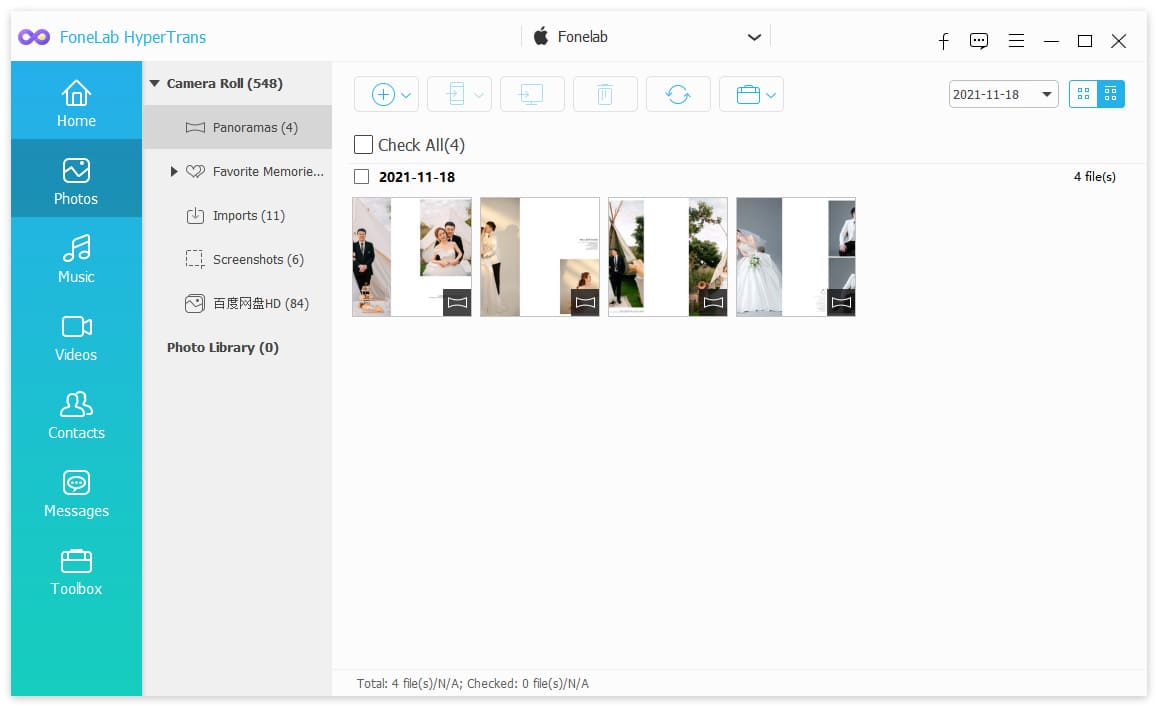
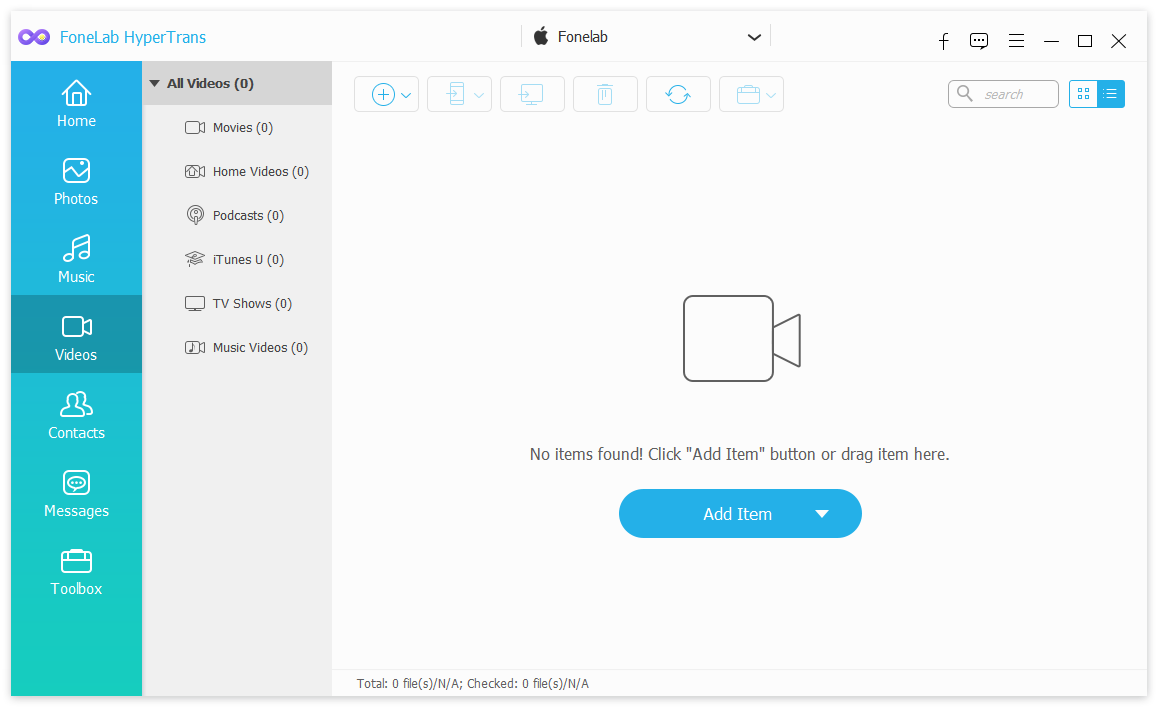
Step 2Click the Photos or Videos tab in HyperTrans to see everything on the phone.
Step 3Select the items to offload, click Export to PC, and choose a folder.
Step 4Once the PC copy is verified, delete the originals from the phone.
What to watch out for
HyperTrans is Windows-only. It exports messages as CSV, HTML, or TXT to the computer rather than syncing them back. For photos, videos, music, and contacts it works exactly as expected.
Transfer Data From iPhone, Android, iOS, Computer to Anywhere without Any Loss.
- Move Files between iPhone, iPad, iPod touch and Android.
- Import Files from iOS to iOS or from Android to Android.
- Move Files from iPhone/iPad/iPod/Android to Computer.
- Save Files from Computer to iPhone/iPad/iPod/Android.
Troubleshooting the USB connection
- Swipe down the notification shade after plugging in USB and switch the USB mode from Charging to File transfer / MTP. This is the single most common reason the phone is invisible to HyperTrans.
- On Samsung, tap Allow on the phone screen to grant access when prompted.
- If HyperTrans still does not see the phone, try a different USB port, restart the phone, and re-plug. Do not use a charge-only cable.
When the export finishes, open the destination folder on the PC to confirm the files are there. Then go back to the phone and delete the originals. I always wait until the PC copy is verified before deleting; it avoids the "I thought it backed up" panic.
Part 3. Set the Camera to Save to SD Card
Instead of moving existing apps, the more reliable long-term fix is to treat the SD card as a photo dump. New media goes straight to the card, and internal storage stays free for apps that cannot move.
Step-by-step
Step 1Open the Camera app, tap the gear icon to open Settings.
Step 2Find Storage location and set it to SD card.
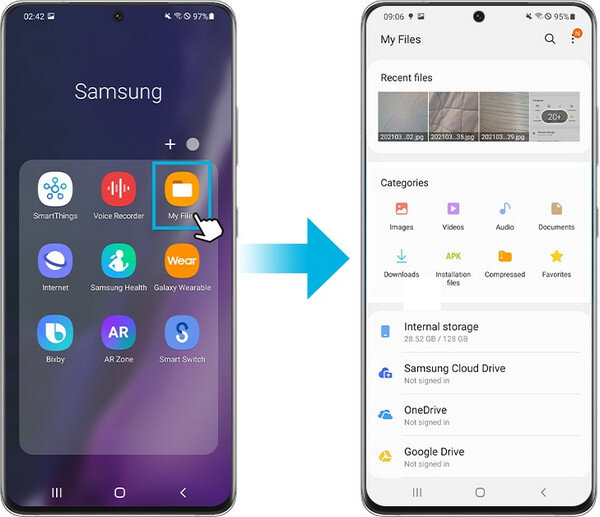
Step 3For existing photos, open My Files, go to Internal storage > DCIM, long-press the Camera folder, choose Move, and pick the SD card.
What to watch out for
Use a Class 10 or UHS-I card at minimum. Slow cards cause the Camera to stutter and apps on the card to lag. A no-name card from a marketplace listing will cause more headaches than it saves.
Transfer Data From iPhone, Android, iOS, Computer to Anywhere without Any Loss.
- Move Files between iPhone, iPad, iPod touch and Android.
- Import Files from iOS to iOS or from Android to Android.
- Move Files from iPhone/iPad/iPod/Android to Computer.
- Save Files from Computer to iPhone/iPad/iPod/Android.
Format a new SD card
Step 1Insert the card into the phone, open Settings > Storage > SD card.
Step 2Tap Format and confirm. Always format inside the phone, not on a computer; the phone chooses the right file system.
Step 3Once formatted, set the Camera storage location to the card.
A 128 GB UHS-I card is under twenty dollars. That is cheaper than deleting photos you want to keep. Buy the card, format it in the phone, set the camera to save to it, and stop fighting the app-move button.
Part 4. Compare the Three Approaches
| Settings app-move | HyperTrans offload | Camera to SD | |
|---|---|---|---|
| Frees internal space | 50-200 MB per app | GBs of photos/videos | Stops future fills |
| App compatibility | Only developer-allowed apps | N/A (media only) | N/A |
| Risk | Low | None after backup verified | Low |
| Platform | On phone | Windows PC | On phone |
Use all three together: move the few apps that allow it, offload old media to a Windows PC with HyperTrans, and set the camera to save to the card going forward.
Do not root or install sketchy "move app" tools
- Third-party "move app to SD" apps on the Play Store either do nothing, or require root.
- Rooting trips Samsung Knox and voids warranty on banking apps. Not worth it to move one extra app.
- The Settings route and the HyperTrans media-offload route are the only safe paths.
If an app still misbehaves after moving to the card, move it back to internal storage and restart the phone. Some games with high-resolution assets run noticeably slower from a slow card. App stability matters more than squeezing the last gigabyte out of internal space.
Apps on the SD card are tied to that specific card. If the card dies, the app data on it dies with it. Keep a backup of internal data on a Windows PC every few months, just in case. HyperTrans is a good tool for that backup.
My own routine
- Once a quarter, plug the Samsung into the Windows PC, open HyperTrans, and export the last three months of photos and videos to a folder named by year.
- Delete the originals from the phone after verifying the PC copy.
- Internal storage stays under 20 GB used, and I never see the "Storage almost full" warning.
I do not bother trying to move apps any more. The handful that move are not worth the effort. Combined with Google Photos backup over Wi-Fi, you have two independent backups and no storage panic.
One more thing: if you ever swap the SD card between phones, move any apps on the card back to internal storage first. Otherwise they show up as broken icons on the new phone. This is the step people forget, and it leads to a frantic re-download.
That is the whole playbook. Use Settings for the few apps that allow it, clear caches on the heavy ones, set the camera to save to the SD card, and offload old media to a Windows PC with HyperTrans. You get your gigabytes back without rooting, custom ROMs, or sketchy Play Store tools.
Good luck freeing up space on your Samsung, and enjoy your new headroom. Drop a comment if a specific app will not move and I will help you figure out why.
Prevent future storage panic
- Buy a 128 GB UHS-I card now, even if you do not need it today. Prices are low, and you will fill the phone eventually.
- Set Google Photos to back up over Wi-Fi only, so you do not burn mobile data.
- Offload media to the PC every quarter rather than waiting for the "storage almost full" warning.
If you have a specific app that will not move, check the developer's support page. Some apps explicitly block SD card placement because they rely on widgets or background services that need fast internal storage. There is no workaround that does not involve rooting, and rooting is not worth it for a single app.
That is everything. Pick the approach that fits your situation, and remember: freeing media matters more than moving the last stubborn app.
If you found this guide useful, bookmark it for the next time the storage warning pops up. It will save you an afternoon of trial and error on your Samsung Galaxy phone.
Now go free up that space on your Samsung and enjoy a smoother, faster, happier phone experience every day.
Cheers.
Part 5. Frequently Asked Questions
Why is the Change button greyed out?
The developer flagged the app as not movable. Banking, widget, and watch-face apps almost always stay on internal storage. There is no official workaround.
Does HyperTrans move apps to the SD card?
No. HyperTrans transfers photos, videos, music, and contacts. It is not an app mover. Use the Settings method for the few apps that allow it.
Can I move apps back from SD to internal storage?
Yes. The same Settings > Apps > Storage > Change path lets you move them back. Do this before removing the SD card.
Is HyperTrans available on Mac?
HyperTrans is a Windows program. On a Mac, use the Android File Transfer tool or USB cable drag-and-drop.