Register
1Click the Key icon on the top-right corner.
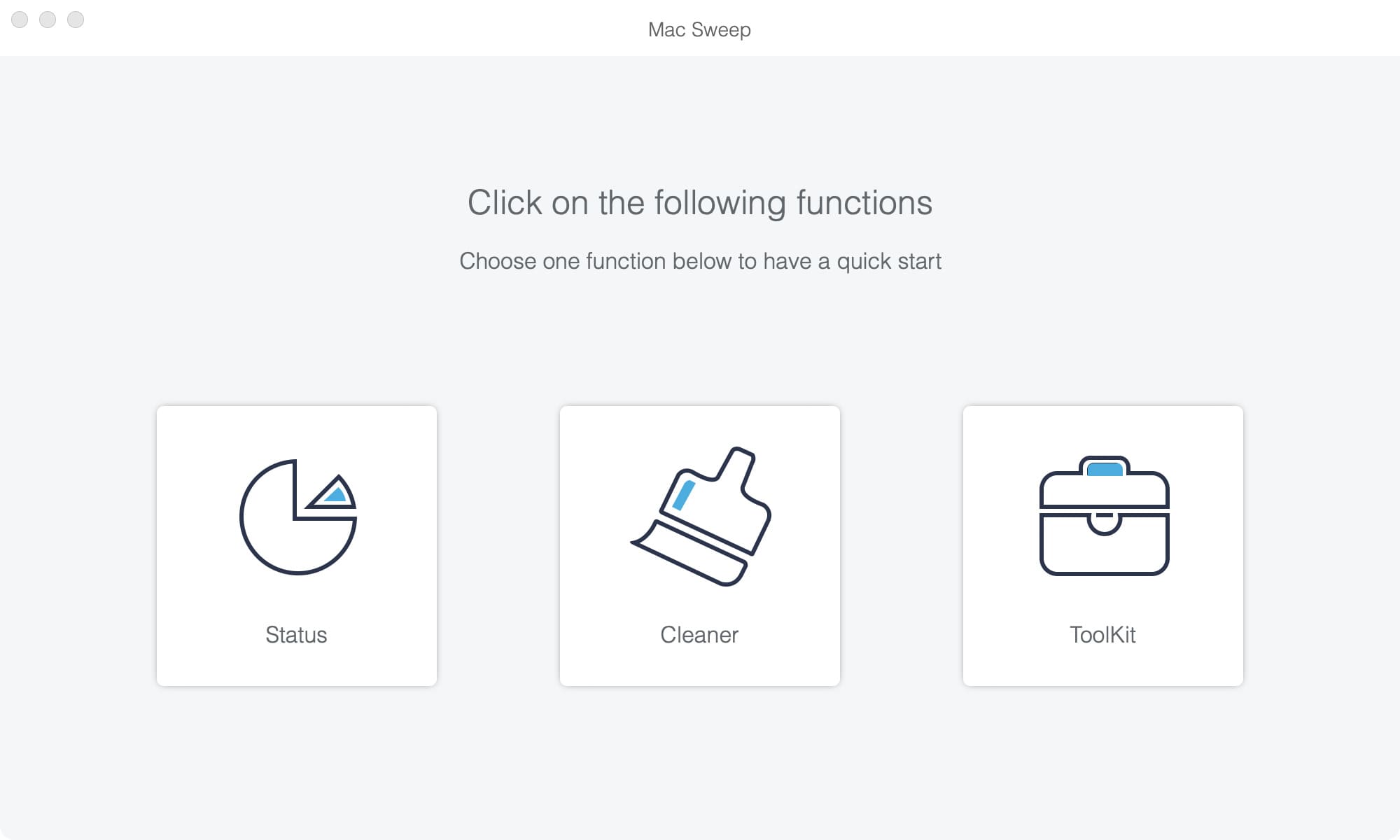
2Enter the email and register code in the box.
1. Status
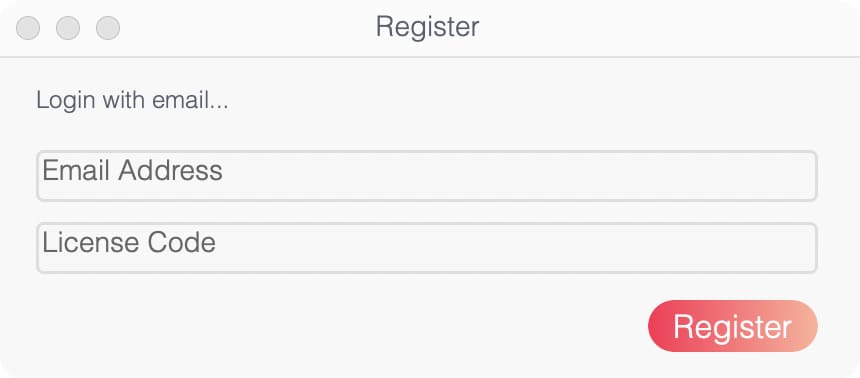
1Download, install and launch FoneLab Mac Sweep. The home screen offers three functions: Status, Cleaner and ToolKit.
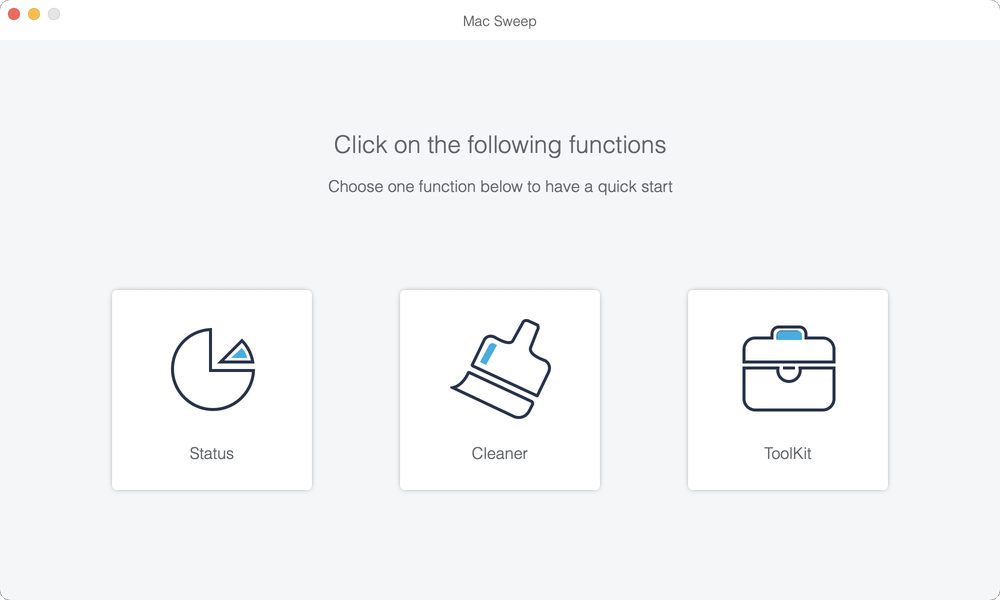
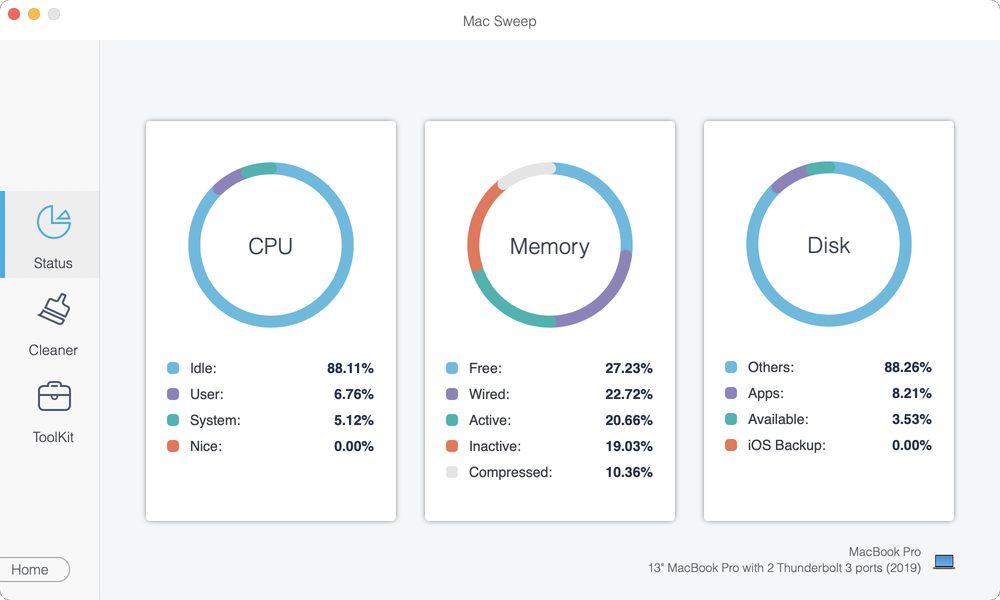
2Click Status in the left sidebar to check the real-time usage of your Mac's CPU, memory and disk.
2. Cleaner
1Click Cleaner in the left sidebar. It offers 8 modules to clean different kinds of junk on your Mac. Choose the module you need and start a scan. The steps below walk you through all 8 modules one by one.
2.1 System Junk
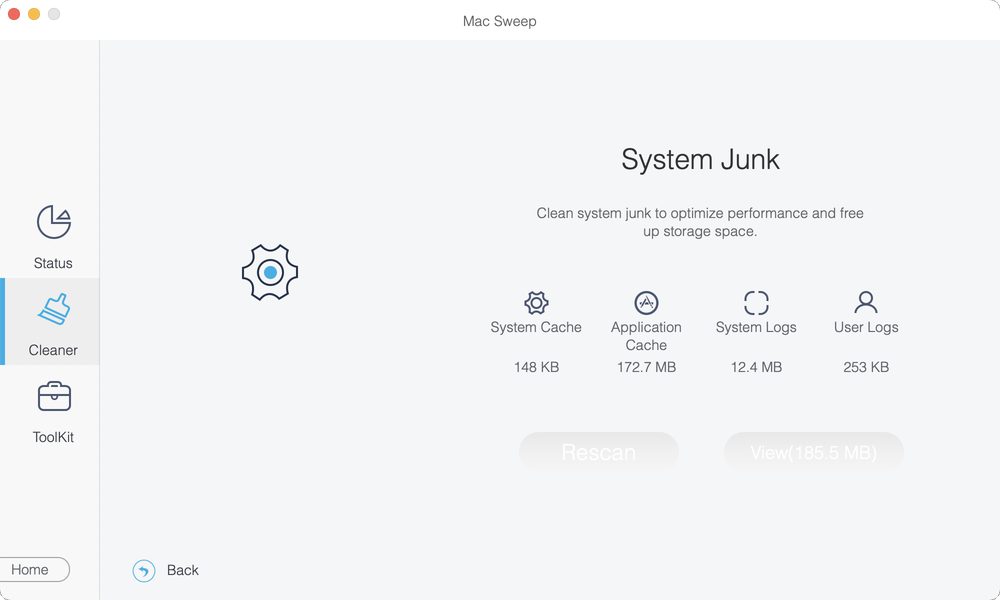
Clean system junk to optimize performance and free up storage space. It checks 4 items: System Cache, Application Cache, System Logs and User Logs.
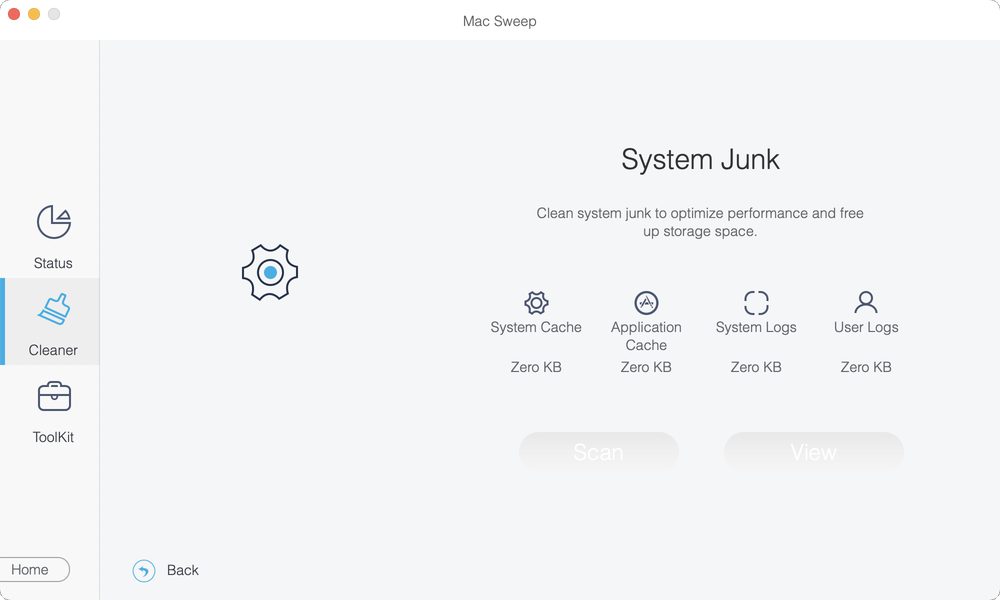
Click Scan. When the scan finishes, all detected junk files are listed with their sizes.
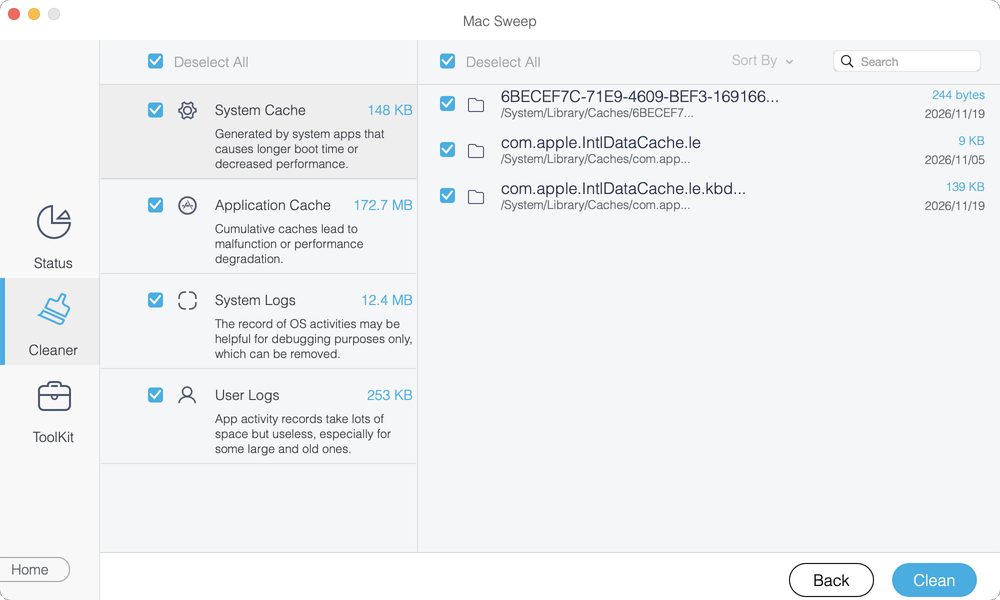
Tick the items you want to remove and click Clean to delete them.
2.2 iPhoto Junk
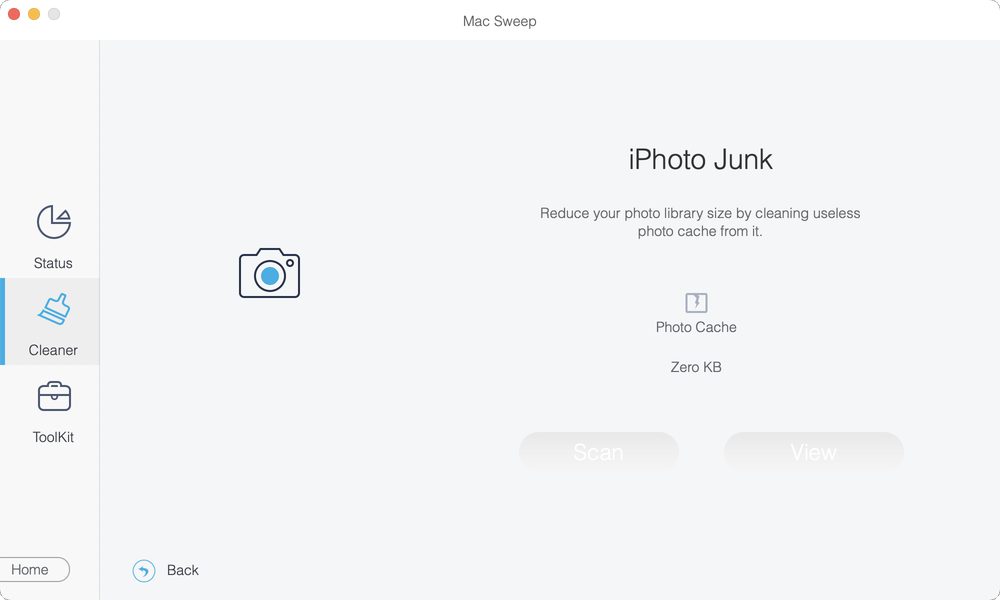
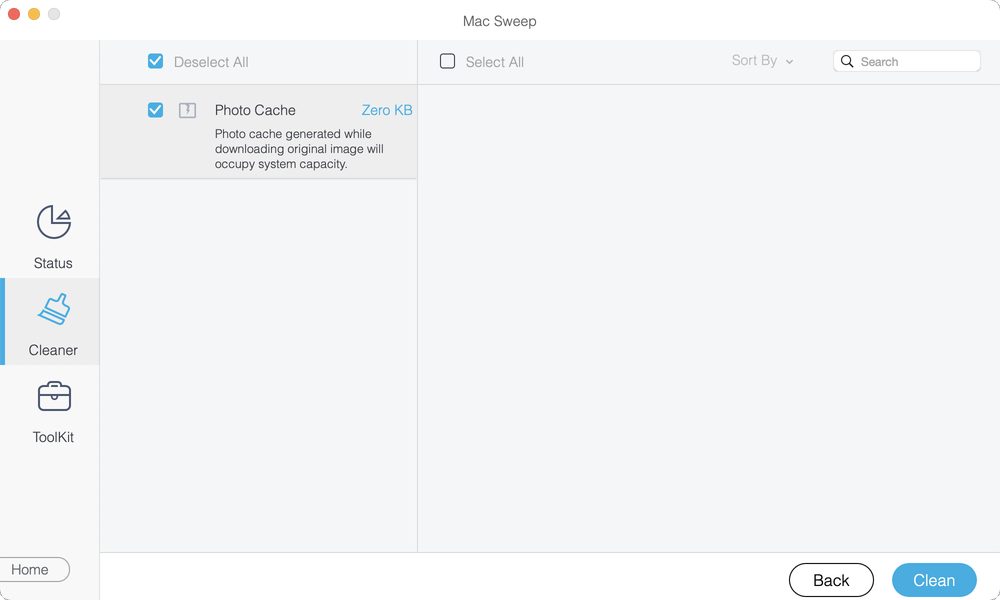
Reduce your photo library size by clearing useless photo cache files from iPhoto.
Click Scan to find the photo cache, then select Photo Cache in the result and click Clean.
2.3 Email Junk
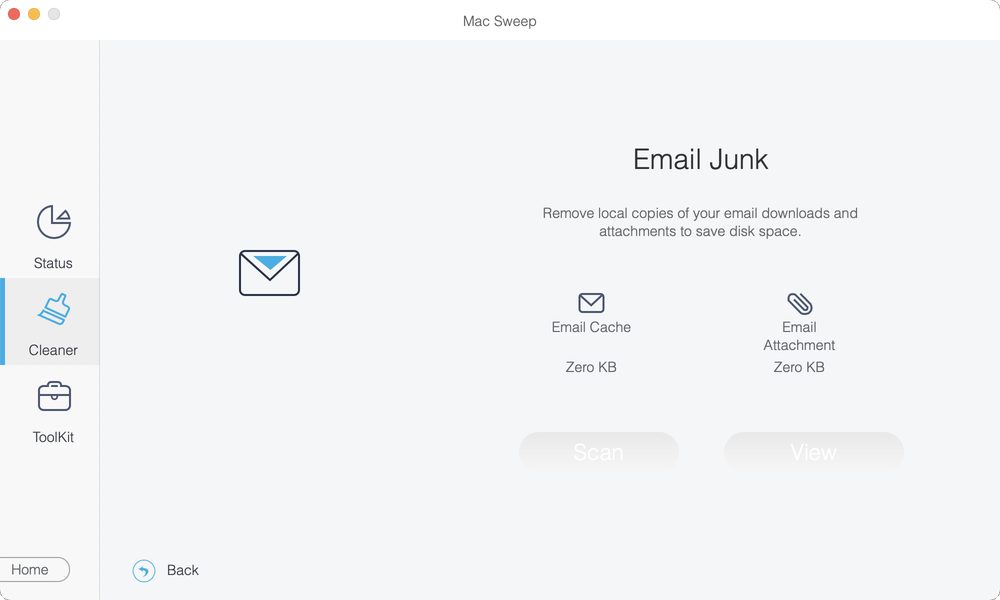
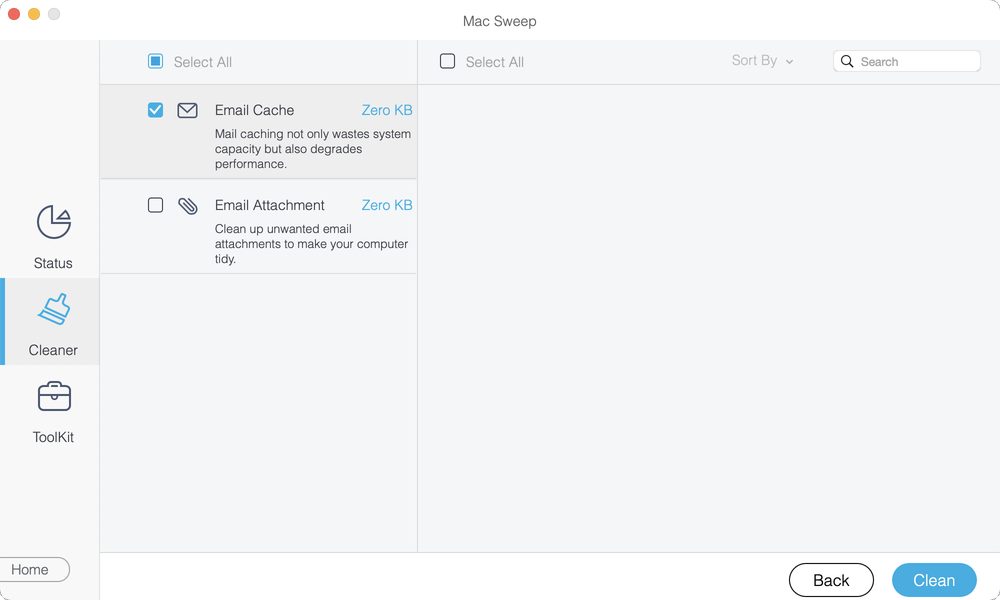
Remove local copies of your email downloads and attachments to save disk space. It scans Email Cache and Email Attachment.
Click Scan, choose the email junk you want to remove and click Clean.
2.4 Similar Photo
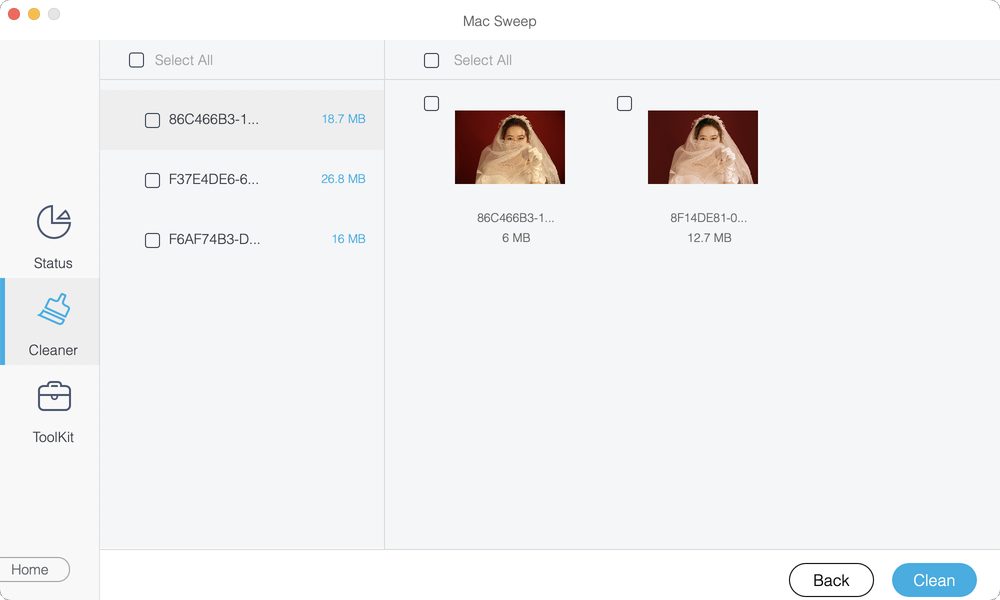
Find similar photos to clean unneeded pics with ease. Ensure you keep just the good ones.
Click Scan and wait while Mac Sweep looks through your photo library.
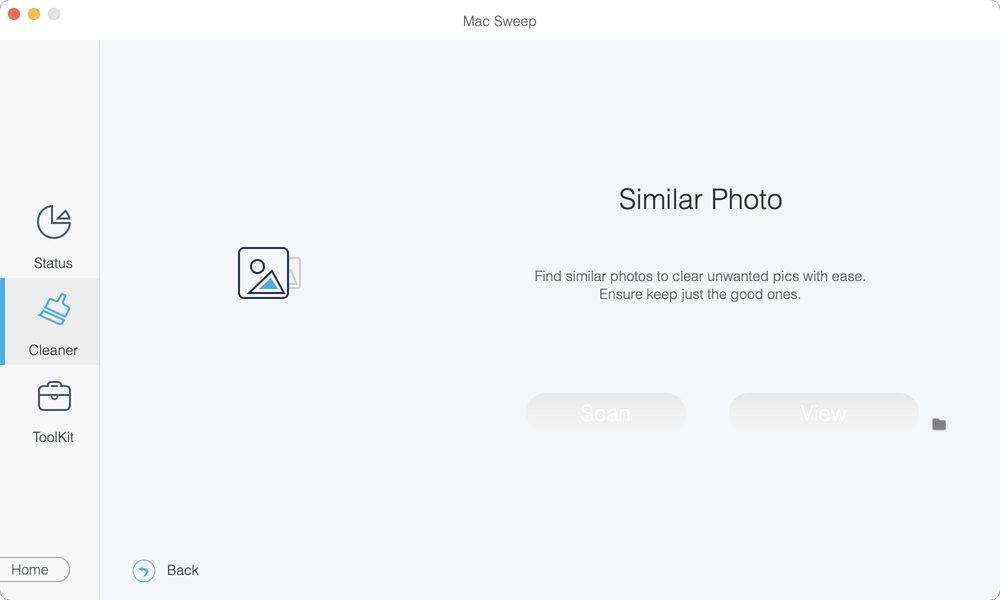
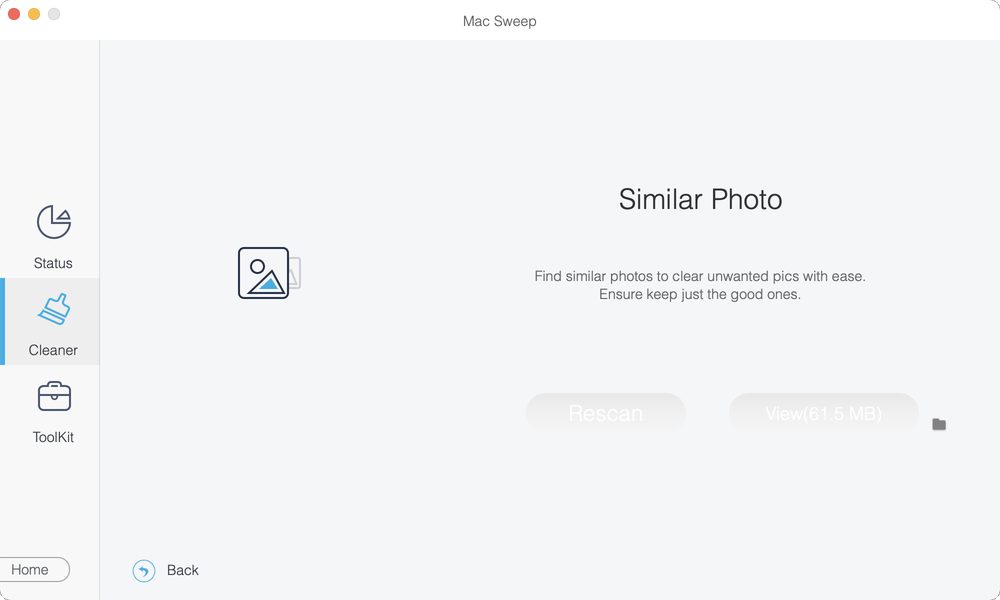
In the result, tick the duplicate pictures you want to delete and click Clean.
2.5 iTunes Junk
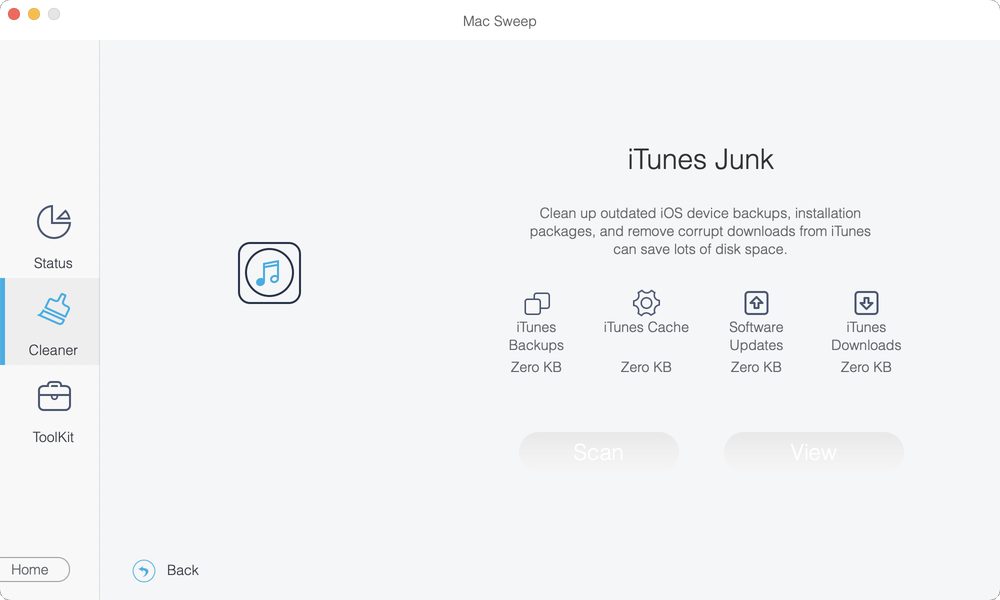
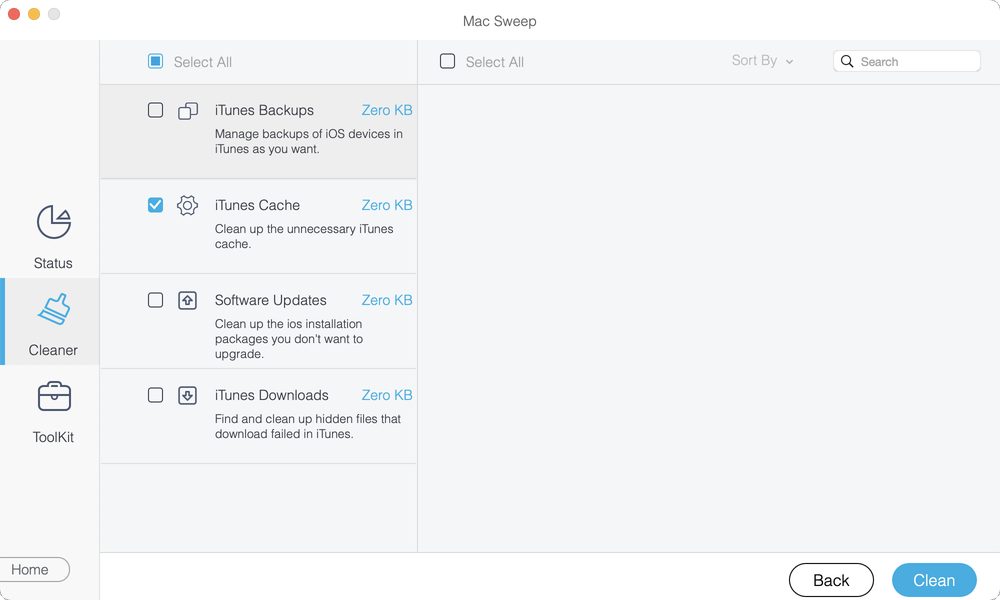
Clean out outdated iOS device backups, installation packages, and remove old downloads from iTunes to free up more storage space. It checks Device Backups, iTunes Cache, Software Update and Downloads.
Click Scan, then select the iTunes junk to remove and click Clean.
2.6 Trash bin
Empty Trash on Mac and free up your disk space.
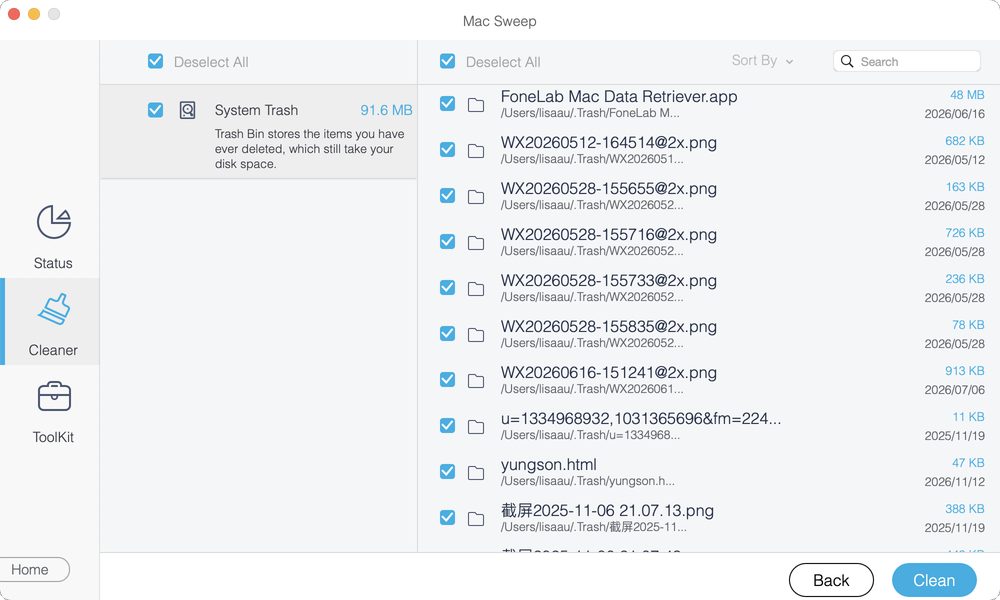
Click Scan to list the files still sitting in the Trash bin.
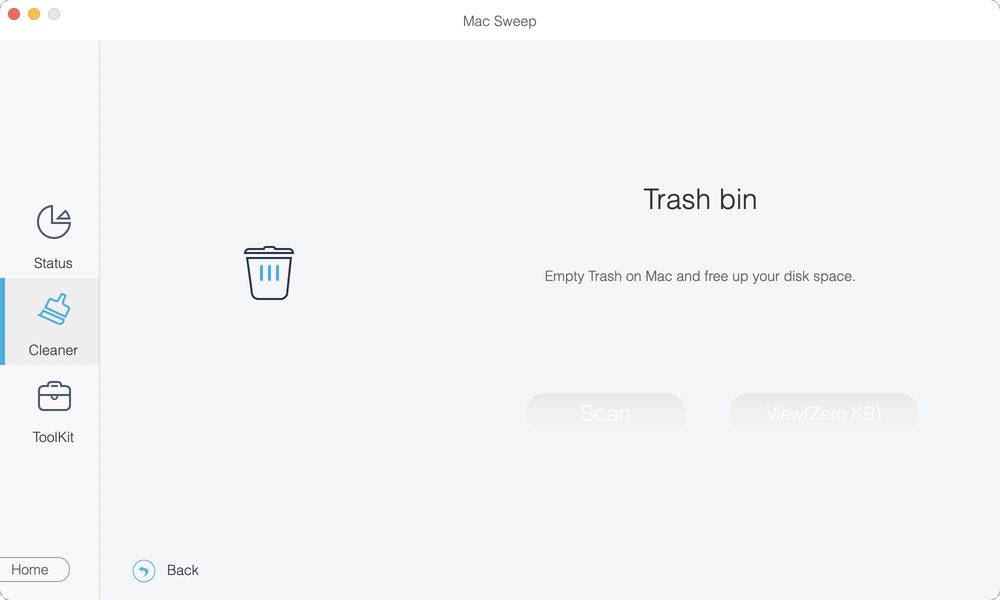
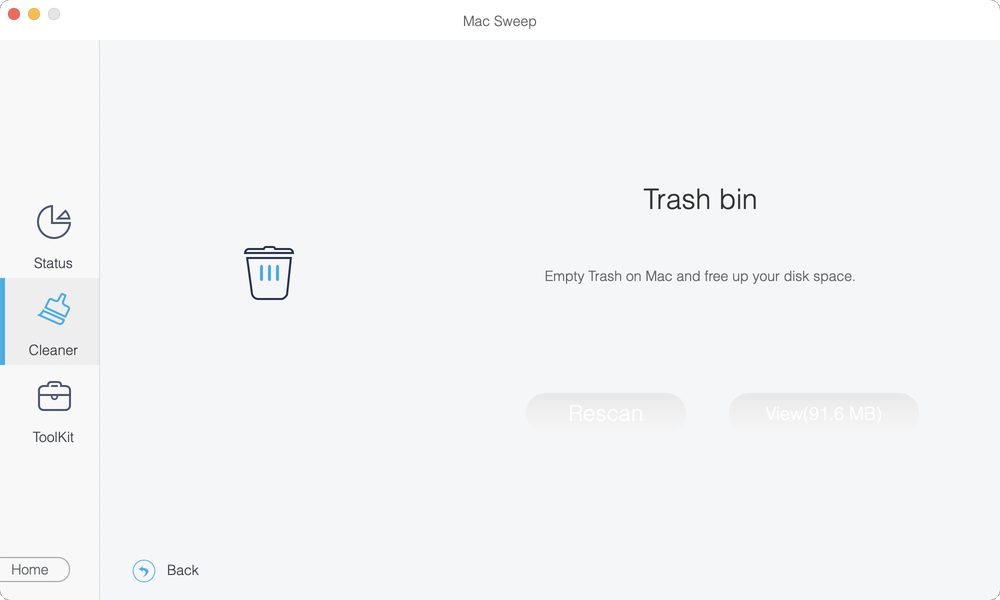
Select the files you want to get rid of and click Clean to empty them.
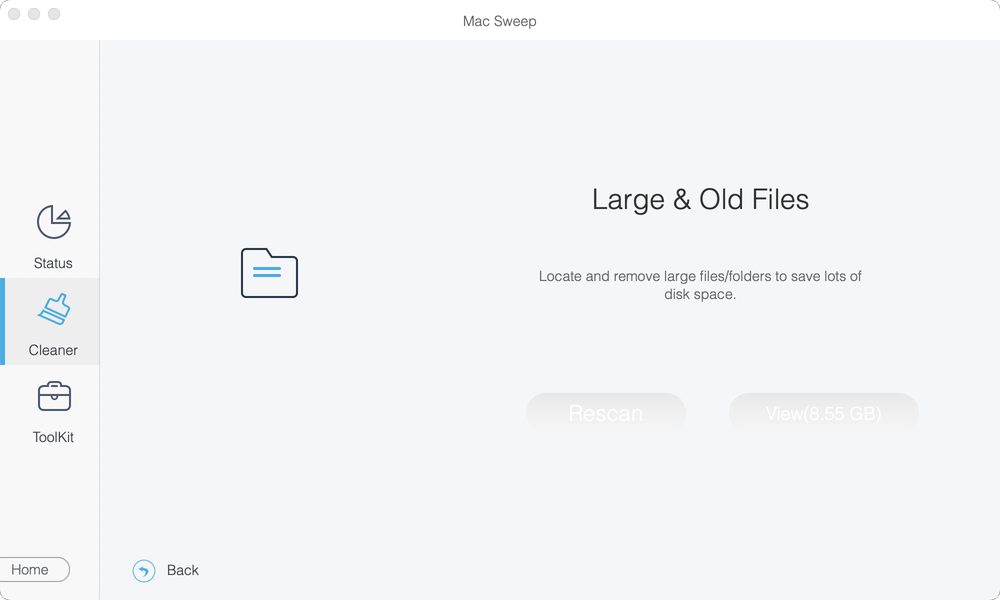
2.7 Large & Old Files
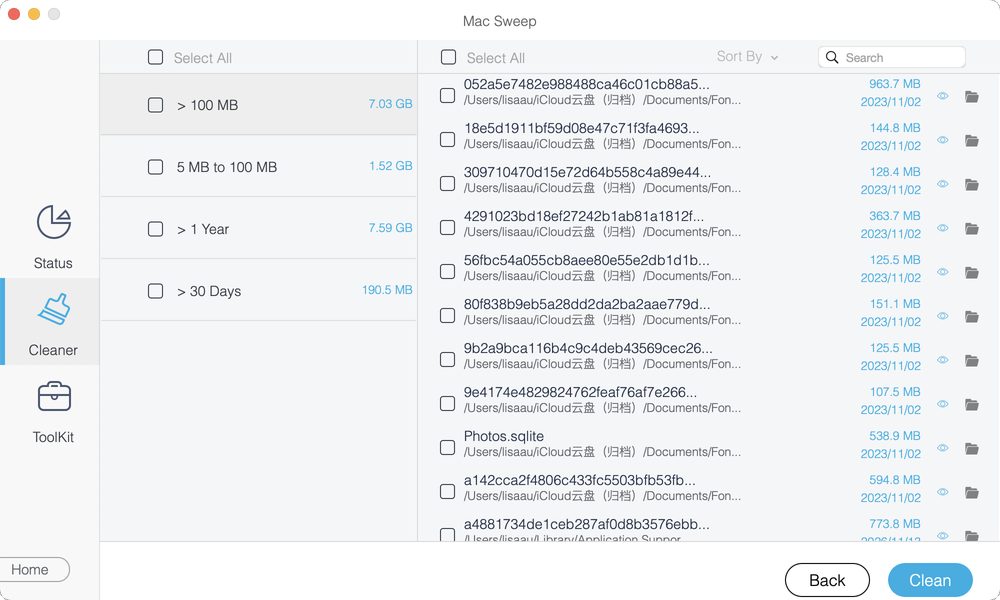
Locate and remove large file/folders to save lots of disk space. Files are sorted by size (over 100 MB, over 1 GB) and age (over 1 year, over 30 days).
Click Scan to search your Mac for large and outdated files.
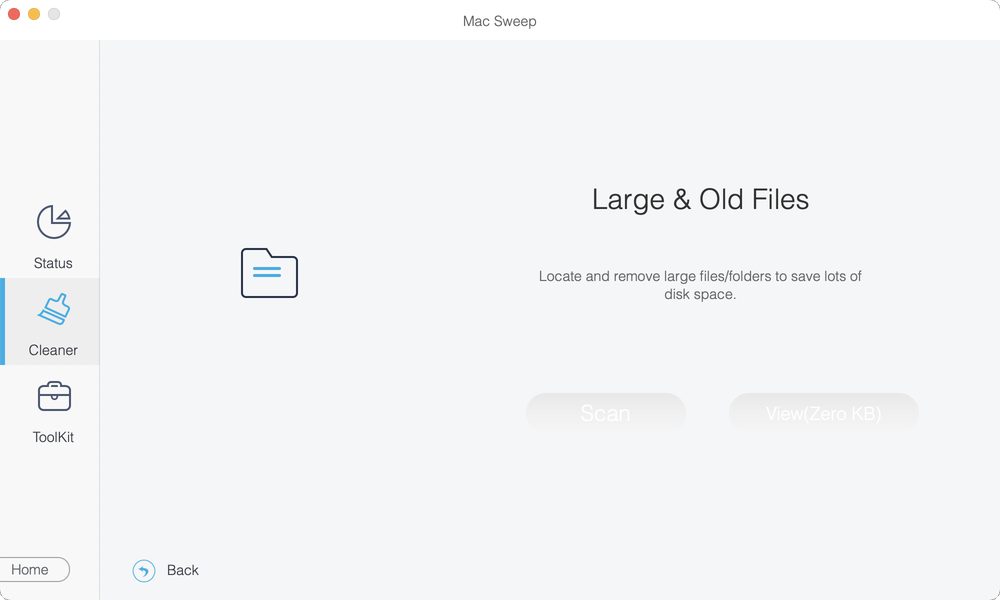
Select the files you no longer need and click Clean.
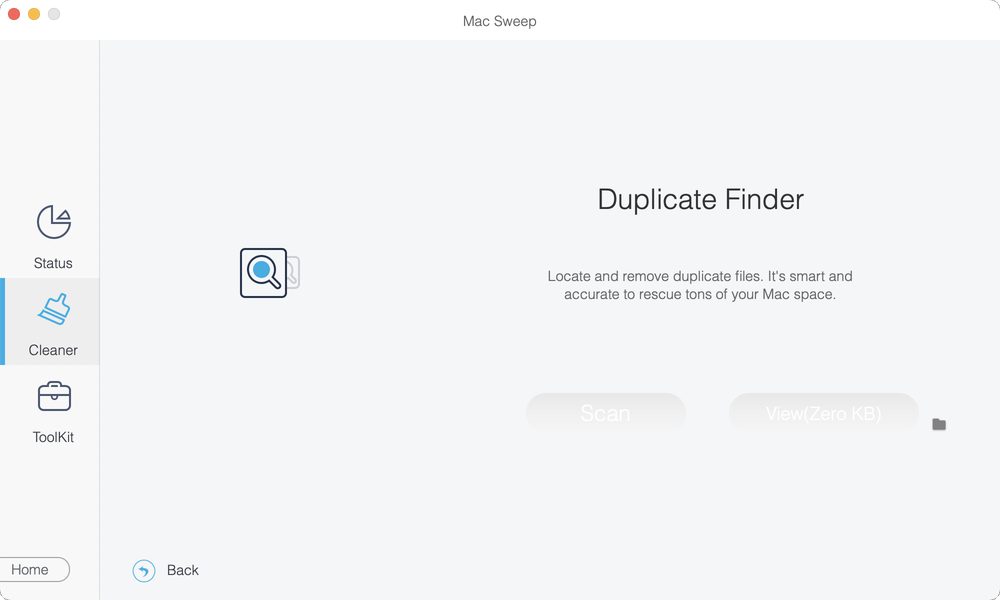
2.8 Duplicate Finder
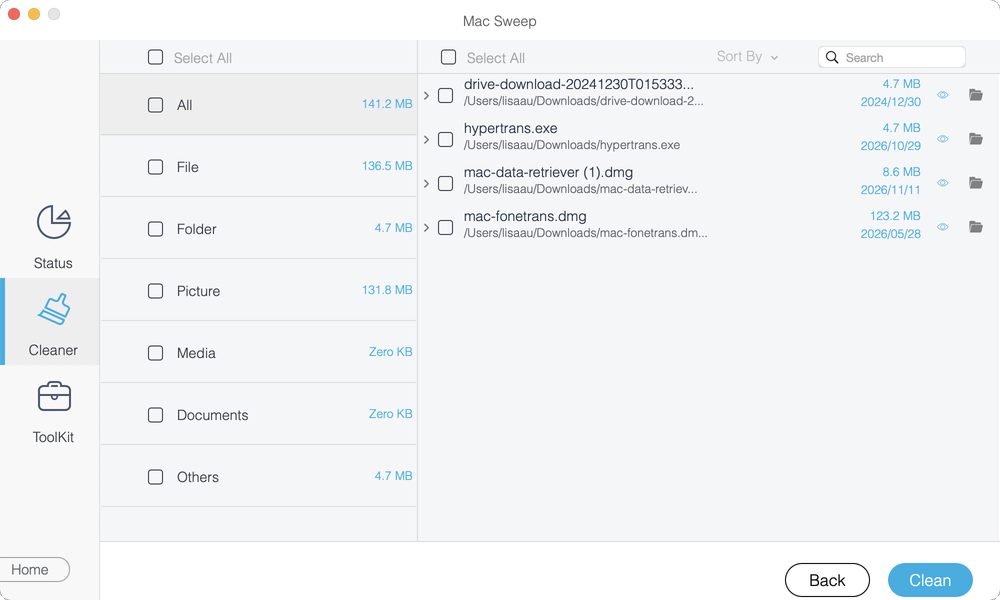
Locate and remove duplicate files. It's smart and accurate to retrieve tons of your Mac space. Results are grouped into All, File, Folder, Picture, Media, Documents and Others.
Click Scan, then pick the copies you want to delete and click Clean.
3. ToolKit
1Click ToolKit in the left sidebar. It includes 6 tools: Uninstall, Optimize, Privacy, File Manager, Hide and Unarchiver. The following steps explain each tool in detail.
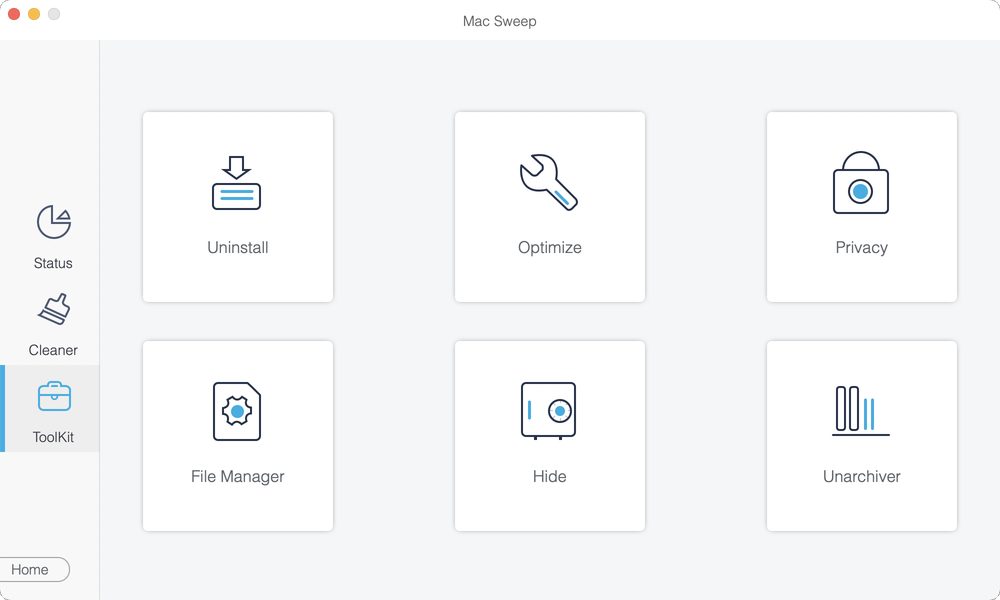
3.1 Uninstall
Easily remove entire applications, along with all associated files.
Click Uninstall to scan the apps installed on your Mac.
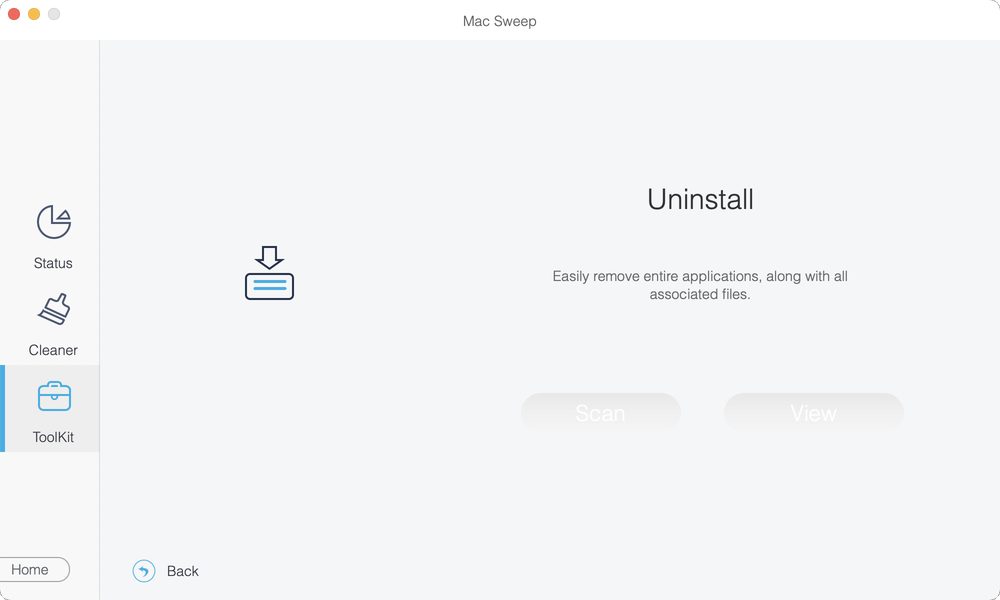
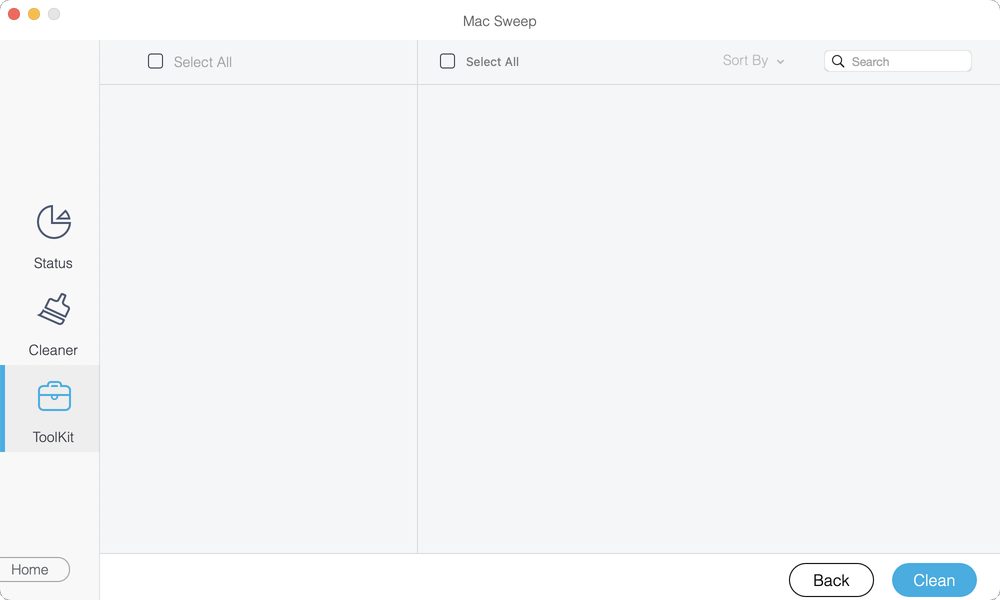
Select the app you want to remove and click Clean to uninstall it together with its leftover files.
3.2 Optimize
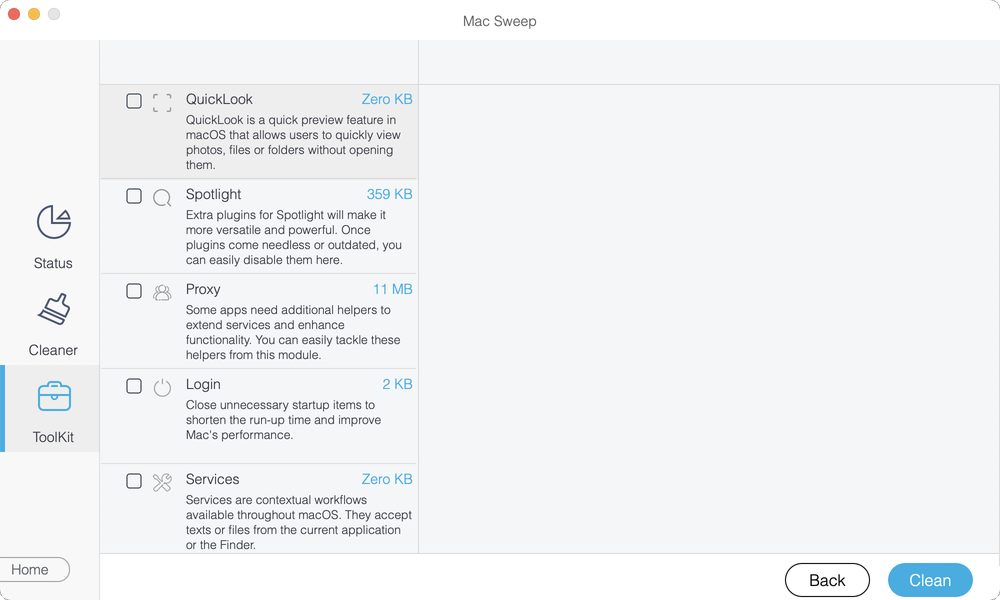
Speed up your Mac and improve its performance with Mac Sweep maintenance function. Lots of tools to let you totally control your Mac, including QuickLook, Spotlight, Privacy, Fonts, Language and Services.
Click Optimize to scan the maintenance items that can be cleaned.
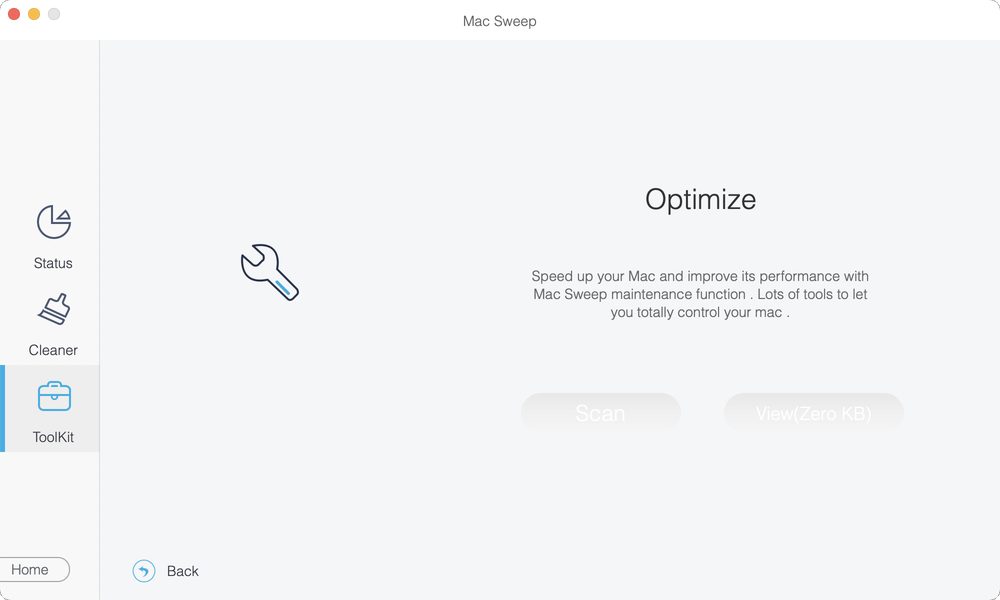
In the result, tick the items you want to clean and click Clean.
3.3 Privacy
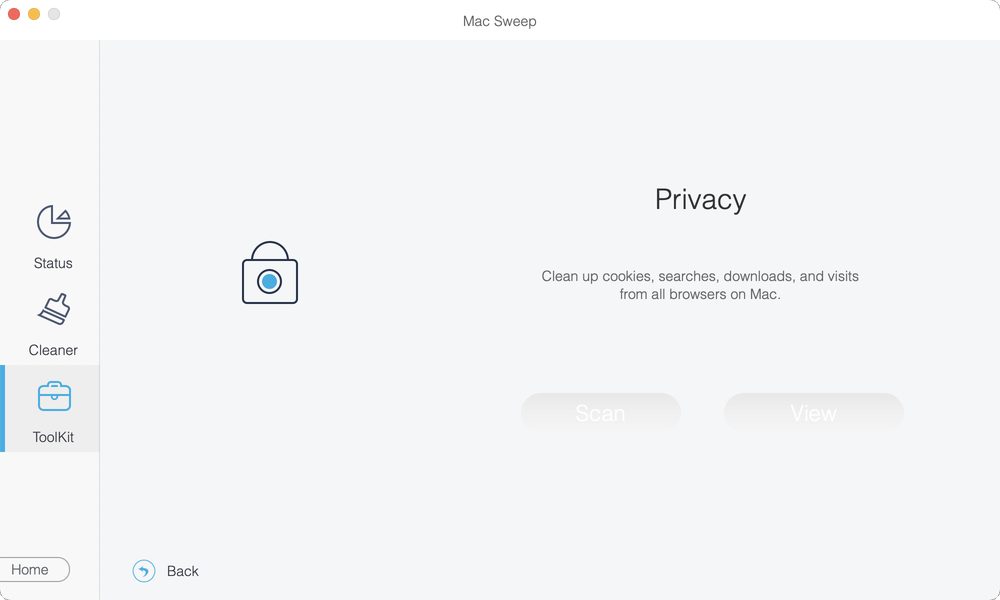
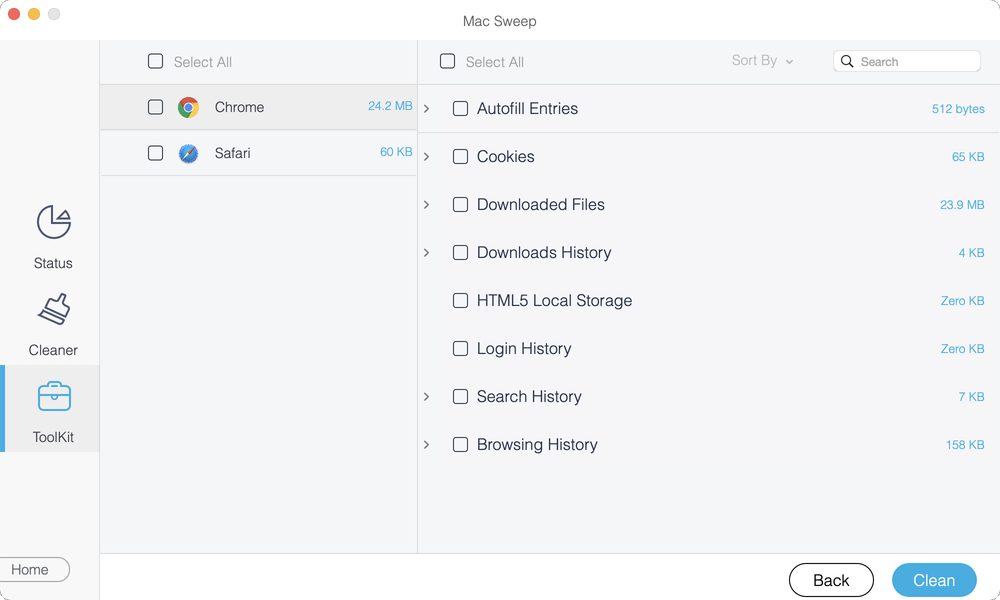
Clean up cookies, searches, downloads and visits from all browsers on Mac. It supports Chrome and Safari, and cleans Autofill Entries, Cookies, Downloaded Files, Downloads History, HTML5 Local Storage, Login History, Search History and Browsing History.
Click Privacy to scan the browsing data stored by your browsers.
Select the browser data you want to erase and click Clean.
3.4 File Manager
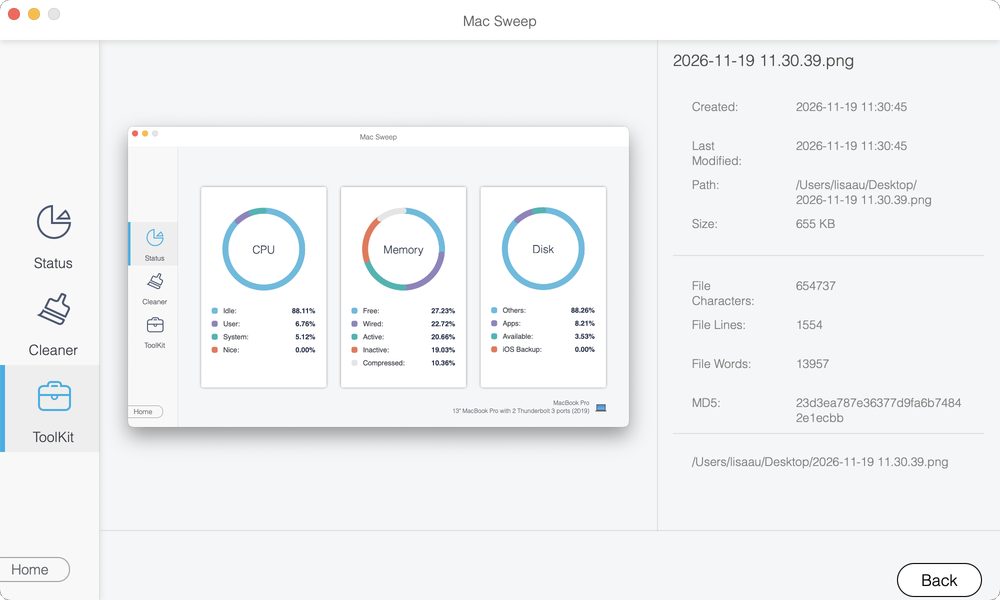
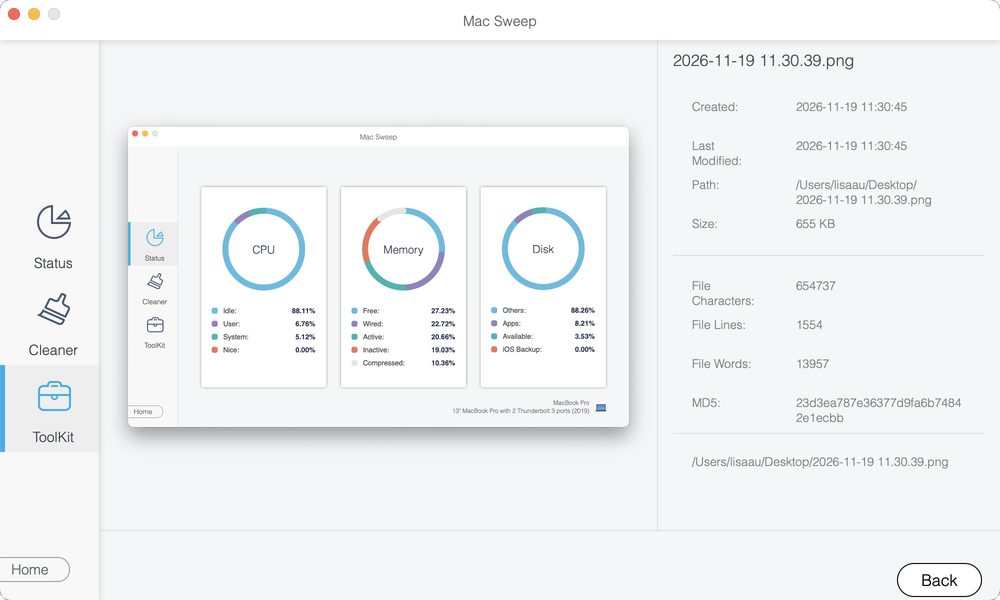
You can view the file information, count words in the file, and safely shred unwanted files. It provides two buttons: View Files and Shred Files.
Click File Manager, then drag a file into the window (or add it to the list) to load it.
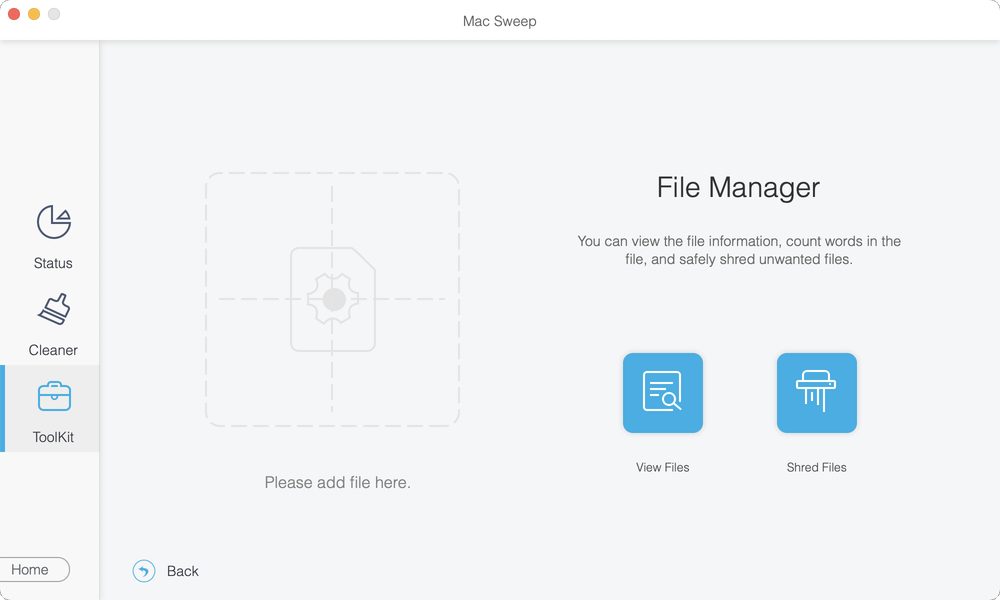
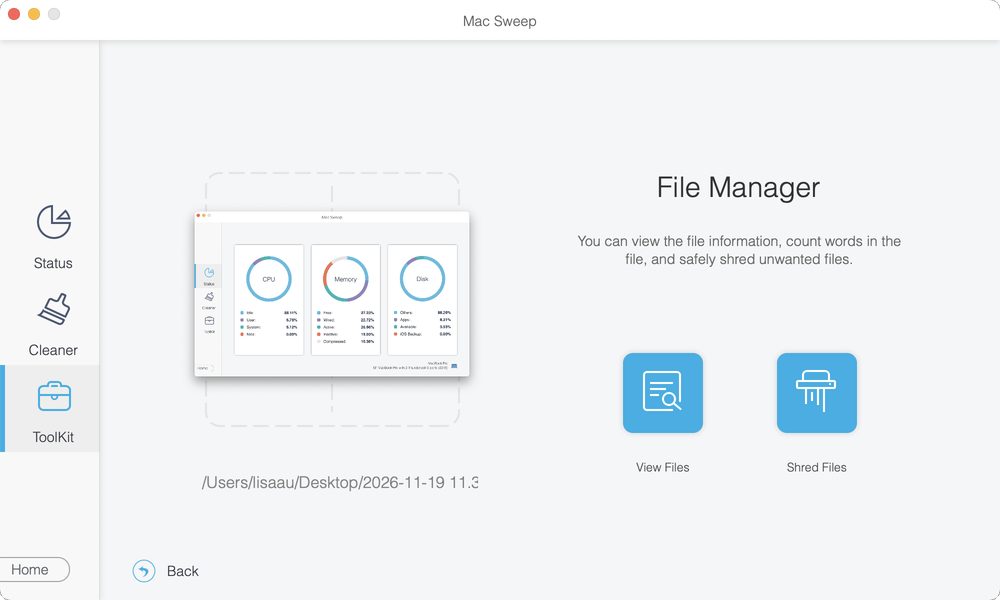
Click View Files to open the file and check its information, or use Shred Files to securely delete it.
3.5 Hide
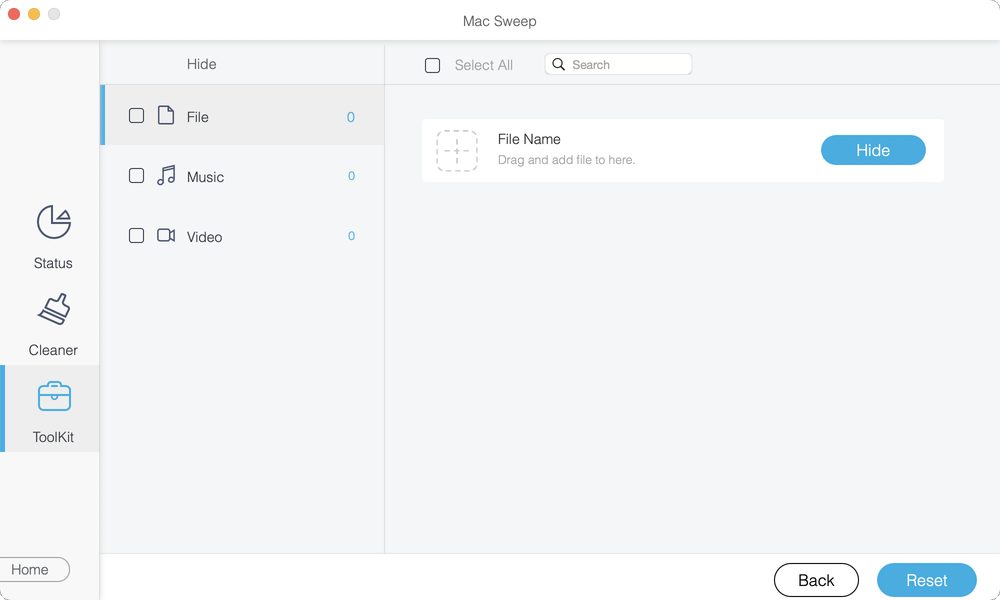
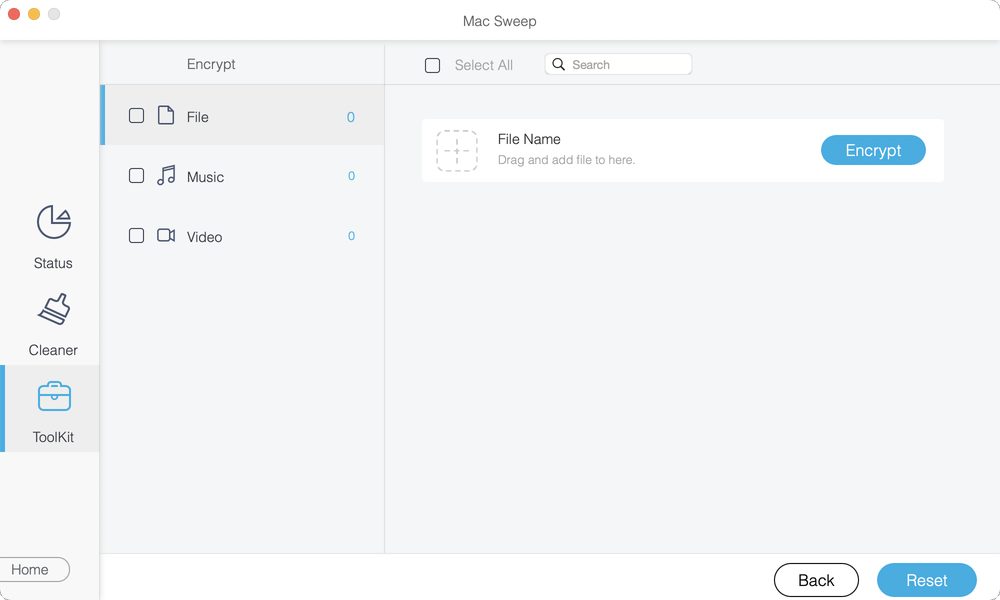
By hiding or encrypting files, you can get your own private space. Files can be organized under File, Music and Video.
Click Hide, then set a password to protect your privacy when prompted.
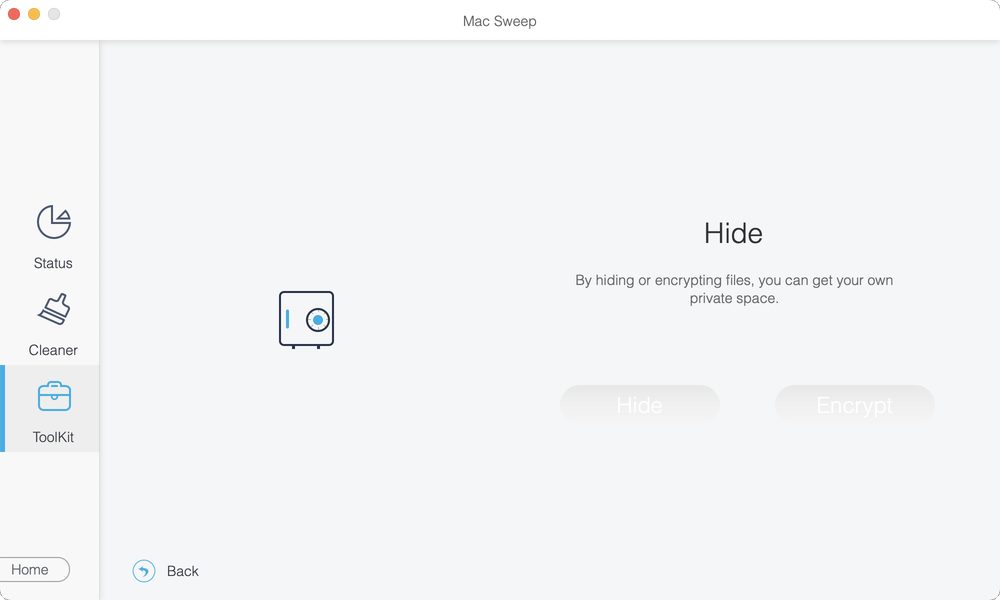
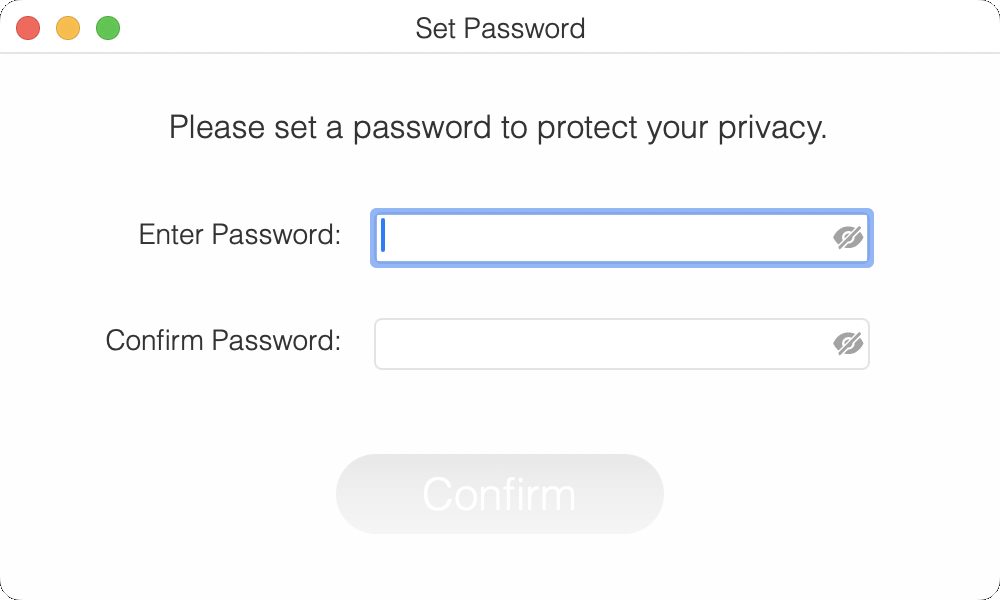
Drag files into the list, then click Hide to conceal them or Encrypt to lock them away.
3.6 Unarchiver
A free RAR opener for Mac. With this unarchiver you can compress files or extract files from RAR.
Click Unarchiver, set a Decompression Path, add the archive file and click Decompress.
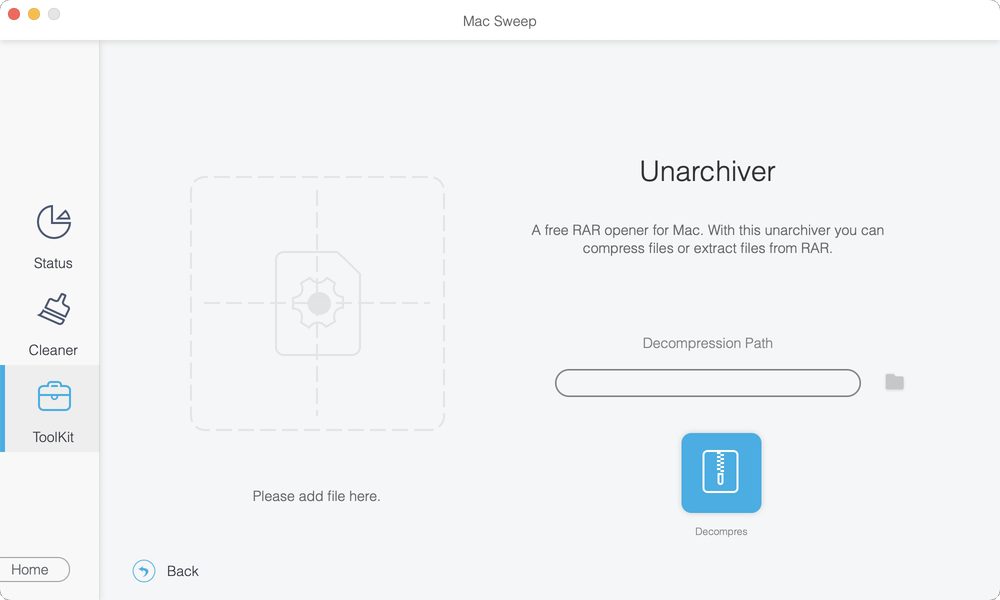
Wait until the Decompress Progress bar completes, then find the extracted files in the target folder.


 iPhone Data Recovery
 iOS System Recovery
 iOS Data Backup & Restore
 iOS Unlocker
 iPhone Password Manager
 Location Changer
 Android Data Recovery
 Broken Android Data Extraction
 Android Data Backup & Restore
 Android Unlocker
 FoneTrans for iOS
 iPhone Data Eraser
 iPhone Cleaner
 HEIC Converter
 HyperTrans
 WhatsApp Transfer for iOS
 Mac Sweep
 Data Retriever
 Mac Data Retriever
 Video Converter Ultimate
 Screen Recorder
 Phone Mirror